
Europe Picks HYDIS as Its 2027 Hypersonic Defence Bet
 Alexandra Reeves
Europe Picks HYDIS as Its 2027 Hypersonic Defence Bet
Europe just chose the shape of its future hypersonic shield. That sounds more decisive than it is.
On July 10, OCCAR, the European armaments cooperation agency managing the programme for France, Germany, Italy and the Netherlands, said the HYDIS programme had completed its Final Concept Review and validated a preferred interceptor design. Defense News reported the development on July 13, noting that MBDA's concept is based on a solid-propellant rocket motor and will now move into a final year of technology maturation.
The important part is not that Europe has a hypersonic interceptor. It does not. The important part is that Europe has narrowed the design space to one candidate, and that candidate now has to become credible before the concept phase closes in May 2027. In missile defence terms, this is a useful step. In strategic terms, it is also a reminder of how far Europe remains from fielding the layer it says it needs.
What HYDIS Actually Chose
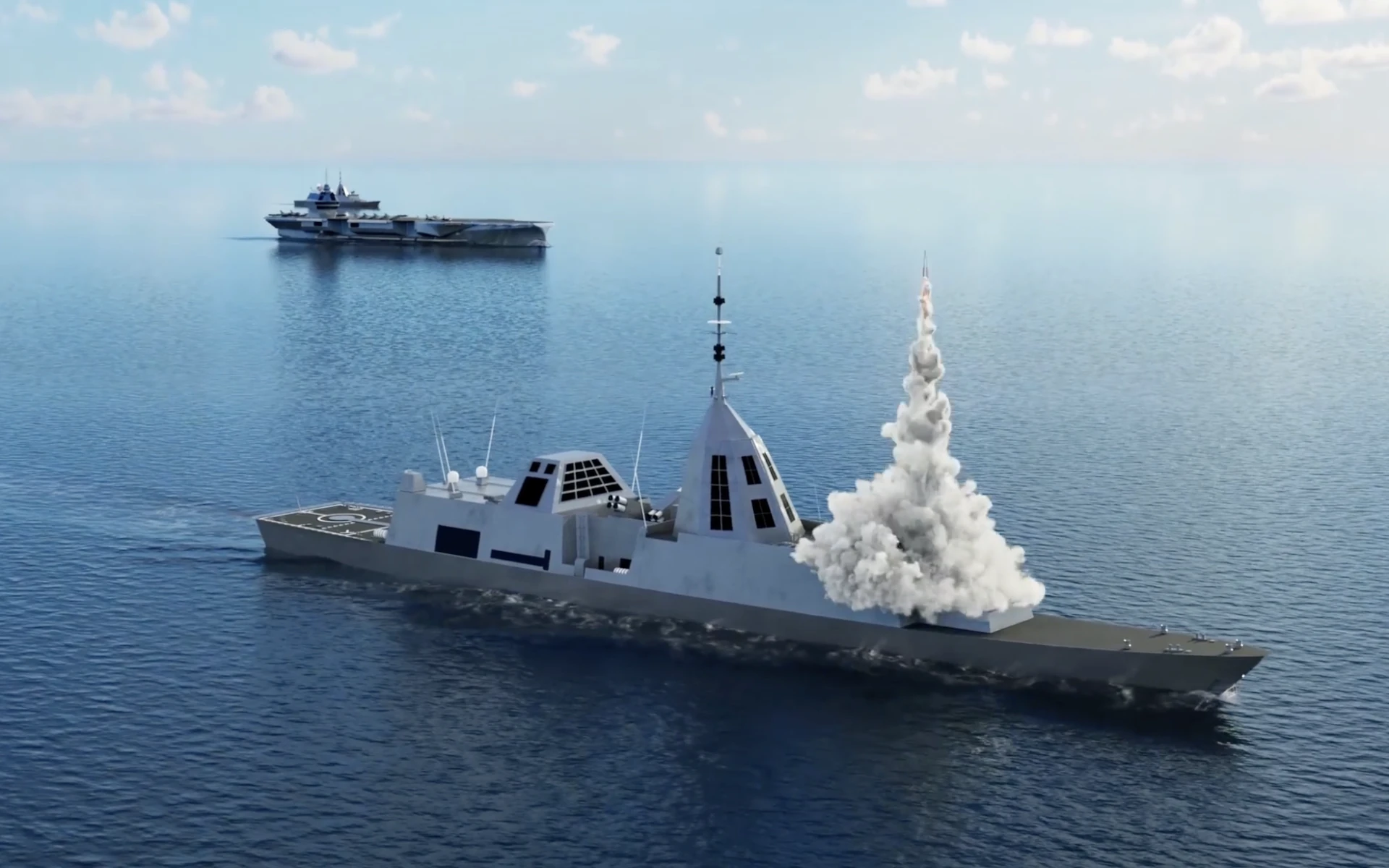
According to OCCAR, the four participating states endorsed the most promising interceptor concept after a structured assessment process that compared multiple designs and interception approaches. The threat set was not narrow. The evaluation looked at hypersonic glide vehicles, hypersonic cruise missiles and manoeuvring ballistic missiles, using threat models developed by Italy's CIRA, France's ONERA and the Netherlands' TNO.
That matters because hypersonic defence is not a single problem. A glide vehicle descending unpredictably through the atmosphere is a different target from a cruise missile powered through much of its flight, and both are different from a ballistic missile that manoeuvres late in its trajectory. The common denominator is time. Sensors have less warning, command chains have less room for hesitation, and the interceptor has less margin for error.
The Final Concept Review focused on the terminal phase of interception, particularly the kill vehicle's performance against demanding threat profiles. MBDA says the selected concept benefited from Avio's work on the solid rocket motor architecture, ArianeGroup and Roxel on final-stage control mechanisms, Lynred on the terminal infrared sensor, Thales Netherlands on naval and ground sensor-suite performance data, and GKN Fokker on integration into the Mk 41 naval launcher.
That list is worth reading slowly. HYDIS is not just a missile. It is a whole ecosystem: propulsion, seeker, kill vehicle control, launch cell integration, sensors, battle management and threat modelling. Europe's problem is that every one of those pieces has to mature at roughly the same speed, across several governments and companies, while Russia and others continue to improve offensive missile systems.
The Technology Is Still Early
OCCAR says the remaining year of the HYDIS programme will focus on advancing critical technologies to at least Technology Readiness Level 3. That is experimental proof of concept. It is not prototype qualification, not flight testing, and certainly not operational deployment.
This is where the press release language needs a little cold water. A validated concept is not a battery on a frigate. It is not a defended city. It is not a NATO commander with a reliable shot doctrine. TRL 3 means Europe is still proving that the key technical ideas can work under controlled conditions. The hard parts come later: high-speed flight testing, seeker discrimination, kill vehicle agility, thermal protection, software validation, production engineering and integration with existing air and missile defence networks.
The Mk 41 launcher angle is still strategically interesting. If Europe can design the interceptor around a widely used naval vertical launch system, it gets a path to shipboard deployment without inventing an entirely new launch architecture. That could matter for northern waters, the Mediterranean and any future defence of European sea lines against long-range missile threats. But launch-cell compatibility is not the same as combat-system integration, and Europe has learned that lesson before.
HYDIS Is Also an Industrial Fight
There is another layer here: HYDIS is competing with HYDEF, the separate European hypersonic defence effort led by Germany's Diehl Defence and coordinated by Spain's SMS. Defense News reported that the European Defence Fund plans to allocate €100 million for an endo-atmospheric interceptor in its 2026 work programme, with only one proposal expected to receive that funding.
HYDIS has already received €80 million from the European Defence Fund, with the four partner countries adding roughly €60 million. HYDEF has received €100 million from the EDF and another €10 million from Belgium, Germany, Norway, Poland and Spain. That split tells you something uncomfortable about European defence cooperation: even when the threat is obvious, the continent often funds parallel lanes before choosing one road.
Sometimes competition produces a better design. Sometimes it simply burns calendar. The danger is that Europe treats programme selection as progress while the operational gap remains open. Russia has used Kinzhal and other ballistic and quasi-ballistic systems in the Ukraine war. Iran has demonstrated expanding missile reach and salvo logic. China is the pacing hypersonic actor for the United States, but its advances shape the global technology race. Europe cannot assume this problem will wait politely for committee alignment.
Why NATO Should Care
PESCO's TWISTER project describes the broader requirement: space-based early warning plus endo-atmospheric interceptors able to counter ballistic missiles up to 3,500 kilometres, hypersonic glide vehicles, high-altitude supersonic or hypersonic cruise missiles and other manoeuvring air-breathing targets. It also says the project should help Europe's ability to contribute to NATO ballistic missile defence.
That last phrase is doing a lot of work. NATO's missile defence architecture has relied heavily on American systems, American sensors and American political commitment. European leaders can talk about sovereignty all they like, but sovereignty in missile defence is measured in radar coverage, launchers, interceptors, command networks, production lines and reload stocks. HYDIS is one piece of that ledger, not the ledger itself.
Here is the thing: the alliance does not need Europe to duplicate every American capability. It does need Europe to stop being the soft underbelly of its own air and missile defence story. If HYDIS matures into a real interceptor, it could give European navies and ground forces a higher-end layer against threats that Patriot and SAMP/T were not originally designed to solve alone. If it stalls, the continent will have another impressive acronym and the same dependency problem.
The Bottom Line
HYDIS matters because Europe has finally picked a preferred technical direction for a counter-hypersonic interceptor backed by four major defence states and a serious industrial team. It also matters because the milestone exposes the gap between Europe's ambitions and Europe's readiness.
The next things to watch are simple: whether HYDIS reaches its promised technology maturity by 2027, whether the European Defence Fund backs HYDIS or HYDEF for the next phase, whether the Mk 41 integration path survives detailed engineering, and whether NATO planners treat this as a future operational layer rather than a science project.
The uncomfortable judgment is this: Europe is not late because it lacks engineers. It is late because it keeps confusing agreement on a programme with possession of a capability. HYDIS may become the exception. For now, it is still a bet.
Europe selected the HYDIS hypersonic interceptor program on July 10, 2023, as its preferred design for future missile defense. The program, managed by OCCAR and supported by France, Germany, Italy, and the Netherlands, will focus on technology maturation over the next year. This development highlights Europe's ongoing efforts to enhance its defense capabilities against hypersonic threats, amidst competition with the HYDEF program for funding and resources.
- Europe has selected the HYDIS hypersonic interceptor program as its preferred design.
- The program is backed by France, Germany, Italy, and the Netherlands.
- The remaining year will focus on advancing critical technologies to Technology Readiness Level 3.
- HYDIS is competing with another program, HYDEF, for funding and development.
- The program aims to enhance Europe's missile defense capabilities against hypersonic threats.