
European Force Instead of UNIFIL in Lebanon 2026 Tests Israel's Withdrawal from 10 Kilometers Deep
 Ahmed Al-Rashid
European Force Instead of UNIFIL in Lebanon 2026 Tests Israel's Withdrawal from a Depth of 10 Kilometers
On July 17, 2026, German Foreign Minister Johan Wadephol stated that the European Union should consider sending a force with a European mandate to southern Lebanon after UNIFIL's mandate ends on December 31. The critical figure in the news is not just the date of the mission's end, but the depth of the area where the Israeli army is currently stationed inside Lebanon, about 10 kilometers along the border. Militarily, this is not a matter of swapping blue helmets for European ones; it is a test of who has the capability to fill the ground when the stronger army departs.
The German proposal came after the sixth round of Lebanese-Israeli talks at the U.S. embassy in Rome, and after a new war broke out on March 2 between Israel and Hezbollah amid the broader escalation between Washington and Tehran. Wadephol said that the European force could prevent a security vacuum and create conditions for the Israeli army's withdrawal without Hezbollah's return. This phrase sounds diplomatic, but in the military lexicon, it means one question: who controls the roads, villages, weapon depots, and return corridors after the tanks leave?
UNIFIL Between the Old Mandate and the New War
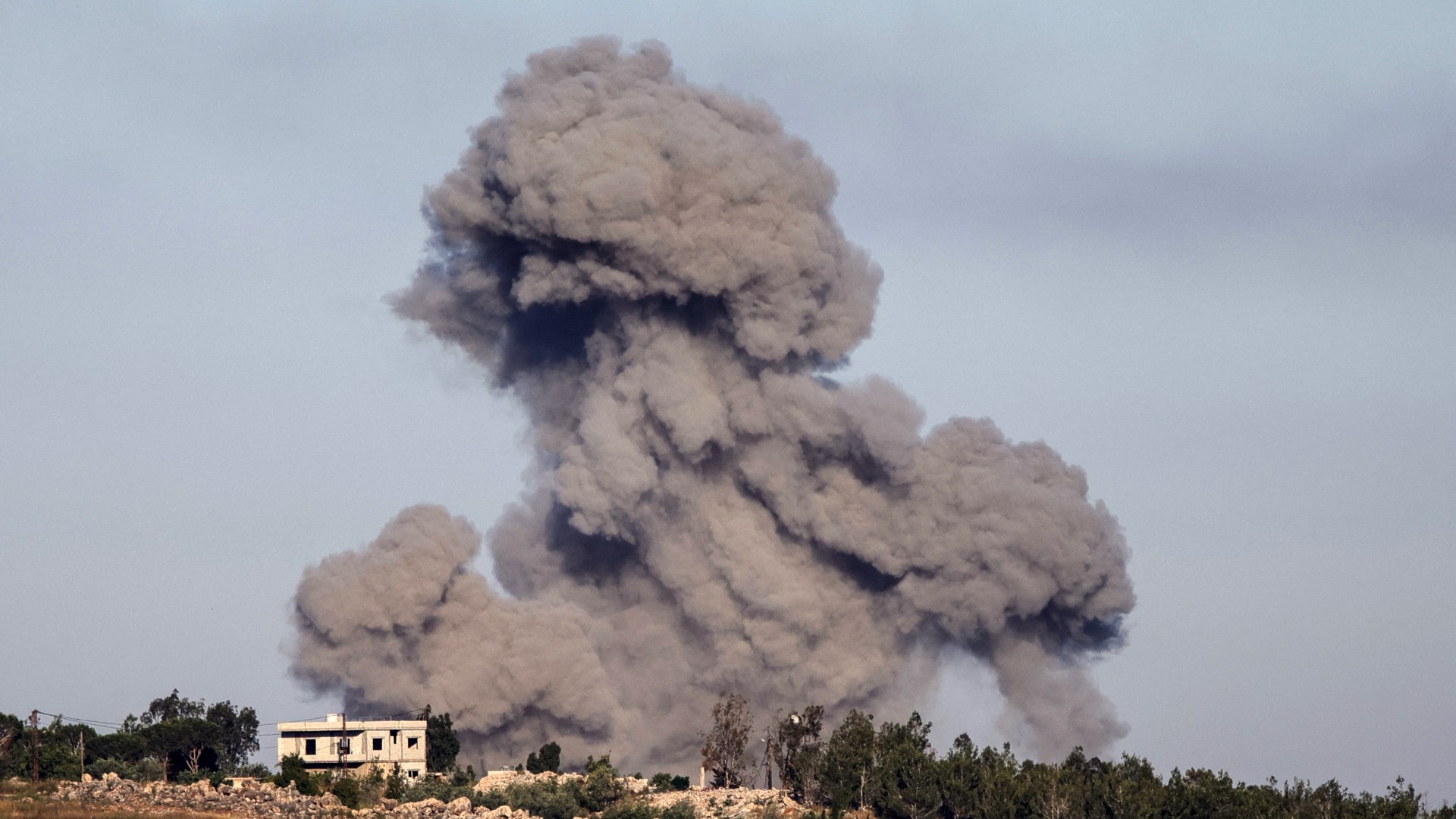
UNIFIL was born in a different environment, and its role expanded after Security Council Resolution 1701. On paper, the mission works with the Lebanese army and helps create security conditions in the south. In practice, every officer who has served in the area knows that the UN mandate does not equate to field control. The force can monitor, record, escort, and de-escalate friction; but it cannot, without strict political will and clear rules of engagement, dismantle a missile network or prevent a local faction from returning at night to a village it knows stone by stone.
The official news from UNIFIL on the same day spoke of distributing 807 health packages to six municipalities in southern Lebanon, benefiting about 4,035 people. This is an important humanitarian and political act, as it maintains trust with the population. However, it also reveals the gap between the peacekeeping function and the security enforcement function. When the mission is forced to solidify the relationship with the local community amid the return of residents and ongoing hostility, it means that the ground is not only not empty of security but is crowded with fear, local calculations, and invisible weapons.
What the European Mandate Means Militarily
If Europe wants to replace UNIFIL or operate afterward, it will need more than a statement of intent. The potential European force must answer three practical questions:
- Will it have rules of engagement that allow for the inspection of suspected roads and buildings, or will it remain hostage to the approval of local parties?
- Will it operate under unified military command with real field intelligence, or under a political settlement among European capitals that fear losses?
- Will it have air cover, reconnaissance capabilities, and rapid medical evacuation capacity, especially if the border villages become friction points with Hezbollah?
The Israeli army, according to the published report, is stationed in a buffer zone of about 10 kilometers inside Lebanon. This depth is not a trivial number. Ten kilometers in southern Lebanon means hills, interspersed villages, side roads, and areas that are difficult to monitor from a fixed point. If Israel withdraws without a force capable of permanent movement, the more patient party closer to the population will return. In southern Lebanon, this advantage does not belong to the Europeans.
Hezbollah Understands the Vacuum Better than the Capitals
Hezbollah does not need a military display to prove its return. It is enough to restore a surveillance network, a small depot, or a camouflaged missile cell within the daily lifestyle. Therefore, the phrase preventing Hezbollah's return does not mean preventing the raising of flags, but rather preventing the rebuilding of combat infrastructure. Here lies the difficulty of the European mission. Europe has professional forces, but it does not always have the political patience to endure a low-intensity and protracted conflict.
Israel will view any European force from one angle: does it reduce the threat of missiles and anti-tank drones on the Galilee? The official Lebanon will view it from the perspective of sovereignty and the withdrawal of the Israeli army. Hezbollah will test it as it has tested others: a small incident, an interception of a patrol, local pressure, and then measuring the reaction. Iran will see southern Lebanon as part of a broader equation that includes the Gulf, Syria, and Iraq, especially after the recent shaking of U.S.-Iranian understandings.
In armies, we say that the ground does not respect a vacuum. Whoever leaves a meter unguarded finds their opponent on it before they finish writing the report.
The Lebanese-Israeli Equation After Rome
The sixth round in Rome gives the German proposal a political context. Beirut wants an Israeli withdrawal that proves the state is still capable of negotiating on behalf of the borders. Israel wants a security guarantee that does not rely on Lebanese promises that Beirut cannot enforce on Hezbollah. Washington wants an arrangement that eases the Lebanon front while it is preoccupied with Iran and the Gulf. Europe sees an opportunity to return as a security player in the Eastern Mediterranean. Each party hears the word stability in a different sense.
In practical terms, the European force will only be successful if it supports the Lebanese army, not if it replaces it. The Lebanese army is the only institution that can, theoretically, transform international presence into local sovereignty. However, it suffers from a lack of funding, equipment, and sustainable deployment capability. Therefore, any new mandate must include a clear support package for the Lebanese army: light armored vehicles, secure communications, small reconnaissance drones, and an operational budget for daily deployment. Without that, the European force will become a temporary barrier between two adversaries who do not wait long.
Conclusion
The proposal to replace UNIFIL with a European force is not an administrative detail before the end of 2026. It is an attempt to reshape security in southern Lebanon after a war that revealed that Resolution 1701 is no longer sufficient on its own. However, the difference between peacekeeping and enforcing its conditions is significant. If Europe comes with a soft monitoring force, it will give everyone a nice picture and a short waiting period. If it comes with a tough mandate, it will enter into direct friction with Hezbollah and the calculations of Iran, Israel, and Lebanon simultaneously.
The paradox is that southern Lebanon needs a force to prevent a vacuum, but it inherently rejects any force that seems like a new occupation. This is the knot that neither a European slogan nor a quick Israeli withdrawal can solve. In the end, whoever cannot gather equipment, training, and institutions in a single triangle will find themselves paying the price of security twice: once with foreign presence, and once with the return of local weapons.
Germany's Foreign Minister proposed deploying a European force to southern Lebanon on July 17, 2026, to replace UNIFIL after its mandate ends. This move aims to test Israel's withdrawal from 10 kilometers inside Lebanon and prevent a security vacuum that could be exploited by Hezbollah. The proposal follows recent conflicts between Israel and Hezbollah and emphasizes the need for a robust military presence to maintain stability in the region.
- Germany's Foreign Minister proposed a European force in southern Lebanon after UNIFIL's mandate ends.
- Israel currently operates 10 kilometers inside Lebanon along the border.
- The proposal follows recent Israeli-Hezbollah conflicts and aims to prevent a security vacuum.
- The European force would need to address local control and military engagement rules.