
Expert Interpretation: Why Japan's "Re-Militarization" is a "Gray Rhino"
The ruling Liberal Democratic Party of Japan recently held a special committee meeting on "space development" and passed a proposal directed at the government, which includes increasing the personnel allocation for the Self-Defense Forces engaged in space-related work. Experts analyze that this so-called "space development" proposal is a key step for Japan to accelerate its path toward becoming a military power and the "militarization" of space.
At a regular press conference held by the Ministry of Foreign Affairs on the 12th, spokesperson Guo Jiakun stated that Japan's "remilitarization," this "gray rhino," is charging forward. Many international experts, scholars, and media have pointed out that Japan has abandoned pacifism and is undergoing the most dangerous shift in military security policy since the war, threatening regional and global peace and stability.
What is a "gray rhino"? Why is Japan's "remilitarization" considered a "gray rhino"? What kind of threats will this charging "gray rhino" of Japan's "remilitarization" bring to various regions? Let's hear the experts' interpretations.
Why is Japan's "remilitarization"
considered a "gray rhino"?
Meng Mingming, Assistant Researcher at the Institute of Japanese Studies, Chinese Academy of Social Sciences: A "gray rhino" refers to a clearly high-probability event that is easily overlooked, ultimately leading to a huge crisis. The spokesperson of the Chinese Ministry of Foreign Affairs used the term "gray rhino" to metaphorically describe Japan's "remilitarization," with the core reasons being as follows:
The trajectory of Japan's "remilitarization" is clear and definite.
Japan has abandoned pacifism, and "remilitarization" has been a process lasting over a decade. Prior to this, during Shinzo Abe's second term, he lifted the ban on collective self-defense and implemented new security laws, which effectively loosened the constraints on militarization. Now, under the leadership of Prime Minister Sanae Takaichi, this "remilitarization" process has been significantly accelerated. In November last year, Takaichi openly stated in the Diet that a "crisis situation" regarding Taiwan could constitute a "survival crisis" for Japan, attempting to intervene militarily in the Taiwan Strait situation, and has since refused to retract this statement. Since 2026, the Takaichi cabinet has achieved the goal of defense spending accounting for 2% of GDP and has allowed the export of lethal weapons such as missile frigates to other countries, while accelerating the revision of the three security documents and publicly campaigning for the amendment of Article 9 of the pacifist constitution, aiming to quickly realize the ideal of making Japan a country capable of war.
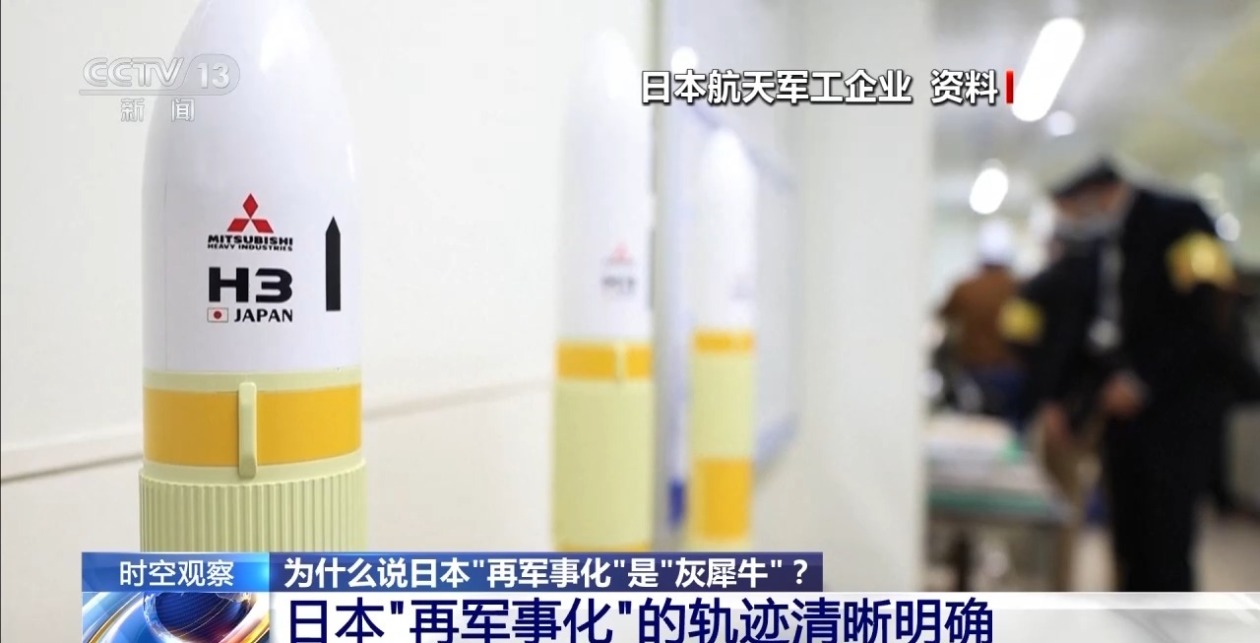
Japan's large scale makes the dangers of "remilitarization" evident.
Japan is the fourth largest economy in the world, with a strong industrial base, sufficient financial resources, and a high-quality population. If such a large country accelerates its comprehensive "remilitarization," it can not only quickly convert advanced civilian industrial capacity into large-scale, high-tech military equipment production but also exert influence globally through arms exports and defense cooperation. The strategic potential released is far beyond that of ordinary regional conflicts.
Some countries, due to their own interests,
harbor complacency towards Japan's "remilitarization."
Despite China's consistent warnings, some countries have taken a passive attitude due to their own interests. Some countries fantasize about balancing regional power by leveraging Japan against China, attempting to use Japan's increasingly enhanced military capabilities as a pawn to contain China. Japan has also exploited this mindset of certain countries, packaging its actions as defensive measures and deliberately downplaying their impact on the post-war peace order. This packaging, in turn, has fostered a sense of complacency among some countries regarding Japan's "remilitarization." This indulgence has precisely allowed the "gray rhino" of Japan's "remilitarization" to gather strength.
What threats will this "gray rhino" bring?
Japanese militarism has brought severe disasters to the peoples of the Asia-Pacific, and now this dangerous trend is resurfacing. Japan's continuous dangerous advances and provocations in the military security field have already made it a "gray rhino" containing enormous crises. Meanwhile, recently, Takaichi and Japanese officials at various levels have been intensively visiting multiple countries to explain Japan's so-called "peace" stance.
At the regular press conference on the 12th, spokesperson Guo Jiakun stated that countries in the Asia-Pacific should open their eyes and jointly resist Japan's reckless actions of "new militarism," and work together to maintain the peace order that is essential for survival and development. What threats will Japan's "remilitarization," this charging "gray rhino," bring? Let's hear the analysis from Meng Mingming, Assistant Researcher at the Institute of Japanese Studies, Chinese Academy of Social Sciences.
Meng Mingming, Assistant Researcher at the Institute of Japanese Studies, Chinese Academy of Social Sciences: First, China is the most directly and primarily affected country. Before Takaichi took office, her attitude towards China was very negative. After taking office, Takaichi has strengthened Japan's military capabilities, openly characterizing the Taiwan issue as a survival crisis for Japan, and actively engaging in military cooperation with countries surrounding China, which enables Japan to intervene more deeply in the surrounding situations of China, such as the Taiwan Strait, East China Sea, and even the South China Sea, endangering China's territorial security and core interests. Secondly, there are neighboring countries around Japan, such as Russia, North Korea, and South Korea, which have historical entanglements with Japan and also have geopolitical conflicts or territorial disputes with Japan. If Japan achieves "remilitarization," relations with these countries may become even tenser.
Additionally, in the Asia-Pacific region, Japan is not only accelerating its own military loosening but is also actively promoting military equipment to neighboring countries like the Philippines, exporting military influence. This forces some countries that originally hoped to maintain neutrality or focus on economic development into the great power competition.
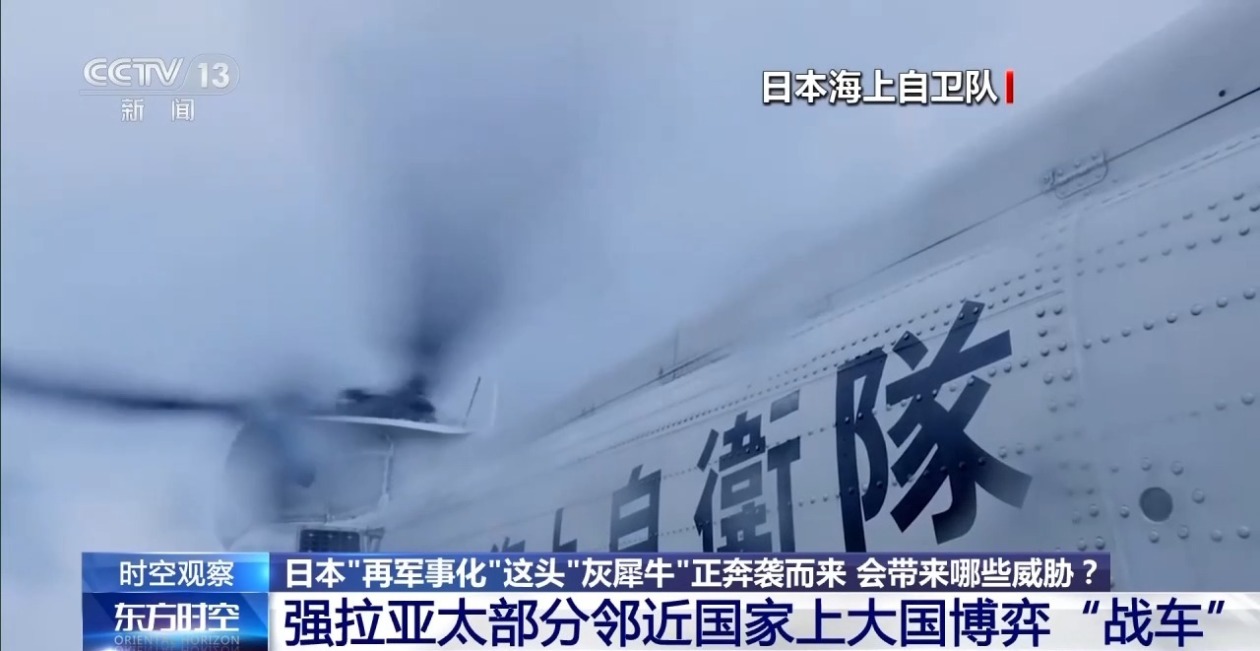
Finally, a significant goal of the Japanese right in achieving "remilitarization" is to shed the identity of a defeated nation and break the post-World War II international order. This poses a clear threat to the victorious countries of World War II. From a broader perspective, Japan's "remilitarization" may lead to a complete imbalance in the regional security structure, with a large amount of resources shifting from economic development to an arms race, significantly increasing the probability of accidental conflicts.
The Asia-Pacific, as a major center of the world economy, has economies that are interdependent and closely intertwined. The shift towards militarization will bring enormous uncertainty, ultimately directly threatening the peace order that all countries rely on for survival and development. China, using the warning of the "gray rhino," calls on all countries to open their eyes, jointly maintain the post-war peace order, and avoid the repetition of historical tragedies.
Japan's ruling Liberal Democratic Party has proposed a plan to increase personnel in the Self-Defense Forces for space-related work, marking a significant step towards militarization. Experts warn that this shift threatens regional stability and peace, as Japan aims to enhance its military capabilities and engage in defense cooperation with neighboring countries. The military spending is projected to reach 2% of GDP by 2026, further solidifying Japan's position as a military power in the Asia-Pacific region.
- Japan's ruling party proposed a plan to increase personnel in the Self-Defense Forces for space-related work.
- Experts warn that Japan is accelerating its militarization, threatening regional stability.
- Japan's military spending is set to reach 2% of GDP by 2026.
- Japan is actively seeking to export military equipment and enhance defense cooperation with neighboring countries.
- The shift in Japan's military policy is seen as a significant threat to peace in the Asia-Pacific region.