
Expert links private nuclear sector to U.S. defense resilience
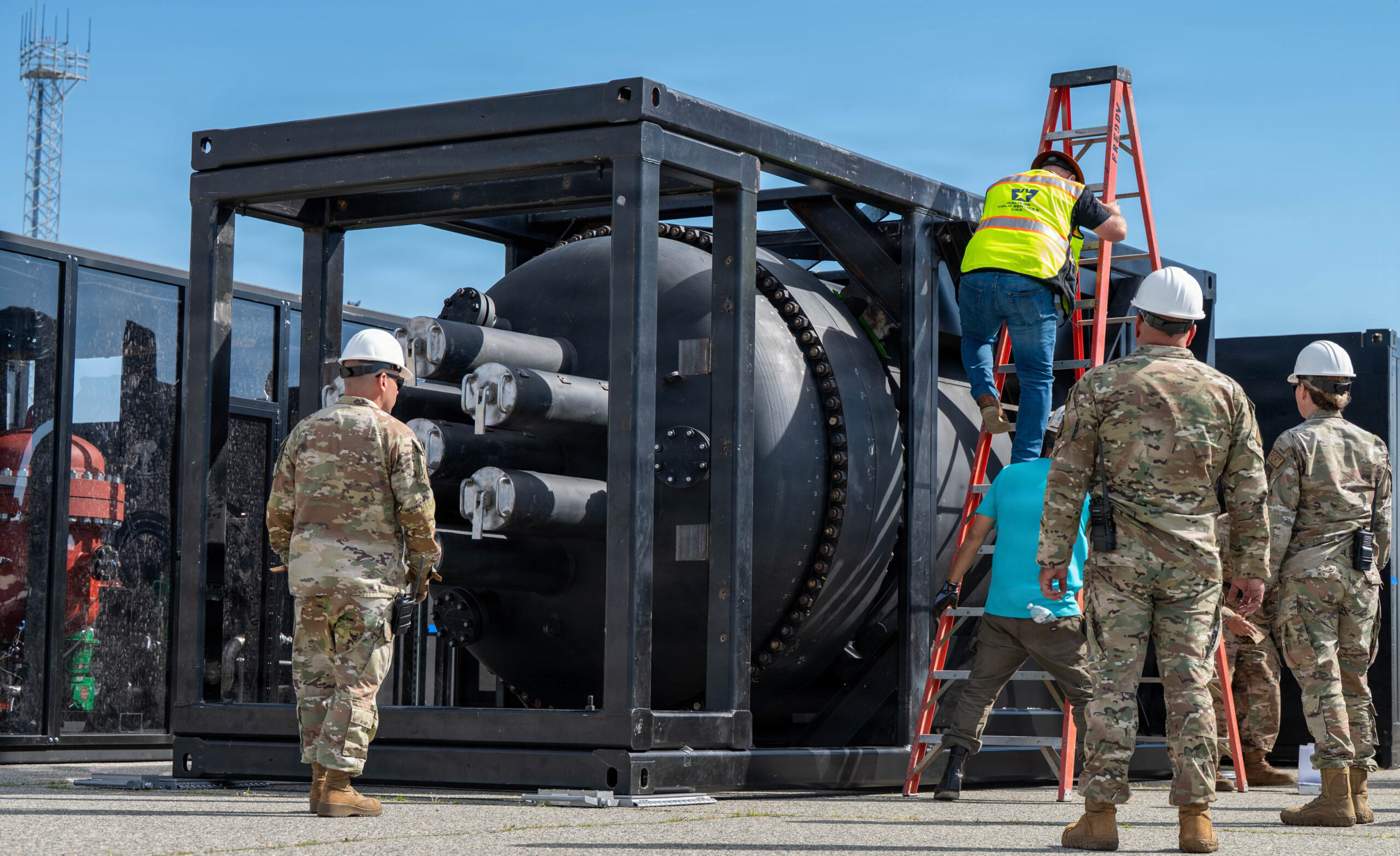
As the United States moves to rebuild parts of its nuclear fuel supply chain amid competition with Russia and China, privately backed technology firms are increasingly entering a field long dominated by government programs. The shift is drawing attention from defense and security observers because U.S. uranium enrichment capacity underpins naval propulsion, advanced reactor fuel, and long-term military energy resilience.
In an interview with The Defence Blog, Christo Liebenberg, co-founder, president, and chief technical advisor of U.S.-based uranium enrichment company LIS Technologies, said the rebuilding of domestic enrichment capacity is directly tied to national security and defense resilience as private-sector firms move into a field long dominated by government-led programs.
According to Liebenberg, uranium enrichment sits at the core of both civilian and defense nuclear infrastructure, making domestic capability a strategic requirement.
“It has a very direct impact. Enrichment sits right at the center of both energy and defense capability,” Liebenberg said. “If you don’t have domestic enrichment, you are dependent on external parties for something that underpins your entire nuclear infrastructure. That includes civilian power, but also naval propulsion, research reactors, and other strategic applications.”
He said companies such as LIS Technologies are now working to restore domestic enrichment capacity after what he described as a prolonged period of underdevelopment in the U.S. nuclear fuel sector.
The timing of the shift comes as defense planners and industry observers increasingly focus on secure fuel access for advanced nuclear systems, including small modular reactors and microreactors that may support remote or hardened military facilities. These systems could provide resilient power generation for installations where conventional fuel logistics remain exposed to disruption.
“What we are seeing now is that private companies can move faster in developing and scaling new technologies,” Liebenberg said. “In practical terms, that means supporting things like fuel supply for advanced reactors, including small modular and microreactors, which have clear applications for remote or secure military installations.”
This faster pace of innovation is one of the main reasons private capital is moving into nuclear technologies, mirroring earlier changes seen in the space sector, where venture-backed firms accelerated development cycles and reduced dependence on slower institutional procurement models.
Liebenberg also linked the issue directly to strategic competition with Russia and China, particularly in the nuclear fuel supply chain.
“It is fundamental,” he said. “Russia still controls a very large portion of global enrichment capacity, and China is expanding rapidly, not only in reactors but across the entire fuel cycle.”
He added that dependence on foreign enrichment services creates strategic risk for both civilian and defense requirements.
“If the U.S. does not rebuild its own enrichment capability, it risks being in a position where it cannot fully support its own nuclear needs without relying on external suppliers. That is not just a commercial issue, it becomes a strategic one very quickly.”
Uranium enrichment is a foundational process in producing reactor fuel, including High-Assay Low-Enriched Uranium, or HALEU, which is increasingly associated with advanced reactor designs. In a defense setting, such fuel may support systems ranging from research reactors to future distributed power concepts for secure installations.
Liebenberg said one area that has not received enough attention is the defense relevance of more flexible fuel-cycle technologies and smaller enrichment systems.
“One area that is not always discussed enough is how these newer technologies can be deployed more flexibly,” he said. “Smaller, more efficient enrichment systems and advanced fuels can support a wider range of applications, including mobile or distributed energy systems.”
He also pointed to the growing importance of HALEU supply in the United States.
“And then there is the fuel itself. HALEU, for example, is becoming increasingly important for advanced systems, and there is not enough domestic supply. That has both commercial and defense implications.”
As energy infrastructure becomes more closely tied to defense planning, domestic enrichment capacity now directly supports military energy resilience, secure supply chains, and the long-term sustainment of advanced nuclear systems without dependence on geopolitical competitors.
Content preview only. Full article available at source. View Full Article
LIS Technologies is actively working to rebuild domestic uranium enrichment capacity in the United States, which is crucial for military energy resilience and secure supply chains. The shift towards private sector involvement in nuclear fuel production is driven by the need to reduce dependence on foreign enrichment services, particularly from Russia and China. This development is linked to the strategic importance of High-Assay Low-Enriched Uranium (HALEU) for advanced military reactor systems.
- U.S. uranium enrichment capacity is vital for naval propulsion and military energy resilience.
- Private firms are entering the nuclear fuel sector, traditionally dominated by government programs.
- Dependence on foreign enrichment services poses strategic risks for U.S. defense.
- HALEU is increasingly important for advanced reactor designs and military applications.
- Domestic enrichment capacity is essential for secure supply chains in defense.