
"Falcon Strike 20 Expands to 052D Class: China's Hypersonic Anti-Ship Network Covers the First Island Chain"
 Tanaka Takashi
YJ-20 Expands to Type 052D: China's Hypersonic Anti-Ship Network Covers the First Island Chain
At the end of July, a scene of a missile launch was included in a recorded video released by the People's Liberation Army ahead of its 99th anniversary. A YJ-20 anti-ship ballistic missile was cold-launched from the bow VLS of a Type 052D destroyer, igniting its booster in mid-air to accelerate. Traditionally, this "carrier killer" was considered to be equipped only on the 10,000-ton Type 055. However, it has now been launched from the far more numerous Type 052D. This single point has a significant impact on the balance of naval and air power in the Western Pacific.
What the Video Showed
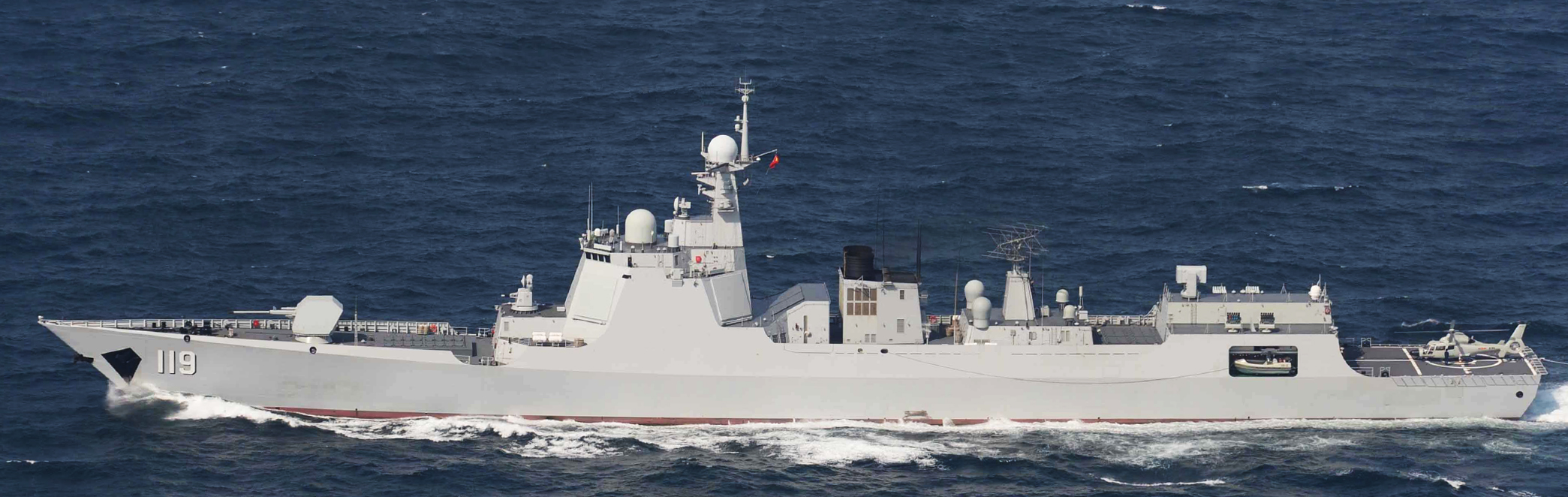
The video, dated July 28 and lasting about 3 minutes and 34 seconds, is titled "Achieving Victory." This is the first public display of the YJ-20 being launched from the front VLS of a Type 052D. The Type 052D has a full-load displacement of about 7,500 tons and is equipped with a 64-cell VLS, with around 35 ships currently in service or under construction. In contrast, the Type 055, which confirmed "standardization testing" at the end of last year, is limited to about 10 ships.
The YJ-20 is estimated to have a cruising speed of over Mach 6, a terminal speed of Mach 10, and a range of 1,000 to 1,500 kilometers.
The Logic of Numbers and Sea Lines
The issue at hand is the numbers. If about 35 Type 052D ships can shoulder the role of around 10 Type 055 ships, then the number of vessels with hypersonic anti-ship strike capabilities would increase more than threefold. The A2/AD network would thicken from the First Island Chain into the Western Pacific.
From the perspective of sea lines of communication (SLOC), this cannot be overlooked. In a crisis, the sea lanes in the Western Pacific that U.S. carrier strike groups rely on would be threatened simultaneously from more launch platforms. Even if the ranges are the same, if the launch points are dispersed, the response for the intercepting side becomes significantly more difficult.
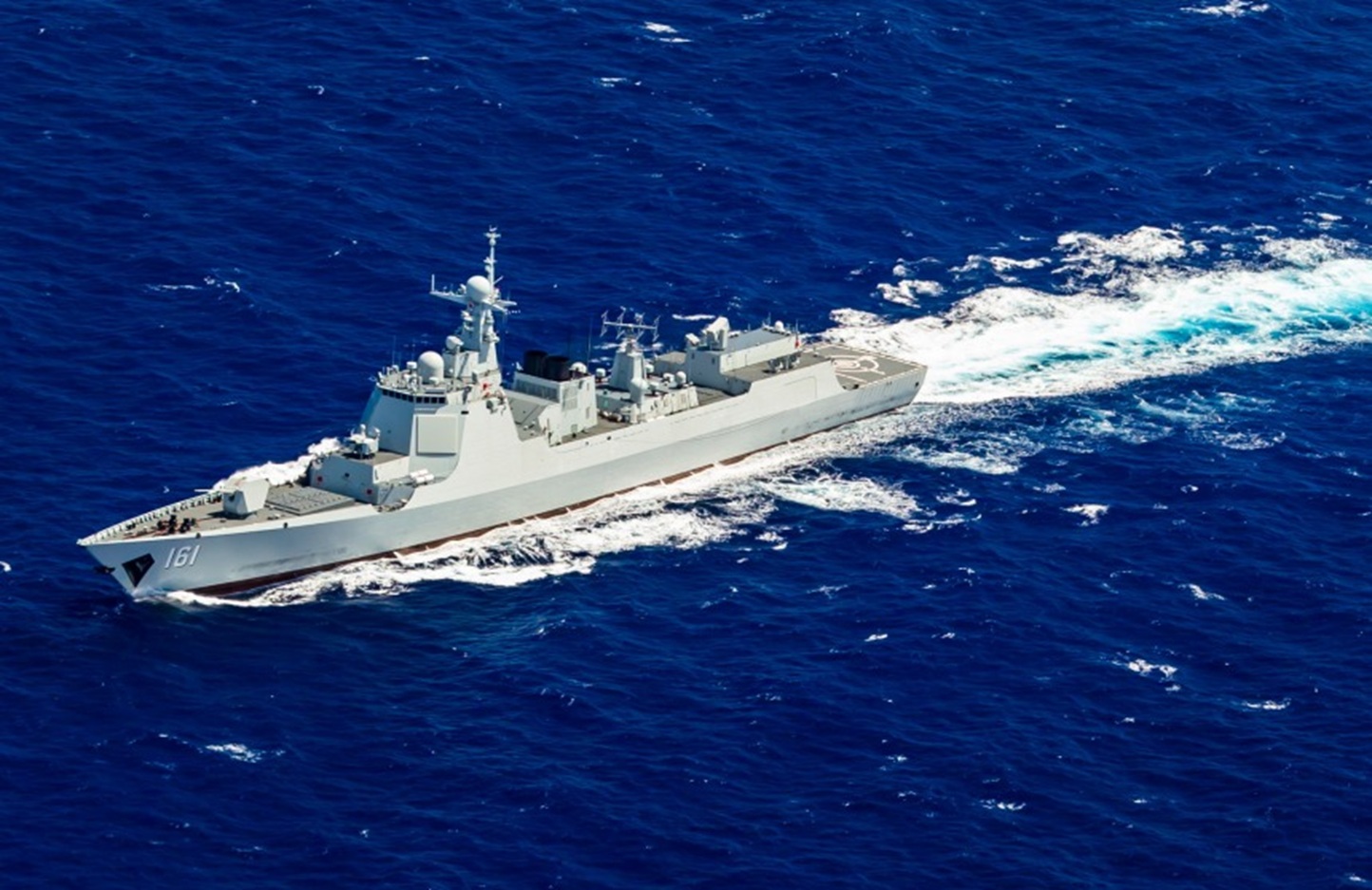
Around the same time, the Japan Maritime Self-Defense Force's Aegis destroyer "Chokai" successfully conducted a live-fire test of the Tomahawk missile with the support of the U.S. Navy. While Japan is developing its counterstrike capabilities, China is dispersing its hypersonic anti-ship network across mass-produced destroyers. The asymmetry in the competition of capabilities is becoming evident.
Points to Reserve
However, reservations are necessary. It is unclear whether all 64 cells of the Type 052D can accommodate the large YJ-20, and it is possible that only a portion can hold the larger munitions. There is also a possibility that the current video remains within the realm of testing and does not lead to large-scale deployment.
Nonetheless, in the author's view, the direction itself reflects a strategic intent. The Chinese Navy is attempting to shift hypersonic anti-ship capabilities from being a "small elite trump card" to a "standard equipment on mass-produced ships." The Japan Maritime Self-Defense Force also has challenges remaining. The current Aegis ships' air defense network does not easily handle ballistic missiles maneuvering at Mach 10.
The True Challenge is "Speed"
In conclusion, I will note an unconventional judgment. While the live-fire test of the Tomahawk was reported, the expansion of China's hypersonic anti-ship network is quietly progressing. The balance of deterrence is not one-directional.
The true challenge lies not in the number of missiles, but in the speed of detection, command and control, and information sharing for escort ships to "shoot" before they are "shot at." If the deployment of the YJ-20 on the Type 052D progresses to full-scale deployment, the fleets in the Western Pacific will be forced to choose between "preempting" or becoming passive in the face of hypersonic missile saturation.
The People's Liberation Army Navy launched the YJ-20 hypersonic anti-ship missile from a 052D destroyer for the first time on July 28, significantly enhancing its naval capabilities. This development allows approximately 35 052D destroyers to potentially carry hypersonic missiles, increasing the threat to U.S. naval forces in the Western Pacific. The YJ-20 is estimated to have a range of 1000-1500 km and speeds exceeding Mach 10, complicating U.S. operational responses.
- The YJ-20 missile was launched from a 052D destroyer for the first time.
- China's Navy is expanding its hypersonic anti-ship capabilities.
- Approximately 35 052D destroyers are in service or under construction.
- The YJ-20 missile has an estimated range of 1000-1500 km and speeds exceeding Mach 10.
- The expansion of hypersonic capabilities poses a challenge to U.S. naval operations in the Western Pacific.