
Farnborough 2026 with 1,600 Exhibitors Shows Europe's Defense Problem Beyond New Jets
 Dr. Klaus Weber
Farnborough 2026 with 1,600 Exhibitors Shows Europe's Armament Problem Beyond New Jets
1,600 exhibitors, about half of them from the defense sector: This number is the actual finding from Farnborough 2026. Not because an airshow has suddenly become more political, but because Europe's security policy demand is growing faster than its industrial capacity to deliver munitions, sensors, missiles, and unmanned systems in predictable quantities. The traditional competition between Airbus and Boeing for civil large contracts is taking a back seat. In its place, a sober question arises: Can Europe turn high defense budgets into timely available military capacity?
The Fair Shifts from Aircraft to the Effect Chain
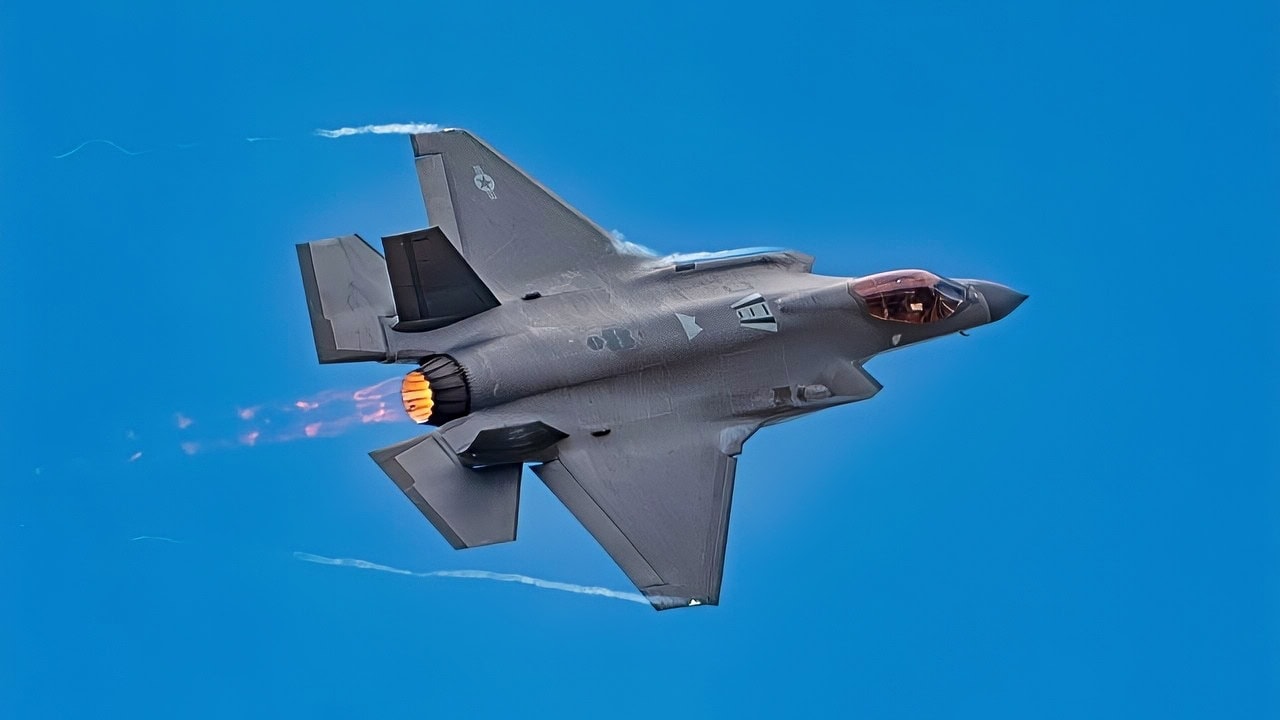
Reuters reports from the fair's preview that the wars in Ukraine and the Gulf are shifting the focus of Farnborough from the civil jet business to weapons, drones, AI, and mass production. The organizers expect a record of 1,600 exhibitors; the defense share is therefore around 50 percent, compared to historically about 40 percent. The fact that F-35 and Eurofighter continue to perform demonstrations changes little about the shift in the problem. The bottleneck is no longer the prestige of the platform, but the industrial chain behind it: missiles, spare parts, data links, target acquisition, software updates, and production reserves.
This is uncomfortable for European procurement policy. For decades, large platform programs have been treated as a visible expression of national sovereignty. Fighter jets, frigates, and tanks could be politically justified; munitions stocks and manufacturing capacities less so. The war in Ukraine has reversed this hierarchy. A single modern aircraft is militarily valuable, but without enough guided missiles, spare engines, and protected communication architecture, it becomes an expensive symbol. This is not a technological objection, but an institutional one.
Helsing and MBDA Show Two Different Speeds
The new armament economy of Europe can be seen in two reports from the same week. Helsing raised $1.8 billion and was valued at $18 billion, even though the company was only founded in 2021. Almost simultaneously, MBDA announced a leadership change: Jean-Brice Dumont will take over in November a company that increased its revenue to €5.8 billion by 2025 and achieved a backlog of €44.4 billion. Both figures sound impressive. However, they describe different types of power.
Helsing represents private venture capital, software, autonomous systems, and a speed that European procurement offices must first be introduced to. MBDA represents the classic European cooperation group: Airbus and BAE Systems each hold 37.5 percent, Leonardo 25 percent. This model has generated sovereignty, for example, with Meteor, Aster, Scalp/Storm Shadow, and Exocet. But it is slow, politically balanced, and dependent on national contracts. When MBDA increases its planned investments for 2026 to 2030 from €2.5 billion to €5 billion, it is a step forward. It is also an admission that previous production assumptions no longer fit the situation.
Here lies the Weber point: Venture capital does not replace a procurement authority, and a multinational champion does not replace mass production. Europe's defense problem arises precisely between these two speeds. Startups can develop prototypes faster, but they need military requirements, test sites, certification, export rules, and series contracts. Established companies can deliver reliably, but their business models have been trained over decades on scarce peacetime orders. Farnborough makes this tension visible but does not resolve it.
More Money Does Not Automatically Answer the Procurement Question
European defense budgets are rising as strongly as they have since the Cold War. Nevertheless, the crucial question remains open: What will the money be spent on, and in what time frame will operational capacity emerge from it? The civil aviation sector provides a useful warning. Airbus and Boeing can book orders, but delivery windows are booked well into the next decade. In the defense industry, the situation is politically more dangerous because a signed contract does not deter. Deterrence only arises when equipment, munitions, personnel, and logistics are available together.
This is especially true for munitions and missiles. Ukraine has shown that Western precision weapons are militarily superior, but politically only as effective as their re-production rate. MBDA's Aster production, the European SAMP/T capability, and the discussion about new ballistic systems like Freyja are therefore not fringe topics. They touch the core of European defense autonomy. Anyone who wants to deter an opponent must not only finance the first salvo but also the third, fourth, and fifth.
The institutional weakness is well known. National procurement offices define requirements differently, industrial policy remains nationally coded, and European programs are too often built as a compromise between work shares. The result is too many variants, too small lots, and too long decision cycles. Farnborough 2026 celebrates the new demand for drones, AI, and deep tech. But demand is not yet capability. Between the exhibition stand and the troops lie budget law, approval, training, and a supply chain that cannot be reinvented in a crisis.
Strategic Autonomy Begins with Quantities
Europe likes to talk about sovereignty in grand terms: FCAS, nuclear deterrence, space communication, strategic autonomy. These debates are necessary. But Farnborough reminds us of a less elegant truth. Sovereign is not who announces the most beautiful future program, but who has enough missiles, drones, spare parts, and data links available in a crisis. Autonomy does not begin with the summit communiqué, but with quantities.
The political reflex will now be to tell the story of the fair as a success story of European rearmament. That would be premature. If half of the exhibitors offer defense, it initially only means that the market has understood the signal. Whether states will turn this into reliable contracts, common standards, and scalable production remains open. More money is a prerequisite, not a solution. Europe's dilemma is therefore: Without higher spending, there is no rearmament; without institutional reform, higher spending will only turn into more expensive waiting lists.
Sources
- Reuters via Defense News, July 17, 2026: Farnborough Airshow Shifts Focus from Commercial Aircraft to Weapons, Drones, and AI Systems.
- Defense News, July 13, 2026: Helsing Raises $1.8 Billion and Achieves a Valuation of $18 Billion.
- Defense News, July 15, 2026: MBDA Appoints Jean-Brice Dumont as CEO and Reports €44.4 Billion Backlog.
Farnborough 2026 showcased 1,600 exhibitors, with half from the defense sector, reflecting a shift towards military capabilities amid rising geopolitical tensions. The European defense industry faces challenges in meeting demand for munitions and advanced systems, as highlighted by the contrasting speeds of startups like Helsing and established firms like MBDA. The report underscores the importance of effective procurement and military readiness in the context of increased defense budgets.
- Farnborough 2026 features 1,600 exhibitors, with about 50% from the defense sector.
- The focus has shifted from civil aviation to military capabilities due to geopolitical tensions.
- Helsing raised $1.8 billion and is valued at $18 billion, indicating a shift towards private capital in defense.
- MBDA reported a leadership change and a significant order backlog of €44.4 billion.
- The report emphasizes the need for military readiness and the challenges of procurement in Europe.