
Germany's 6.3 Billion MEKO A-200 Purchase in 2026 Shows the Costs of the F126 Escape
 Dr. Klaus Weber
Germany's €6.3 Billion MEKO A-200 Purchase in 2026 Shows the Costs of the F126 Escape
€6.3 billion for four smaller frigates is not a story of savings. Berlin has effectively ended the F126 program with its planned 10,550-ton ships and is now purchasing MEKO A-200 DEU from TKMS because the old solution had become too late, too expensive, and contractually too risky. On July 16, Defense News reported that Saab has received a contract worth 8.7 billion Swedish Krona, around $900 million, for sensors, combat management, and fire control for these new German ships. This is operationally sensible. Institutionally, it is a rather bitter balance sheet of Germany's turning point at sea.
What Berlin is Buying Now
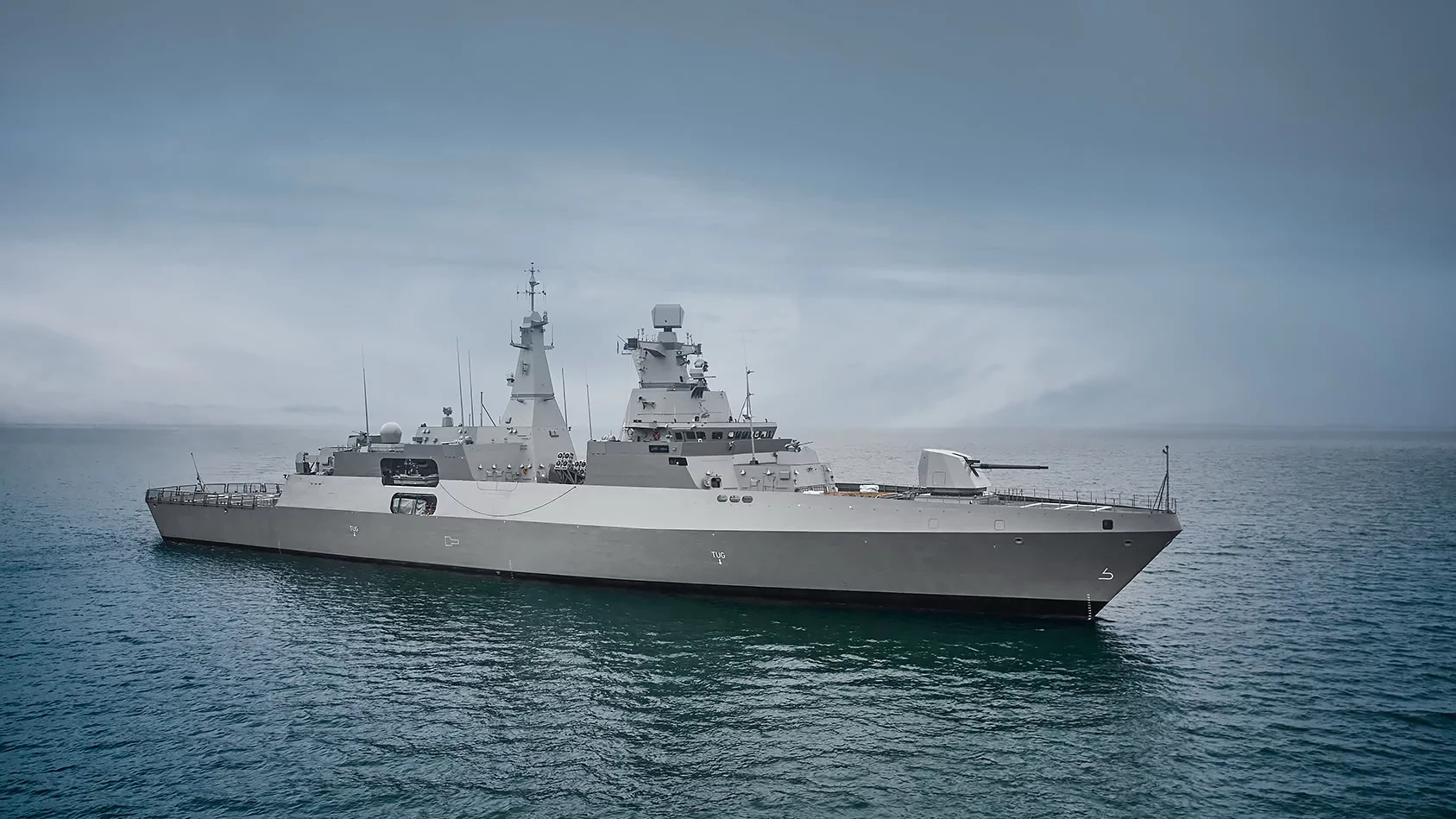
The new plan is clearer at first glance than the old F126 construct. The first four MEKO A-200 DEU are expected to cost around €6.3 billion after approval from the budget committee; there is an option for four more units for about €5.3 billion by the end of 2026. This results in approximately €11.6 billion for eight ships. According to Saab, they will provide, via TKMS, integrated superstructures, the 9LV combat management and fire control system, as well as a radar package with Sea Giraffe 4A Fixed Face and Sea Giraffe 1X. Deliveries to TKMS are expected to take place between 2029 and 2032.
The technical differences are politically relevant. The MEKO A-200 DEU is significantly smaller at around 4,000 tons than the canceled F126, which was designed as a multi-role combat ship for long deployments and complex anti-submarine missions. In return, MEKO is a more mature, commercially available design with an export history and an industrial base at TKMS. This is precisely where the logic of the shift lies: Germany is foregoing the perfect national special solution to close a NATO capability gap more quickly.
The F126 Was Not an Isolated Procurement Accident
The ministry had abandoned the F126 program after years of delays and cost increases. The original contract with Damen Schelde Naval Shipbuilding from 2020 called for six ships for around €10 billion. According to sources close to the decision, Damen could not meet the schedule and budget. A change of the general contractor to Naval Vessels Luerssen, now part of the Rheinmetall shipbuilding portfolio, would have cost about €15.2 billion for six ships, according to Defense News; together with already completed work and support contracts, more than €18 billion would have been due. Additionally, there was the question of possible compensation claims against Damen.
This is not merely a case of poor project management. It illustrates a recurring German pattern: the Bundeswehr defines demanding individual systems, the industry organizes complex consortium structures, the Bundestag expects budgetary control, and in the end, the risk shifts between the ministry, contractors, and parliament until military capability itself becomes a residual size. This is precisely where the difference between defense spending and defense capability lies. Money is available; contractual speed, industrial accountability, and operational prioritization are lacking.
Saab Benefits from German Risk Reduction
That a Swedish provider is now delivering central sensor and combat systems is not a scandal for the European defense industry. On the contrary, it is an example of functioning European division of labor. Saab brings in a package with 9LV and Sea Giraffe that is already used in several navies. For Germany, this is attractive because the technical integration burden appears to be lower than with a large new design. For Sweden, it is a signal that NATO's northern expansion has consequences not only geostrategically but also industrially.
However, this solution is not without risks. A smaller ship with multinational sensors, a German prime contractor, Swedish combat management, and an accelerated schedule is not a shelf product in the simple sense. The central question is not whether the Sea Giraffe radars are capable. The question is whether Berlin has learned to treat system integration as its own governmental task. Those who only contractually delegate interfaces will ultimately face delays again, only this time under the label of a rapid bridging solution.
The NATO Deadline Explains the Urgency
The operational pressure comes from the north. The German Navy must provide credible anti-submarine and escort protection capabilities for NATO planning in the Atlantic, North Sea, and Baltic Sea. Russian submarines, sabotage risks against undersea cables, and the vulnerability of maritime supply routes have turned a long-neglected specialty capability back into a core problem of deterrence. A 10,550-ton ship that arrives too late is worth less for this planning than a 4,000-ton ship that actually enters the fleet before the end of the decade.
Here, the decision in favor of MEKO is rational. It accepts that availability is a strategic category. German debates often focus on whether a system meets the optimal performance specification. However, in a coalition scenario, what matters first is whether it is available, maintainable, networked, and armed. A less ambitious frigate can be militarily superior if it is commissioned in time and integrated into a NATO situational awareness and fire control architecture.
The Price of Acceleration
- Four MEKO A-200 DEU cost around €6.3 billion, with an option for four more ships for about €5.3 billion.
- Saab's share of 8.7 billion Swedish Krona includes 9LV, fire control, integrated superstructures, as well as Sea Giraffe 4A Fixed Face and Sea Giraffe 1X.
- The supply chain is expected to run from 2029 to 2032, while Berlin wants to see the first ship by the end of the decade.
- The canceled F126 could have potentially tied up more than €18 billion if continued with a new prime contractor.
These figures illustrate the actual conflict of objectives. Germany is not buying cheaply. It is buying lower complexity because the greater complexity could no longer be managed politically and organizationally. This may be correct as long as it is honestly stated. The problematic aspect would only be the subsequent narrative that the MEKO decision is a normal modernization step. It is an escape from a failed procurement design.
European Lesson Instead of German Excuse
For Europe, this case is more interesting than a national naval contract. Especially after the tensions surrounding FCAS and the recurring problems of joint armament programs, MEKO shows that cooperation works when responsibilities are clearer and not every industrial interest is transformed into a symbolic sovereignty project. TKMS builds, Saab integrates essential sensors, the Bundestag finances, and NATO applies capability pressure. This is less ceremonial than a German-French summit communiqué, but probably more useful.
The downside remains: Europe often learns about acceleration only through failure. Only when the large program becomes irretrievable does one discover the more mature design, the smaller claim, and the clear supply chain. This is expensive. It costs money, time, and trust in the planability of the turning point.
The lesson from F126 and MEKO is not that Germany needs smaller ships. The lesson is that a navy cannot have strategic patience with procurement architectures that consume its own capabilities.
Berlin has made a plausible correction with the MEKO A-200 purchase. However, a correction is not yet a reform. If the Bundeswehr believes it can again master complexity through budget proposals and consortium rhetoric in the next major project, this lesson will also dissipate. More money gives Germany room for action. Only better procurement transforms this room into ships, sensors, and deterrence.
Germany is purchasing 4 MEKO A-200 DEU frigates for 6.3 billion euros to replace the canceled F126 program, which faced delays and cost overruns. Saab will provide key sensor and combat management systems for these ships. The decision aims to enhance NATO capabilities in the Atlantic, North Sea, and Baltic Sea by ensuring timely availability of naval assets.
- Germany is spending 6.3 billion euros for 4 MEKO A-200 DEU frigates.
- Saab has received a contract worth 8.7 billion Swedish Krona for sensors and combat management systems.
- The MEKO A-200 DEU is significantly smaller than the canceled F126 frigate.
- The procurement aims to close a NATO capability gap more quickly.