
Finland buys German RGW110 anti-tank weapon
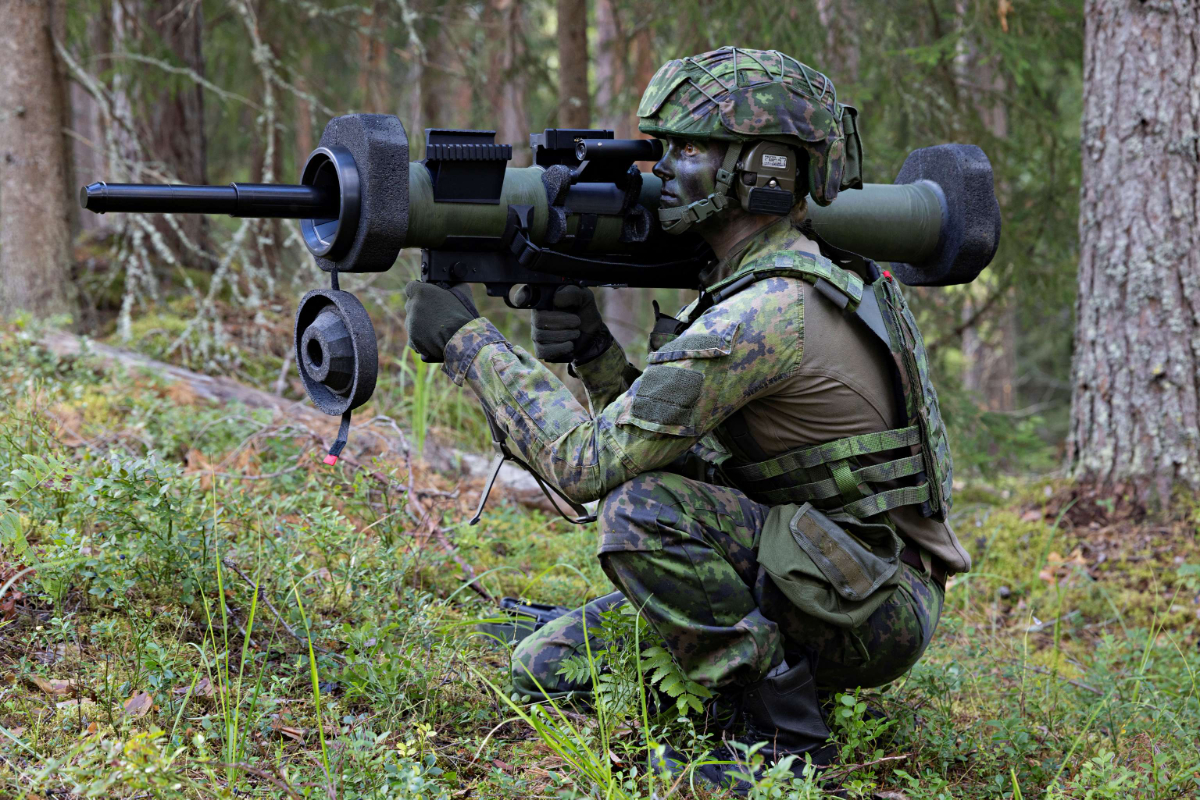
Finland will buy the RGW110 heavy disposable anti-tank weapon from Germany’s Dynamit Nobel Defence to replace the APILAS launcher its soldiers have carried since the 1980s, the Finnish Army said on Oct. 28.
The purchase is worth about €84.5 million (about $94 million) excluding value-added tax, and deliveries of the weapons, training equipment and instruction will begin in 2027, Finland’s government said after Defence Minister Antti Häkkänen authorized the deal. The Finnish Defence Forces did not say how many launchers it is ordering.
“The main battle tank will remain a threat on the battlefield in the future as well. The new disposable launcher system is intended for destroying tanks at close range and will replace the APILAS system acquired in the 1980s as the troops’ heavy close-range anti-tank weapon,” said Col. Ari Mure, inspector of infantry at Finnish Army Command.
The RGW110 is a shoulder-fired, single-use weapon that a soldier fires once and throws away, so units can carry it like ammunition and spread it across many fighting positions without the support crews that guided missile systems need. The Finnish Army said this lets several soldiers fire at the same tank from different positions at once, while keeping the logistics burden and the load on each soldier lighter. The rocket is unguided, so it cannot be jammed, and the army said it works in any light or weather, from towns to forest and in both attack and defense.
The trade-off is range. The army acknowledged that the unguided round has a relatively short reach, but said Finland’s broken, heavily wooded terrain makes up for it by letting soldiers get close to enemy armor unseen. Dynamit Nobel Defence lists an effective range of up to 800 m (2,600 feet), roughly twice that of the Panzerfaust 3 it was designed to succeed, European Security & Defence reported.
Penetration drove the choice. The Finnish Army said a modern anti-tank weapon must first clear a tank’s explosive reactive armor, the boxes of explosive bolted to the outside of the hull to disrupt incoming warheads, and then carry a large enough caliber to punch through the main armor behind it. The RGW110 uses a 110 mm tandem warhead, in which a small lead charge sets off the reactive armor before the main charge strikes, and its maker says it can penetrate about 1,000 mm of armor steel behind reactive armor. Finland compared the systems on the market, tested the one that met its criteria against a target with realistic armor protection, and then worked with the manufacturer to further improve the warhead. The army said observations from the war in Ukraine confirmed its earlier assessments of how well an adversary’s tanks are protected.
The RGW110 is the larger, 110 mm member of Dynamit Nobel Defence’s RGW family, whose 90 mm RGW90, known as MATADOR, has been used in combat in Ukraine since Germany cleared exports and Ukraine received more of the German-made anti-armor weapons from the company’s stocks in 2022. Hungary became the first customer for the RGW110 in 2022 and has set up a joint venture with Dynamit Nobel Defence to build parts of the weapon locally, while the warheads are still made at the company’s plant in Burbach, Germany.
Hungary became the RGW110’s first customer in 2022 and has set up a joint venture with Dynamit Nobel Defence to build parts of the weapon locally, while the warheads are still made at the company’s plant in Burbach, Germany.
Content preview only. Full article available at source. View Full Article
Finland is purchasing the RGW110 heavy disposable anti-tank weapon from Germany's Dynamit Nobel Defence to replace the APILAS launcher. The deal, worth about €84.5 million, was authorized by Defence Minister Antti Häkkänen on October 28, 2023, with deliveries set to begin in 2027. The RGW110 is designed for close-range operations against tanks and features a tandem warhead for effective penetration.
- Finland is purchasing the RGW110 anti-tank weapon from Germany.
- The deal is worth approximately €84.5 million.
- Deliveries will begin in 2027.
- The RGW110 is intended to replace the APILAS launcher used since the 1980s.
- The weapon is designed for close-range anti-tank operations.