

Summary and Key Points: Iran is the only country still flying the F-14 Tomcat. The Shah took delivery of 79, Iran claimed 160 Iraqi aircraft in the Iran-Iraq War, and Jalil Zandi’s 11 confirmed kills made him the top-scoring Tomcat pilot.
The F-14 Tomcat and Iran: A Story Most Aviation Geeks Miss
Editor’s Note: Since 2022, we have visited many F-14 Tomcats across the country. This article includes some of our best photos of the F-14.
The F-14 Tomcat is a Cold War-era fighter jet primarily used by the U.S. Navy. Many aviators and enthusiasts love the Tomcat, and its reputation is bolstered by the Top Gun films starring Tom Cruise. Its variable sweep-wing geometry makes it instantly recognizable in the air.
Here’s where things get odd for the Tomcat: Today, the Islamic Republic of Iran is the F-14’s sole operator. Iran’s story with the Tomcat is strange. And strange is one word that truly explains this situation.
Iran acquired them before the Islamic Revolution, when the Kingdom of Iran was a valuable U.S. ally.
After the Revolution, the new Iranian air force (IRIAF) flew its F-14s against Iraq during the Iran-Iraq War.
Despite numerous sanctions and the U.S. military’s efforts to prevent the Islamic Republic from acquiring spare parts, Iran has somehow managed to maintain its fleet. The IRIAF still flies its Tomcats even to this day.
How Iran Got its F-14s
In the 1970s, Iran was one of the biggest recipients of American and British weaponry in the Middle East.
Under the leadership of Mohammad Reza Pahlavi, the last Shah, the Kingdom of Iran sought to become a major regional military power.
Following the Arab-Israeli War in 1973, Iran profited from increased oil prices, which were the country’s main exports, and used the profits to purchase large quantities of military equipment from the U.S. and the UK.
The Shah purchased hundreds of tanks from both Western nations and ordered hundreds more, which ultimately never arrived.
One of these orders was for a new UK main battle tank called the Shir (Lion) 2.
After the Islamic Revolution, the UK instead pressed the Shir 2 into British service and renamed it the Challenger Mk 1.
Shah Pahlavi also sought to build up Iran’s air power.
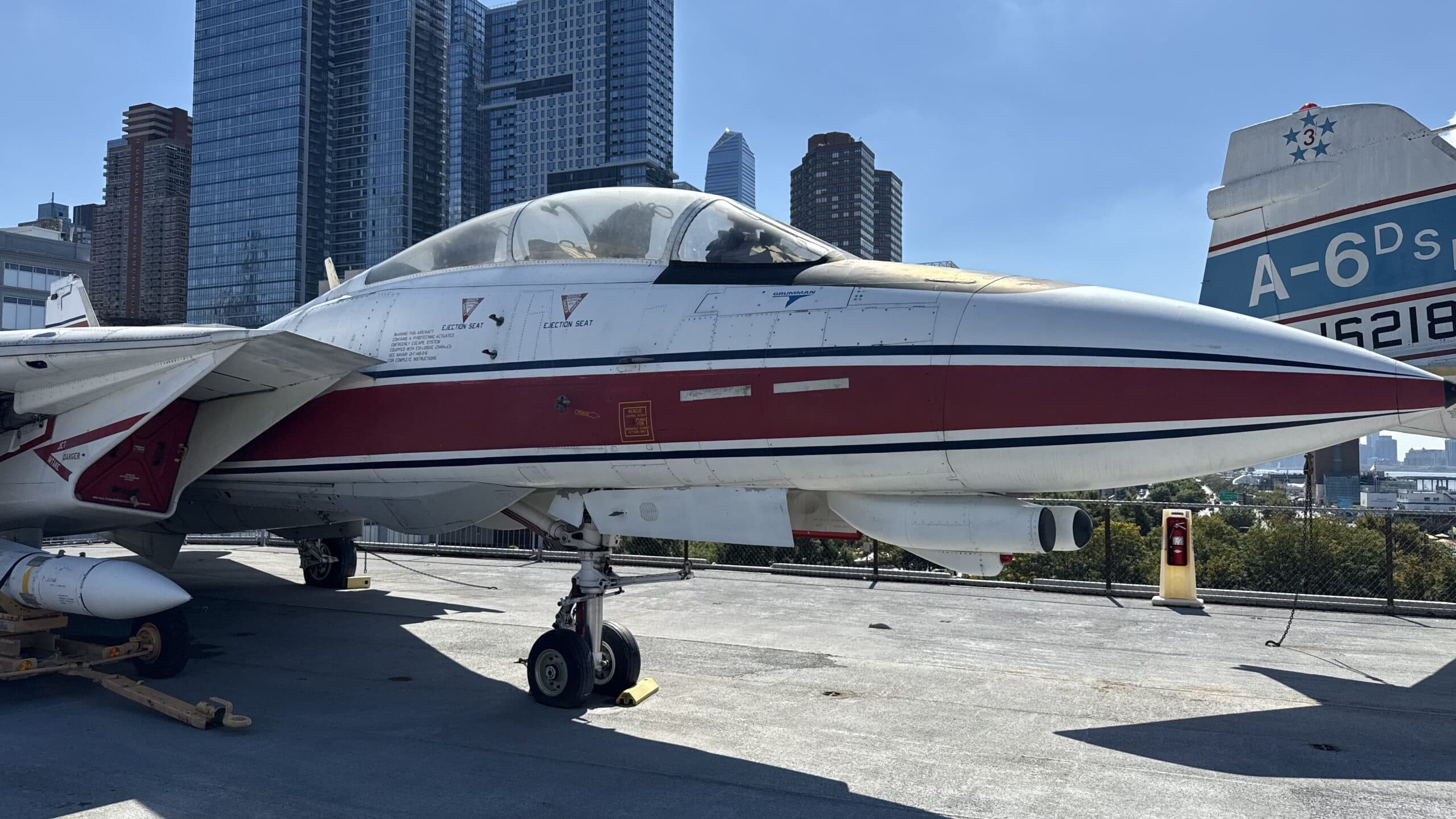
F-14 Tomcat. Image Taken by 19FortyFive.com
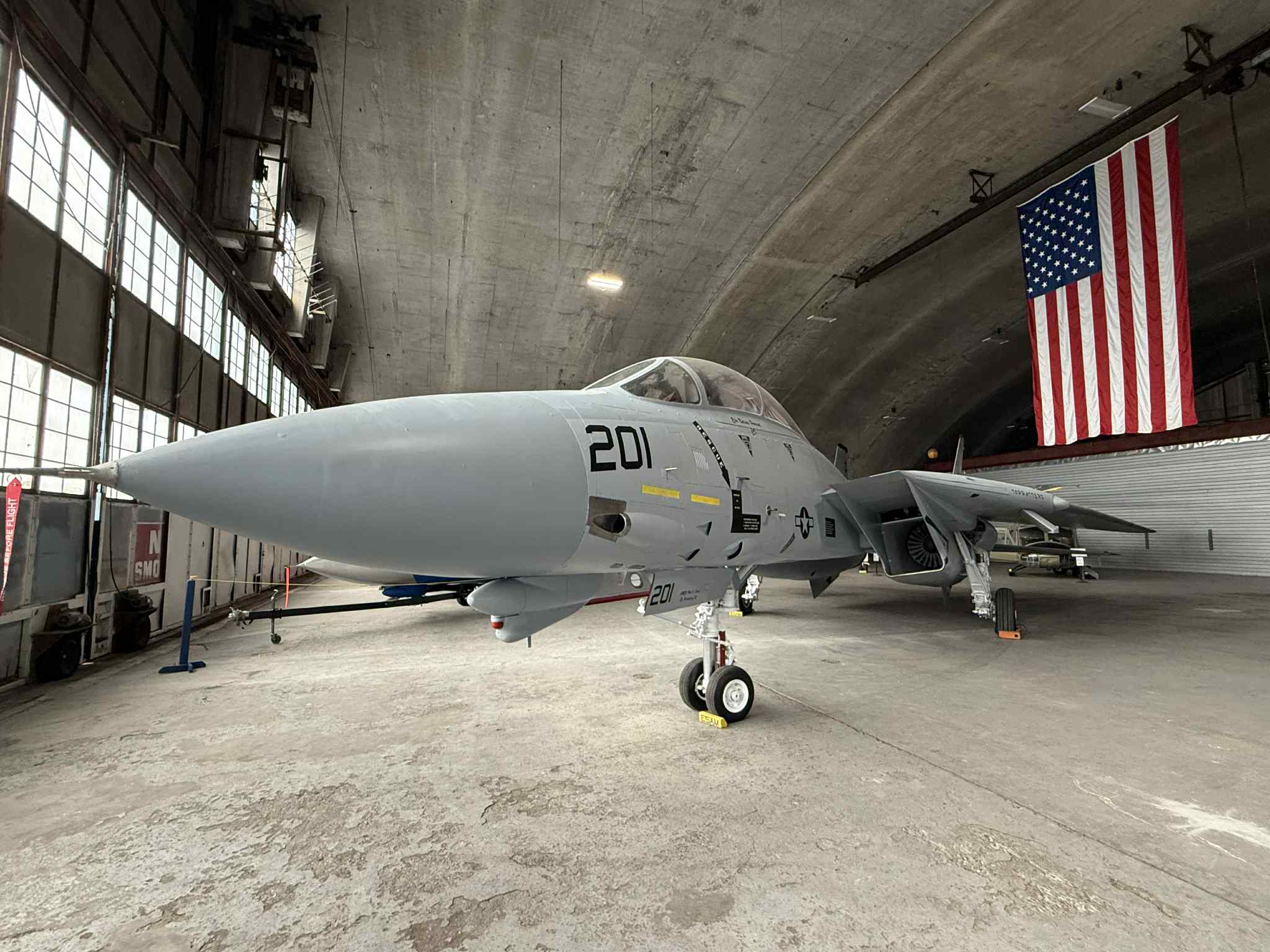
F-14 Tomcat. Image Taken by 19FortyFive.com
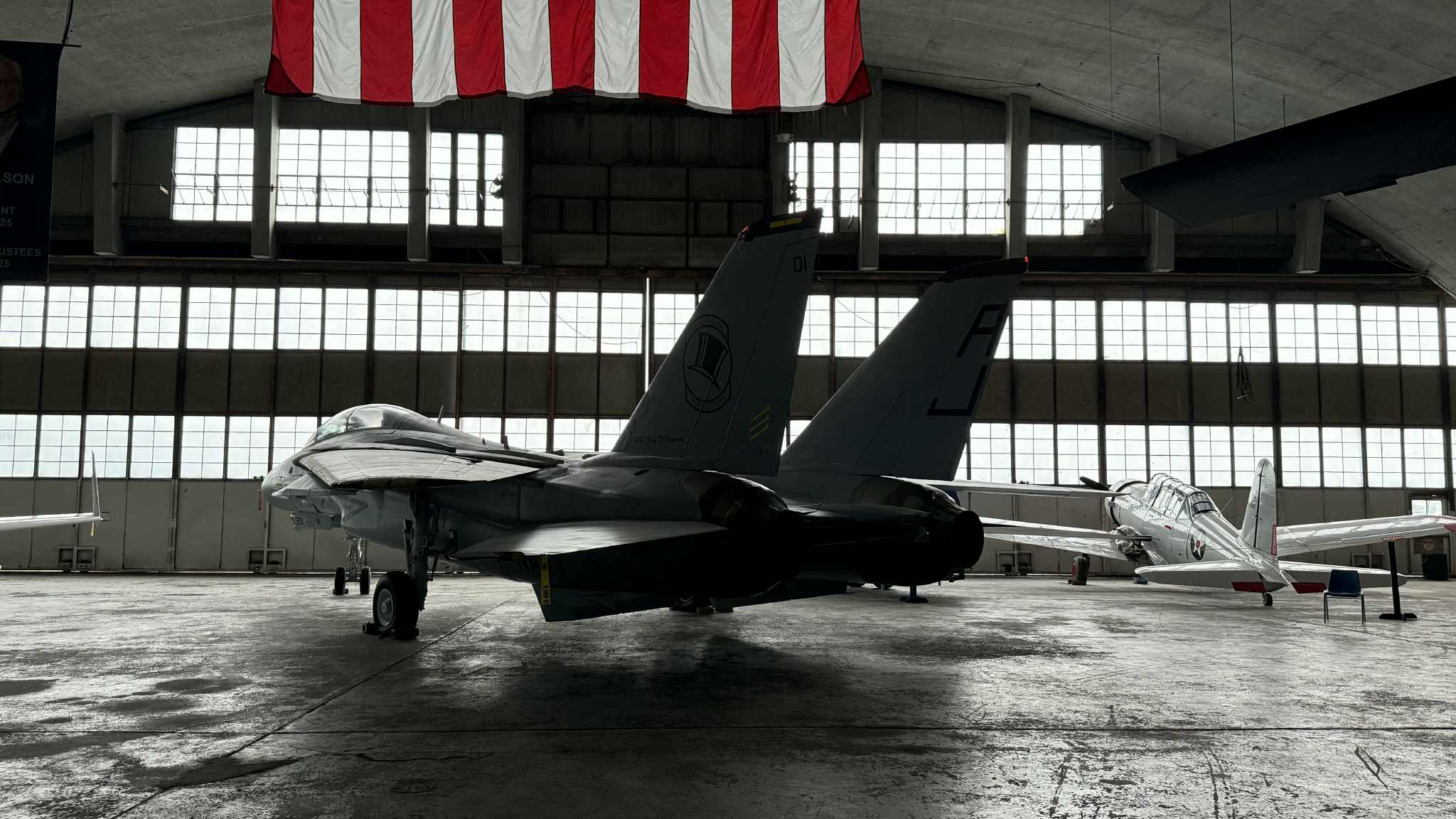
F-14 Tomcat. Image Taken by 19FortyFive.com
The Kingdom of Iran ordered large quantities of aircraft from the U.S., including F-4 Phantom IIs and F-5 Tiger IIs. Iran was particularly interested in the F-14 Tomcat.
The Shah, himself a pilot, was impressed by the aircraft’s performance and sought to acquire it to boost the Imperial Iranian Air Force’s (IIAF’s) air superiority, especially against Iraq’s MiG-25 Foxbats.
The kingdom ordered about 80 Tomcats, of which 79 were delivered. On the eve of the Islamic Revolution, the IIAF had the largest air force in the Middle East and the fifth-largest in the world.
When the Revolution finally came, the country’s military ambitions were cut short, and the U.S. and its allies promptly cut all ties with the new Islamic Republic and implemented harsh sanctions.
The Iran-Iraq War: The Tomcat’s Finest Hours
Following the Islamic Revolution, relations between Iran and Iraq, which were tense to begin with, reached their breaking point as Iraq invaded the newly formed Islamic Republic.
In the Iran-Iraq War, the IRIAF’s F-14s received their first combat experience.
Originally, the F-14 was used as an early-warning platform for older, less sophisticated aircraft.
They defended critical areas, including oil infrastructure on Kharg Island and infrastructure in Tehran.
As the war dragged on, Iran’s Tomcats became more involved in the fighting and performed exceptionally well.
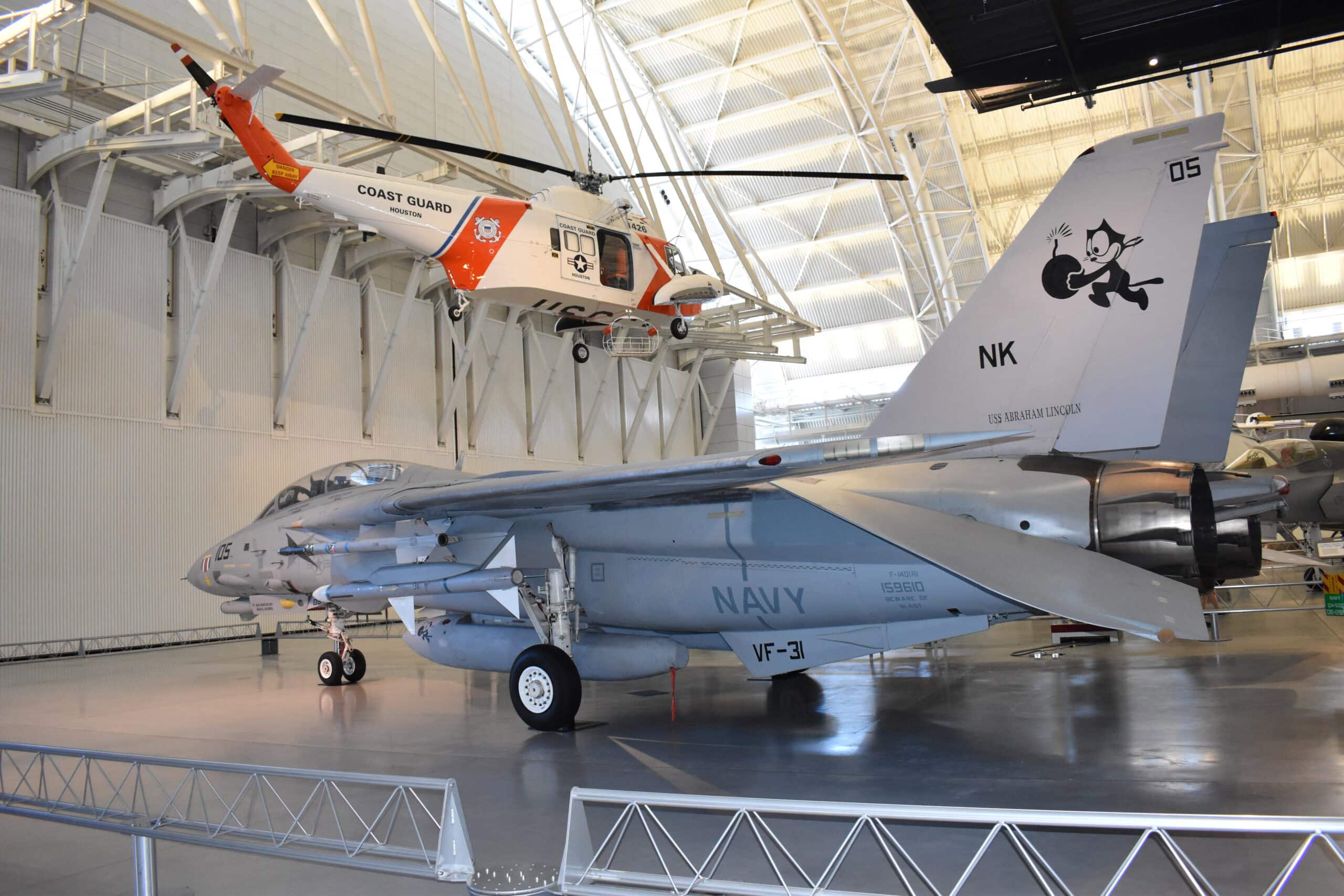
F-14 Tomcat at the Smithsonian. Image Credit: 19FortyFive.com
By the end of the war, Iran claimed that its F-14s had shot down 160 Iraqi planes, ranging from fighters like the MiG-21 and Mirage F-1s to heavy bombers like the Tu-22s and Chinese-made B-6s (not all of these claims have been confirmed).
Some pilots became aces during the war; Jalil Zandi scored 11 confirmed kills in his F-14, making him the highest-scoring Tomcat pilot in history.
Iraq, meanwhile, claimed that it had shot down 70 F-14s, though the Americans could only confirm 12 to 16.
When the U.S. Navy retired its F-14s in 2006, the Iranians tried to buy spare parts to keep the fleet flying. The U.S. Department of Defense subsequently announced that it would suspend spare-parts sales to prevent Iran from maintaining its aircraft.
The U.S. cut the wing boxes (the structure that connects the aircraft’s variable-sweep wings to the fuselage) on all flight-worthy Tomcats to ensure they could never fly again.
Despite these measures, Iran found daring, creative ways to keep its F-14s flying.
Tehran turned to the black market and shady intermediaries to smuggle spare parts from the U.S. illegally.
Between the 90s and the early 2000s, the U.S. arrested several individuals for attempting to smuggle spare parts.
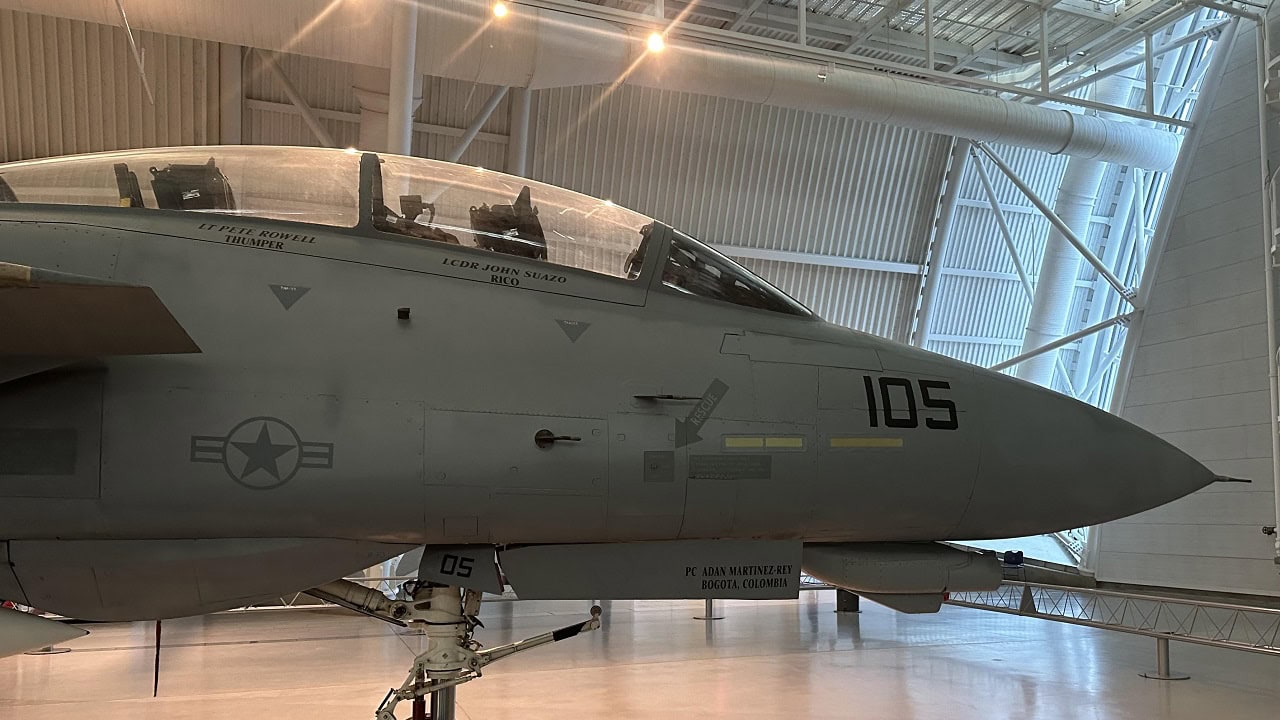
F-14 Tomcat. Image taken at National Air and Space Museum on October 1, 2022. Image by 19FortyFive.
Iran also reverse-engineered as many components as it could, but some parts, like the titanium wing box, required specialized laser-welding techniques only the U.S. could perform.
The F-14’s Final Days
No one knows how many operational Tomcats Iran still possesses.
Even before the 12-day War between Iran and Israel in 2025, estimates ranged from 19 to 30 combat-ready aircraft.
Since then, however, that number has dwindled due to repeated Israeli and American airstrikes. During the 12-day War, the IDF released footage showing strikes against five F-14s.
During the ongoing war with Iran, satellite imagery showed what appeared to be eight destroyed Tomcats, though it is highly likely that some or all of these were wooden decoys.
It is unknown how many operational F-14s the IRIAF still has.
The last known footage of Iran’s Tomcats was released in June, assuming it wasn’t taken earlier. Some sources say F-14s still patrol Iranian airspace, though no official confirmation exists.
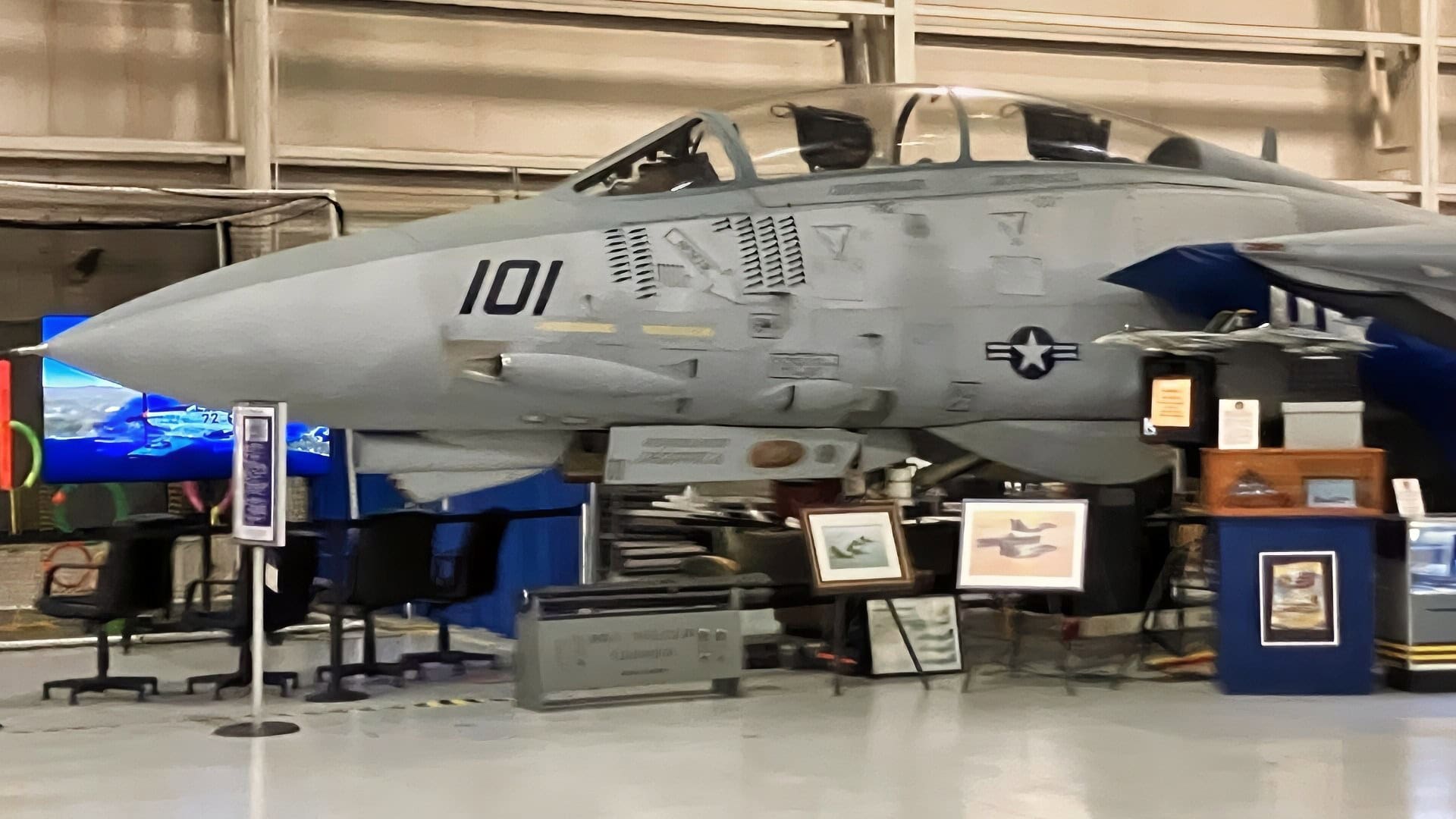
Aviation Museum of Kentucky F-14 Tomcat. Image Credit: 19FortyFive author Christian D. Orr. Taken on March 1, 2026.
The IRAIF likely has a few operational aircraft in its inventory.
However, between a lack of spare parts and military action, Iran’s last remaining F-14s are unlikely to remain airworthy much longer.
About the Author: Isaac Seitz
Isaac Seitz, a Defense Columnist, graduated from Patrick Henry College’s Strategic Intelligence and National Security program. He has also studied Russian at Middlebury Language Schools and has worked as an intelligence Analyst in the private sector.