
Finland Joins France's Rafale Nuclear Initiative in 2026 — Europe's Deterrence Lacks NATO Guarantee
 Dr. Klaus Weber
Finland Joins France's Rafale Nuclear Initiative in 2026 — Europe's Deterrence Remains Without NATO Guarantee
Finland's Minister of Defense Antti Häkkänen confirmed on September 14, 2026, that Helsinki will join the French initiative for European nuclear deterrence. The step is politically significant, but militarily limited at first. Finland will not receive French nuclear weapons nor an automatic say in their use. It will gain a seat at consultations, possible joint exercises, and a debate centered on the question of what Europe's security means when the American commitment seems less certain.
A Membership with a Long Border and Limited Capabilities
Finland shares a border of approximately 1,340 kilometers with Russia and has been a NATO member since April 2023. Its security policy logic has been clear: national defense, conventional deterrence, and integration into the American nuclear umbrella. Joining the French initiative expands this architecture but does not replace it. This distinction is crucial. Political consultation is not nuclear participation, and participating in an exercise is not a commitment to retaliation.
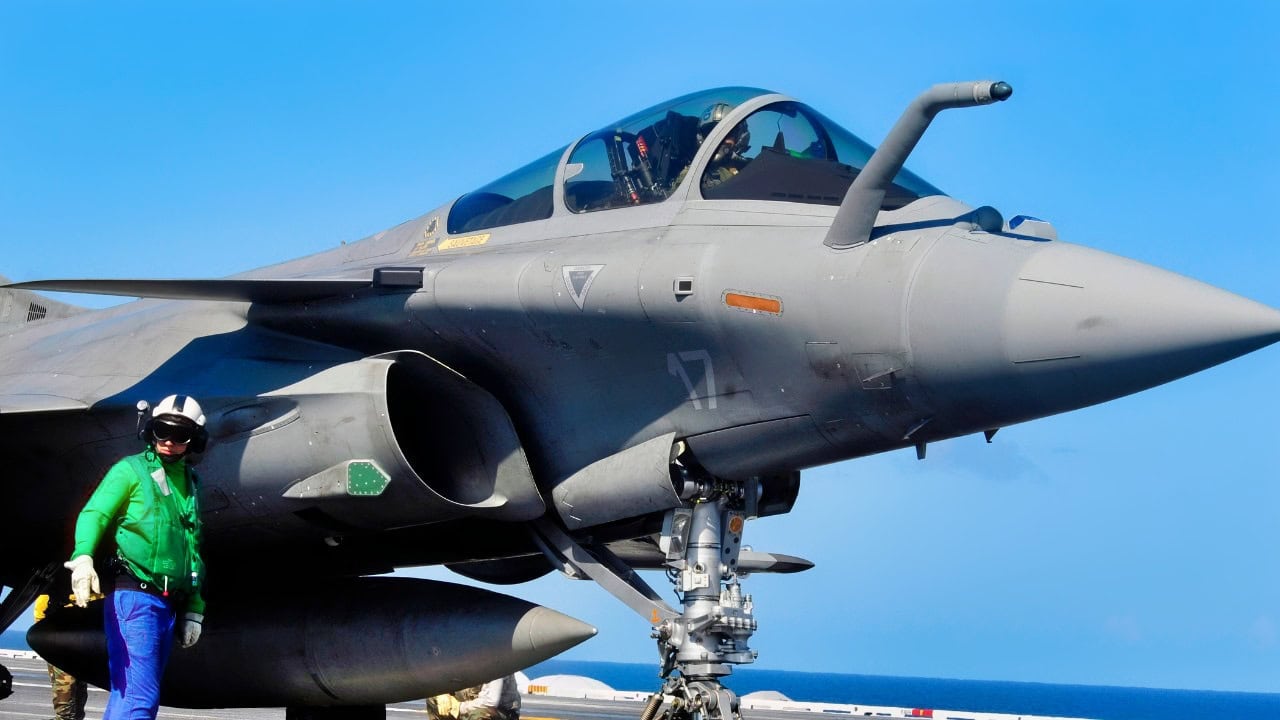
France has two components of its force de dissuasion. The sea-based component relies on four Triomphant-class strategic submarines armed with M51 missiles. The air-based component utilizes the Dassault Rafale B and the ASMPA-R cruise missile. These capabilities are sovereign to France. Paris alone decides on their deployment and use; neither NATO nor a partner state has a veto or automatic release. This fundamentally distinguishes the French offer from American nuclear participation in NATO.
What France Offers and What It Does Not
The French initiative, politically advanced by President Emmanuel Macron in the spring, includes discussions on the European security situation, possible joint exercises, and temporary deployments of French strategic air forces. This is more than symbolism. French Rafale units could convey the political message that an attack on a European state will not be assessed solely in Washington. For Finland, which has been reorganizing its eastern flank since joining NATO, this message is not insignificant.
But the limits are equally clear. France does not offer an American Article 5 guarantee in French. It does not distribute warheads, transfer decision-making authority, or create a joint European command structure. Therefore, the term "nuclear deterrence of Europe" sounds larger than its institutional content. Europe's problem is not just whether it possesses nuclear weapons. It is about who decides in a crisis, who bears the risk, and what political commitment has been credibly expressed before an attack.
The NATO Factor and Germany's Uncomfortable Intermediate Position
For NATO, Finland's step is both a complement and a disruptive signal. A complement because additional French presence can politically strengthen deterrence on the northeastern flank. A disruptive signal because the alliance gains a second nuclear discussion level, whose decision-making logic lies outside the integrated NATO structures. This need not be a contradiction. However, it becomes one if national initiatives are sold as a substitute for robust alliance planning.
Germany finds itself in a particularly uncomfortable position. Berlin remains dependent on the American nuclear commitment but has been discussing Europe's strategic responsibility more intensively since the end of the Zeitenwende rhetoric. A Franco-Finnish rapprochement increases the pressure to clarify this discussion. Germany cannot permanently demand European sovereignty while delegating every question about armed forces, deployment risks, and political decision-making authority to Washington. Likewise, Berlin cannot assume that French sovereignty automatically translates into European sovereignty.
Political Signal, No New Nuclear Participation
The crucial effect of Finland's membership lies in the institutionalization of a political option. France gains a security-policy credible partner on the Russian border. Finland gains access to discussions that go beyond conventional NATO planning. Both sides are testing whether European deterrence can gradually emerge through consultation, exercises, and presence without creating a common bomb or a common command.
This is a realistic start, but not a finished system. Deterrence does not work through headlines but through capability, communication, and the expectation that political leadership will act in a serious situation. The Rafale B can be a delivery system; it is not yet a common European strategy. Finland's membership thus shows both Europe's progress and its weakness. Europe is beginning to talk about its own nuclear responsibility while the decision on the most credible security guarantee remains outside Europe.
More French consultation can change Europe's strategic language. However, it does not replace a NATO guarantee as long as no one determines who decides for Europe in a serious situation.
Sources: Finnish Ministry of Defense and Valtioneuvosto, statement by Antti Häkkänen from September 14, 2026; Reuters, “Finland joins France’s nuclear deterrent initiative,” September 14, 2026; Euractiv, “Finland joins France’s nuclear forward deterrence initiative,” September 14, 2026; French information on force de dissuasion and the Rafale B with ASMPA-R.
Finland will join France's nuclear deterrent initiative in 2026, as confirmed by Finnish Defense Minister Antti Häkkänen on September 14, 2026. This move aims to enhance European security discussions, although Finland will not gain access to French nuclear weapons or decision-making rights. The initiative reflects a shift in European defense dynamics, particularly in light of NATO's structure and the need for credible deterrence against potential threats.
- Finland will join France's nuclear deterrent initiative in 2026.
- Finnish Defense Minister Antti Häkkänen confirmed the decision on September 14, 2026.
- Finland will not receive French nuclear weapons or automatic decision-making rights.
- The initiative aims to enhance European security discussions and military exercises.
- France's nuclear capabilities remain under French control, distinct from NATO's structure.