
Fires in France's Gironde threaten M51 and Rafale — Europe's autonomy depends on 9 kilometers
 Dr. Klaus Weber
France's Gironde Fires Threaten M51 and Rafale — Europe's Autonomy Hangs by 9 Kilometers
Nine kilometers separated active fire zones west of Bordeaux from Dassault's facility in Martignas on Tuesday morning. Twelve kilometers lay between the fire and ArianeGroup's Candale site, where components for the M51 missile are integrated. In a normal industrial fire, this would be a regional crisis. In this case, it touches the core of French and thus European security order.
Defense News reported on July 28 that the fires in Gironde threaten several key sites of the French defense industry: Dassault's Rafale wing assembly in Martignas, ArianeGroup's facilities for M51 propulsion and integration, Roxel sites for solid rocket motors, and the CEA Cesta center, whose Megajoule laser contributes to maintaining nuclear deterrence without real nuclear tests. Over 100,000 acres are reported to have already burned, an area about four times the size of Paris. This figure is not only meteorologically interesting. It shows how thin the line has become between climate risk and strategic availability.
An Industrial Cluster with Strategic Overload
The French defense industry is consciously concentrated. This has historical, technical, and security policy reasons. The proximity of DGA, Dassault, ArianeGroup, Thales, CEA, and Roxel creates short distances, shared pools of expertise, and a closed industrial culture. This very concentration makes the system efficient. However, it also makes it vulnerable.
According to Defense News, Dassault announced it would relocate sensitive equipment from Martignas and Cestas to Mérignac and Air Base 106. Most employees were instructed to stay home by the authorities. ArianeGroup evacuated affected sites. Thales preemptively closed its site in Mérignac. The CEA confirmed the closure of Cesta due to the fire situation. Roxel spoke of necessary protective measures for personnel and operations. No single step is dramatic. However, together they describe a temporary interruption in a cluster that France treats as nearly irreplaceable for its strategic sovereignty.
The point is not whether a wildfire can temporarily incapacitate French deterrence. It cannot. France has operational reserves, military protective procedures, and a security culture practiced for decades. The point is institutional: If a single regional natural area simultaneously affects Rafale assembly, M51 production, rocket motors, avionics, and nuclear research, then resilience is no longer just a matter of factory fire brigades. It becomes a question of strategic geography.
Rafale and M51 Are Not Normal Programs
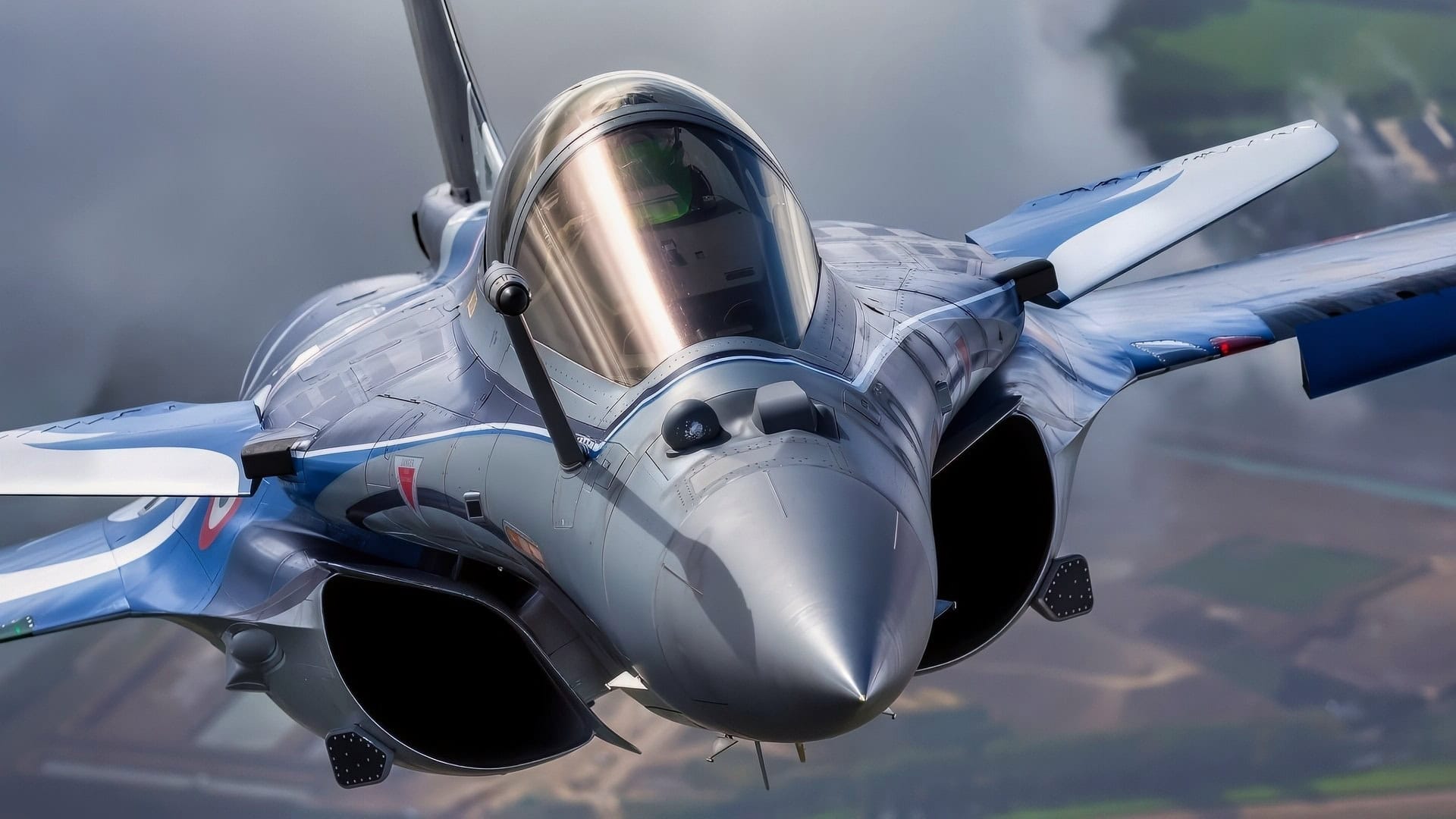
The Rafale is not just a fighter jet. Dassault describes it as an expression of national sovereignty, with capabilities for air superiority, attack, reconnaissance, projection, and nuclear deterrence. France plans to operate the Rafale beyond 2060. It is also an export tool: Egypt, India, Qatar, Greece, Croatia, the United Arab Emirates, Indonesia, and Serbia have chosen the model. Any disruption in the production chain therefore affects not only the Armée de l’Air et de l’Espace but also France's foreign policy credibility as a supplier.
The M51 is even more sensitive. ArianeGroup describes itself as the prime contractor for the strategic ballistic M51 system for the nuclear submarines of the Force Océanique Stratégique. Three solid stages, intercontinental range, re-entry at Mach 20: these are not interchangeable industrial goods. The M51.3 is intended to ensure France's future security and sovereignty. When its industrial environment is threatened by fire, one sees an uncomfortable truth: nuclear deterrence does not only rely on doctrine and submarines but on very concrete workshops, access roads, firebreaks, and skilled workers.
Roxel adds to this picture. The company supplies propulsion for Aster 15 and Aster 30, CAMM, Mistral, Meteor, Mica, ASMP-A, MdCN, Exocet, and other systems. Thus, a site in Saint-Médard connects not only French nuclear capability but also European air defense, cruise missiles, and rocket artillery projects. Aster is particularly central to Europe's air defense debate because Paris and Rome want to politically elevate it as a European alternative to US systems. But is an alternative sufficient when its critical precursor products are concentrated in a single fire region?
The European Lesson Is Uncomfortable
Europe has been discussing strategic autonomy for years, mostly in relation to the United States. The Gironde fires reveal a second dimension that is rarely treated seriously in Brussels papers: autonomy without physical resilience is merely a procurement formula. SAFE credits, EDF projects, and joint programs increase demand. However, they do not automatically distribute production risks. More money creates orders, not redundant production lines.
The French model has a clear advantage over the German model: it maintains complete system competence within the country. In the case of Rafale, M51, and nuclear simulation, the industrial chain is politically coherent. Germany can learn from this. But France pays for it with concentration risks. When sovereignty is organized nationally, it becomes geographically narrow. When organized European-wide, it becomes institutionally slow. Exactly between these two weaknesses lies Europe's defense policy.
The French Ministry of Defense referred on July 24 to the Héphaïstos framework, Operation Sentinelle, and the contribution of the armed forces to civil security: surveillance, early detection, reconnaissance, pioneering work, helicopter transport, logistics, and personnel reinforcement. According to the ministry, the Brigade of military civil security has been pre-positioning around 600 Sapeurs-sauveteurs since June 30 until October 1 and can mobilize 300 soldiers within three hours. This is a serious instrument. However, it is primarily a crisis response instrument, not an industrial policy redundancy concept.
What Needs to Be Examined Now
The right response would not be a symbolic statement about climate and security. It would be a sober assessment of European bottlenecks. Which sites are single points of failure for Aster, Meteor, M51, ASMP-A, IRIS-T, Patriot supplies, 155mm ammunition, and drone propulsion? Which of these are located in flood, heat, fire, or sabotage risk zones? Which can be protected within weeks, and which can only be duplicated within years?
- First, Europe needs a map of critical defense sites that considers industrial capacity and environmental risk together.
- Second, EDF and SAFE funds must not only finance new projects but also include resilience requirements.
- Third, the European air defense debate regarding Aster and SAMP/T should ask the same question as with Patriot: Who can not only buy but continuously produce in a crisis?
France will likely manage these fires. Dassault will continue to build Rafale, ArianeGroup will continue to maintain M51, and Roxel will continue to supply rocket motors. The strategic message remains, however. Europe's autonomy does not only fail due to American export controls or German budget rules. It can also hinge on nine kilometers of dry forest. More sovereignty therefore means not only more national industry. It means the willingness to pay for redundancy, even though it looks inefficient in normal operations. That is the paradox: those who seek maximum efficiency lose exactly the freedom of action in a crisis that they call sovereignty.
Sources
- Defense News, July 28, 2026, report on Gironde fires and French defense sites.
- Ministère des Armées, July 24, 2026, information on military support for wildfires.
- Dassault Aviation, Rafale program information on sovereignty, operational profile, and export customers.
- ArianeGroup, information on the M51 strategic ballistic missile system.
- Roxel, product information on Aster, Meteor, Mica, ASMP-A, MdCN, and other propulsion systems.
Wildfires near Bordeaux threaten key French defense sites, including Rafale aircraft assembly and M51 missile production facilities. Over 100,000 acres have burned, prompting the French Defense Ministry to mobilize military resources for crisis response. The situation highlights vulnerabilities in France's defense logistics and strategic autonomy.
- Wildfires are threatening key French defense sites including Rafale assembly and M51 missile production.
- Over 100,000 acres have burned, impacting strategic military capabilities.
- The French Defense Ministry has mobilized military resources for crisis response.