
First Flight in 17 Years, "Flying Shark" Sets Off for the Open Sea Again
【Global Times Report by Reporter Guo Yuandan】Editor's Note: On August 31, 17 years ago, our country's independently developed J-15 carrier-based fighter jet successfully achieved its first flight from land. Over the past 17 years, the J-15 family has grown increasingly robust, evolving from a single basic model into a multi-series, multi-mission, all-dimensional carrier combat system. Military experts interviewed by the Global Times stated that the development of the "Flying Shark" J-15 family reflects a leap in China's carrier aviation technology from nothing to something, from weak to strong, and from following to keeping pace, showcasing the continuous maturation and hard-core strength of China's aircraft carrier capabilities.
From solitary development to the J-15 family
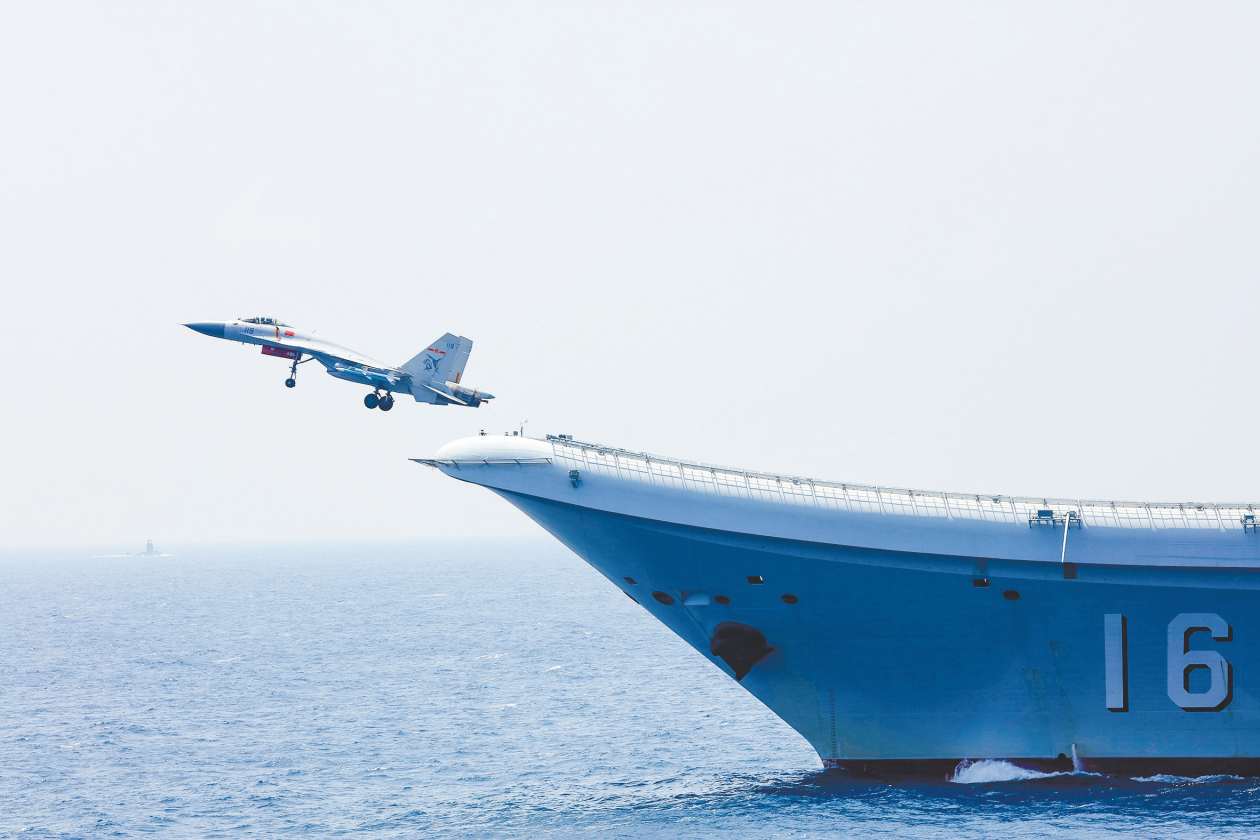
All commemorations are meant to better move forward. On August 31, 17 years ago, the first flight of the J-15 filled the gap in our navy's carrier-based fighter jet field. On November 23, 2012, the J-15 successfully landed on the Liaoning aircraft carrier, marking a historic breakthrough for the People's Navy in deploying carrier-based fighter jets. Since then, the J-15 has continuously broken training records, including its first realistic training in the western Pacific, and its first night landing... consistently overcoming a series of key technologies such as all-weather takeoff and landing, long-range maneuvering, and formation confrontation. After 17 years of growth, the J-15 fighter jet has become increasingly mature and complete, with its model series continuously expanding, fully possessing all-weather, all-time, and long-range operational capabilities, supporting the People's Navy's deep blue barrier as it strives to strengthen its maritime power.
At the same time, with the commissioning of the Shandong and Fujian aircraft carriers, the People's Navy's carrier combat system is rapidly taking shape, and the J-15 has gradually evolved from a single basic model into a multi-series, multi-mission, all-dimensional carrier combat system.
“The iteration of the aircraft carrier platform directly determines the technical route of carrier-based aircraft; the fission of carrier-based aircraft, in turn, supports the upgrade of carrier combat capabilities,” military expert Zhang Junsha told the Global Times.
With the commissioning of our first electromagnetic catapult aircraft carrier, the Fujian, the bottleneck of limited payload for heavy carrier-based aircraft in the ski-jump mode urgently needs to be resolved, leading to the emergence of the J-15T catapult version and the J-15D electronic warfare aircraft. In Zhang Junsha's view, the J-15T can unleash the combat potential of heavy fighters with full fuel and armament; the J-15D serves as an important electronic warfare force, filling the electromagnetic confrontation gap in the carrier formation. The continuous enrichment of the "Flying Shark" series models transforms the platform advantages of the Fujian into practical combat capabilities, promoting significant enhancements in carrier operations in distant seas.
On September 3, 2025, a formation of carrier-based aircraft consisting of J-15T, J-15DH, J-15DT, and J-35 flew over Tiananmen Square for a review, marking the public appearance of four types of carrier-based aircraft. On September 22, the Chinese Navy announced that the J-15T and two other types of carrier-based aircraft had completed their first catapult takeoff and landing training on the Fujian, marking another milestone breakthrough in the development of our aircraft carriers.
Zhang Junsha stated that from the first flight of a single model 17 years ago to the current multi-functional, multi-series coordinated operations, the development path of the J-15 is not merely a simple accumulation of equipment, but strictly aligns with the realistic needs of China's aircraft carriers evolving from ski-jump to catapult, from near-sea training to far-sea deployment, and from single-ship operations to fleet system combat. Each new aircraft type emerges with a clear battlefield requirement as a prerequisite; each technological leap ultimately points to combat effectiveness generation.
The new positioning of the J-15 family in the era of three aircraft carriers
On November 5, 2025, our third aircraft carrier, the Fujian, was officially commissioned, marking the People's Navy's entry into the era of three aircraft carriers, with both ski-jump and catapult takeoff modes coexisting. What core tasks will the various models of the J-15 family undertake in multi-carrier fleet coordinated operations? In this regard, Zhang Junsha stated that the J-15, after multiple technical upgrades, can complete full fuel and armament strikes using electromagnetic catapults on the Fujian, overcoming the limitations of balancing fuel and armament during ski-jump takeoffs, and can also take off and land normally on the Liaoning and Shandong carriers with ski-jump decks.
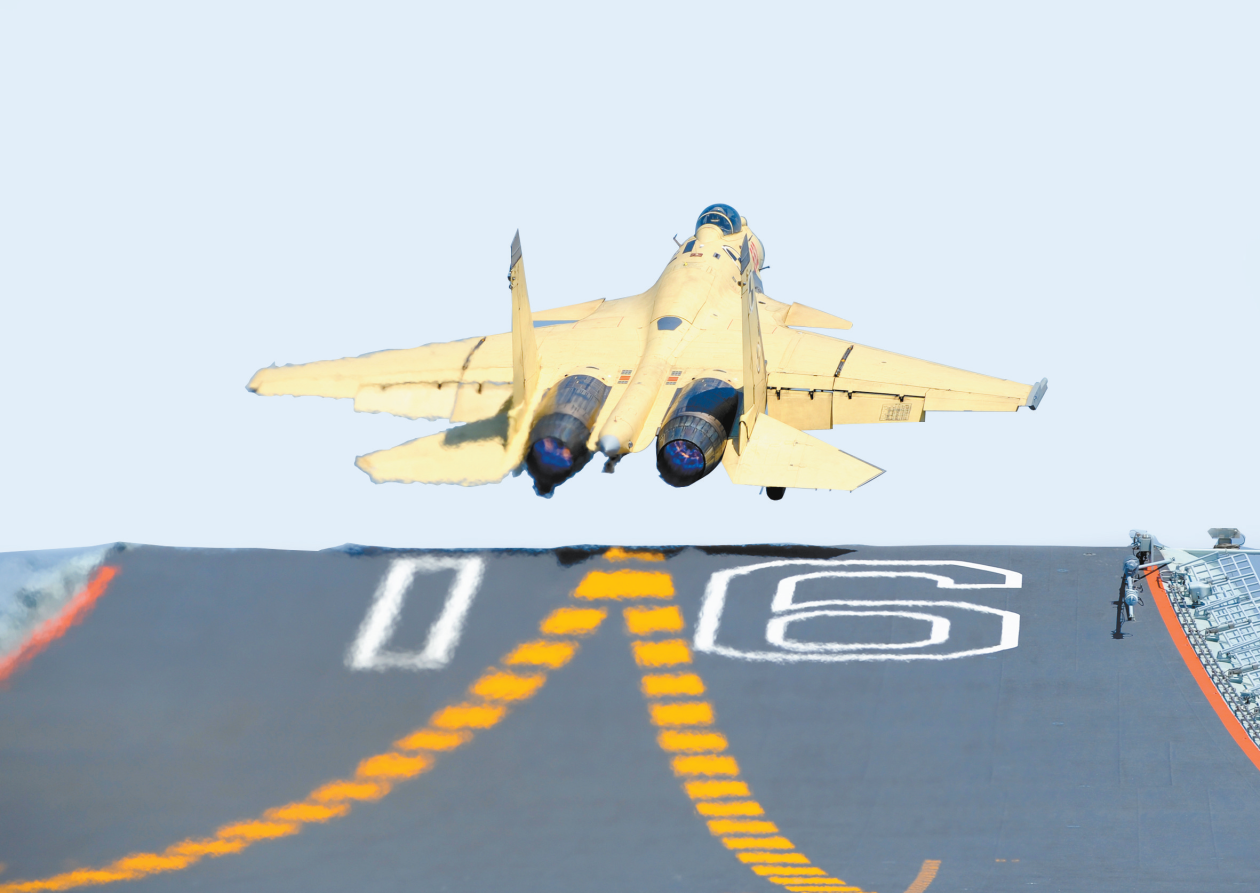
“Therefore, the various models of the J-15 family can be flexibly assigned to different carrier platforms, undertaking core tasks such as long-range air superiority, anti-ship strikes, accompanying electronic countermeasures, and verification and expulsion of foreign naval aircraft,” Zhang Junsha analyzed, especially noting that the various types of J-15 aircraft can support cross-carrier mobility and coordinated operations. Thanks to the dual capability of both catapult and ski-jump, the aircraft can be flexibly allocated among the Fujian, Liaoning, and Shandong carriers according to operational needs, achieving mutual support among carrier-based aircraft. When one aircraft carrier undergoes maintenance, the aircraft can be reassigned to the remaining carriers to continue executing missions, enhancing the sustained combat capability of the entire fleet.
“This cross-carrier deployment capability effectively simplifies logistical support pressure, enhances the flexibility of carrier-based aircraft scheduling among various carriers, and strengthens the effectiveness of multi-carrier coordinated operations,” Zhang Junsha said.
Future upgrades and optimizations
From the perspective of equipment iteration, what further upgrade and optimization directions does the J-15 family have to better adapt to the complex maritime battlefield environment of the future? In this regard, Zhang Junsha analyzed that in the future, the J-15 family may continue to iterate and upgrade from dimensions such as platform optimization, weapon configuration, intelligence, and system coordination.
According to Zhang Junsha, in terms of platform optimization, the aircraft will further strengthen the structural strength of the landing gear, improve the catapult tow bar configuration, stabilize the compatibility of catapult and ski-jump capabilities, and fully adapt to the catapult-type aircraft carrier Fujian, achieving full fuel and armament catapult takeoff, expanding operational radius and payload. At the same time, the airframe structure will be optimized to reduce weight while enhancing strength, and aerodynamic designs such as inclined radar covers will be used to reduce radar cross-section, improving battlefield survivability. The overall anti-corrosion process will be upgraded to better cope with the harsh marine high-salt and high-humidity environment. In addition, the weapon system upgrades will focus on expanding multi-mission capabilities. The aircraft will be compatible with close-range dogfighting and medium-to-long-range air-to-air missiles, enhancing beyond-visual-range air combat and multi-target engagement capabilities to address diverse aerial threats. It will be compatible with a new generation of hypersonic anti-ship missiles and long-range air-to-ground munitions, strengthening the penetration and damage capabilities against high-value targets such as enemy aircraft carriers. At the same time, it will enhance electromagnetic suppression and anti-radiation strike capabilities, achieving integration of electronic suppression and firepower strikes.
Furthermore, in terms of intelligence and system coordination, the aircraft will integrate drone command modules, capable of commanding the Attack-11 drone, achieving a manned-unmanned loyal wingman combat mode, enhancing fleet situational awareness and saturation attack levels. “In actual combat, it will form a high-low pairing with the J-35, where the J-35 focuses on gaining air superiority, while the J-15T undertakes anti-ship and ground fire strike missions, working in conjunction with the KJ-600 and Type 055 destroyers to establish a comprehensive joint combat system, meeting the complex battlefield needs of future offshore offense and defense,” Zhang Junsha said.
The People's Liberation Army Navy (PLAN) has advanced the J-15 fighter jet family, including the J-15T and J-15D variants, enhancing its operational capabilities for carrier-based operations. The Fujian aircraft carrier successfully conducted its first catapult launches with these jets, marking a significant milestone in China's naval aviation development. The J-15 family is set to play a crucial role in multi-carrier operations and future upgrades will focus on improving combat capabilities and integration with unmanned systems.
- The J-15 fighter jet family has evolved significantly over 17 years, enhancing China's naval aviation capabilities.
- The J-15T and J-15D variants are designed for electromagnetic catapult launches and electronic warfare, respectively.
- The Fujian aircraft carrier has achieved a milestone with its first catapult launches of the J-15T and other variants.
- The J-15 family supports multi-carrier operations and can flexibly adapt to different mission requirements.
- Future upgrades for the J-15 family will focus on platform optimization, weapon systems, and integration with unmanned systems.