
First LCU 1700-class vessel joins the U.S. Navy fleet
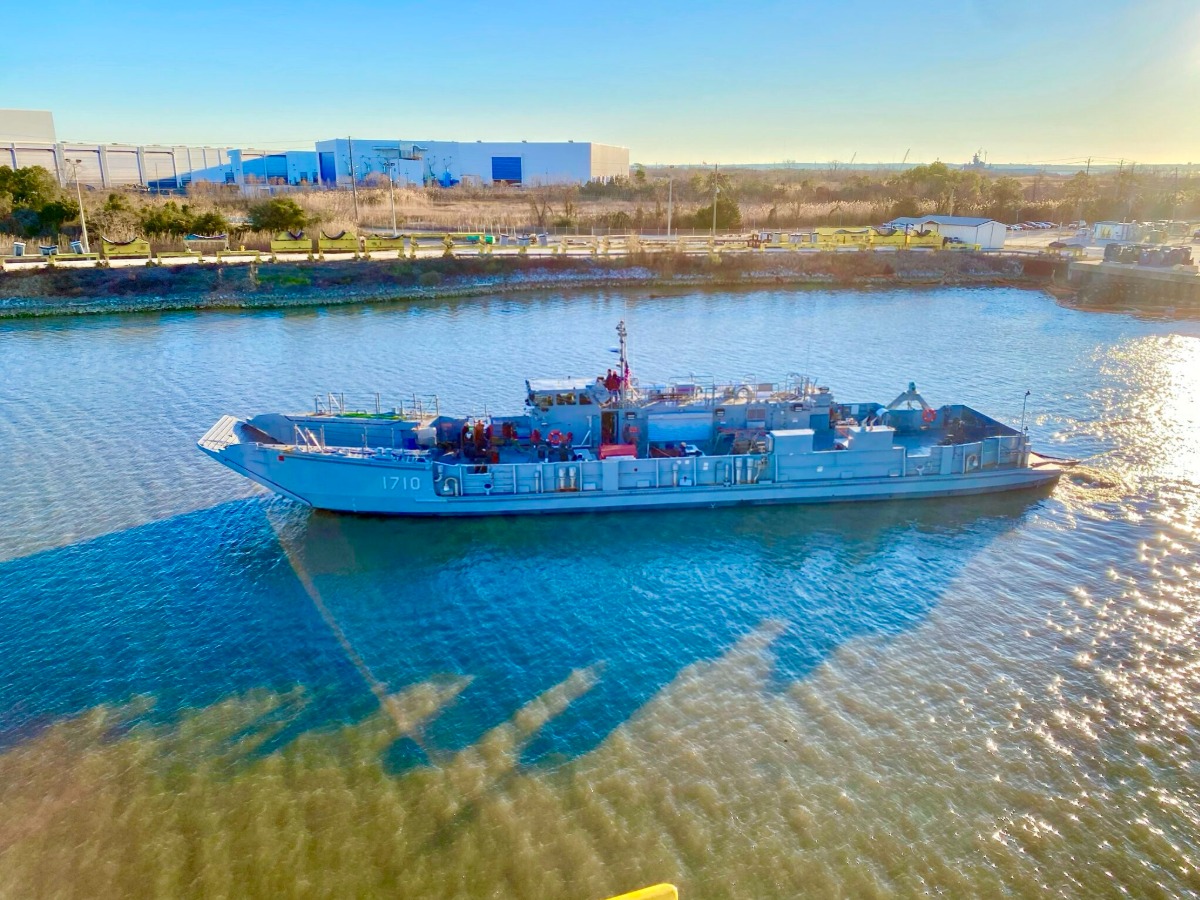
Austal USA delivered LCU 1710 to the U.S. Navy on August 14, 2026, the first vessel completed under the Navy’s LCU 1700-class program and the first steel-hulled ship the shipbuilder has ever delivered to the service.
Austal USA, based in Mobile, Alabama, has built its Navy business primarily on aluminum vessels, including Independence-variant littoral combat ships and Expeditionary Fast Transport ships. LCU 1710 marks the company’s shift into steel-hull construction for the Navy, a different set of fabrication and welding processes than its aluminum work.
“The delivery of LCU 1710 represents a major achievement for Austal USA and our shipbuilding team,” said Gene Miller, President of Austal USA. “As our first Landing Craft Utility and first steel ship delivered to the U.S. Navy, this accomplishment reflects the dedication and expertise of our workforce and our industry partners. It also demonstrates Austal USA’s ability to skillfully design, build and deliver highly complex steel vessels while continuing to support the Navy’s evolving mission requirements.”
Before delivery, LCU 1710 went through acceptance trials that tested the ship’s major systems and equipment for operational performance, reliability, and compliance with Navy requirements. The U.S. Navy’s Board of Inspection and Survey, known as INSURV, oversaw the trials and validated the ship’s construction quality and mission readiness.
“The successful completion of these trials reflects exceptional planning, flawless execution, dedication, and the collaboration of our shipbuilding team and Navy counterparts,” said Mike Pruitt, Vice President of Surface Ship Programs at Austal USA. “Our entire organization played a principal role in achieving these milestones, paving the way for delivery to the U.S. Navy.”
During testing, LCU 1710 got underway without the assistance of tugs or pilots and demonstrated a limited crew operating capability, meaning the ship can run with a smaller onboard crew than older landing craft in the fleet require.
LCU 1710 is built to move equipment and personnel from ship to shore in support of expeditionary operations. Austal USA and the Navy have described the LCU 1700 class as offering greater capability, endurance, and survivability than the legacy LCU 1610-class vessels it is replacing. Those legacy landing craft have been in Navy service since the 1970s.
PAE Maritime, a program support contractor working on the LCU 1700-class effort, said in a LinkedIn post that LCU 1710’s expanded capabilities are meant to support efficient production of steel-hulled connectors going forward, giving the Navy and Marine Corps added industrial base and heavy-lift capacity for expeditionary and littoral operations.
Austal USA is building the LCU 1700 class alongside a broader portfolio of Navy and Coast Guard work. The company said it currently has multiple vessels under construction and continues to support submarine module production and auxiliary ship programs for both services.
Content preview only. Full article available at source. View Full Article
Austal USA delivered LCU 1710, the first steel-hulled vessel of the LCU 1700 class, to the U.S. Navy on August 14, 2026, in Mobile, Alabama. The delivery followed successful acceptance trials that validated the ship's operational performance and readiness. LCU 1710 is designed to enhance the Navy's capability for expeditionary operations, replacing older landing craft with improved features.
- Austal USA delivered LCU 1710 to the U.S. Navy on August 14, 2026.
- LCU 1710 is the first steel-hulled ship delivered by Austal USA to the Navy.
- The vessel underwent acceptance trials to test its operational performance.
- LCU 1710 is designed to support expeditionary operations by moving equipment and personnel from ship to shore.
- The LCU 1700 class offers greater capability than the legacy LCU 1610-class vessels.