
"Flamingo" vs "Dagger" — Ukrainian missile reaches Savasleyka airbase at a distance of 700 kilometers
 Dmitri Volkov
“Flamingo” against “Kinzhal” — Ukrainian missile reaches Savasleyka airbase at 700 kilometers
On the night of August 15, the Ukrainian cruise missile “Flamingo” reached the Savasleyka airbase in the Nizhny Novgorod region — the very base where the carriers of the “Kinzhal” MiG-31K are stationed. The distance from the Ukrainian border is about 700 kilometers. Just recently, such a figure was considered a guarantee of safety in the VKS headquarters: the range of Ukrainian strike capabilities “ended” somewhere near the Kharkiv line. Today, the boundary of that guarantee has shifted deeper into the country, prompting a reevaluation of more than one page of Russian operational doctrine.
Strike on the “sacred rear”
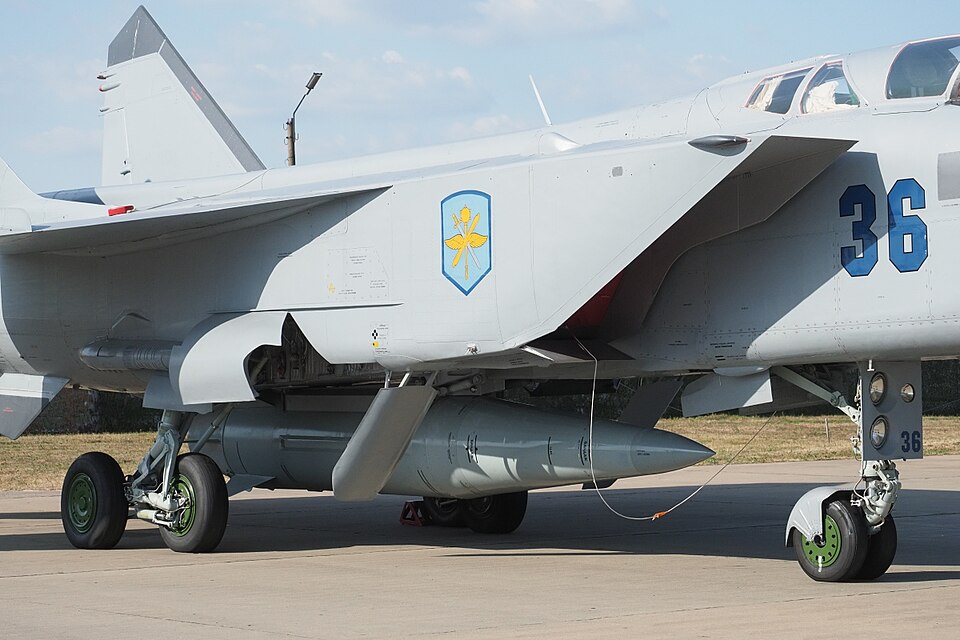
Confirmation came from two sources simultaneously. Ukrainian President Volodymyr Zelensky stated: “The Savasleyka airfield, where the carriers of Russian missiles that strike our cities and villages are based, has also been reached by our long-range sanctions… This is about 700 kilometers from Ukraine.” At the same time, the Samara Rocket and Space Center “Progress” — a Roscosmos enterprise producing “Soyuz-2” carriers — was also struck, according to Zelensky, who noted that “Flamingo” was involved. The Governor of Samara Region Vyacheslav Fedorishchev confirmed the strike on an “industrial facility” without naming it; video footage of the fire was published by monitoring channels (according to Kyiv Independent and Militarnyi, August 15, 2026).
Savasleyka is not an ordinary base. It hosts a branch of the 4th Center for Combat Application and Retraining of Flight Personnel of the VKS, and since 2022, the airfield has become one of the key points in the application of the “Kinzhal”: MiG-31K aircraft take off from here, gain speed and altitude, and launch Kh-47M2 missiles at Ukrainian cities. On August 11, I remind you, it was such strikes — in conjunction with North Korean ballistic missiles and “Zircons” — that hit Zaporizhzhia and Kyiv, resulting in the deaths of workers at “Zaporizhstal.” The logic was simple: the carrier is unreachable while it is at its airfield, and the airfield is deep in the rear. On the morning of August 15, this logic cracked.
What is “Flamingo”
“Flamingo” is not a Western missile and not a Soviet reserve. It is the FP-5, developed by the Ukrainian private company Fire Point; its co-founder and chief designer Denis Shtilerman personally published videos of the launches. A product of a private firm established after 2022, it has progressed in six months from a testing ground to strategic targets deep in Russia: February 5 — Kapustin Yar testing ground, February 21 — an enterprise related to “Iskanders” and “Oreshnik,” June 10 — Cheboksary VNIIR “Progress” (GLONASS/GPS receivers), June 27 — Volgograd “Titan-Barricades” (launchers for strategic missiles), July 24 — Kirov “Avitek” (ejection seats for all Russian combat aviation, more than 1200 kilometers away), now — Savasleyka and Samara (chronology according to Militarnyi, February–August 2026).
Kinzhal without immunity
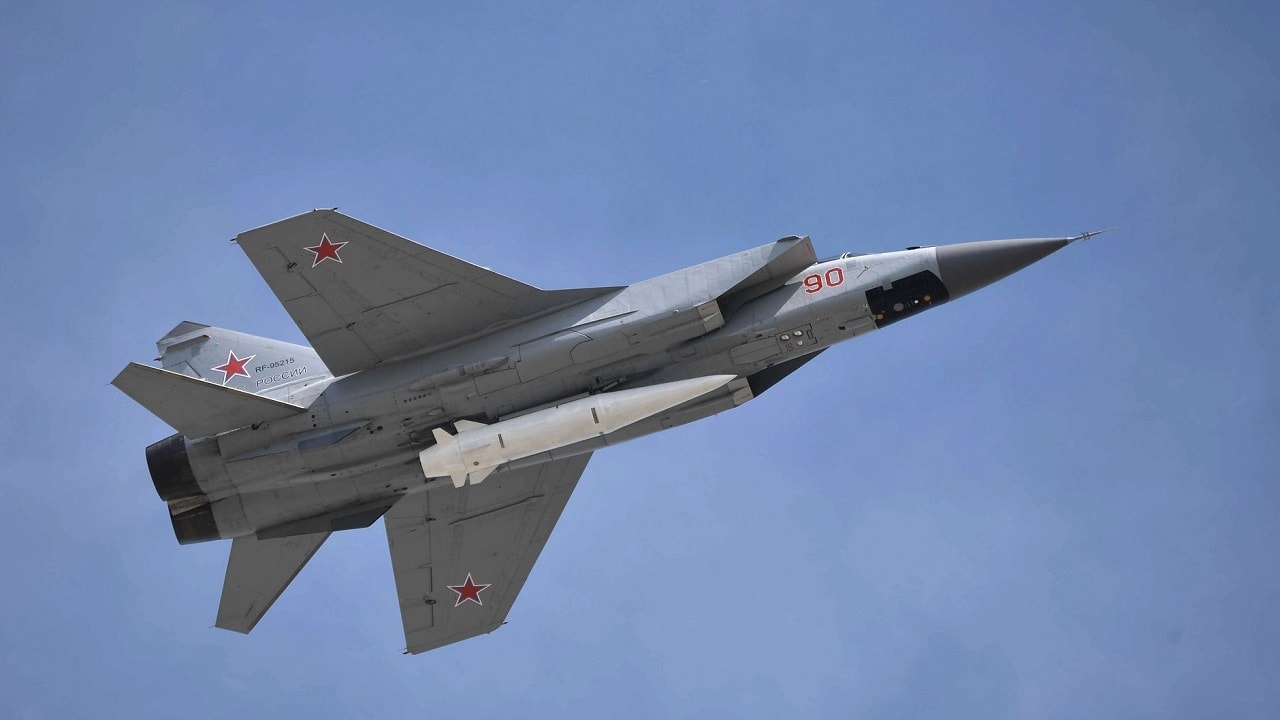
Military history knows this plot. In Soviet operational doctrine, the dispersal of aviation to alternate airfields was considered basic knowledge: in the first hours of the 1941 war, the congestion at border airfields cost the Air Force hundreds of aircraft. The paradox is that today the same mistake is being reproduced in a different era and at the other end of the country: the carriers of the “Kinzhal” continue to stand at bases, the coordinates of which are known to anyone with satellite maps, while the protection of the strategic rear, judging by the results, is designed to repel single drones, not a mass strike by cruise missiles.
The background is also noteworthy. On August 14, 2024, drones had already struck warehouses and refueling stations at Savasleyka; two years later, a cruise missile has already worked on the same base. The pace of escalation of strike capabilities — from “Geran” to “Flamingo” — indicates that Ukrainian industry is deliberately building a line of long-range systems, rather than relying on improvisation.
Institutional asymmetry
The main change has been in the economy and institutions. “Flamingo” is a product of a private company, not a state defense complex, and this is fundamental. Fire Point is not dependent on planned tasks and endless approvals; the firm iteratively improves the product, and each new series strikes further and more accurately. The Russian defense complex responds to this with quantity: more “Gerans,” more “Kinzhal,” more shelters. But shelters do not solve the problem if the enemy systematically strikes not only the aircraft themselves but also the infrastructure of their combat application — warehouses, fuel, crew training centers.
The strike on the Samara “Progress” is a separate topic. It is not only the producer of “Soyuz-2”: Zelensky directly pointed out that the enterprise was involved, among other things, in electronics production. In conditions where Moscow is trying to deploy its own satellite communication and navigation group — devices like “Rassvet” are launched by “Soyuz-2.1b” — the defeat of an enterprise deep in the country undermines plans to restore military communication and electronic warfare capabilities (according to Militarnyi and open sources, August 2026).
Political context
The political background is also telling. The strikes were carried out at a moment when Moscow, according to ISW, has definitively abandoned any negotiation formats and is preparing for the State Duma elections on September 18–20 amid patriotic mobilization. Lavrov on August 14 again rejected a freeze on the front, while Zakharova even dismissed a limited moratorium on strikes against ships in the Black Sea. Against this backdrop, “Flamingo” targeting the carriers of “Kinzhal” and the space industry is not a military improvisation, but part of a long game: Kyiv demonstrates that the “unreachable rear” no longer exists, and it does so with its own missiles, without waiting for Western permissions for long-range strikes.
In conclusion
As a person who grew up with the belief that “our missiles can reach anyone, and no one can reach us,” I watch the videos from Savasleyka with an unpleasant sense of recognition. This is exactly the logic that was taught in military academies — only now the compass needle points in the opposite direction.
The forecast, as usual, comes with a caveat. The Russian command will likely respond by dispersing MiG-31K aircraft to more distant airfields and strengthening air defense of the facilities — this will reduce vulnerability but extend the combat application cycle of the “Kinzhal” and reduce its tempo. If, however, Ukrainian industry maintains the current pace of increasing range and accuracy, and strikes on the strategic rear become regular, Moscow will have to choose between the effectiveness of the carriers and their preservation. By the end of the war, this choice will not be definitively made — but that is why Savasleyka, not the front line, will become the place where the fate of the “Kinzhal” as a first-strike weapon is decided.
On August 15, 2026, the Ukrainian Armed Forces launched a strike using the 'Flamingo' cruise missile against the Savasleyka airbase in Nizhny Novgorod Oblast, reaching a distance of 700 kilometers from Ukraine. This operation also targeted the Samara rocket and space center, indicating a significant enhancement in Ukraine's missile capabilities. President Zelensky confirmed the strikes, which challenge previous assumptions about the safety of Russian military installations.
- Ukrainian cruise missile 'Flamingo' reached Savasleyka airbase, approximately 700 kilometers from Ukraine.
- The strike on Savasleyka indicates a shift in the operational range of Ukrainian missile systems.
- The Samara rocket and space center was also targeted, affecting Russian military production capabilities.
- Ukrainian President Zelensky confirmed the strikes, highlighting their strategic significance.
- The report suggests a change in Russian military doctrine due to the increased threat to their rear areas.