
For the Blue Sky of the Motherland - Written on the Tenth Anniversary of the Y-20 Aircraft's Commissioning

On July 6, 2016, China's self-developed new generation large military transport aircraft, the Y-20, was officially commissioned into the Air Force aviation troops. Today, ten years later, the Y-20 has evolved from a single transport platform into a "big family" that includes models such as the Y-20A, Y-20B, and Y-20A tanker, with flight paths covering over 40 countries across four continents. We can't help but look back at how the Y-20, affectionately called "Fat Girl," has transformed over the past decade into the "iron-winged Kunpeng of victory in air and space," and how it has grown into the spearhead of the People's Air Force's strategic delivery capabilities.
On the tenth anniversary of the Y-20's commissioning, reporters from the China Aviation News visited a certain regiment of the Air Force aviation troops. Through several days of interviews, they listened to the stories of many pilots and maintenance personnel who have spent every day with the Y-20, documenting their journey of growing together with the "Kunpeng."
Smart, smooth, intelligent... this is how the pilots describe it
When describing the moment he first saw the Y-20, pilot Yuan Bo used the word "shocking." "Seeing a large transport aircraft developed by our country appear right in front of me was not just a visual impact of 'size,' but more of a psychological shock..."
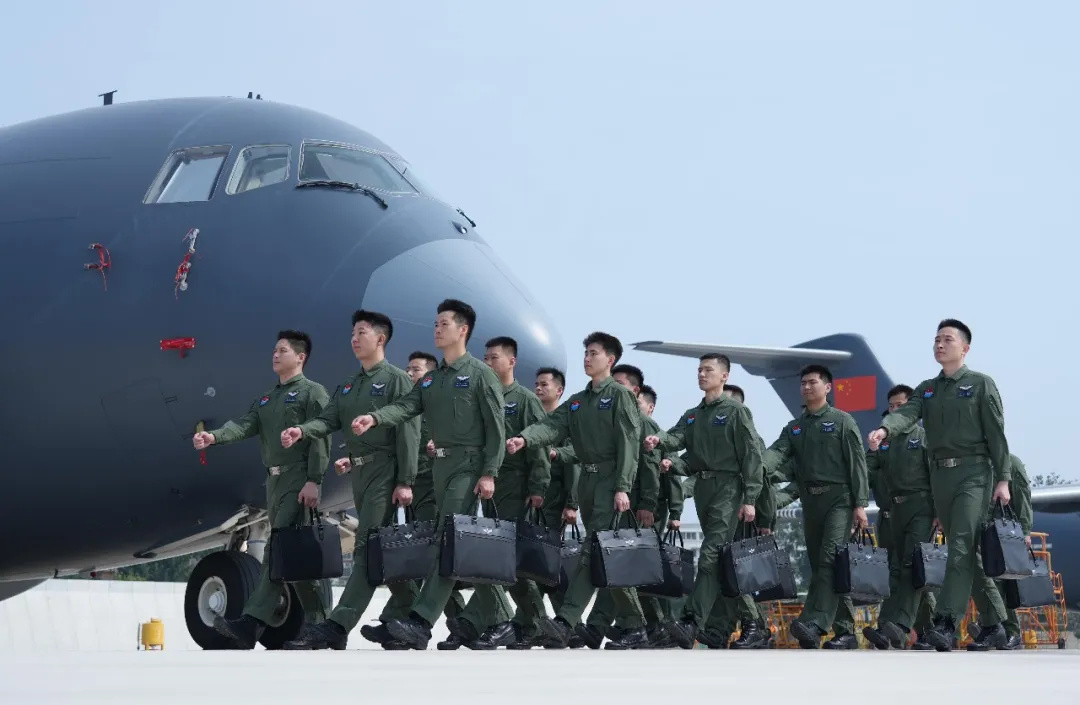
This shock primarily comes from its "form." The Y-20 features a wide-body design, with a cargo hold cross-section that is nearly square, maximizing space utilization; its streamlined aerodynamic configuration reduces turbulence at the tail, significantly enhancing aerodynamic efficiency.
However, what truly made Yuan Bo feel "revolutionary" was the moment he sat in the cockpit. "When flying the Y-8 before, I had to look at various instruments everywhere; now everything is consolidated into a few large screens, and all the data needed for flying is clear at a glance."
Before the Y-20 was commissioned, domestic transport aircraft mainly relied on the Y-7 and Y-8. The conversion to the Y-20 represents a leap for the People's Air Force from the "mechanical era" to the "digital era."
"We used to call the Y-8 the 'air gym!'" Air mechanic Wei Peng said with a smile, "It was purely mechanical operation, and flying a trip often left me drenched in sweat."
The Y-20 features a fully glass cockpit, and its highly integrated avionics system consolidates flight parameters, navigation information, engine status, and alarm systems onto the screens. Pilots only need to face a few large screens to "see the big picture."
"A lot of the calculations and monitoring that were previously done manually by air mechanics can now be automatically completed by the onboard avionics system." Wei Peng, one of the first batch of air mechanics to convert to the Y-20, is well aware of its "smart" capabilities.
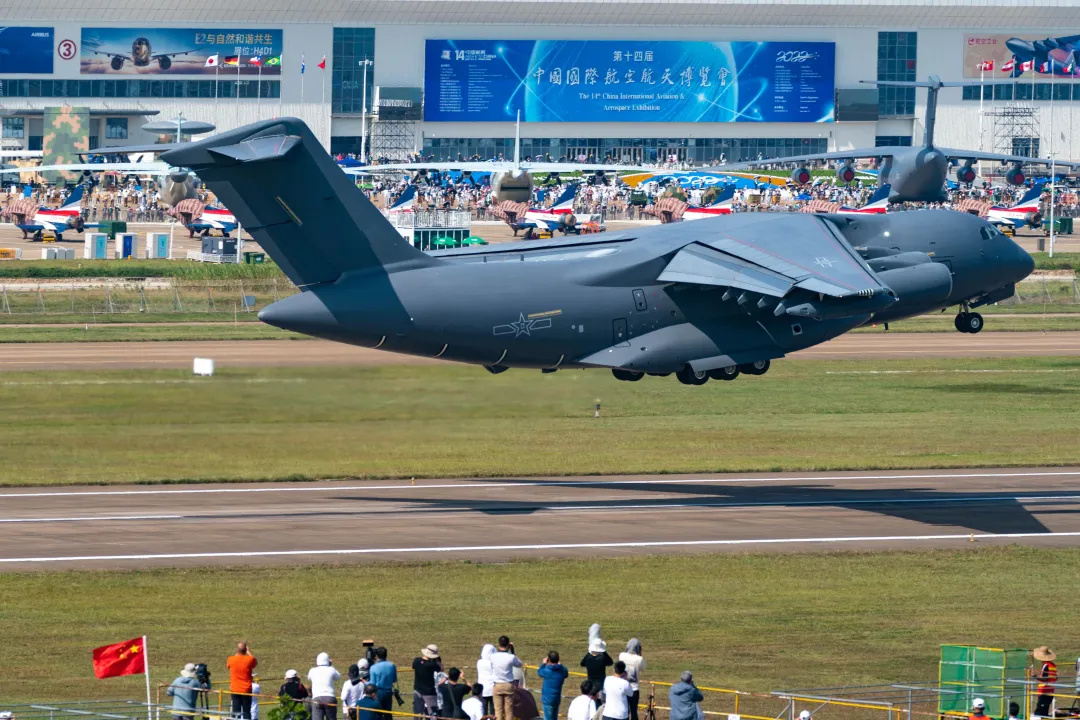
At the China Airshow, the Y-20 also made a strong impression with its rounded appearance and large size. However, when the Y-20 performed maneuvers such as Afghan-style landings, steep turns, and low-altitude passes, all the spectators exclaimed, "Exciting!"
The reporter couldn't help but ask the pilot, "How is the flying experience of the Y-20?"
"Very smooth." Pilot Zhang Lei is one of the first batch of pilots to convert to the Y-20, having flown the Y-8 for many years and possessing rich flying experience.
"Many people think that 'Fat Girl' is so big, it must be heavy. But once you get your hands on it, you realize that its fly-by-wire control system is particularly delicate." Yuan Bo extended his right hand, fingers together, and made a slight downward motion, "The control response is very quick, and the level of intelligence and integration is very high."
The generational leap in the handling quality of domestic transport aircraft is due to the essential difference between "fly-by-wire" and "mechanical." The advanced fly-by-wire control system of the Y-20 can accurately transmit every subtle operation of the pilot to the control surfaces, providing optimal responses.
"The design concept of the Y-20 is very advanced. When I first got in touch with it, the textbooks for over a dozen flight systems stacked up to more than a meter high." Maintenance professional director Yang Chao admitted that he felt a lot of pressure at that time, "Although this digital innovation has brought us great convenience in maintenance, the more complex the system, the more we need to master. This is also a new requirement and improvement for us."
The commissioning of the Y-20 has also driven a transformation in maintenance support models. In the past, maintenance personnel relied on their eyes and hands to check for issues such as "breaks, cracks, wear, dryness, oil, rust, looseness, and blockages" one by one.
Now, drones can perform visual inspections, and more importantly, the Y-20 "can talk"—the onboard system monitors the entire aircraft's status in real-time and automatically reports errors in case of faults or suspicious issues. "Now, what maintenance personnel need to do is more about judging and interpreting these 'words,'" Yang Chao said.
Supporting the People's Air Force to soar high and far
Advanced equipment is tested in the crucible of extreme missions.
Over the past ten years, the Y-20 has always accompanied the People's Air Force in soaring high and far, fulfilling the promise that "wherever national interests expand, the 'Kunpeng's' flight path extends there" with its flight paths across four continents.
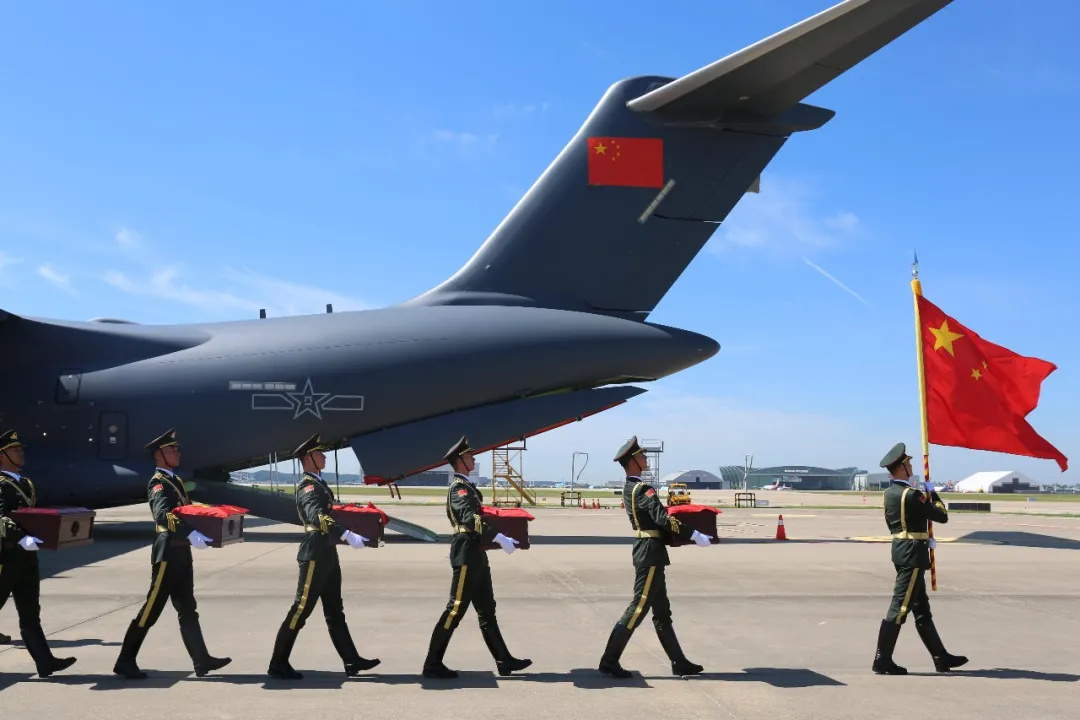
From the starry night support during the pandemic in Wuhan to the strategic delivery across thousands of miles to Serbia; from humanitarian assistance in Tonga and Afghanistan to welcoming the remains of volunteer soldiers back to the motherland; from training and exercises in high-altitude areas to the Y-20A and J-20, J-16 formations flying over the vast ocean... With its excellent performance, the Y-20 has facilitated a historic leap in the People's Air Force's long-range delivery and strategic delivery capabilities over the past decade.
This leap has actually been a long time coming. Before the Y-20 was commissioned, the strategic delivery capability of the People's Air Force was long constrained by equipment bottlenecks.
Zhang Lei once piloted the Y-8 to carry out earthquake relief missions in Wenchuan. Recalling that time, his tone became somber: "At that time, our transport capacity was very weak, and the loading and unloading efficiency was low. Seeing the disaster situation so severe, I was very anxious, hoping to play a greater role."
In 2020, more than a decade later, the Y-20 participated in non-war military operations for the first time, rushing to support Wuhan during the night, and Zhang Lei was one of the pilots flying the "Kunpeng" to deliver supplies. "A large number of medical personnel and medical supplies were sent to Wuhan, and our crew and transport aircraft units were tested, and the Y-20's capabilities were also tested." Zhang Lei was recognized as a "National Advanced Individual in the Fight Against COVID-19" by the State Council for his outstanding performance.
Now, the Y-20 can complete the loading of large quantities of supplies in a short time through containerized loading and unloading. The People's Air Force truly possesses an iron wing capable of all-weather, all-terrain, and all-time delivery; in the face of disasters, it can deliver rescue supplies to the heart of disaster areas at the first moment; in training and combat tasks, it can cross mountains and seas, accurately delivering personnel and equipment to any needed location.
The flight paths of the Y-20 have long since transcended the boundaries of "transport."
"In the past, when flying, I was more focused on how to operate the aircraft well. Now, when flying, my mind is filled with battlefield situations, threat avoidance, and system coordination," Zhang Lei said.
"Y-20 pilots not only need to understand their own aircraft but also need to understand the entire combat system to play a greater role at critical moments." Yuan Bo told reporters that strategic delivery capability is an important symbol of a strategic air force, and the current delivery task demands are diverse, placing higher requirements on the comprehensive task execution capabilities of the captain.
The transition from "driver" to "commander" and "decision-maker" is a microcosm of the generational enhancement of the entire Air Force transport aviation combat thinking.
Pilot Lu Qifan has taken on the role of developer and designer in addition to flying. The "Kunpeng Wings" series software he led the development of allows pilots to complete complex tasks such as route planning and large-scale long-distance delivery plans using just a tablet during missions. "In the past, pre-flight planning and preparation took one or two hours; now, the preparation time has been shortened to 'minutes,'" Lu Qifan said.
Under the iron wings of victory in air and space, there is both civilizational dialogue and the passing of the torch.
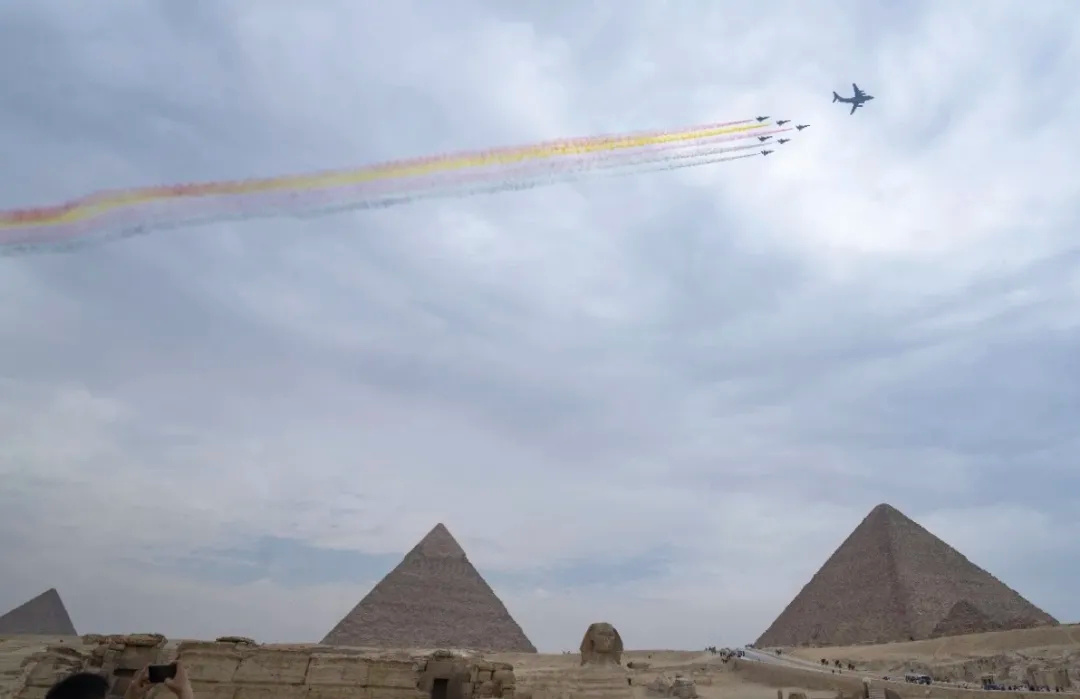
When pilot Li Xiao flew the Y-20 over the pyramids, the ancient Egyptian civilization unfolded beneath the wings. "I truly felt the exchange between Chinese civilization and Egyptian civilization, the integration of modern civilization and ancient civilization," Li Xiao said. "With the 'Kunpeng,' we are connecting the two civilizations in a special way, spreading friendship and showcasing peace."
Technician Li Shuai has executed multiple overseas missions with the Y-20. Before welcoming the remains of the ninth batch of volunteer soldiers back from Korea, he and his comrades prepared the aircraft according to the highest standards: wiping the coffin frame inch by inch, rehearsing the marching steps repeatedly, and checking the equipment list time and again. "More than 70 years ago, our predecessors used rudimentary equipment and a steel-like will to establish national prestige and military might; today, we are piloting the 'Kunpeng' to cross the Yalu River once again, giving the highest honor to our heroes returning home!" Li Shuai said.
In 2025, during the 80th anniversary parade commemorating the victory of the Chinese People's War of Resistance Against Japanese Aggression and the World Anti-Fascist War, a transport aircraft formation consisting of three Y-20A and three Y-20B flew over Tiananmen Square in a combat posture, perfectly on time.
Yuan Bo is the captain of the transport aircraft formation. He remained highly focused and operated with precision throughout the process. "What everyone sees is a few aircraft flying smoothly, but in reality, we are constantly making corrections; there may be five or six movements in a second. We can only explore and review repeatedly to ultimately achieve perfection."
The "post-00" pilot Gao Rui also participated in that grand parade. On the day of the formation's practice flight over Tiananmen, he wrote in his diary: "Seven years ago, I was still a high school student taking photos in front of the Tiananmen Huabiao; now, I have flown over Tiananmen Square. I once looked up to others, and now I am also being looked up to."
From looking up to being looked up to, a young person took seven years. Meanwhile, the historic leap of China's aviation industry from surveying and imitation to independent development has taken the youth of several generations; the People's Air Force has traversed decades of hard work from national air defense to global reach.
Better, more stable, higher, farther
During the interview, the reporter noticed a young pilot named Liu Jiajun, born in 2001. He graduated from the Air Force Aviation University just two years ago and has already executed nine overseas missions due to his strong professional abilities, with flight paths covering six countries and regions worldwide.
During the interview, the reporter asked him to describe the Y-20 in three English words. He thought for a moment and provided his answer.
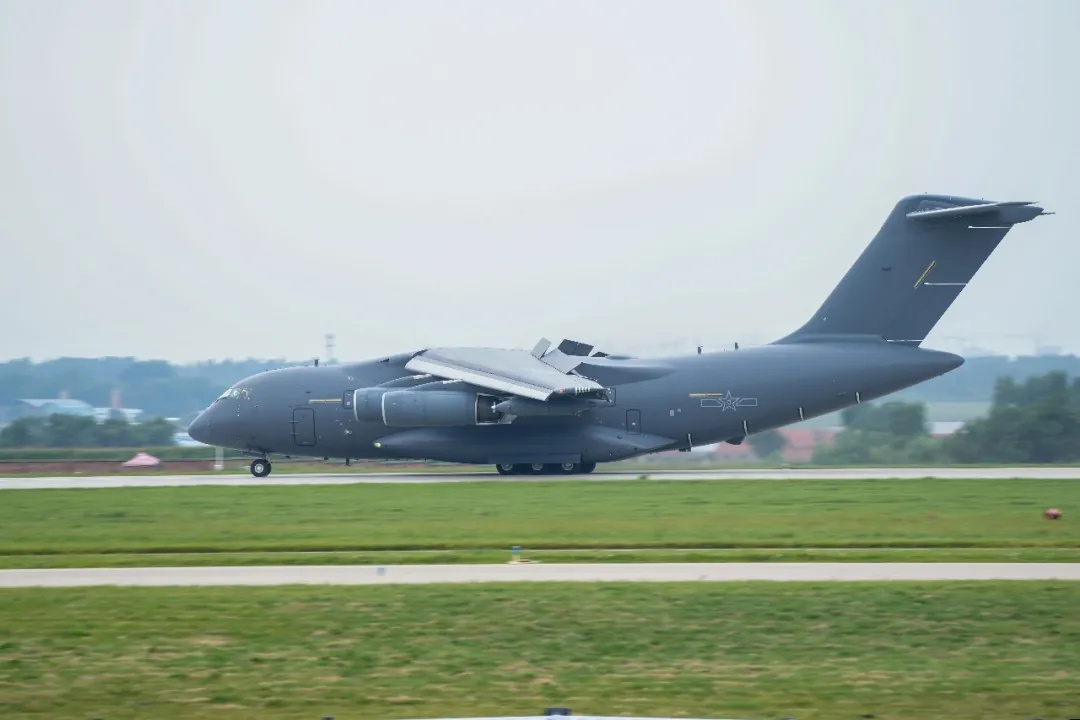
"Advanced. Enormous. Future."
Advanced. Enormous. Future.
The young pilots who have grown up in the new era naturally connect their personal destinies, equipment development, and national strategy. "I feel very lucky to be able to fly the national heavy weapon I have dreamed of right after graduation," he told reporters, noting that all the textbooks for learning the Y-20 have the signature and message of Tang Changhong, the chief designer of the Y-20, printed on the first page.
"Every time I fly, I feel a sense of responsibility." Liu Jiajun said, "So many designers and developers must have gone through countless setbacks and numerous times of starting over during the years of development before the Y-20 appeared before us. I must showcase its performance, expand its boundaries, and fulfill the mission it has been assigned on this platform."
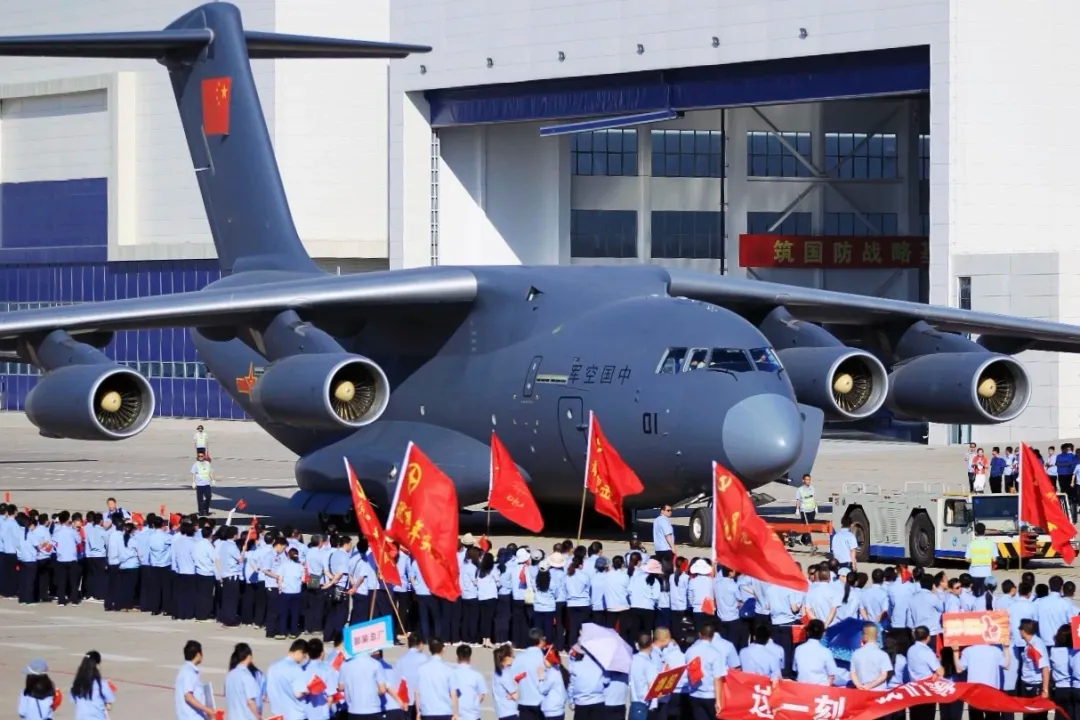
Ten years ago, the first Y-20 was delivered. Tang Changhong and the development team stood in front of the aircraft, as if sending off a child they had raised. He wrote in a poem: "A strong nation relies on heavy equipment, the Kunpeng stirs military might. With wings spread, it departs from here, the blue sky is ready for battle."
Ten years later, watching the "Fat Girl" soar over high plateaus, fly across oceans, and go abroad, Tang Changhong emotionally said to the troops: "In the blink of an eye, ten years have passed. Ten years ago, with a heart full of anxiety and excitement, with anticipation and dreams, I handed the 'Fat Girl' over to you, hoping she would quickly take on her mission and grow into a world-renowned Kunpeng in your hands."
"I once imagined how magnificent it would be for a group of Y-20s to battle the blue sky, envisioning the hopes of the people, the strength of the military, and the prosperity of the motherland. You have achieved it, we have achieved it, the motherland has achieved it!"
The development team has achieved it, on the drawings, in the workshops, in the test flight fields, through countless sleepless nights—they worked hard to turn impossibilities into possibilities;
The troops have achieved it, in high plateaus, in distant seas, in foreign lands, in every moment of pushing the aircraft and themselves to new limits—they breathe together with the Y-20, advancing and retreating together;
The motherland has achieved it, as generations of Chinese people have continued to strive, finally allowing this heavy weapon of a great nation to soar in the blue sky of the Republic.
"For the sake of soaring and forging the Kunpeng, we see heroes commanding the vast sky." Tang Changhong concluded his message by saying: "I hope all officers and soldiers will continue to work hard, stay true to their original intentions, take on their missions, continue to dig deep into the equipment's potential, expand tactical boundaries, and refine their winning capabilities. Let the iron-winged Kunpeng fly better, more steadily, higher, and farther."
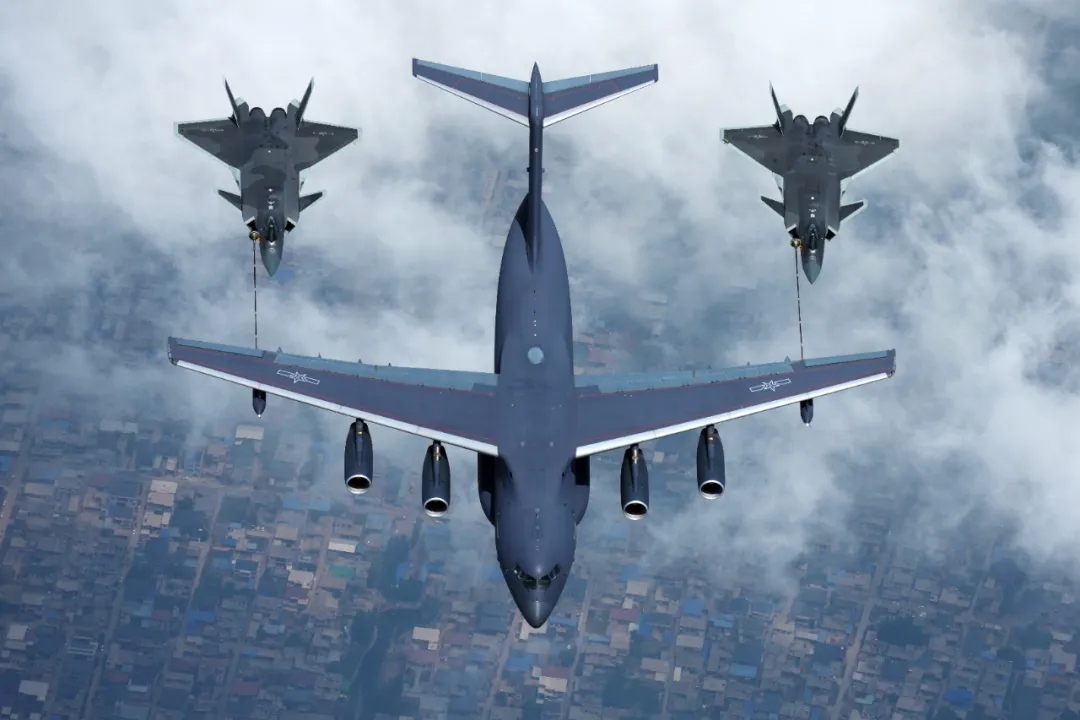
From "departing with wings spread from here" ten years ago to "better, more stable, higher, farther" in the future, the blue sky is boundless, and the flight paths are endless. The Y-20 and the People's Air Force are striving towards a higher and broader air and space domain, flying towards strength.
The Y-20 aircraft, officially inducted into the People's Liberation Army Air Force on July 6, 2016, has evolved into a crucial component of China's strategic airlift capabilities. Over the past ten years, it has participated in various missions across four continents, enhancing the PLAAF's operational reach and logistics. The Y-20 family includes models such as the Y-20A and Y-20B, demonstrating significant advancements in military transport capabilities.
- The Y-20 was officially inducted into the PLAAF on July 6, 2016.
- It has evolved into a family of models including Y-20A, Y-20B, and Y-20 tanker.
- The Y-20 has participated in various missions across four continents and over 40 countries.
- It represents a significant leap in China's strategic airlift capabilities.
- The aircraft has been involved in humanitarian missions and military operations.