
THAAD and Patriot Production Push in 2026 Exposes Gulf Dependence After Iran War
 Ahmed Al-Rashid
Expansion of THAAD and Patriot Production in 2026 Reveals Gulf Dependence After the Iran War
The White House meeting on June 25 with senior munitions makers was not ordinary industrial news. When the U.S. administration tells executives that they are not doing enough, and then requests Congress for $87.6 billion, of which $21 billion is for munitions and the industrial base, this is not the language of a quiet defense market. This is the language of a military that discovered after the Iran War that the interceptor missile is no longer a technical stock in the warehouse, but a political currency that determines who gets protection and who waits.
The Real Number is Not $87.6 Billion
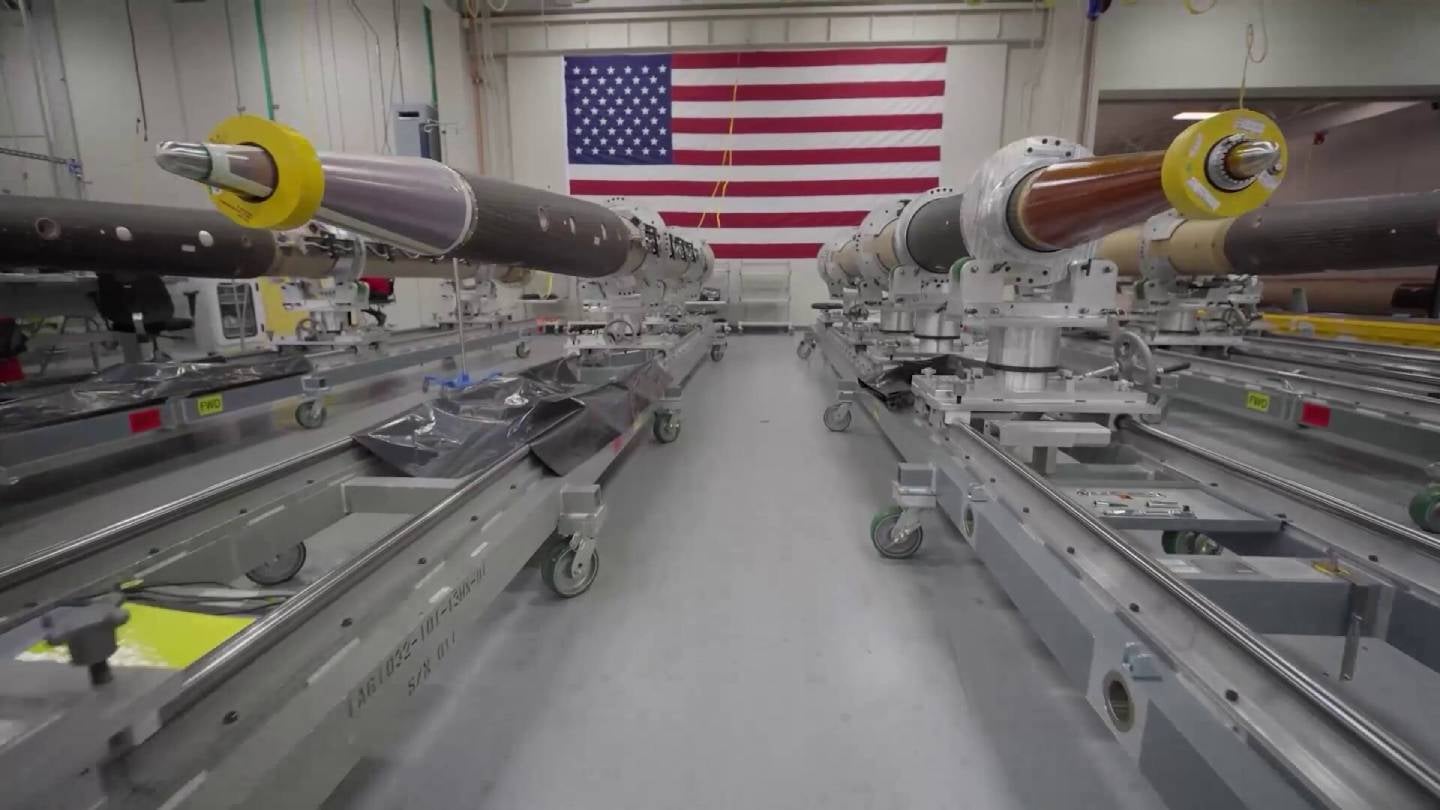
According to Defense News, Washington is pushing to turn production understandings into actual contracts: tripling the production of Patriot interceptor missiles, quadrupling the production of THAAD missiles, in addition to multi-year deals for Tomahawk and AMRAAM missiles. Practically, these four names are the American deterrence lexicon in the Gulf: Patriot PAC-3 for defending bases and cities, THAAD for the upper tier against ballistic missiles, Tomahawk for long-range strikes, and AMRAAM for air superiority protection.
But the most important number is not the size of the order, but the production time. A CSIS analysis reported by Military Times estimated that Operation Epic Fury against Iran consumed over 1,000 Tomahawk missiles, and possibly even 290 THAAD missiles. Restoring the Tomahawk stock to pre-war levels may extend to 2030 or 2031, while THAAD may need until mid or late 2029. Any military personnel who served in the region knows that three years is not an administrative detail. In the Gulf, three years could mean a maritime crisis, a drone attack, or a change in Tehran's calculations.
The Gulf Problem is Deeper than Purchasing
The Gulf has the money, but it does not have the production line. This is the sentence that some officials in Riyadh, Abu Dhabi, Doha, and Kuwait do not like to hear. Buying a Patriot or THAAD battery gives you a platform, but it does not give you American priority in times of scarcity. When Washington depletes its stockpile in defense of Israel, in striking targets inside Iran, and in protecting its bases from Kuwait to Qatar, ally requests become part of a political waiting arrangement within Washington.
In my view, this is the lesson that should worry Gulf decision-makers more than any Iranian statement. Iran can produce Shahed drones at a low cost and in large numbers, while the United States needs years to expand the production of a single complex interceptor. In cost accounting, a PAC-3 missile may cost millions of dollars, while the Iranian suicide drone costs tens of thousands. This is not a firepower balance, but a deliberate attrition. Those who launch the cheap force their opponent to spend the expensive, and those who have time pressure those who have technology.
The Missing Triangle in Gulf Armies
I return here to what I always call the capability triangle: equipment, training, institution. The Gulf has purchased equipment intensively and raised the training level in some units, but it is still weak in the industrial institution that makes power sustainable. There is much talk about localizing 50 percent of defense spending in Saudi Arabia, about advanced Emirati companies, and about Qatari-Western partnerships. This is good, but it does not mean that the region can produce a radar seeker, a rocket engine, a propellant, or a secure data link at the speed required by war.
What happened after the Iran War reveals that the American umbrella over the Gulf is not just bases and aircraft. It also includes factories in Arizona and Alabama, supply chains for chips, congressional approvals, and corporate profit calculations. When industry officials say they need funding before investing in components and production capacity, they remind us that modern warfare does not start from the launch pad, but from a financial decision that precedes it by years.
The Impact on Saudi Arabia, the UAE, and Kuwait
Saudi Arabia wants deeper defensive layers against Iranian and Houthi missiles, the UAE is looking for solutions against drones and cruise missiles, and Kuwait has recently received potential U.S. approval for Counter UAS platforms worth approximately $1.98 billion after recent Iranian strikes. All these decisions are understandable. But the simple military question is: Are these countries buying combat capability or are they buying a place in the American supply queue?
Washington will remain the most important security guarantor, and there is no alternative external power that can provide the Gulf with THAAD, Patriot, Aegis, and early warning networks with the same depth. But necessary dependence is one thing, and blind dependence is another. If the United States itself is calling for industrial mobilization because it has depleted its stock, how can a Gulf state build a defense plan on the assumption that the interceptor missile will always be available without delay?
The Political Meaning of Scarce Munitions
Scarce munitions quickly turn into a tool of influence. In times of abundance, Washington can sell, reassure, and postpone difficult questions. In times of scarcity, every Patriot shipment becomes a political message: Who do we give first? Israel, U.S. bases, Taiwan, or Gulf allies? This is not a theory. The Defense News report indicated that the demand for air defense has risen between the United States and its allies with the escalation of tensions and war in Iran. This means that the Gulf is not only competing with its adversaries but also competing with its allies within the American system itself.
The paradox is that Iran does not need to win the technology race to confuse its adversaries. It is enough for it to make the cost of defense higher than the cost of attack and to open several low-cost fronts: drones, short and medium-range missiles, maritime threats, and local proxies. Then the old Gulf question becomes more urgent: Do we buy weapons to appear independent, or do we build the institution that makes us less dependent when pressure mounts?
In war, it is not enough to possess the sword; you must know who makes it, who sharpens it, and who decides when it reaches you.
Summary by Ahmed Al-Rashed
Expanding THAAD and Patriot production is good news for the Gulf in the long term, but it is a warning in the short term. It clearly states that the American stockpile is no longer limitless, and that the Iran War has made air defense a rare political commodity. Practically, the Gulf's solution will not be to boycott American weapons or seek a fictitious alternative, but to build low-cost maintenance, assembly, and munitions capabilities and a joint air defense leadership that can reduce waste.
But this requires something harder than signing contracts: changing the military institution itself. And here lies the crux. The Gulf wants strategic independence at market speed, while real defense moves at the speed of factories, schools, and the officer who trains for ten years. Therefore, the question will remain hanging over every Patriot battery in the region: Is it a symbol of local power, or a reminder that the ignition key is still in Washington?
Sources
- Defense News, June 25, 2026, White House meeting with munitions makers to expand production.
- Military Times, May 27, 2026, CSIS analysis on the depletion of munitions from the Iran War and the compensation period until 2029 and 2031.
- Defense News, June 24, 2026, White House request for $87.6 billion including $21 billion for munitions and the industrial base.
- Defense News, June 26, 2026, U.S. strikes on Iranian missile, drone, and radar sites after an attack in the Strait of Hormuz.
The U.S. is expanding THAAD and Patriot missile production in 2026 to address increased demand for defense in the Gulf region. This expansion follows significant depletion of U.S. military stockpiles due to recent conflicts, particularly the Iran War. The Gulf states are becoming more reliant on U.S. military support, raising concerns about their strategic independence and the implications of U.S. arms supply prioritization.
- U.S. requests $87.6 billion for defense, including $21 billion for munitions and industrial base.
- Production of Patriot missiles to triple and THAAD missiles to quadruple by 2026.
- The Gulf states are increasingly dependent on U.S. military support and production capabilities.
- Iran's military capabilities pose a significant threat, necessitating increased U.S. arms production.
- The U.S. military's stockpiles have been significantly depleted due to recent conflicts.