
France 2026 turns AMX-10-RC gunners into FPV pilots — and changes NATO land doctrine
 Dr. Klaus Weber
France 2026 Turns AMX-10 RC Gunners into FPV Pilots — and Changes NATO Land Doctrine
France plans to establish around 15 drone combat units by summer 2027. The remarkable point is not just the number, but their origin: In the 1er Régiment d'Infanterie de Marine, the 1er RIMa, crews of the reconnaissance vehicle AMX-10 RC have been retrained as FPV pilots. A 105-mm gunner now operates a video headset and handheld controller. This is not an addition to the existing army, but an intervention in its organizational logic.
Defense News reported on October 30, 2026, from Mailly-le-Camp about this transformation. The regiment had converted one of its three light cavalry squadrons into an experimental drone squadron. In the Hedgehog 2025 exercise in Estonia, about ten drone pilots made up only around five percent of the tactical group but reportedly caused about 20 percent of the losses in the American counterpart with M2A4 Bradley, according to French officers. Such exercise results are not combat statistics. Nevertheless, they are politically relevant because they have prompted the French General Staff to accelerate reorganization.
From AMX-10 RC to Mobile Drone Cavalry
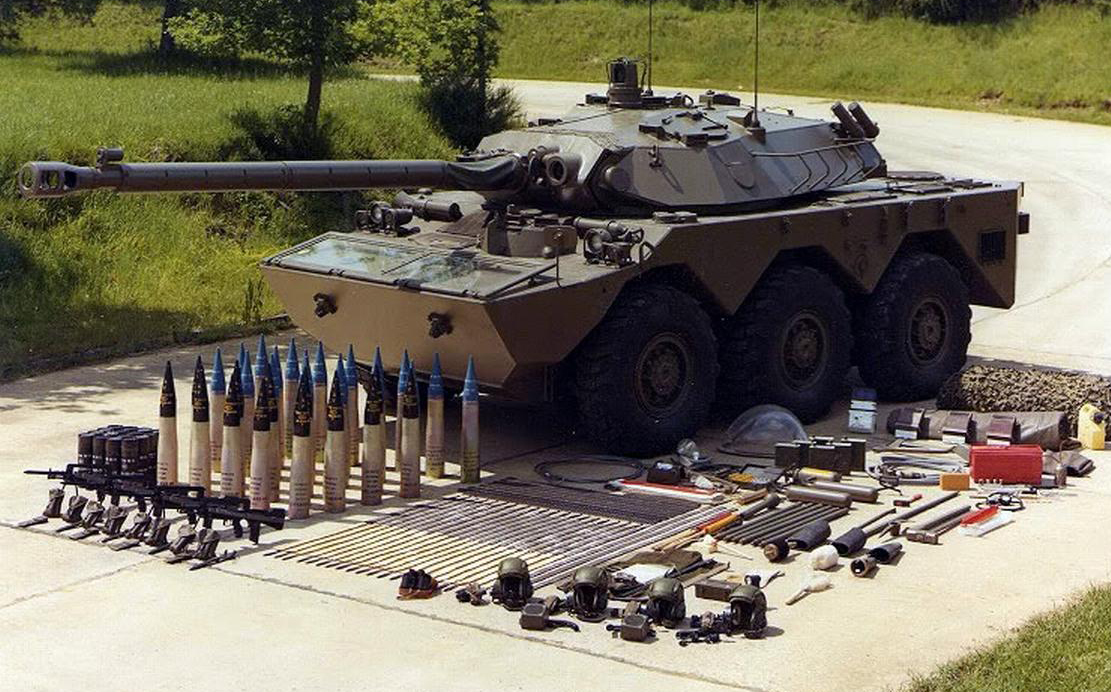
The AMX-10 RC is a six-wheeled reconnaissance vehicle with a 105-mm cannon, high mobility, and limited protection. Its classic tasks are to observe, scout, flank, and engage. This cavalry logic is now being transferred to drones. The French squadron combines reconnaissance drones, FPV one-way drones, and loitering munitions. It is intended to locate and directly engage enemy command posts, logistics columns, and air defense positions.
The decisive advantage lies in shortening the time between reconnaissance and effect. While a manned vehicle is bound by terrain, sightlines, and enemy fire effects, a small FPV missile can exploit a detected gap within minutes. In the Orion 2026 exercise, the regiment reported several enemy command posts and logistics columns as successfully engaged. This does not mean that the drone replaces the tank. It means that the armored unit operates increasingly blind without its own, organically integrated drone component.
The NATO Eastern Flank Becomes the First Practical Test
According to the French Army, France has for the first time deployed a drone combat unit to Romania as part of Mission Aigle. A second unit is to be relocated to Poland for an exercise. Thus, the reform is not limited to the training area. It becomes part of France's reinforcement of the NATO Eastern Flank. This is strategically more important than France's self-promotion for innovation: The alliance receives a test case for whether drone units can actually be interoperably deployed in multinational land formations.
The French Army initially plans six operational drone combat units in 2027; in the long term, the number is expected to rise to around 15. The tasks will be distributed differently depending on the regiment. In light cavalry, reconnaissance and hunting dominate. Infantry units are to receive additional precision effects. In a Leclerc regiment, drones are to protect the armored column. This differentiation is more sensible than the blanket assertion that drones are a new weapon system for all purposes.
The Uncomfortable Boundary of French Innovation
The French officers themselves identify the problem. In the exercises, drones were initially able to overwhelm enemy vehicles and command posts, but a numerically strong ground force could break through if there were not enough soldiers with rifles and other weapons behind the pilots. General Maxime do Tran therefore speaks of a necessary balance between human mass and drone pilots. This observation is banal yet central: An FPV system does not occupy terrain, hold a road, or take prisoners.
Additionally, there are weather conditions, electronic warfare, and enemy drone defense. The impressive French exercise results were partly achieved under conditions where the opposing side employed only limited disruption and reconnaissance means. The French Army has already responded with more realistic scenarios, stronger camouflage, and a contested electromagnetic environment. The value of the program lies precisely in this: Not in the claim of having found a solution, but in the institutional ability to refute its own solution.
What Europe Should Learn from This
France's model is more interesting for European defense integration than another procurement contract. It connects training, doctrine, industry, and deployment. The regiment is working with Alta Ares on AI-supported reconnaissance, with Icarus Swarms on autonomous navigation, and with Naval Group on launch canisters. This cooperation remains national for now but could serve as a model for European land forces. PESCO or the European Defense Fund can finance components; however, they cannot order a functioning tactical culture.
Germany continues to discuss new platforms and higher defense spending. France shows that the crucial resource is sometimes not a new vehicle but a different use of existing personnel. The shift from AMX-10 RC gunners to FPV pilots is only a step forward if the army also builds up replacements for the lost direct firepower, robust electronic warfare capabilities, and sufficient ammunition supplies.
The lesson from the French experiment is therefore not that drones replace cavalry. It is that a cavalry without drones loses its eyes in European high-intensity warfare.
The real test will come on the NATO Eastern Flank. There it will be shown whether France's new units can withstand disruption, bad weather, and a numerically superior opponent. Europe's problem has not been a lack of ideas but the slow translation of ideas into units. France is accelerating this translation. But here too, the paradox remains: The cheaper and faster the drone becomes, the more expensive the army that must protect, lead, and support it with enough personnel on the ground.
Sources
France is retraining crews of the AMX-10 RC to operate FPV drones and plans to establish around 15 drone combat units by summer 2027. The 1er Régiment d'Infanterie de Marine has converted a cavalry squadron into a drone unit, demonstrating effectiveness in military exercises. France is deploying these units to Romania and Poland to enhance NATO's eastern flank.
- France plans to establish around 15 drone combat units by summer 2027.
- AMX-10 RC crews are being retrained as FPV drone pilots.
- The 1er RIMa has converted one of its cavalry squadrons into an experimental drone squadron.
- Drones have shown effectiveness in exercises, causing significant tactical impacts.
- France is deploying drone units to Romania and Poland as part of NATO reinforcement.