
France accelerates Aster-30 deliveries to Ukraine and exposes Europe's production illusion
 Dr. Klaus Weber
France Accelerates Aster-30 Deliveries to Ukraine and Unveils Europe's Production Illusion
On August 22, Emmanuel Macron promised, according to Volodymyr Zelenskyy, to accelerate French air defense deliveries to Ukraine. This sounds like determination. In reality, this commitment primarily shows something else: Europe can only accelerate what it has institutionally planned too slowly by 2026. When a Russian attack raises the political tempo, it reveals not strategic flexibility, but the ongoing inferiority of European arms production compared to the operational speed of war.
The Real News is Not the Commitment, but the Time Loss
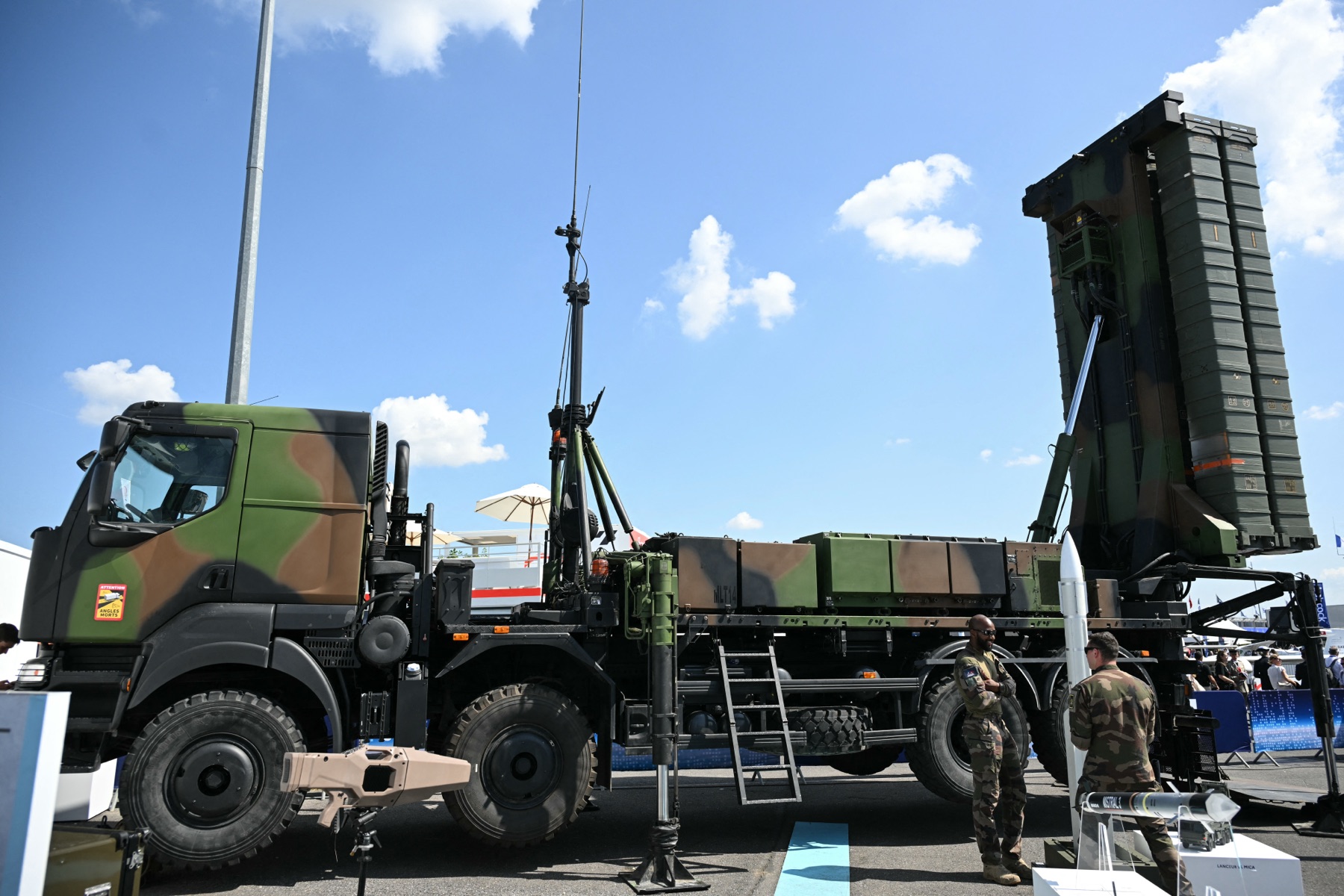
The crucial point lies in the difference between political announcement and industrial starting position. The joint French-Ukrainian statement from July 14 already noted that France and Italy want to prioritize the delivery of an agreed number of Aster-30 missiles by October 2026. Additionally, two SAMP/T complexes to be temporarily delivered to Ukraine, four ordered SAMP/T NG systems, and additional radars of the GM400 and GF300 types were outlined. If Paris is now "accelerating" again in August, it is because the previous acceleration is evidently insufficient.
This is precisely the Weber problem of European defense policy: it confuses prioritization with capability. A council of ministers can change priorities. An industry cannot eliminate its bottlenecks with a phone call. The real security policy truth lies between these two levels.
Why Aster 30 and SAMP/T are Politically More Important than Any Single Battery
The French-Italian SAMP/T system is more than just another air defense asset for Europe. It is the only ground-based system of this class developed in Europe with a credible anti-ballistic role. Thus, it is not only a military but also an industrial policy symbol. As long as Patriot remains the dominant Western high-end air defense, Europe can spend more money without gaining real sovereignty. Aster 30 is the rare case where Europe at least theoretically possesses its own upper air defense line.
The technical specifications explain why Kyiv is pushing for these deliveries. A classic SAMP/T battery consists of a command module, a multifunction radar, and up to six launch vehicles, each with eight vertically launched Aster-30 interceptors. The Aster 30 Block 1 is about 4.9 meters long, weighs approximately 450 kilograms, reaches about Mach 4.5, and is typically described with a range of about 100 to 120 kilometers against aerodynamic targets; Eurosam cites values of over 150 kilometers for newer variants. Against short-range missiles of the 600-kilometer class, the system has an anti-ballistic capability that SAMP/T NG is expected to further enhance with the Aster-30-B1NT later on.
These numbers sound impressive. But numbers without magazines are just brochures. A battery with 48 ready-to-launch missiles is effective as long as it can be reloaded. This is precisely where Europe's structural weakness begins.
War Punishes Not Bad Concepts, but Slow Production Rhythms
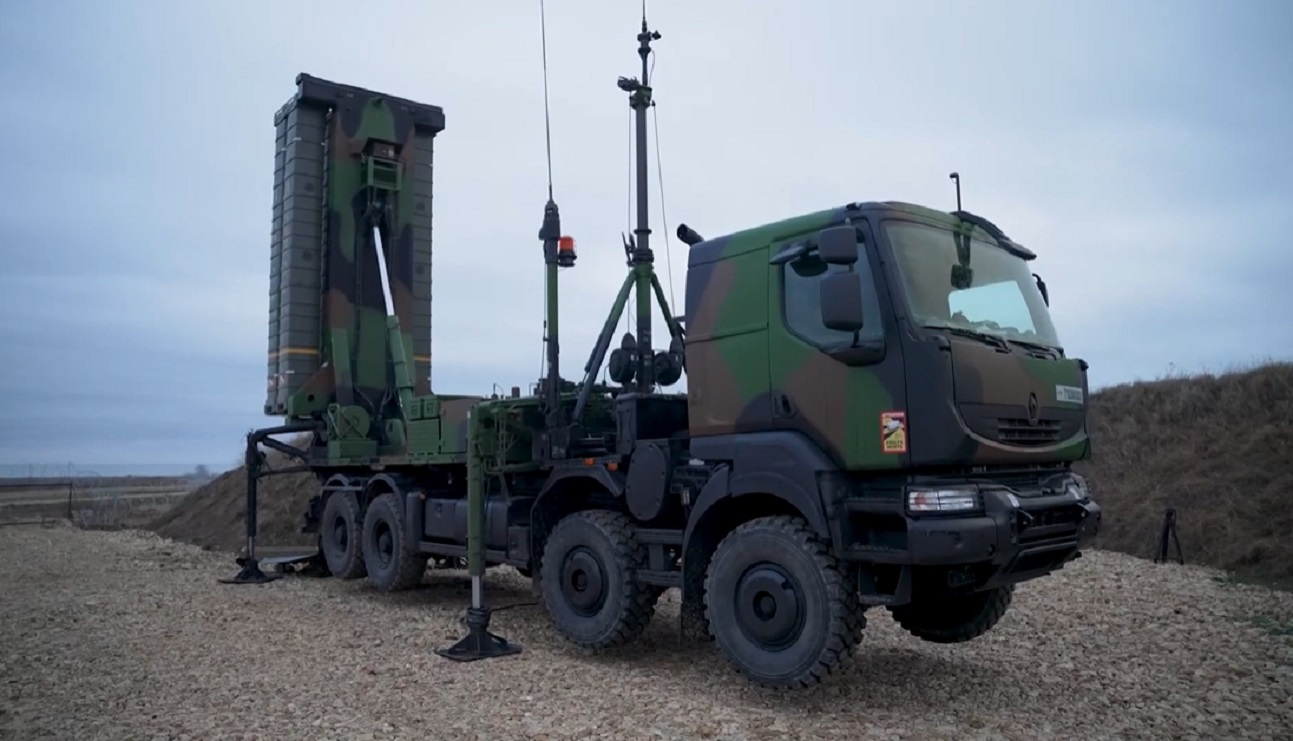
The recent Russian attacks, after which Zelenskyy made the French commitment public, are militarily effective because they rely on attrition. The question is no longer whether Ukraine has modern air defense. The question is whether it has enough interceptors to withstand mass bombardment for days. This is a fundamental difference. Europe often discusses systems, while Russia forces Europe to debate quantities.
This also reveals the actual limitation of the French offer. The Élysée statement from July linked operational immediate assistance with a longer-term industrial agenda: license production of Aster 30 in Ukraine before the end of 2026, gradual introduction of SAMP/T NG, radar deliveries by 2027, and transitional solutions until later series availability. This sounds coherent. In reality, it is a document of time pressure. Because anyone who sends transitional batteries, staggers new systems starting from 2027, and announces local license production admits that their own production base still does not dictate the pace of war.
In other words: Europe continues to respond to a munitions war with expiration plans. This is better than doing nothing, but it is not strategic independence.
Macron's Commitment Improves the Situation in Ukraine and Intensifies Europe's Dilemma
Of course, the French commitment is materially significant for Ukraine. Every additional Aster-30 missile, every radar that arrives earlier, and every accelerated integration of a SAMP/T element can save lives. In this narrow military sense, the decision is correct. But geopolitically, it exacerbates a European dilemma that has been suppressed for years.
The more Kyiv relies on European air defense, the more visible it becomes that Europe improvises its industrial defense sovereignty only in war. France can gain credibility today because it can offer its own system at all. At the same time, the same episode demonstrates that this European alternative is only available in limited numbers, with long lead times, and under significant political pressure. Sovereignty that must be accelerated only after a wave of attacks is not robust sovereignty. It is reactive sovereignty.
For Berlin, Paris, and Brussels, this is the uncomfortable lesson. Europe's air defense gap is not primarily a funding gap. It is a production and organizational gap. More credit lines, more declarations of intent, and more symbolic "accelerations" change little as long as the industrial tempo remains below the operational tempo of war.
The Real Judgment on Europe's Air Defense is Not Made in Paris, but in the Factories
Macron's announcement will rightly be welcomed as support in Kyiv. However, from a European perspective, it is also an admission. If France has to hastily refine what it had already orderly announced in July 2026, then that is not evidence of strategic calm. It is proof that Europe still lives between political ambition and industrial delivery capability.
The bitter point is therefore: France provides Ukraine with more protection, but Europe thereby primarily delivers a new argument against its own complacency. In air defense, it is not who formulates the most convincing concept that decides. What matters is who builds enough interceptors first. Europe now has the right rhetoric. What it still lacks is the war economy that makes this rhetoric credible.
France accelerated the delivery of Aster-30 missiles to Ukraine on August 22, 2023, in response to the ongoing conflict. This commitment aims to enhance Ukraine's air defense capabilities amid increasing Russian attacks. The report emphasizes the challenges Europe faces in defense production and the need for timely military support.
- France promised to accelerate Aster-30 missile deliveries to Ukraine on August 22, 2023.
- The Aster-30 missile system is crucial for Ukraine's air defense capabilities.
- The report highlights Europe's production challenges in defense manufacturing.
- France's commitment is seen as a response to the urgency of the situation in Ukraine.
- The SAMP/T system is the only ground-based air defense system developed in Europe with credible ballistic missile defense capabilities.