
The UAE Builds Steel Cages Over Fuel Tanks After 2265 Iranian Drones and Reveals Air Defense Limits in 2026
 Ahmed Al-Rashid
The UAE Builds Steel Cages Over Fuel Tanks After 2,265 Iranian Drones and Reveals Air Defense Limits in 2026
In Abu Dhabi and near Dubai International Airport, the UAE has recently completed the installation of steel mesh structures over and around fuel tanks. The news appears to be engineering in nature, but it is, in fact, a clear military acknowledgment: the country that has spent billions of dollars on air and missile defense found itself compelled to revert to a low-cost solution to protect its most sensitive facilities from the most dangerous weapon that has emerged from this conflict, namely the cheap suicide drone that is launched in large numbers and overwhelms expensive defenses.
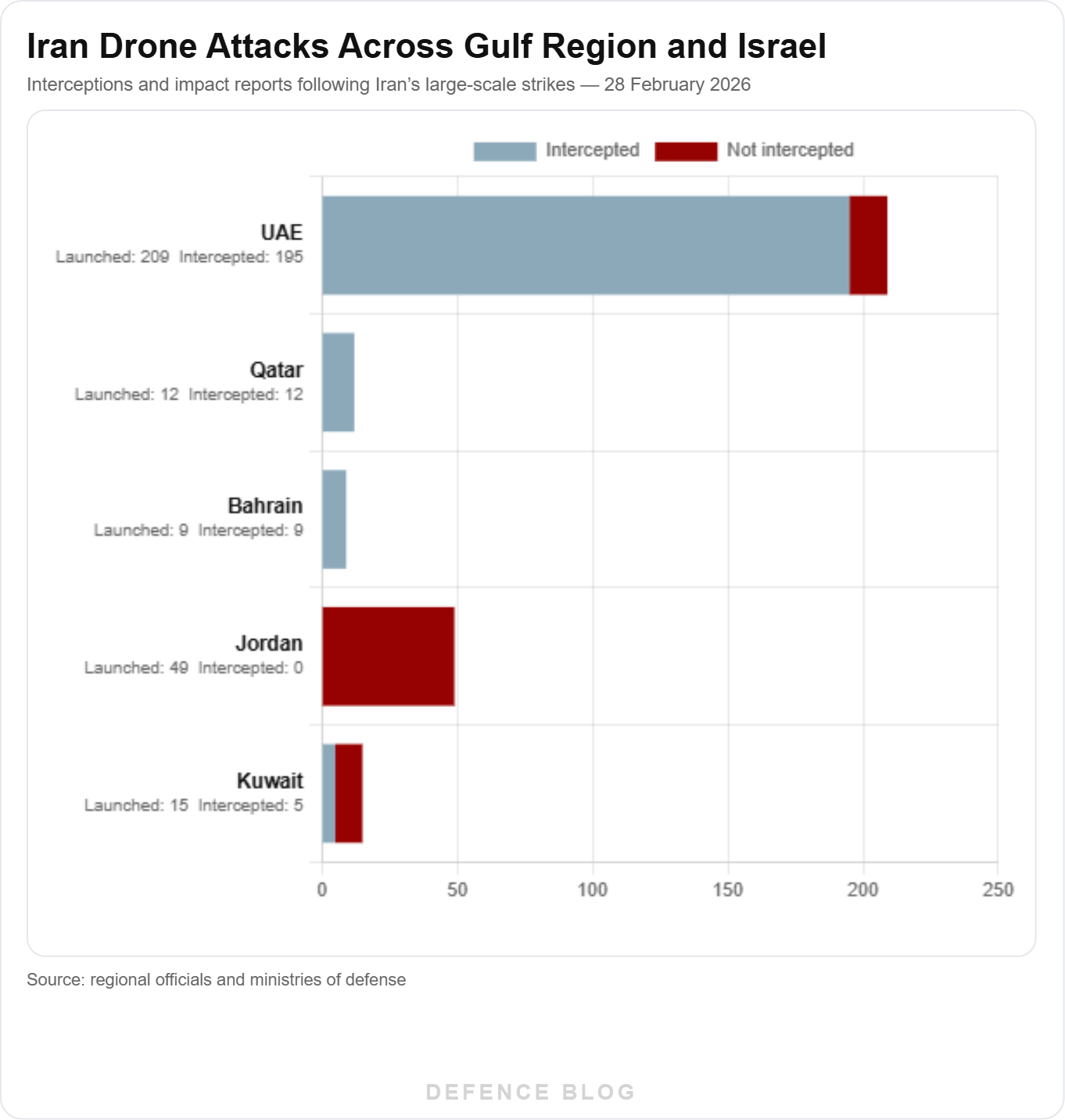
According to recent reports, work on these cages began in May and was completed after months of Iranian strikes and the subsequent rising Emirati concerns about the security of energy infrastructure, airports, and navigation. More importantly, one of the drones struck a fuel tank near Dubai Airport on March 16, while subsequent Emirati data reported dealing with 551 ballistic missiles, 29 cruise missiles, and 2,265 drones during the war. Militarily, these numbers not only indicate the intensity of Iranian fire; they also mean that any interception network, no matter how advanced, will eventually reach a saturation point.
Why Did Abu Dhabi Choose the Metal Cage Now?
The cages here are not a substitute for the Patriot or THAAD systems, nor for radars and command and control. Their function is simpler and more modest: to prevent the drone from directly reaching the tank body or to force it to explode before the ideal contact point, thereby reducing the impact of shrapnel, heat, and pressure on the sensitive surface. This type of protection does not stop a ballistic missile, nor does it solve the cruise missile problem if it reaches its target, but it creates a useful final layer against slow and cheap drones that have become the preferred weapon for anyone wanting to embarrass their opponent at the lowest possible cost.
- Installation work began around May after a wave of attacks on Emirati facilities and corridors.
- Fortification was completed at energy-related sites near Abu Dhabi and near Dubai International Airport.
- The immediate goal is to reduce the impact of suicide drones of the Shahed class and similar types, not to intercept heavy missiles.
- The solution is practically borrowed from Russian and Ukrainian experiences in protecting fixed assets from drone strikes.
Any military personnel who has served in the region knows that defending an oil facility is not like defending an airbase. An airbase can maneuver and distribute aircraft and munitions; however, an oil tank is a fixed and large target filled with enough energy to create a political and psychological impact that exceeds the explosion itself. Therefore, placing a steel layer over it is not a symbolic act, but rather an acknowledgment that the fundamental problem is no longer just about shooting down the hostile aircraft, but ensuring that a small leak or localized fire does not turn into an image that shakes the state's reputation as a safe center for energy and trade.
The Real Capability Is Not Just in the Weapon
For years, I have repeated that the strength of any army is measured by three dimensions: weaponry, training, and institution. Gulf countries are very superior in the first dimension, but weaker than they acknowledge in the other two. The current step taken by the UAE is important because it belongs specifically to the third dimension, that is, to the mindset of the institution that learns, adapts, and adds non-flashy but practical layers of defense. This is much better than merely showcasing Western batteries at exhibitions and press releases.
However, one should not exaggerate. The steel cage protects against a specific scenario, but it does not solve the larger dilemma: how does the state manage a long attrition battle against an adversary capable of launching large waves of drones and missiles at a cost much lower than the cost of interception? When Abu Dhabi states that it has dealt with hundreds of missiles and thousands of drones, the issue is no longer just technical, but also economic and organizational. How many intercept missiles can be launched daily? How many hours can radars and batteries be kept at maximum readiness? And how many vital facilities can be protected simultaneously if the target list expands from ports to tanks to airports to gas stations?
Here lies the significance of the cages. They send a message that the UAE has begun to act on the basis that breaches will occur sometimes, no matter how high the quality of the upper systems, and therefore losses must be minimized after a breach. This is an advanced military civil defense mentality, but it also indicates that deterrence no longer prevents targeting as it was supposed to.
What Does This Step Say About the Gulf Balance?
Notably, this step comes after Emirati accusations against Iran of striking ADNOC vessels in the Strait of Hormuz, and after Abu Dhabi announced an open halt to trade with Tehran following accusations of launching two ballistic missiles towards the state. This indicates a clear transition from maritime message warfare to pressure on economic contracts: ports, tankers, airports, tanks, and insurance and shipping routes.
In my estimation, this shift is more dangerous for the Gulf than a conventional missile strike. A ballistic missile creates a big headline for one day, while the ongoing threat of drones creates a permanent cost on the economy: higher insurance, new preventive measures, operational slowdowns, and increased spending on engineering solutions, security, and sensing. Therefore, Iran does not need to destroy Emirati facilities to achieve a strategic impact; it is enough to make the protection of these facilities more costly and complicated year after year.
Here, the old Gulf paradox appears in a new form. The UAE and Saudi Arabia have purchased the best defensive umbrellas on the market, but they are discovering once again that the adversary can drag them into an uncomfortable battle, a battle of cheap tools against expensive targets. The metal cage over the tank is much cheaper than an intercept missile, and this is a point in favor of Abu Dhabi in terms of learning. But at the same time, it exposes that the security environment in the Gulf is no longer managed solely by the logic of air control, but by the logic of protecting infrastructure layer by layer.
Summary by Ahmed Al-Rashed
These cages will not change the balance of power alone, but they may be one of the truest military images in the Gulf this year. Why? Because they tell the truth that the region does not like: possessing American-made air defense does not mean having complete immunity, and having money does not eliminate the need for humble and practical thinking. In modern wars, a very wealthy state may end up protecting an oil tank with a steel mesh because this, simply put, is more effective than launching an expensive missile at every cheap drone.
If the UAE continues on this path, it will have learned the right lesson: defense is not a single platform but a flexible system that starts from cyberspace and radar and does not end with the metal cage over the tank. However, if it settles for this step as a quick visual solution, the problem will remain the same: an adversary capable of imposing its rhythm with cheap tools, and a wealthy Gulf that pays more each time to remain in almost the same place.
The United Arab Emirates has installed steel cages over fuel tanks at Abu Dhabi and near Dubai International Airport to protect against Iranian drone attacks. This installation follows a series of Iranian strikes, including a drone attack on March 16 that hit a fuel tank. The UAE's approach indicates a shift towards more cost-effective defensive measures in response to the increasing threat from drones.
- The UAE has installed steel cages over fuel tanks to protect against Iranian drones.
- 2265 Iranian drones have been reported in the conflict.
- The installation began in May after a series of Iranian attacks.
- One drone struck a fuel tank near Dubai International Airport on March 16.
- The UAE's actions reflect a shift in defense strategy towards cost-effective measures.