
France and the Netherlands Launch Nuclear Dialogue in 2026 — Europe's Deterrence Lacks Joint Operational Authority
 Dr. Klaus Weber
France and the Netherlands Launch Nuclear Dialogue in 2026 — Europe's Deterrence Lacks Joint Operational Authority
On October 14, the bilateral Nuclear Steering Group of France and the Netherlands met for the first time. The meeting is politically noteworthy, but militarily modest at first: no new weapon system was decided, no joint operational planning was published, and no French nuclear guarantee was promised. This difference is crucial. Europe is beginning to talk about its own nuclear dimension, but still lacks a common nuclear decision-making authority.
A Conversation with Clear Institutional Boundaries
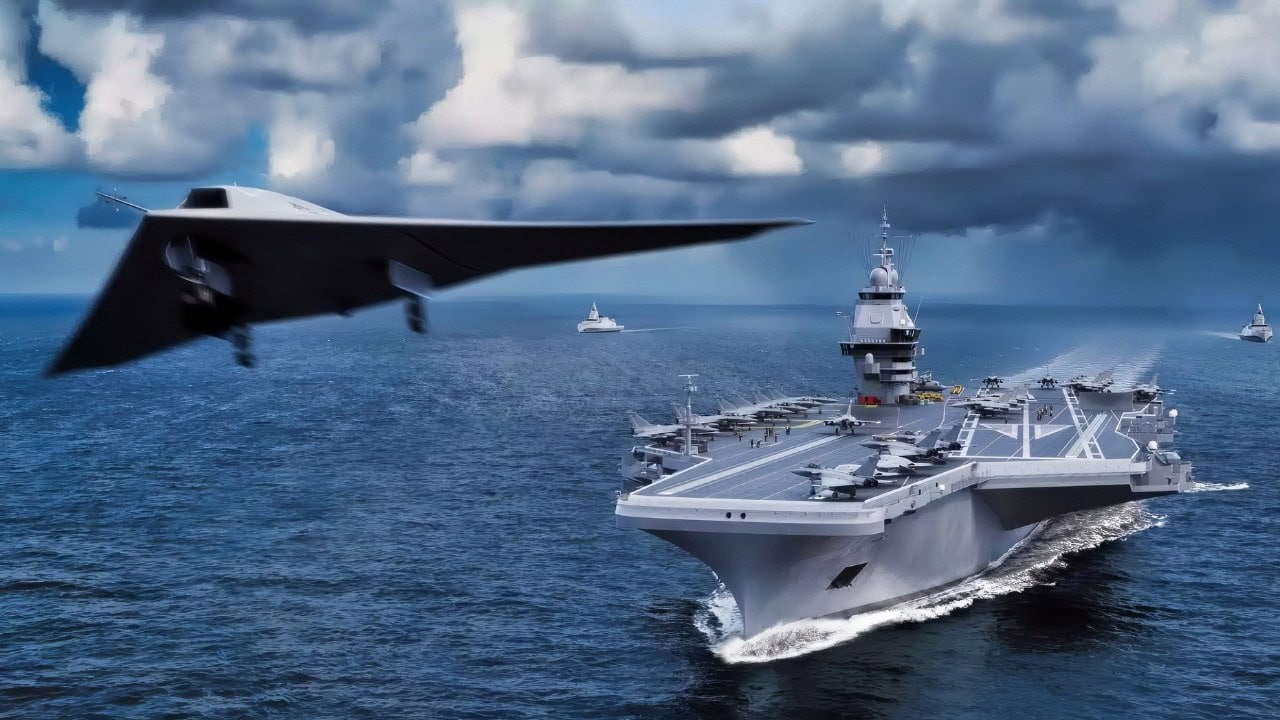
The Dutch Ministry of Defense explicitly describes the meeting as a strategic dialogue to strengthen European nuclear and conventional deterrence. At the same time, The Hague emphasizes that the cooperation should complement NATO's collective defense and not replace it. This formulation is not a diplomatic detail, but the political framework of the entire project. The Netherlands wants more European responsibility without questioning the American security guarantee or the nuclear participation of the alliance.
France, on the other hand, traditionally pursues a different model. Its Force de dissuasion remains under national control; the decision on deployment lies with the French president. The sea-based component with Triomphant submarines and M51 missiles ensures strategic second-strike capability. The air-based component with Rafale and nuclear stand-off munitions expands options but does not replace the political exclusivity of the French decision. Paris can offer consultations but cannot give away automatic co-decision-making.
Why The Hague Still Comes to the Table
The Dutch position follows a sober calculation. The Russian war of aggression against Ukraine has disproven the assumption that conventional stability in Europe is permanently guaranteed. At the same time, the reliability of American commitments is the subject of a political debate that European governments cannot ignore. For the Netherlands, this creates a dual pressure to act: national defense must become more robust, and the European pillar of NATO must not consist solely of higher budget figures.
The Netherlands does not possess its own nuclear weapon. However, its armed forces are closely integrated into NATO structures; the Royal Netherlands Air Force operates F-35A and is involved in the alliance's nuclear participation. This is technically and organizationally somewhat different from a French national deterrent. Therefore, a Dutch interest in talks with Paris does not mean that The Hague can support a French deployment decision tomorrow. It initially means that the government is reassessing the political geography of European deterrence.
The Real Question Is Not Who Owns the Bomb
The European debate often remains stuck in symbolism. The more important question is what military capabilities are needed for credible deterrence below the nuclear threshold. These include resilient command and communication systems, protected reconnaissance, anti-submarine warfare, air defense, long-range capabilities, and the ability to quickly distinguish between NATO and national decision-making paths in a crisis.
Here lies the potential value of the French-Dutch dialogue. France brings strategic autonomy and its own nuclear force to the table. The Netherlands contributes NATO interoperability, maritime capabilities, F-35 experience, and a traditionally strong involvement in multinational command structures. Therefore, a meaningful dialogue could initially address the conventional prerequisites of deterrence: shared situational awareness, protection of critical infrastructure, maritime surveillance, and the resilience of political communication.
But is that enough? Without a political understanding of which threats affect France's vital interests and what role European partners play in a crisis, the term "European dimension" remains deliberately vague. This may be wise at the beginning. However, in the long run, strategic ambiguity will not automatically lead to strategic strength.
The Absence of Germany Is the Elephant in the Room
For Germany, the dialogue is uncomfortable. Berlin supports greater European responsibility but does not possess its own nuclear force and has not yet committed to a French guarantee as a substitute for the American commitment. At the same time, any European deterrence arrangement would be incomplete without German political, financial, and conventional contributions. Germany cannot handle the nuclear question by claiming it is exclusively French. However, it also cannot Europeanize it through a vague promise.
The institutional problem is thus visible: NATO remains the framework for collective defense, France insists on national decision-making authority, and individual European states are seeking a political assurance for the case of American restraint. So far, there is no common decision-making mechanism among these three levels. Another working group will not create one.
Dialogue Is Necessary but Not Yet Deterrence
The first Nuclear Steering Group meeting is therefore a signal, not a breakthrough. It shows that the French initiative from March resonates and that The Hague no longer views European security responsibility solely as a budgetary issue. However, it also shows that the partners do not want to weaken NATO and do not claim automatic participation in the French Force de dissuasion.
The next steps should be verifiable: regular political consultations, a common definition of critical conventional support capabilities, and clear rules for the exchange of sensitive information. Only after that can it be assessed whether a robust European pillar emerges from the dialogue. Europe's dilemma remains: France can initiate a European debate on nuclear weapons, but only multiple states together can create the conventional and political infrastructure that makes this debate credible.
Sources
France and the Netherlands convened their inaugural Nuclear Steering Group meeting on October 14, 2026, to enhance European nuclear and conventional deterrence. The discussions highlighted the need for a collective European security framework while reaffirming NATO's role. No new military systems were agreed upon, and France emphasized its national control over nuclear decisions, while the Netherlands sought to increase European defense responsibilities without compromising NATO commitments.
- France and the Netherlands held their first Nuclear Steering Group meeting on October 14, 2026.
- The meeting aimed to strengthen European nuclear and conventional deterrence.
- No new weapons systems or joint operational plans were announced during the meeting.
- The Netherlands seeks more European responsibility without undermining NATO's collective defense.
- France maintains national control over its nuclear deterrent.