
France Develops Multiple Types of Long-Range Strike Weapons, Including Advanced Hypersonic Weapons and Inexpensive Cruise Missiles
[Global Times Special Correspondent Xie Zhao] In the increasingly apparent divergence between the United States and European countries, more and more European nations are beginning to consider strengthening their own military capabilities, rather than relying on the security commitments of the United States. On the 18th, U.S. Defense News reported that France will initiate the development of a new generation of land-based ballistic missiles with a range of 2,500 kilometers, equipped with hypersonic glide vehicles. On the 20th, Russia's Sputnik News stated that regarding France's plans to strengthen its nuclear arsenal, "the Russian military's strike list will have to consider France's intentions to deploy its nuclear weapons in non-nuclear European countries."
Building Independent Land-Based Long-Range Precision Strike Capability
According to Defense News, Patrick Palou, head of the French Armaments Directorate, revealed that France will start the development of a ballistic missile with a range of 2,500 kilometers this year, with a budget of approximately 1 billion euros. This medium-range ballistic missile will be equipped with a maneuverable hypersonic glide vehicle, "which may provide the best cost-effectiveness for France's military deterrence."
It is reported that after the Cold War, France believed that the threat from Soviet medium-range missiles had disappeared. To save financial expenditures, it announced the abandonment of land-based nuclear forces in 1996, shifting to a "dual-capable" nuclear deterrence framework based on sea and air. However, in recent years, as the U.S. and Russia successively withdrew from the Intermediate-Range Nuclear Forces Treaty, and with Russia's new generation of "Zircon" hypersonic medium-range missiles entering combat, the U.S. has repeatedly threatened to withdraw from NATO. French President Macron proposed that Europe also needs to build an independent land-based long-range precision strike capability to fill the strategic deterrence gap. In 2024, France took the lead in proposing the "European Long-Range Strike Program," which includes a series of medium and long-range weapon development plans, with the 2,500-kilometer range ballistic missile developed by the Ariane Group becoming a top priority.
At the Paris Air Show in June 2025, the Ariane Group showcased two new models of land-based ballistic missiles and announced its "two-step" development plan. The first type is a single-stage solid-fuel ballistic missile with a range of over 1,000 kilometers, which can be launched from standard missile launchers. The second type is a two-stage ballistic missile, with a range increased to over 2,000 kilometers. Both types of missiles heavily draw on the mature experience gained by the Ariane Group during the development of the M51 submarine-launched intercontinental missile.
On the 18th, the Ukrainian "Defense News" website reported that France's medium-range ballistic missile will next be combined with the V-MAX hypersonic glide vehicle developed by the Ariane Group, providing a longer range and stronger penetration capability. This project was officially launched in January 2019, with then-French Defense Minister Florence Parly declaring, "Many countries possess such (hypersonic) weapons, and we cannot continue to wait." In June 2023, V-MAX successfully conducted its first test at a missile test site in southwestern France using a sounding rocket provided by the U.S. The complex white trail it left in the sky was clearly visible in several areas of southwestern France and northern Spain. In 2025, France, in order to completely eliminate its dependence on the U.S., requested that subsequent tests of V-MAX use domestically produced rockets, which is expected to delay progress.
Defense News reported that France's timeline for deploying this new type of ballistic missile is set for 2035. Palou stated, "There is no difficulty in meeting the schedule, but it is indeed a bit late." He revealed that France will accelerate related development work, aiming to have it in service by 2030. To this end, it will first introduce an early model without anti-jamming measures, and then add these features in subsequent models.
France Has Multiple Long-Range Projects
Defense News reported that France is also simultaneously advancing multiple long-range strike projects. Several French companies are bidding for a new generation of "Long-Range Ground Fire Systems." The U.S.-made M270 long-range rocket artillery system currently in service with the French Army is expected to begin retiring in 2027, prompting France to plan to replace it with domestically produced equipment. The European missile group (MBDA) and Safran have developed the "Thunder" precision-guided rocket artillery, while the Ariane Group and Thales have jointly launched the FLP-T 150 long-range rocket artillery. Both have ranges exceeding 150 kilometers and do not use any components restricted by U.S. export licenses, completely freeing Europe from U.S. control over long-range strike equipment.
At the same time, France is developing various long-range cruise missiles. Among them, the "Scalp-EG" Mk.2 is an improved version of the French Air Force's current "Scalp-EG" air-launched cruise missile, with the core goal of upgrading key systems to cope with more complex battlefield environments and filling the capability gap before the next generation of cruise missiles enters service.
France is also jointly developing "Future Cruise/Anti-Ship Weapons" (STRATUS) with the UK and Italy, which includes two different models. The STRATUS LO (low-observable type) primarily executes long-range deep strike and anti-ship missions, leveraging its stealth characteristics and high subsonic flight capabilities; the STRATUS RS (rapid strike type) is mainly used to suppress/destroy enemy air defense systems and strike high-value targets, with a maximum speed of 3-5 Mach.
Additionally, based on the French shipborne cruise missile, MBDA is developing a land-based cruise missile aimed at filling the gap in Europe's conventional long-range strike capabilities, with the first launch planned for as early as 2027. Its range exceeds 1,000 kilometers, and it is expected to achieve initial operational capability in the early 2030s.
Furthermore, France is developing various low-cost long-range drones to meet the ammunition consumption needs of large-scale conflicts. MBDA is working on a jet-powered long-range strike drone with a range of about 500 kilometers and a warhead weight of 40 kilograms. The French Armaments Directorate issued a development and production order in January 2026, with plans to complete the first batch of deliveries by mid-2027. MBDA claims it can produce 1,000 of these low-cost long-range drones per month. Another heavier suicide drone can carry a 300-kilogram warhead and has a range of 800 kilometers.
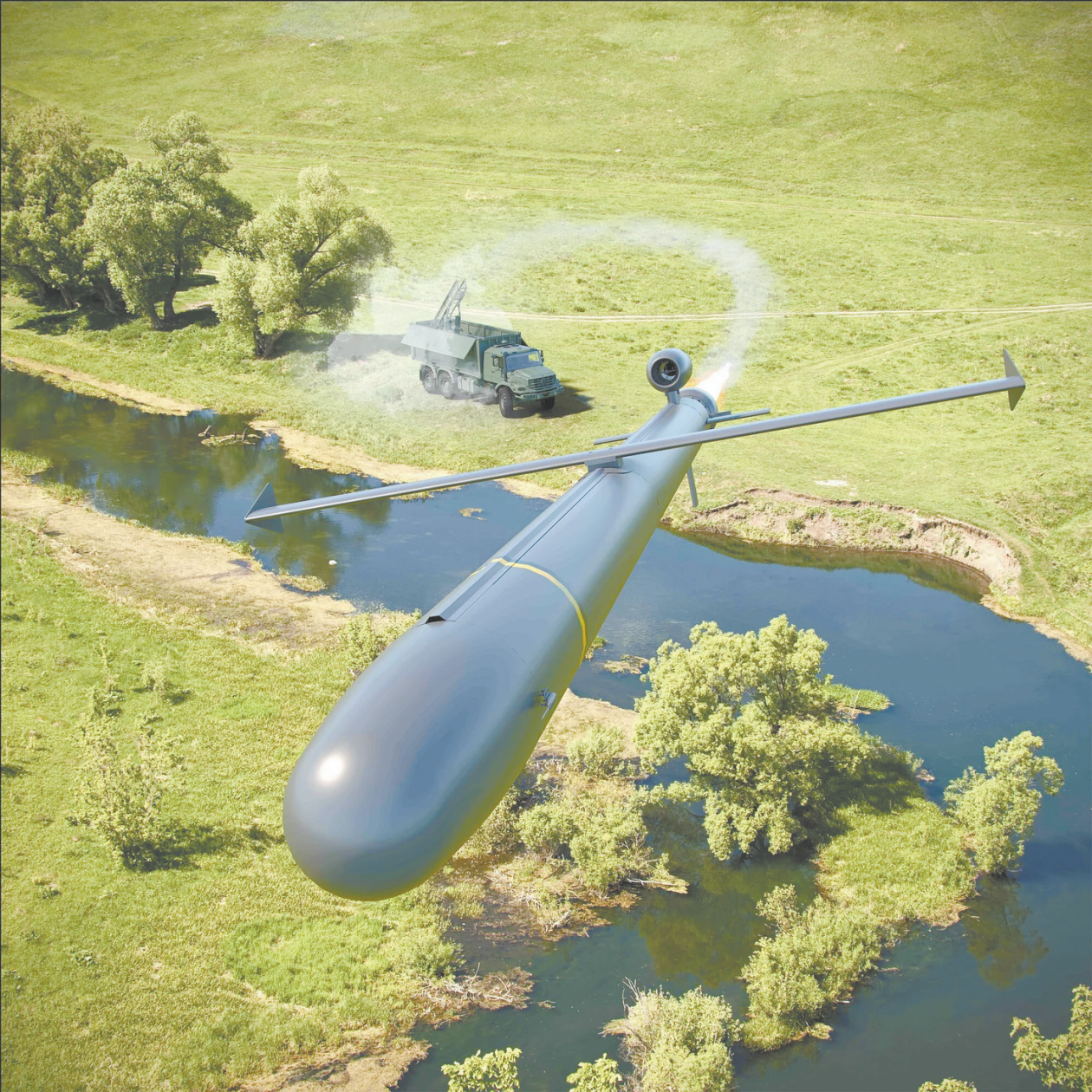
Additionally, the French defense company Turgis & Gaillard is collaborating with automobile manufacturer Renault to develop a low-cost attack platform that falls between a cruise missile and a suicide drone. It references the design of Ukraine's "Flamingo" long-range missile and can carry a 500-kilogram warhead, with a range exceeding 3,000 kilometers and a speed of about 400 kilometers per hour. The French Armaments Directorate has awarded a contract worth 35 million euros, planning to evaluate the first batch of this type of drone this summer. If the tests are successful, a long-term order worth approximately 1 billion euros may be signed in the future. Palou stated, "This drone is much cheaper compared to other similar weapons and can be produced in large quantities."
France's Strengthening of Nuclear Doctrine Provokes Russian Military Response
These actions by France to strengthen its strategic deterrence and long-range strike capabilities have already elicited a response from Russia. In a speech on March 2 regarding France's nuclear deterrence policy, President Macron stated that in the face of new threats, France must strengthen its nuclear doctrine and ordered an increase in the number of French nuclear weapons. According to the so-called "frontline deterrence" nuclear plan announced by Macron, France will, in certain circumstances, "deploy strategic nuclear forces among allied countries," allowing French aircraft carrying nuclear weapons to penetrate deep into the European continent, thereby expanding the defense range. As the only nuclear-armed country in the EU, France is attempting to provide a "nuclear umbrella" for Europe, thereby promoting European defense autonomy to a higher level. Currently, eight European countries have agreed to participate, but this also means a significant adjustment to France's traditional nuclear philosophy. Professor Vasinski from the Free University of Brussels' International Politics Research Center stated that if France's nuclear deterrent expands to encompass all of Europe, it increases the likelihood of France itself becoming a target for nuclear attacks.
On the 20th, Russian Deputy Foreign Minister Alexander Grushko stated that given the possibility of France's nuclear forces being dispersed to facilities in non-nuclear European countries and continuing to execute their combat missions from there, the Russian military will have to consider France's intentions to deploy its nuclear weapons in non-nuclear European countries when updating its priority strike target list in the event of renewed conflict.
France is developing a new generation of land-based ballistic missiles with a range of 2500 kilometers, equipped with hypersonic glide vehicles, starting this year. The French Armed Forces are enhancing their nuclear capabilities and plan to deploy these systems by 2035. Additionally, France is advancing multiple remote strike projects, including new cruise missiles and low-cost drones, to strengthen its military independence from the U.S.
- France is developing a new land-based ballistic missile with a range of 2500 kilometers.
- The missile will be equipped with hypersonic glide vehicles.
- France plans to enhance its nuclear capabilities and deploy these systems by 2035.
- Multiple remote strike projects are being advanced, including new cruise missiles and drones.
- France aims to reduce reliance on U.S. military technology in its defense systems.