
France's UCUV Bet Could Change NATO's Underwater War
 Alexandra Reeves
France's UCUV Bet Could Change NATO's Underwater War
France has finally decided that the seabed deserves its own unmanned arms race. Paris has signed a contract with Naval Group to develop a large oceangoing uncrewed combat underwater vehicle, with sea trials planned for 2028. That sounds like a technology demonstrator. It is more than that. France is testing whether an autonomous submarine can become a persistent military instrument across one of the world's largest maritime spaces.
The timing is the point. European navies are rediscovering that underwater infrastructure, cables, pipelines and naval routes are not protected simply because they are difficult to see. Russia's submarine activity and the sabotage anxiety around critical infrastructure have made the seabed a front line. France's answer is not to build another expensive crewed submarine. It is to put endurance, sensors and risk-taking into a platform that does not need a berth for a crew.
What France Is Actually Building
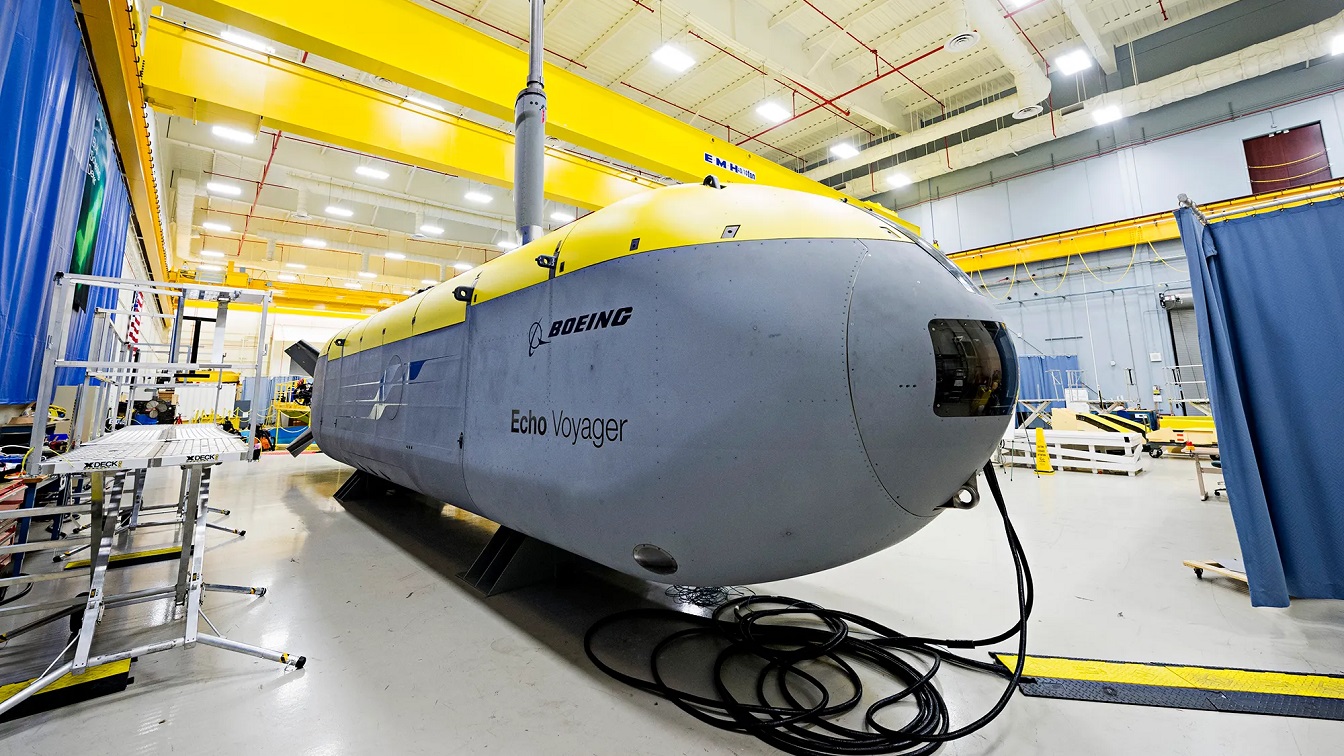
According to Defense News, citing France's Armed Forces Ministry, the UCUV demonstrator must prove endurance and controlled autonomous decision-making. Its missions could range from intelligence, surveillance and reconnaissance to what the ministry calls more offensive neutralization actions. The vehicle must also be air transportable and deployable from a pier or a surface vessel.
Those requirements matter more than a glossy model. Air transportability gives France a way to move the system between its Atlantic, Mediterranean, Indian Ocean and Pacific responsibilities. Deployment from a ship or pier means the navy does not need to dedicate a specialised mothership every time it wants to put an unmanned sensor into the water. The concept is designed for a navy that has too much ocean and too few hulls.
- Sea trials: planned for 2028
- Primary functions: ISR, autonomous patrol and potentially offensive missions
- Deployment: pier, surface vessel or air transport
- Control: autonomous decisions adapted to tactical and environmental conditions, including potential failures
- France's maritime reach: about 11 million square kilometres of exclusive economic zone
The Strategic Logic Is Bigger Than France
France is joining a small but increasingly crowded group. The United States is developing Boeing's Orca extra-large unmanned underwater vehicle. Britain has reported a heavy-torpedo launch from an uncrewed submarine. Australia has ordered a fleet of Anduril Ghost Shark vehicles. The direction is unmistakable: allies are moving from remotely piloted experiments toward systems expected to operate at distance, with limited human intervention.
That creates a useful NATO capability, but not automatically a NATO capability. An underwater drone that can patrol, classify contacts and report on infrastructure is valuable only if allies agree on data standards, rules of engagement and the threshold for intervention. The alliance has spent years discussing maritime domain awareness as if the problem were mainly a shortage of screens in headquarters. The harder problem is getting persistent sensors into hostile waters without risking sailors.
Here is the uncomfortable assumption to challenge: an unmanned submarine is not simply a cheaper submarine. It changes the political cost of action. A lost crewed boat is a national crisis. A lost UCUV is still an intelligence failure and perhaps an escalation trigger, but it is not a mass-casualty event. That may give commanders more freedom to inspect suspicious activity, map an adversary's patterns and test its reactions. It may also tempt governments to take risks they would avoid with a crewed platform.
Money And Autonomy Will Decide The Result
France's budget shows both ambition and caution. The 2026 defence budget allocated €30 million in commitment authorisations and €17 million in payment appropriations for the ocean-going demonstrator, according to a French National Assembly budget report cited by Defense News. France's 2024-2030 military programming law also set aside €5 billion for drones and robots across seven years.
That is meaningful money for a demonstrator, not proof of a deployable fleet. The difficult engineering is not just propulsion or battery life. It is deciding when an autonomous system should alter course, surface, abort a mission or classify an object as hostile. Underwater communications are intermittent. Sensors are imperfect. GPS is unavailable at depth. An algorithm that performs well in a test range may behave very differently in a crowded, noisy and contested sea.
Naval Group's earlier self-funded 10-ton ocean-going drone work gives France a head start, but it does not solve the operational question. The navy needs a system that can be maintained, updated and trusted over years, not a remarkable prototype that works only with a large shore team standing behind it.
NATO's Underwater Gap Is Also An Industrial Gap
The UCUV programme is therefore a test of European defence industry as much as naval technology. France wants sovereign control over a capability that touches nuclear deterrence, seabed security and long-range surveillance. Britain, Australia and the United States are developing their own paths. Cooperation may be politically attractive, but each country will want control over software, sensors and weapons integration.
That tension is familiar. Europe says it wants strategic autonomy, then discovers that autonomy requires production lines, specialist technicians and common standards. A fleet of unmanned submarines will not appear because ministers announce one at a defence exhibition. It will appear only if governments buy enough systems to create a real support ecosystem and accept that early versions will be imperfect.
The next milestone is not the contract signing. It is the 2028 sea trial. Watch whether France demonstrates long endurance, reliable autonomous recovery from faults and useful cooperation with crewed ships and aircraft. If it does, the UCUV could become a practical way for NATO to watch its maritime approaches without exposing sailors to every dangerous inspection. If it does not, Europe will have purchased another expensive demonstration of how hard the seabed remains to control.
France is making the right bet, but it is still only a bet. The underwater war of the next decade will be won by the navy that can combine autonomy with disciplined human judgment. NATO has plenty of submarines. What it lacks is persistent, expendable and politically usable presence beneath the waves.
Sources
- Defense News, “France tasks Naval Group to develop large oceangoing underwater drone,” November 4, 2026.
- French Armed Forces Ministry statements quoted in the Defense News report.
- French National Assembly, 2026 defence budget report: budget report.
- Royal Navy, “Historic first as Royal Navy launches torpedo from uncrewed submarine,” September 30, 2026.
France is developing a large oceangoing uncrewed combat underwater vehicle (UCUV) with planned sea trials in 2028. This initiative aims to enhance military capabilities in response to increased underwater threats, particularly from Russian submarine activity. The UCUV will perform various missions, including intelligence, surveillance, reconnaissance, and potentially offensive actions, while being deployable from various platforms.
- France signed a contract with Naval Group to develop a large oceangoing uncrewed combat underwater vehicle (UCUV).
- Sea trials for the UCUV are planned for 2028.
- The UCUV will be capable of intelligence, surveillance, reconnaissance, and offensive missions.
- France's 2026 defense budget allocated €30 million for the UCUV demonstrator.
- The UCUV aims to enhance NATO's underwater capabilities.