
FREYA 2026 forces Ukraine and Europe's industry to the first real system test
 Dr. Klaus Weber
FREYA 2026 Forces Ukraine and Europe's Industry into the First Real System Test
700,000 dollars against 3.8 million dollars: The true political core of FREYA lies in this difference. President Volodymyr Zelensky announced on Thursday after the NATO summit in Ankara that he would convene a first coalition round in France for a Ukrainian-European anti-ballistic system. The number is not just a cost calculation. It describes the gap between a war that must intercept ballistic missiles daily and a European defense industry that has been talking about sovereignty for years but rarely integrates a complete weapon system under wartime pressure.
According to Ukrainian representation, FREYA is not meant to be a symbolic addition to Patriot, but a cheaper, mass-producible counterpart against Russian ballistic missiles. The core is the Ukrainian FP-7.X interceptor from Fire Point, designed for interception altitudes of about 15 miles. However, Zelensky himself pointed out what the problem is: A system does not consist of a missile and a launch device. It requires radars, fire control, data processing, command interfaces, and industrial quality assurance. This is exactly where Europe begins.
Why FREYA is More than a Ukrainian Project
According to reports from Defense News, Fire Point is in talks with Hensoldt in Germany for radar technology, as well as with Thales, Leonardo, and Kongsberg for locating, command, and control systems. This is institutionally more interesting than the usual announcement of new aid packages. For the first time since the beginning of the war, a Ukrainian development is being enhanced not only by European funding but also by European system architecture.
Ukraine brings the most urgent operational need and the fastest innovation culture. Europe provides exactly those components that turn a missile into an air defense system. If this division of labor works, FREYA would be a counter-model to Europe's previous dependence on American high-end systems. If it fails, it will remain just another memorandum stuck in the engine room of national export rules, industrial interests, and certification processes.
The timing is not coincidental. At the NATO summit in Ankara, allies pledged military aid of around 70 billion euros for this year. At the same time, Donald Trump promised to give Ukraine a license for Patriot production. This sounds spectacular but does not solve the timing problem. PAC-3-MSE interceptors are among the most protected American technologies. Defense News points to production times of about 24 months for the missile and around 30 months for the solid rocket motor. Even accelerated U.S. contracts will deliver significant quantities only by the end of the decade.
Patriot Remains Necessary but Not Sufficient
Patriot remains indispensable for Ukraine because it is one of the few systems that can reliably combat ballistic missiles. However, the strategic conclusion from four years of war is not that Kyiv needs more Patriot alone. It is that no European security space should be permanently reliant on a single American bottleneck. The U.S. fired between 1,060 and 1,430 Patriot interceptors during the Iran War, according to American analyses, at a unit cost of about 3.9 million dollars. Lockheed Martin delivered around 620 PAC-3s last year; by 2030, industry targets aim for up to 2,000 annually. These numbers are large, but not reassuring for two parallel theaters of war.
Therefore, FREYA addresses not only Ukraine but also the European ammunition concept. Europe has long thought in terms of platforms: aircraft, frigates, tanks, batteries. However, the war shows that the decisive measure is often quantity, replacement rate, and sensor fusion. An interceptor for 700,000 dollars, as long as this number remains technically realistic, changes the political economy of air defense. It allows for more shots per budget unit. But is that enough?
No, if Europe misunderstands the Ukrainian approach merely as a cheap procurement solution. A cheaper missile is not a substitute for a robust network. Radars must detect target trajectories early enough, fire control systems must process data in seconds, national manufacturers must disclose interfaces, and the involved governments must clarify export and liability issues before the crisis, not afterward. This is precisely where European armament programs have often failed in peacetime.
The Industrial Test for Europe's Defense Union
FREYA is therefore a test case for the defense union that Brussels likes to talk about. It is not the press release that matters, but three questions. First: Can Germany, France, Italy, and Norway coordinate their companies so that Ukraine is not caught between national responsibilities? Second: Will the funding be oriented towards multi-year production lines or just the next political donor conference? Third: Will Kyiv gain access to enough technical data to further develop the system in wartime?
The target deadlines are ambitious. Fire Point aims to produce three interceptors per day starting in August after the flight test in early June and to achieve the first ballistic launch by the end of 2027. These deadlines are almost indecently short for European procurement administrations. That is precisely why they are useful. They force Europe's industry to turn its usual logic upside down: not first perfect requirements, then years of development, finally series production; but an ongoing war requirement, rapid prototypes, iterative integration, and industrial scaling under risk.
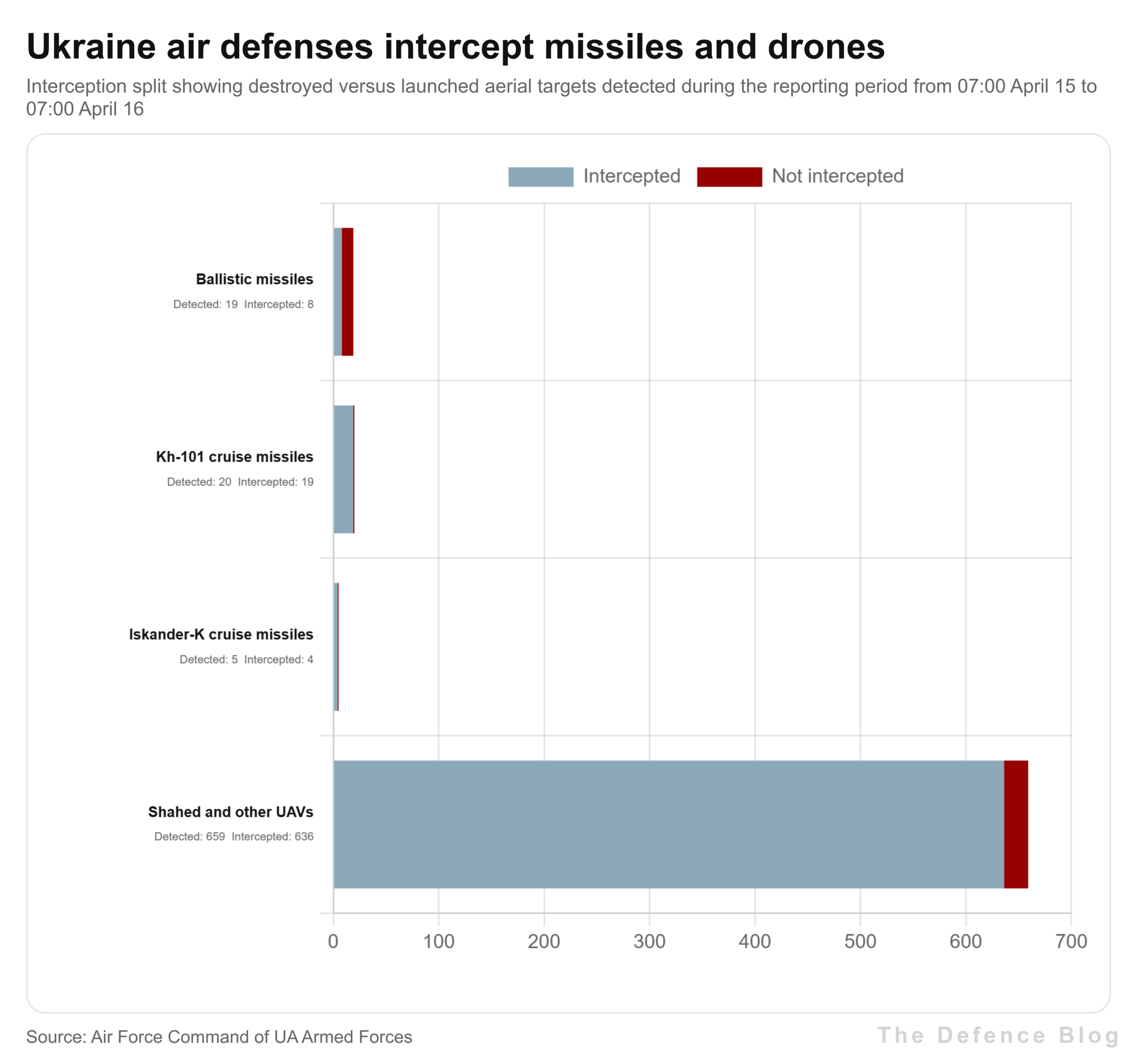
This does not mean that one should uncritically adopt Ukrainian optimism figures. FREYA must prove that it can combat not only drones or cruise missiles but also ballistic targets under real countermeasures. The May data from the UN, indicating that long-range missiles and drones caused 45 percent of civilian casualties, show why Ukraine is taking this bet. In a major Russian attack on Kyiv, according to Ukrainian reports, all 29 ballistic missiles were not intercepted. This is not a technical footnote but a political urgency.
European Autonomy Begins with Interfaces
For Berlin, FREYA is particularly uncomfortable. Germany possesses sensor expertise with Hensoldt, industrial depth with Rheinmetall and Diehl, and theoretically money with the special fund. Nevertheless, the Federal Republic has often conducted its air defense policy as a procurement policy: Arrow 3, Patriot, IRIS-T SLM, Sky Shield. All of this is necessary. But purchasing does not replace integration capability. Those who take European sovereignty seriously must be willing to combine Ukrainian speed with German system discipline.
France, on the other hand, gets an opportunity to put its sovereignty rhetoric into practice. If Thales and possibly MBDA-related competencies are integrated into a Ukrainian system, it will not create a French leading platform but a shared European-Ukrainian security product. This is politically more difficult but strategically more valuable. Italy and Norway face the same question: Do they supply components, or do they accept real joint system responsibility?
The difference is crucial. Component delivery is industrial policy. System responsibility is defense policy. FREYA will only become more than a project name if Europe's states coordinate their companies, budgets, and export rules in such a way that Kyiv does not have to embark on a diplomatic tour with every software change.
The paradoxical conclusion is therefore: Europe's defense autonomy may not begin in Brussels, Paris, or Berlin, but in a Ukrainian interceptor that forces European radars and command systems to finally work together. Europe now has more money. What is still missing is the ability to turn that into a system under time pressure. FREYA will show whether this capability exists.
Ukrainian President Zelensky announced the initiation of the FREYA 2026 anti-ballistic system project in France, aiming to enhance Ukraine's air defense capabilities. The project involves collaboration with European defense contractors to integrate various components necessary for effective missile interception. This initiative marks a significant step towards European defense autonomy, addressing the urgent operational needs of Ukraine while reducing reliance on American systems. Production goals are ambitious, targeting three interceptors per day by August.
- Ukrainian President Zelensky announced a coalition for an anti-ballistic system in France after the NATO summit.
- FREYA aims to provide a cost-effective alternative to the Patriot system for intercepting ballistic missiles.
- Fire Point is in talks with European defense companies for radar and command systems integration.
- The project represents a shift towards European defense autonomy and collaboration with Ukraine.
- Production goals include three interceptors per day starting in August, with a first ballistic launch by the end of 2027.