
Algiers and Bamako reopen the sky in 2026 — Tinzaouaten changes the calculations of the Sahel
 Marie Dubois
Algiers and Bamako Reopen the Skies in 2026 — Tinzaouaten Changes the Calculation of the Sahel
On July 11, between Algiers and Bamako, it is not just an ambassador who resumes his journey. It is an air corridor, closed for fifteen months, that becomes passable again for civilian and military aircraft from both countries. After the crisis of the drone shot down near Tinzaouaten, in the Malian region of Kidal, Algeria and Mali announced the reopening of their respective airspaces and the return of their diplomatic representatives.
On a map, this seems administrative. On the ground, it is something else. Tinzaouaten is on the northern edge of Mali, facing the Algerian border, in an area where tracks, tribal networks, smuggling, and armed groups matter more than lines drawn in ink. When this sector closes politically, the entire Malian theater of operations loses depth.
A Drone Incident Becomes a Strategic Crisis
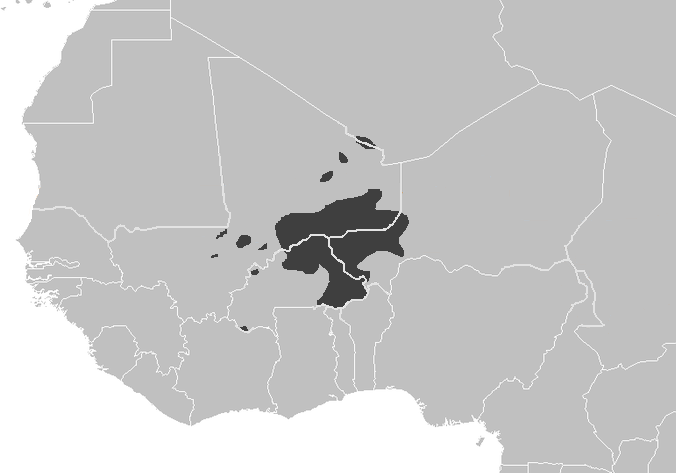
The rupture comes from the night of March 31, 2025. Algiers claims to have destroyed a Malian military drone of Turkish manufacture after a violation of its airspace. Bamako, on the other hand, insists that the aircraft was on the Malian side. In the logic of a general staff, the nuance is immense: a drone lost on reconnaissance over its own territory is a serious accident; a drone that crosses a sensitive border is a political fault.
Mali, joined by Niger and Burkina Faso, recalled its ambassadors, speaking of an aggression against the confederal space of the Alliance of Sahel States. Algeria responded by closing its skies to flights to and from Mali and recalling its own representatives. Bamako also left a regional military coordination mechanism that included Algeria, Mali, Niger, and Mauritania against terrorism.
This chain of measures mainly revealed a fragility: the AES needs displayed sovereignty, but northern Mali needs cross-border coordination. The two imperatives often contradict each other.
Why Algerian Airspace Matters to Bamako
From Bamako, Kidal is far away. Gao is far away. Tinzaouaten is even further. The distances are not abstract: a convoy heading north exposes its flanks for hundreds of kilometers, crosses areas where ambushes can be prepared with minimal means, and depends on water points, fuel, human intelligence, and local relays. In this environment, air support is not a luxury. It allows for surveillance, the movement of authorities, evacuation, and sometimes simply shows that the state can still reach an area.
The reopening of airspace does not mean that Algeria will become the security godfather of Mali again. It rather means that both capitals have understood the cost of a complete rupture. For Bamako, fighting in the north while keeping Algiers as a diplomatic adversary amounted to adding an unnecessary front. For Algiers, allowing northern Mali to drift without a channel with Bamako increased the risk of instability rising towards Tamanrasset and the Saharan routes.
One must remain cautious: the operational details of this resumption are not public. It is still unclear whether intelligence cooperation will be reactivated, or at what level officers from both countries will communicate again. But the return of ambassadors at least creates a line of communication.
Algerian Mediation Returns Through the Back Door
Before the Malian coups of 2020 and 2021, Algiers played a central role in mediating with the Tuareg movements. This role was never neutral in the romantic sense: Algeria primarily protects its southern border and refuses the permanent establishment of armed groups capable of moving between Mali, Niger, and its own territory. But it knew the actors, the families, the routes, and the power dynamics.
Bamako, on its part, has chosen a harder line for several years: a break with France, a rapprochement with Moscow, integration into the AES, increased reliance on the Russian Africa Corps, and a priority given to military reconquest. This line yields occasional results, such as the recapture or temporary securing of certain localities. It does not resolve the essential question: who controls the bush when the column moves on?
This is where Algeria becomes useful again, even if Bamako will not say it that way. The Tuareg groups, smuggling networks, and katibas linked to the Support Group for Islam and Muslims, the JNIM, do not disappear just because a capital renames them. They adapt to diplomatic ruptures as they adapt to the seasons.
Russia in the Picture, Not Out of the Calculation
The timing makes the rapprochement even more interesting. At the same time, Moscow promises to continue its military support to the AES states and emphasizes cooperation with their armed forces, including the future unified Sahelian force. Russia provides the juntas with what Paris could no longer politically offer: weapons, instructors, a discourse without democratic conditions, and a symbolic validation of their sovereignty.
But the Africa Corps does not replace geography. A Russian instructor in Gao does not replace a de-escalation channel with Algiers. An attack aircraft does not replace a minimal agreement on trajectories, patrols, and border incidents. From experience, in the Sahara, the problem is never just about striking. It is about knowing what you are striking, where you can land, who warns after a mistake, and who prevents the mistake from becoming a state crisis.
The resumption with Algiers thus shows a limit of the AES-Moscow model: it can harden the military posture, but it cannot alone create regional depth. Sahelian armies can buy drones and issue statements, but they remain prisoners of long, porous, and politically volatile borders.
What Armed Groups Will Observe
The JNIM and the Tuareg separatists do not need to comment on the reopening of the skies to draw conclusions. They will first look to see if flights actually resume, if the movements of the Malian army towards Kidal become smoother, if Algiers resumes local contacts, and if border incidents decrease. These are more serious indicators than a statement.
If the détente remains diplomatic, its effect will be limited. If it translates into discreet military channels, it may complicate the task of groups that exploit the gray areas between Kidal, Tinzaouaten, and southern Algeria. The critical point will be trust. After a drone is shot down, it does not return with a handshake. It is rebuilt incident by incident.
For Bamako, the immediate danger is to read this resumption as a political victory. That would be a mistake. It is a minimal repair after fifteen months of damage. The real test will come with the next misidentified flight, the next raid near the border, or the next column caught between an ambush and a diplomatic protest. In northern Mali, the skies are reopened. The ground, however, remains closed to improvisation.
On July 11, 2026, Algeria and Mali reopened their airspace for civilian and military flights after a 15-month closure due to a drone incident. This development marks a significant step in restoring diplomatic relations between the two nations, which had been strained following the downing of a Malian drone. The reopening is crucial for military operations and regional security, as it allows for better coordination against armed groups in the Sahel region.
- Algeria and Mali reopened their airspace for civilian and military flights after 15 months of closure.
- The closure was due to a drone incident involving a Malian military drone.
- The reopening signifies a return to diplomatic relations between the two countries.
- Algeria's role in regional security and its historical mediation efforts are highlighted.
- The report notes the ongoing challenges in the region, including the presence of armed groups.