
Fujian Ship 2026 Crosses the Taiwan Strait, PLA's Three Aircraft Carrier System Still Lacks Carrier-Based Aviation Capacity
 Li Minghui
The Fujian Carrier Crosses the Taiwan Strait in 2026, PLA's Three Aircraft Carrier System Still Lacks Carrier-Based Aviation Capacity
On June 23, the Fujian carrier crossed the Taiwan Strait. This action itself is not complicated; a new aircraft carrier forming combat capability is moving south for training, which makes technical sense. However, an interesting detail in the high-altitude black-and-white photos released by Taiwan's defense department is that there are no carrier-based aircraft visible on the flight deck.
I believe this "empty deck" photo speaks more to the issue than slogans do. The Fujian carrier is no longer a project in a dry dock; it is entering a rhythm of maritime training. However, it is also not yet a mature aircraft carrier that can immediately deploy a complete carrier-based aviation group for high-intensity missions.
The Empty Deck Reveals Not a Weakness, But a Stage
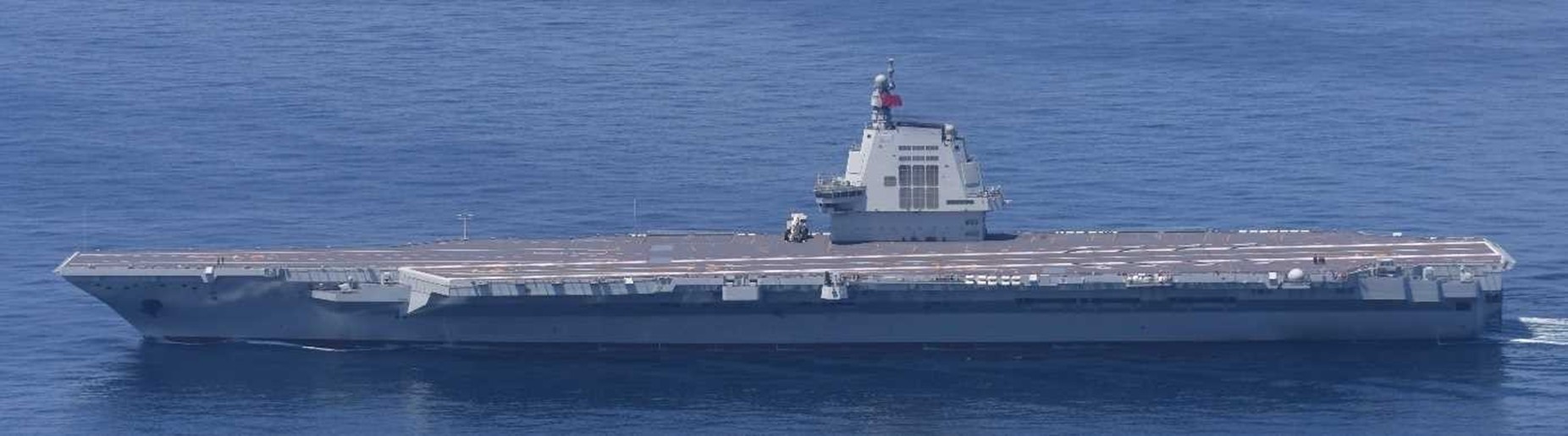
According to a report by The Diplomat in June, Taiwan confirmed that the Fujian carrier passed through the Taiwan Strait and initiated joint surveillance measures. The report also mentioned that Beijing described it as routine training, and similar activities will continue in the future. This statement is not surprising; what really needs to be unpacked is the training content behind the term "routine."
The biggest difference between the Fujian carrier and the Liaoning and Shandong carriers is not the increase in displacement, but that the electromagnetic catapult system has revamped the entire carrier-based aviation system. The J-15 from the ski-jump takeoff era can address the "existence" issue; the electromagnetic catapult requires the J-15T, J-35, KJ-600, and J-15D to mature simultaneously in deck scheduling, launch parameters, maintenance support, and pilot transitions. In simple terms, what the Fujian carrier needs to validate is not a single catapult track, but a new aviation production line.
Three Aircraft Carriers Do Not Equal Three Complete Battle Groups
It is easy for outsiders to interpret the Fujian carrier's crossing of the Taiwan Strait as "China entering the era of three aircraft carriers." This statement has a certain appeal, but it is technically premature. The Liaoning carrier has reportedly concluded over 40 days of activities in the Western Pacific, while the Shandong carrier has been pointed out by several open-source observers as undergoing a longer maintenance period. The existence of three ships does not mean that all three can simultaneously deploy a complete carrier-based aircraft group at sea.
- The Liaoning and Shandong carriers still primarily operate on a ski-jump system, with the core being the J-15 and its training and maintenance chain.
- The Fujian carrier uses electromagnetic catapults, requiring new carrier-based aircraft and new deck processes to be re-acclimated.
- If all three carriers operate simultaneously at high intensity, the demand for fixed-wing carrier-based aircraft could approach nearly a hundred, not including backups, training, and maintenance turnover.
This number may seem like a rough estimate, but it is crucial for the carrier group. The combat capability of an aircraft carrier is not a simple addition of "ships plus aircraft," but rather a multiplication of pilots, deck crew, maintenance personnel, munitions, spare parts, and shore-based training systems. Any shortcoming will reduce the operational rate of the entire ship.
The Strategic Implications of the Fujian Carrier's Southern Movement
After passing through the Taiwan Strait, if the Fujian carrier continues training southward, the most natural environment would be the South China Sea. There, there are supporting facilities like Sanya, as well as a maritime and aerial electromagnetic environment that is closer to actual combat. For the PLA Navy, the Taiwan Strait, South China Sea, and Western Pacific are being connected into a training loop: near-sea political signals, South China Sea support acclimatization, and Western Pacific open-sea validation.
There is a reality that is easily overlooked: the faster the Fujian carrier enters training, the more it will expose the supply pressure of carrier-based aviation. China's shipyards' ability to build large ships is no longer the main question; the real challenge is whether they can continuously cultivate enough pilots for catapult-equipped carrier-based aircraft and deck maintenance teams. Transitioning pilots from land-based runways to aircraft carriers is not as simple as changing airports; night landings, recovery in adverse weather, and high-frequency launches all require time to develop.
The Diplomat's assessment is that China may have entered the "three aircraft carrier era," but has not yet reached the stage of "three mature carrier-based aviation groups operating simultaneously." I agree with this distinction.
The Fujian carrier's crossing of the Taiwan Strait will certainly exert pressure on Taiwan and neighboring countries; however, it is also a pressure test for Beijing internally. The next focus should not be on which body of water the Fujian carrier crosses next, but rather when the combinations of J-15T, J-35, and KJ-600 will consistently appear on the deck. Only then will the outside world need to reassess the true pace of the PLA Navy's aircraft carrier force.
The Fujian aircraft carrier transited the Taiwan Strait on June 23, 2026, as part of its training operations. This movement highlights the ongoing development of the People's Liberation Army Navy's capabilities, although the carrier currently lacks a complete set of operational aircraft. The transition is viewed as a routine training exercise, but it underscores the strategic implications for regional security and the need for further development of carrier-based aviation.
- Fujian aircraft carrier transited the Taiwan Strait on June 23, 2026.
- The carrier currently lacks a full complement of carrier-based aircraft.
- The transition is part of routine training operations by the PLAN.
- The carrier's electromagnetic catapult system requires new aircraft and operational adjustments.
- The operational readiness of the PLAN's carrier strike groups is still developing.