
Fujian Ship to Cross Taiwan Strait Again in 2026, Empty Deck Shows PLA Aircraft Carrier Training Still on the Rise
 Li Minghui
The Fujian Carrier Crosses the Taiwan Strait Again in 2026, Empty Deck Indicates PLA Navy Aircraft Carrier Training is Still in the Ascent
On June 24, the Taiwan defense department released a photo of the Fujian carrier, and the most noteworthy aspect is not the aircraft carrier itself, but the deck. The photo shows no carrier-based aircraft, and the flight deck is quite clean. The South China Morning Post and several Taiwanese media outlets later confirmed that the Type 003 Fujian carrier passed through the Taiwan Strait on the 23rd, marking another instance this year of it entering a highly scrutinized narrow waterway. This detail can easily be interpreted as a show of strength, but I prefer to view it as a transition and signal test during a training cycle.
An Empty Deck Speaks More Than a Full Deck
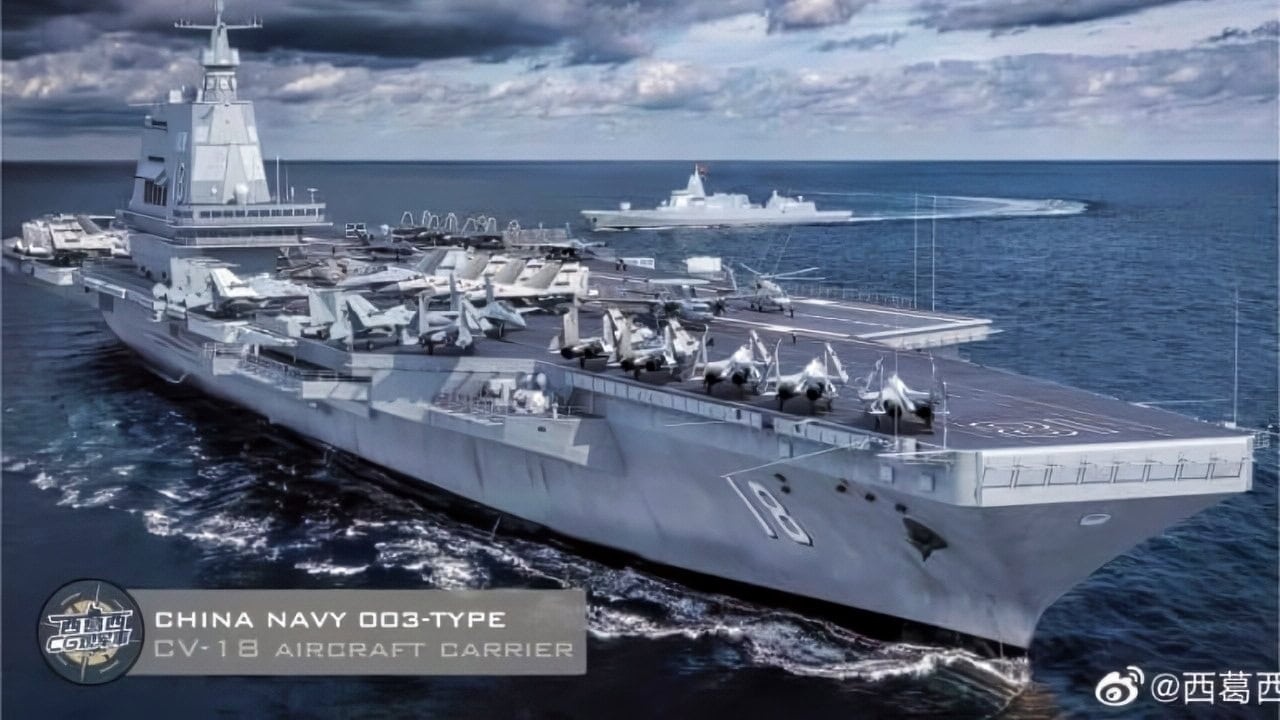
The Fujian carrier is China's first aircraft carrier to use an electromagnetic catapult and arrestor wire system, with a full-load displacement typically estimated by outsiders to be over 80,000 tons. Its biggest difference from the Liaoning and Shandong carriers is not that it is larger, but that the operational logic of its deck is completely different. The challenge for ski-jump deck carriers lies in the payload and takeoff weight of carrier-based aircraft, while the challenge for catapult carriers shifts to the reliability of the catapult system, deck scheduling, ship-aircraft data links, and maintenance support.
Therefore, the fact that Taiwan captured images of an empty deck does not simply indicate that the Fujian carrier lacks combat capability. A more reasonable explanation is that its passage through the strait was in a low-threat transition state, or that it was returning to port for maintenance after completing a certain phase of training. For a new aircraft carrier that is still in the ascent phase, the truly valuable indicators are not how many J-15T aircraft are visible in publicly released photos, but rather how many consecutive days it maintains catapult launches and recoveries, the ratio of night operations, and the turnaround time for maintenance of carrier-based aircraft. These data have not been made public yet.
The Timing of the Strait Passage is Interesting
The timing of the Fujian carrier's passage through the Taiwan Strait coincided with the conclusion of a five-day immediate combat readiness exercise initiated by Taiwan. The Taiwanese side stated that the focus of the exercise was on rapid mobilization and troop deployment before a conflict breaks out. In other words, the Taiwanese military is testing its ability to quickly enter a wartime state, while the PLA is using its latest aircraft carrier to traverse the most sensitive waters, testing the other side's monitoring, reporting, and public opinion response.
It is important to avoid an over-interpretation: the Fujian carrier itself is not suitable for executing high-intensity air operations within the Taiwan Strait. The strait is too narrow, and land-based air forces, rocket forces, and land-based anti-ship firepower are the more realistic protagonists. The true value of the Fujian carrier lies outside the strait, in the waters east of the Bashi Channel, the Philippine Sea, and the South China Sea, pushing carrier-based aviation beyond the range of land-based air forces. In simple terms, it is not meant to block the door, but to create a second layer of pressure outside the door.
The Type 003 Still Lacks a Public Answer
From the available information, the hardware progress of the Fujian carrier has been quite rapid, but the combat capability of an aircraft carrier is not something that naturally emerges at the moment of delivery from the shipyard. A complete aircraft carrier air wing must address at least three categories of issues:
- Carrier-based aircraft composition: How to form a fixed grouping of J-15T, J-35, KJ-600, and Z-20 carrier-based variants.
- Catapult support: The sustained operational capability of the electromagnetic catapult system in high-temperature, high-salinity, and high-humidity environments.
- Long-range resupply: Whether the rhythm of accompanying Type 055 destroyers, Type 052D destroyers, and Type 901 comprehensive supply ships can keep up.
The strength of the U.S. Navy's aircraft carriers is not just due to nuclear power or large decks, but rather the deck operation culture developed over decades. The Chinese Navy is currently crossing the institutional threshold from ski-jump to catapult, which is more challenging than simply changing a set of equipment. I believe that the frequent appearances of the Fujian carrier in sensitive waters this year are more about externalizing training pressure: training itself while forcing surrounding militaries to expose their reconnaissance processes.
Impact on Regional Military Balance
Reports from Reuters and Taiwan's Central News Agency emphasize that this is yet another instance of the Fujian carrier passing through the Taiwan Strait this year. For Japan, the Philippines, and the U.S. Seventh Fleet, the significance of such maneuvers lies in the fact that the operational radius of Chinese aircraft carriers is becoming more predictable and more frequent. Predictable does not equate to low risk. On the contrary, when a military unit begins to act according to a training cycle, it indicates that it has transitioned from a testing platform to a quasi-combat platform stage.
However, the Fujian carrier is still some distance from truly changing the balance of power in the Western Pacific. When the J-35 will form a stable carrier-based squadron, whether the KJ-600 can operate frequently, and whether the electromagnetic catapult system is reliable in continuous operations—these are the key issues. The Fujian carrier we see now resembles a complex machine that is already on the road but still being calibrated. It can move, and it makes a lot of noise, but whether the engine, transmission, and maintenance team can support long-distance high-speed operations remains to be seen in the next round of long-range training, which will determine if carrier-based aircraft can truly be placed on the deck.
Source: South China Morning Post report on June 24, Reuters report on June 23, public statements from Taiwan's defense department, and public data from CSIS Missile Threat regarding the Chinese Navy's equipment and regional strike environment.
The Fujian aircraft carrier transited the Taiwan Strait on June 23, 2026, with an empty flight deck, indicating ongoing training and operational testing. This movement followed a five-day readiness exercise by Taiwan, suggesting a strategic signal regarding military readiness and response. The carrier's operational capabilities are still under development, and its presence in the region is intended to exert pressure beyond the immediate area.
- The Fujian aircraft carrier passed through the Taiwan Strait on June 23, 2026.
- The flight deck was empty, indicating a low-threat transit or post-training maintenance.
- Taiwan conducted a five-day readiness exercise prior to the carrier's transit.
- The carrier's operational capabilities are still being developed and tested.
- The transit is seen as a signal test of Taiwan's monitoring and response capabilities.