
Full of Details! Comprehensive Analysis of Maritime Three-Dimensional Landing Operations Training

The expansion of the 075-class amphibious assault ship family not only signifies an increase in quantity but also marks the transition of the combat system from "existing" to "superior," from "single-point breakthrough" to "full-chain connectivity."
On the ocean, the 075-class amphibious assault ship Anhui cuts through the waves, engaging in a joint multi-service maritime integrated landing operation training exercise. An immersive experience capturing the entire training process.
Amphibious assault ships, helicopters, and amphibious armored equipment working in coordination are key components of maritime landing operations. Modern integrated landing operations emphasize landing but are challenging in terms of coordination. In this training, the Anhui will face different combat forces, making the command process more complex.
Fully armed!
Marines boarding the ship-borne helicopter
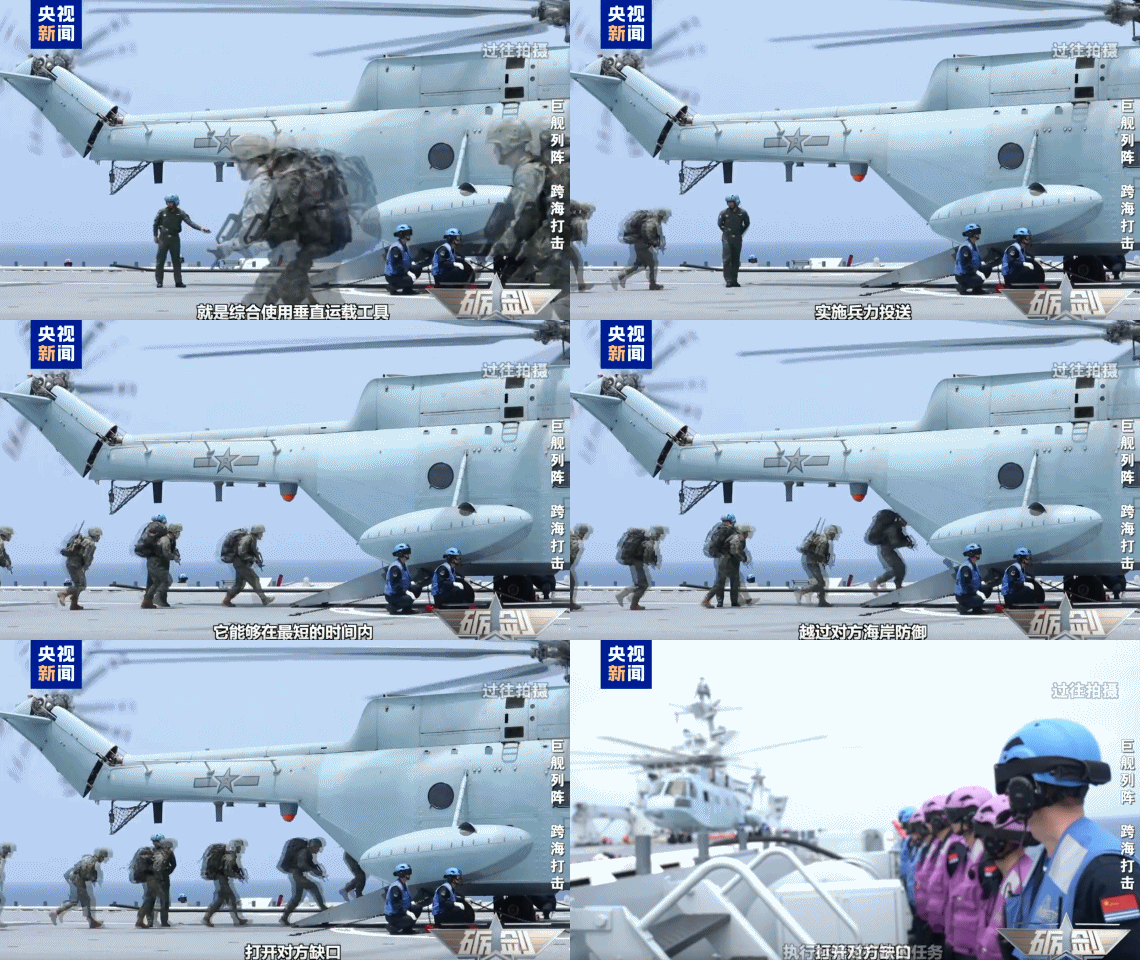
Marines fully armed, orderly board the ship-borne helicopter to carry out landing operation tasks.
Rapidly delivering combat forces to the shore is crucial for amphibious operations, and the most efficient delivery method is to comprehensively use vertical lift vehicles for troop deployment. This allows for crossing the enemy's coastal defenses in the shortest time, opening gaps, executing transport and strike missions, and quickly occupying target positions to support subsequent forces in launching attacks.
The design of the Anhui's straight-through flight deck can accommodate multiple types of helicopters, enabling the delivery of large quantities of combat forces and executing diversified combat missions.
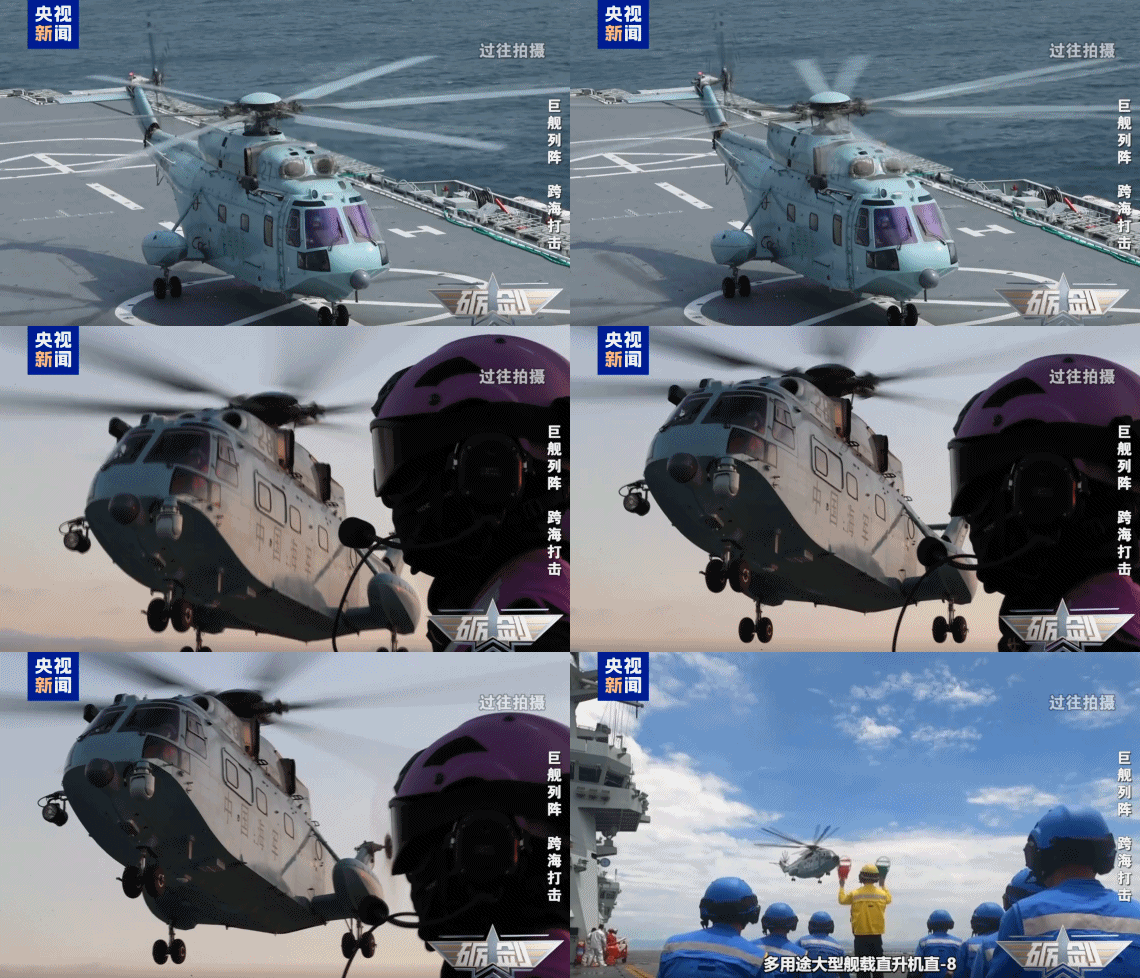
Participating in this transport mission is the multi-purpose large ship-borne transport helicopter Zhi-8, which is currently the largest domestic helicopter family by tonnage. The Zhi-8 in the naval aviation force is already the third generation of the Zhi-8 family, primarily tasked with troop transport. The Zhi-8 helicopter is notable for its large size, long range, spacious interior, and strong transport capacity, making it a true "air warhorse" in integrated landing operations.
Over-the-horizon landing!
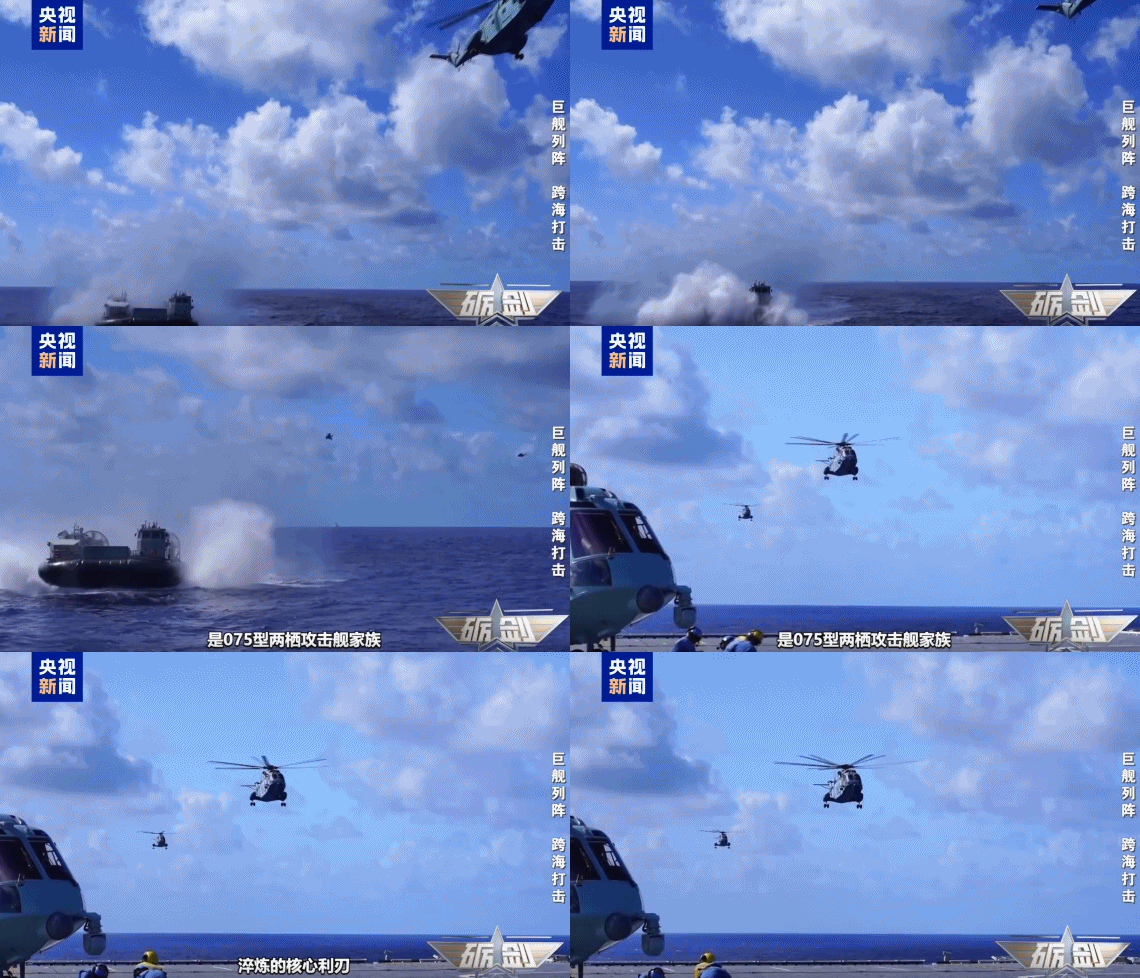
Amphibious armored equipment transferring to hovercraft landing craft
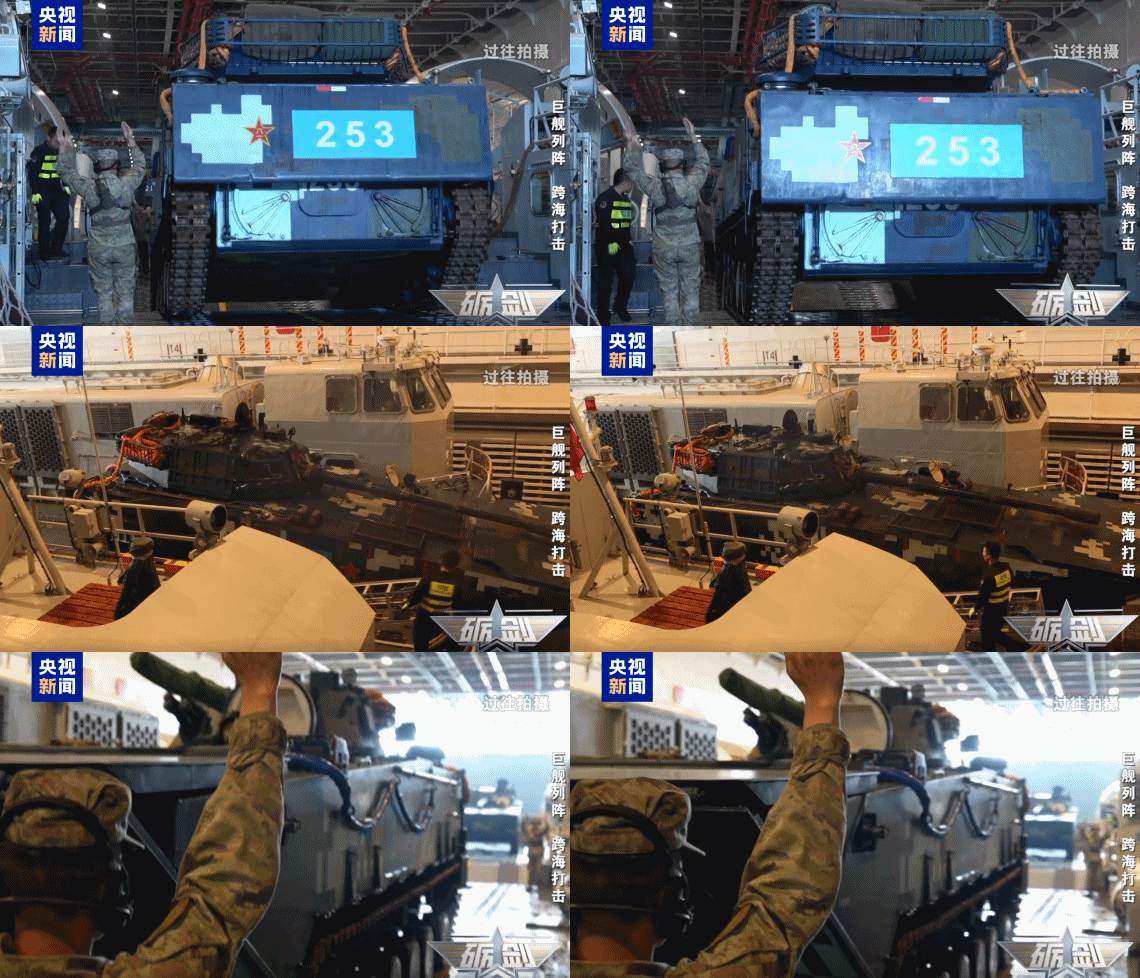
Amphibious armored equipment boards the Wild Horse hovercraft to execute the over-the-horizon landing mission.
Over-the-horizon landing involves landing troops using hovercraft, rapidly maneuvering along the coastal plane and assaulting the shore. With fast maneuvering speed, strong obstacle-crossing capability, and high carrying capacity, it enables the rapid transport of heavy combat equipment and personnel from ship to shore or from shore to shore.
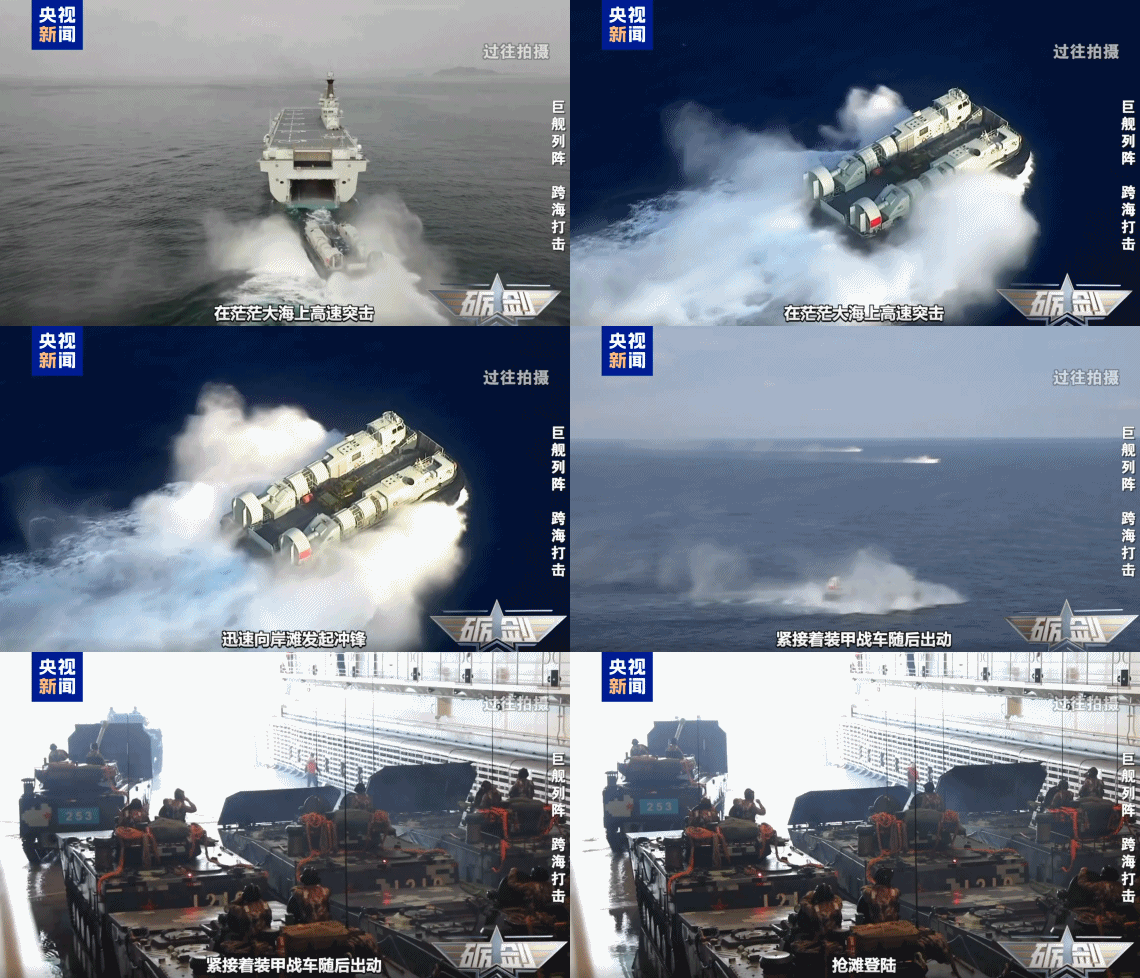
In amphibious operations, speed is key to victory. The Wild Horse hovercraft, as a sharp tool for transporting military forces, has become the "sea supercar" for amphibious armored equipment, effectively compensating for the slow assault speed and high threat from enemy fire faced by amphibious armored equipment, achieving over-the-horizon transport capability.
Launching an assault on the shore!
Amphibious armored equipment successively exiting the hatch
As the stern door of the Anhui slowly opens, two Wild Horse hovercraft, acting as "pioneers," carry amphibious armored equipment, rapidly charging across the vast ocean towards the shore. Following closely, armored vehicles then deploy to storm the beach.
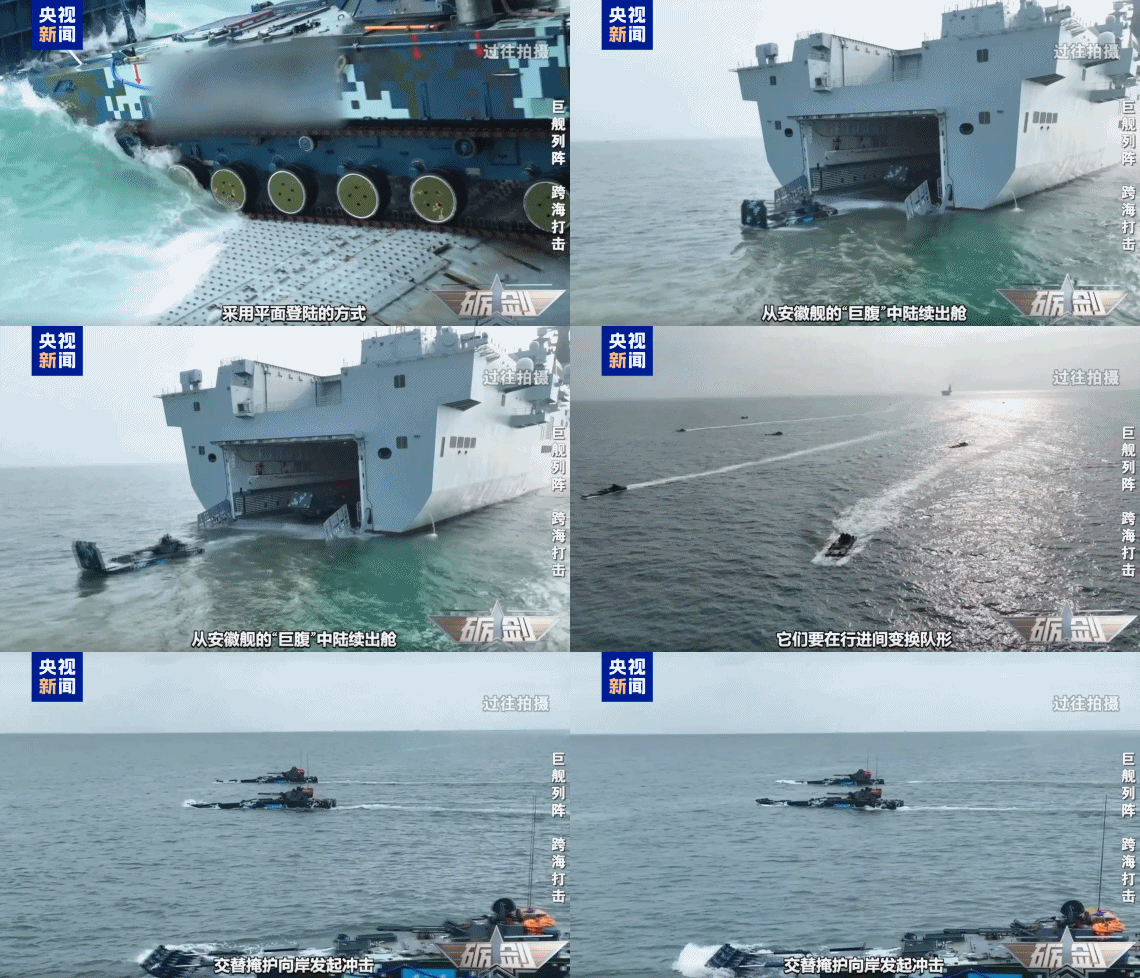
Dozens of amphibious armored vehicles use a flat landing method, successively exiting from the "giant belly" of the Anhui, changing formations while advancing, alternating to cover each other as they launch an assault on the shore. In a real combat environment, vertical landings, over-the-horizon landings, and flat landings occur simultaneously, but with different combat tasks.
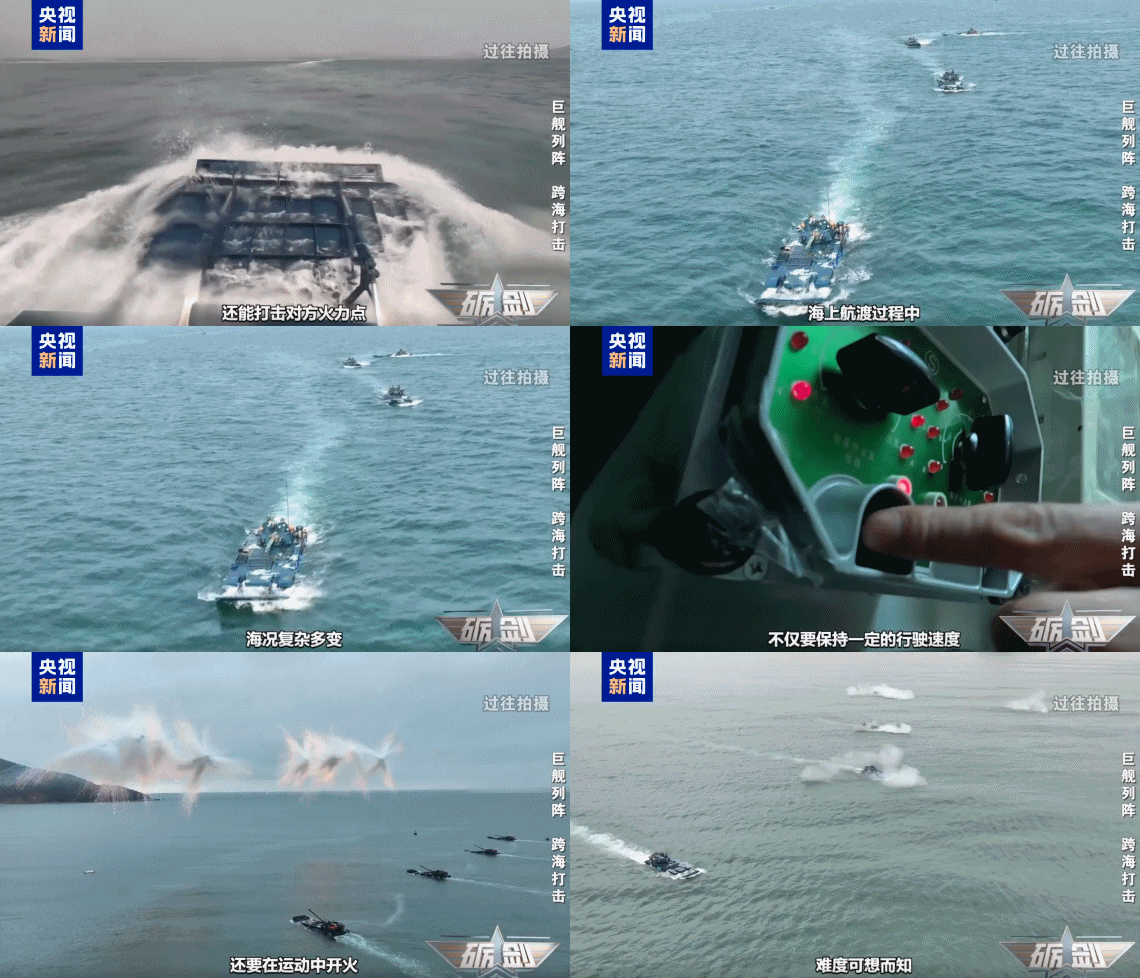
In landing operations, if the formation is too dense, it is easily hit by the enemy, while a too-dispersed formation is not conducive to forming a strong firepower strike on the shore. Therefore, armored equipment must adjust its formation based on the conditions of the landing site, ensuring both safety and the ability to strike enemy fire points.
During maritime navigation, the sea conditions are complex and changeable. Armored equipment must not only maintain a certain speed but also fire while moving, which is quite challenging. The Anhui's large carrying capacity provides solid logistical support for flat transport.
Arriving at the shore!
Implementing precise strikes to seize positions
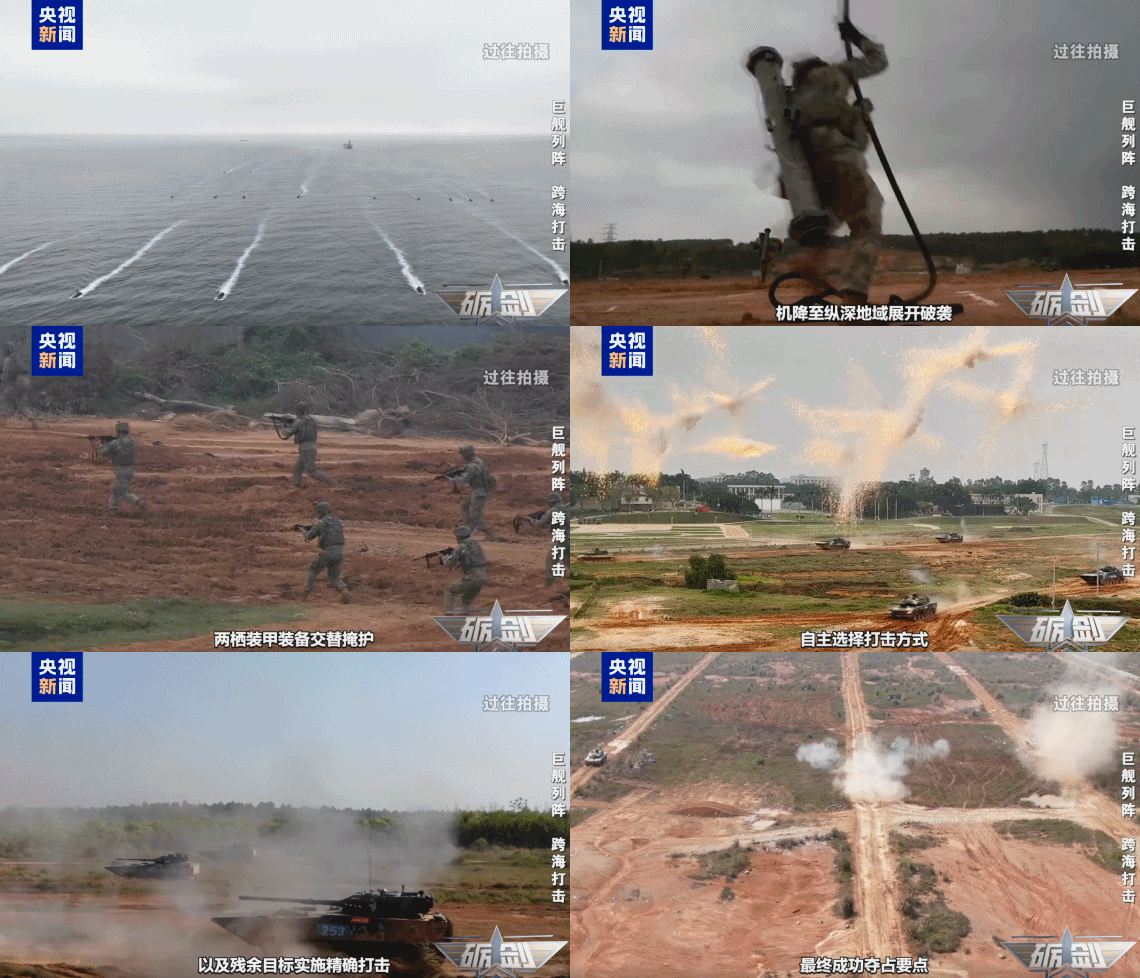
Upon reaching the shore, the transport helicopter carrying the special operations team descends into the deep area to launch a raid. Meanwhile, the amphibious armored equipment alternates in providing cover, autonomously choosing strike methods to carry out precise strikes against "enemy" bunkers, anti-armor fire points, and remaining targets, ultimately successfully capturing key points and securing positions.
Integrated landing
is thecore weapon
forged by the 075-class amphibious assault ship family
When the giant ships form a formation
The People's Navyhas already grasped
the key force for cross-sea assaults and decisive strikes
(Source: China Central Television's Defense Military Channel "Sword Training" program)
The 075-class amphibious assault ship conducted a joint multi-service amphibious landing operation training off the coast of Anhui, China. The exercise involved numerous amphibious armored vehicles and Z-8 transport helicopters, focusing on rapid troop deployment and coordination among various military units. This operation highlights the capabilities of the Chinese Navy in executing complex amphibious assaults.
- The 075-class amphibious assault ship participated in a joint landing operation.
- The operation involved various military units including helicopters and armored vehicles.
- The Z-8 helicopter is noted for its large transport capacity and role in the operation.
- Hovercraft landing crafts were used for rapid troop deployment.
- The training emphasized coordination among different military branches.