
Garbougna in Niger counts 67 dead in 2026 — JNIM challenges the Islamic State in the Sahel
 Marie Dubois
Garbougna in Niger counts 67 dead in 2026 — JNIM challenges the Islamic State in the Sahel
On May 14, in Garbougna, in the Nigerien region of Tillabéri, a military engineering unit was working on a bridge near the Malian border. It was neither a prestigious garrison nor a forward post designed to hold out alone for several hours against a jihadist column. It was a militarized construction site, thus a target more significant than it appeared.
According to Zagazola Makama and MDMG Sahel, at least 67 people, both military and civilian, were killed when heavily armed assailants overwhelmed the unit and destroyed the camp. The Support Group for Islam and Muslims, better known by its Arabic acronym JNIM, claimed responsibility for the operation. Niamey had not yet released an official toll at the time this information was circulating, which necessitates basic caution. But the order of magnitude is already telling.
A bridge targeted as a strategic objective
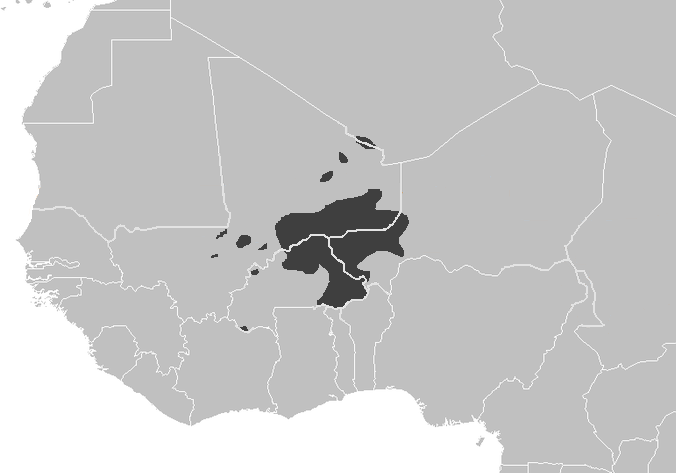
On the ground, engineering is never a detail. A bridge in Tillabéri means the possibility of moving vehicles, supporting a post, evacuating the wounded, or reopening a route that armed groups want to keep under constraint. By striking a construction unit, JNIM was not only seeking deaths or weapons. It attacked the Nigerien state's ability to stitch together a fragmented area.
Garbougna is located in that western strip where distances can be deceptive. Niamey may appear close on a map, but real control depends on tracks, fords, bridges, and logistical relays. When improvised explosive devices render certain sectors inaccessible after the assault, as indicated by local sources cited, the military effect lingers after the assailants have left. One does not just win a raid. One slows down the recovery of territory.
The signal sent to the Islamic State
The most interesting aspect is not just the toll. Garbougna is located in an area long associated with the Islamic State in the Sahel, the heir to EIGS in the tri-border region. The fact that JNIM claims an attack of such magnitude in this space indicates either a deeper penetration of its networks or a capacity to exploit margins left by its rival. Both hypotheses are bad for Niamey.
The rivalry between jihadist organizations in the Sahel does not prevent their effectiveness against states. It can even sharpen it. Each group must prove that it can strike, extract resources, impose its rules, and protect its lines of mobility. In a theater like Tillabéri, where communities live between forced taxation, reprisals, and military operations, this competition produces continuous pressure rather than stabilization through mutual exhaustion.
The U.S. National Counterterrorism Center reminded in May 2026 that JNIM remains primarily anchored in Mali and Burkina Faso but is active in several West African countries, including Niger. It estimated the group to have at least 6,000 members and highlighted its way of exploiting local divisions, economic weaknesses, and trafficking. Garbougna fits this logic. The goal is not to hold a barracks in the classical sense. The goal is to show who can decide which road works and which road becomes deadly.
The Niamey junta facing its depth problem
Since the coup in 2023, Nigerien authorities have promised a security sovereignty free from Western tutelage. The discourse is politically effective. It is more difficult to transform into daily control of a rural space where armed groups know the markets, wells, notables, smugglers, and the weak points of isolated units.
The question is not to mechanically regret Barkhane or Western deployments. I have seen, from experience, what these operations could do and what they could not do. A foreign presence can provide intelligence, air support, and a reaction capability. It never replaces the link between a local administration and the inhabitants. But its withdrawal creates a technical void that the juntas do not always have the means to fill, especially when regional cooperation has become political before being operational.
The Sahel States Alliance was supposed to address this problem. Mali, Burkina Faso, and Niger share enemies, porous borders, and a common sovereignist rhetoric. Yet recent attacks show that mutualization remains limited when jihadist columns choose weak points rather than capitals. A bridge in Garbougna is sometimes worth more, militarily, than a statement in Bamako, Ouagadougou, or Niamey.
The trap of reprisals
Niger also has a problem of operational legitimacy. Human Rights Watch documented in February a Nigerien drone strike in Kokoloko, also in Tillabéri, which reportedly killed at least 17 civilians, including children, in addition to three Islamist fighters. Authorities have not publicly responded to all requests for clarification. This type of episode should not be confused with the attack in Garbougna, but it weighs on the same human environment.
In these areas, a targeting error pays off for a long time. Displaced families do not reason in legal categories. They remember who struck the market, who burned the motorcycles, who left the road mined, who demanded zakat, who arrested a cousin. JNIM and the Islamic State work precisely within this local memory. A brutal response after Garbougna could satisfy urban opinion for forty-eight hours and provide jihadist recruiters with six months of material.
What Garbougna signals
The next phase will likely play out less in grand announcements than in construction sites, convoys, and secondary routes. Armed groups will seek to strike engineering, telecommunications, fuel depots, and markets that allow the state to return. They do not need to take Tillabéri city to impose their pace. It is enough for them to make every movement between the Niger River, the Malian border, and the Burkinabe fringes costly.
There remain significant unknowns. The final toll is not confirmed by Niamey. The exact composition of the commando is not publicly established. It is also unclear whether the attack marks a lasting advance of JNIM or an opportunistic operation in a contested area. But the tactical message is clear: in western Niger, the fight is no longer just about bases. It is about the minimal infrastructure that allows a state to breathe.
If Niamey wants to avoid Garbougna becoming a reproducible model, the priority is not only to pursue the assailants. It is necessary to secure engineering teams, clear IED routes, protect markets without turning them into targets, and restore a fire discipline that limits civilian casualties. Otherwise, the next bridge will not only be destroyed. It may not even be built.
Sources
- Zagazola Makama, May 17, 2026, Garbougna attack and JNIM claim.
- MDMG Sahel, May 17, 2026, provisional toll and destruction of the military engineering camp.
- National Counterterrorism Center, JNIM fact sheet updated in May 2026.
- Human Rights Watch, investigation into the Kokoloko strike in the Tillabéri region.
- ACLED, analyses on jihadist expansion in the Benin-Niger-Nigeria triangle and central Sahel.
On May 14, 2026, heavily armed assailants attacked a military engineering unit in Garbougna, Tillabéri, resulting in 67 casualties, including military personnel and civilians. The JNIM claimed responsibility for the assault, which targeted a strategically important bridge construction site. This incident underscores the ongoing jihadist threat in the region and the challenges faced by the Nigerien state in maintaining control.
- 67 people killed in the attack, including military and civilians.
- The JNIM claimed responsibility for the operation.
- The attack targeted a military engineering unit working on a bridge.
- The incident highlights the ongoing jihadist threat in the Tillabéri region.
- The attack may indicate a deeper penetration of JNIM's networks in the area.