
Geranium-4 Seeker and Banderolet Change the Russian Campaign of Strikes on Ukraine's Ports in 2026
 Dmitri Volkov
Geran-4 Seeker and BanderoL Change Russia's Campaign of Strikes on Ukraine's Ports in 2026
The important figure of this week is not the 133 drones launched by Russia against Ukraine on the night of August 2. Such numbers have ceased to surprise. More important is another ratio: according to Ukrainian sanctions policy representative Vladislav Vlasyuk, about 80% of recent Russian strikes on the ports in the Odessa region were carried out using the new munitions "BanderoL" (data provided to Bloomberg and cited by ISW, July 31 - August 2, 2026). This indicates not just the emergence of another Russian nomenclature with a characteristically bureaucratic name. It means that the Russian strike campaign is gradually moving away from the simple logic of mass depleting air defense systems and transitioning to a more specialized hunt for the weak points of the Ukrainian war economy.
A New Niche Between Shahed and X-101
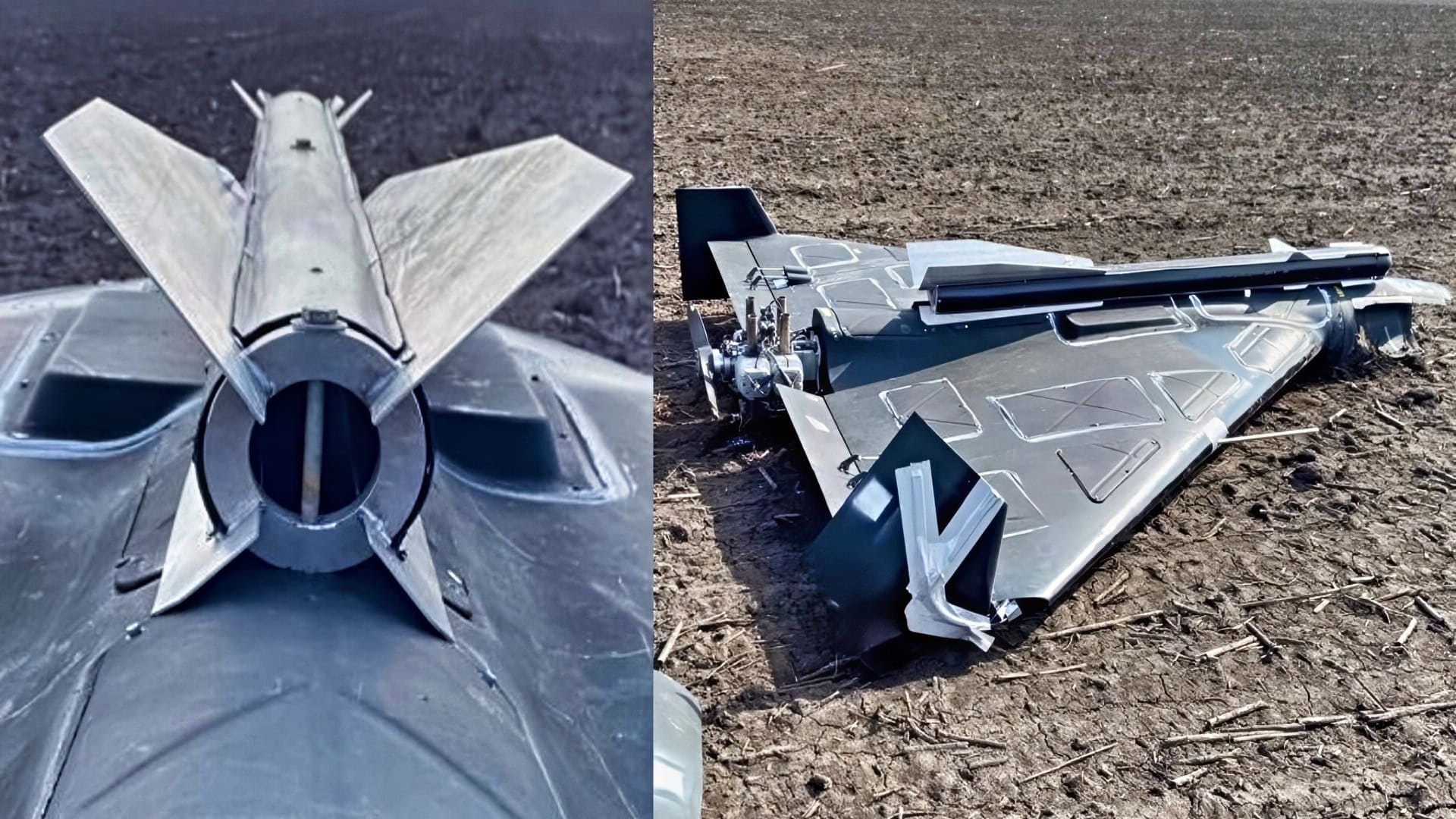
"BanderoL" is interesting not because it is supposedly a wonder weapon. Wonder weapons in Russian military history usually end up as accounting reports and shortages of components. It is interesting for its niche. According to available data, the munition carries a warhead of about 150 kg, which is significantly more than the typical "Shahed," but remains cheaper and simpler than the X-101 cruise missile. The range of several hundred kilometers limits the geography of application, so strikes on Odessa are conveniently launched from occupied Crimea. As a result, Russia obtains an intermediate tool: heavy enough for port infrastructure, fast enough to complicate interception, and cheap enough for serial use.
From a military perspective, this is an attempt to close an old gap in the Russian arsenal. Mass "Shaheds" are good for overloading air defenses, arson, and psychological pressure, but their 40-50 kg warhead is often insufficient for guaranteed destruction of large port facilities. The X-101, on the other hand, has range and accuracy but is expensive, requires complex aviation infrastructure, and consumes a limited supply of high-tech components. "BanderoL" occupies the space between them. The Soviet school would call this rationalization of munitions by target type. Modern Russian practice calls it adaptation to sanctions and losses.
Geran-4 Seeker as a Response to Ukrainian Interceptors
The second part of the change is the "Geran-4 Seeker." Militarnyi, analyzing published photographs, points to a redesigned nose section with an electro-optical guidance system and an additional fixed camera, which OSINT researchers have identified as a Chinese Dahua TiOC Dual-Lens Panoramic with a 180-degree view. The claimed specifications are as follows: range up to 550 km, cruising speed around 300 km/h, maximum speed up to 500 km/h, ceiling around 5000 m, and a warhead of about 50 kg. Even if some of these parameters are exaggerated, the main trend is clear: Russia is trying to make the drone not just a cheap flying charge but an autonomous terminal strike weapon.
Especially important is the ability to capture a target in the terminal phase when communication is lost. The Ukrainian defense system over the past two years has actively developed intercepting UAVs and mobile fire groups. Against the slow "Shahed," this model has been working increasingly well. Against a jet-powered device with a speed of 300-400 km/h, it becomes much less stable. There is no mystique here: if the interceptor does not have a sufficient speed surplus, it turns from a weapon into an observer. Therefore, reports of Russia's plans to increase the share of jet-powered strike UAVs to 50% of air attacks, as mentioned in June by the Commander-in-Chief of the Armed Forces of Ukraine, Oleksandr Syrskyi, cannot be considered ordinary informational rhetoric.
Why Ports and Railroads Became Targets
ISW notes that Russian forces are using "BanderoL" and "Geran-4 Seeker" against Black Sea port infrastructure, commercial vessels, and the railway system. This makes sense. A port is not just a dock, crane, or warehouse. It is where the Ukrainian war economy intersects with the external market, insurance, grain logistics, fuel imports, repairs, and foreign currency earnings. The railroad is not just tracks. It includes rolling stock, locomotives, traction substations, and depots, without which the front turns into a set of warehouses without circulation.
Russian sources cited by ISW claimed that in the second half of July, strikes on railway infrastructure were most often directed against locomotives and rolling stock in border and frontline areas, especially in the Dnipropetrovsk region. This is an important detail. A strike on the tracks can be repaired relatively quickly. A strike on a locomotive changes the network's capacity. A strike on a traction substation can stop a section. If such a campaign is conducted systematically, it resembles not air terror for the sake of reporting but an attempt to shift pressure from the front line to operational depth.
The Sanction Paradox of Russian Adaptation
At first glance, the use of Chinese cameras, commercial components, and jet small engines shows the weakness of the Russian defense industry. Indeed, dependence on imported electronics remains. But weakness does not equal helplessness. The Russian industry has learned over four years of war to build combat-capable systems from civilian and semi-civilian components, albeit with limited reliability, imperfect accuracy, and a high degree of manual refinement. This is not the level of the late Soviet military-industrial complex. Rather, it resembles the 1990s in reverse: then factories degraded amid an excess of engineering schools, now the engineering school operates against the backdrop of the degradation of machine and electronic bases.
The Ukrainian response will also not be simple. Increasing the number of jet-powered UAVs will require faster interceptors, a dense network of acoustic and radar sensors, cheap short-range surface-to-air missiles, and, importantly, strikes on assembly and launch sites. Ukrainian strikes on Russian oil refineries, facilities in Saratov, Ufa, Kaluga region, and the Engels-2 base show that Kyiv is already thinking in this logic: not only to shoot down flying munitions but also to destroy the production and logistics chain before launch.
The Russian army again demonstrates a familiar feature: it learns slowly, but when it learns, it does so through mass production and rough specialization of means.
Forecast
In the coming months, an increase in the share of jet-powered strike UAVs in Russian raids on southern Ukraine and railway logistics targets is to be expected. "BanderoL" will not replace the X-101, and the "Geran-4 Seeker" will not cancel the "Shahed." But together they create a more complex ladder of threats: cheap drones overload the defense, jet-powered devices break through to pinpoint targets, and missiles are preserved for objects of high strategic value. The Russian defense industry is not becoming technologically modern in the Western sense. It is becoming sufficiently adapted for the war to remain costly for Ukraine. This is a less spectacular conclusion than discussions of a turning point, but it is closer to reality.
Sources: Institute for the Study of War, Russian Offensive Campaign Assessment, August 2, 2026; Militarnyi, Russia Upgrades Geran-4 Seeker Fuselage for Optical Guidance, August 2026; data from Vladislav Vlasyuk, cited by Bloomberg and ISW.
Russia launched 133 drone strikes against Ukrainian ports on August 2, 2026, primarily using new munitions called 'Banderol'. These strikes, which targeted Odessa, indicate a strategic shift towards specialized attacks on Ukraine's war economy infrastructure. The upgraded 'Geran-4 Seeker' drones are now equipped with optical guidance systems, enhancing their effectiveness against Ukrainian defenses.
- 80% of recent Russian strikes on Odessa ports used new 'Banderol' munitions.
- 'Geran-4 Seeker' drones have been upgraded with optical guidance systems.
- Russian strikes target critical infrastructure affecting Ukraine's war economy.
- The new munitions are designed to be cost-effective and efficient against port facilities.
- Russia aims to increase the proportion of reactive strike drones in air attacks.