
Zhou Bo Discusses the PLA's 2027 Goals: The Real Challenge of Modernization Lies in the System, Not Individual Equipment
 Li Minghui
Zhou Bo Discusses PLA's 2027 Goals: The Real Challenge of Modernization Lies in the System, Not Individual Equipment
On August 3, the South China Morning Post published an exclusive interview with retired colonel and senior researcher at Tsinghua University's Center for International Security and Strategy, Zhou Bo. One detail I find more interesting than the headline is that he did not refer to 2027 as a "completion of modernization" milestone, but rather placed it within a three-stage goal of 2027, 2035, and 2049. In other words, the PLA's centennial goal is not an endpoint, but more like a phase assessment.
This statement sounds conservative, yet it closely aligns with the true logic of the military-industrial system. Individual equipment can be pushed out by concentrating resources, but systemic capabilities cannot be resolved through a few showcases. The J-20, Fujian aircraft carrier, Type 055 destroyers, and Dongfeng series missiles have already drawn external attention, but by the 2027 window, what truly matters is not "whether there is" but "whether it can be stable, scalable, and used across different military branches."
2027 is Not a Preemptive Submission for 2049
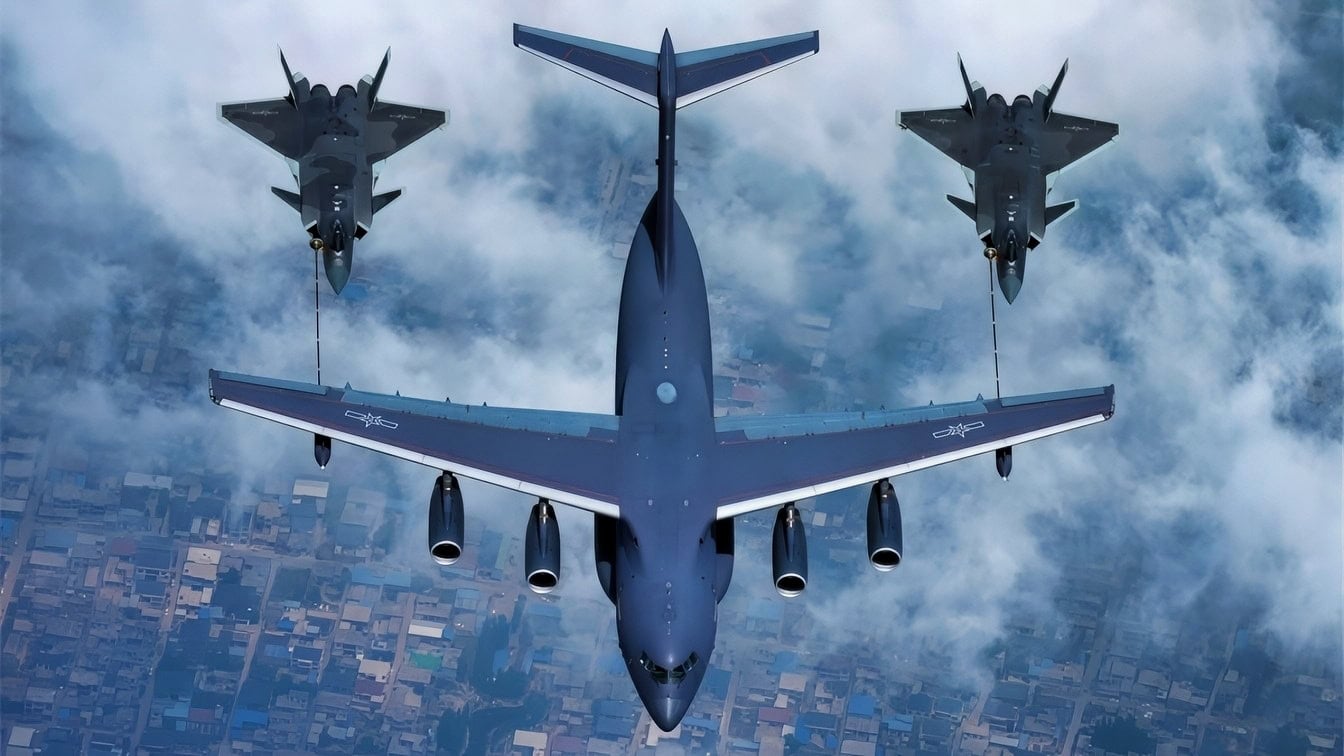
Zhou Bo mentioned in the interview that China has two larger military goals: the centennial of the PLA in 2027 and the establishment of a world-class military by 2049, with 2035 as the year to basically achieve modernization of national defense and the military. This order is significant because it lowers the external perception of the "2027 window." I believe that 2027 is more likely to assess whether critical shortcomings have been addressed, rather than requiring the PLA to be on par with the U.S. military in global deployment, joint combat experience, and overseas support.
In engineering terms, 2027 is like a system integration test, not a full lifecycle assessment after mass production delivery. For example, the rapid increase in the number of J-20s suggests that multiple batches have already been equipped; however, the combat capability of stealth fighters is not merely about the number of airframes, but rather the result of the operation of early warning aircraft, refueling aircraft, electronic warfare, data links, long-range air-to-air missiles, and ground support working together. The importance of the J-20 refueling imagery lies not in its aesthetic appeal, but in the fact that it indicates the PLA is addressing its longstanding shortcoming in sustained aerial operations.
Numerical Advantages Are Emerging, But Quality Assessment Is More Challenging
The same series of SCMP reports on the military establishment day noted that the PLA's progress in the direction of the first island chain is mainly reflected in the use of dual aircraft carriers, large-scale weapon production, and enhanced nuclear deterrence capabilities beyond the island chain. This assessment is fundamentally valid. The simultaneous or sequential training of the Liaoning and Shandong aircraft carriers indicates that the Chinese navy is no longer satisfied with showcasing a single aircraft carrier; if the Fujian aircraft carrier completes electromagnetic catapult testing and fixed-wing early warning aircraft adaptation, the ceiling for carrier-based aviation will significantly increase. The mass construction of Type 055 and Type 052D destroyers has also provided the far-sea fleet with a framework for area air defense and long-range strike capabilities.
However, there is an easily overlooked issue: numerical advantages are the most visible, while quality assessments are the hardest to quantify. The advantage of U.S. aircraft carrier strike groups is not just the nuclear-powered carriers themselves, but also the sortie rates of carrier-based aircraft, damage control experience, overseas bases, supply fleets, and allied port networks. China's rapid shipbuilding is an industrial advantage; however, sustained deployment in the far sea requires a different set of accounts, which includes personnel rotation, ship and aircraft maintenance, spare parts inventory, training areas, and command authorization processes. In simple terms, once the ships are built, the real spending begins.
Intelligence is Remedial, Not Magical
Around July 31, Xi Jinping called for strengthening the military application of unmanned intelligent technology during a collective study session of the Political Bureau, deepening the construction of the network information system, and gradually building an intelligent military system. This statement is connected to the 2027 goals. Drones, unmanned boats, and unmanned underwater vehicles are not "novel equipment," but are intended to address several longstanding issues faced by the PLA: insufficient reconnaissance chain, slow battlefield situation updates, and high risks associated with manned platforms at the front lines.
- In the air domain: The J-20, J-35, unmanned wingmen, and early warning aircraft aim to address air superiority and long-range perception.
- In the maritime domain: The Fujian aircraft carrier, Type 075, Type 076, and unmanned systems aim to ensure sustained presence beyond the island chain.
- In the rocket forces domain: The Dongfeng series, submarine-launched missiles, and command and control systems aim to enhance deterrence credibility.
- In the army domain: Long-range firepower, helicopters, and unmanned reconnaissance aim to establish a firepower loop before and after amphibious landings.
However, I do not fully agree with interpreting "intelligence" as a universal key for overtaking on a curve. AI can improve the efficiency of recognition, distribution, and decision-making assistance, but it cannot replace training or anti-jamming communication. In future conflicts in the Taiwan Strait or the first island chain, electromagnetic suppression will be very strong, and satellite links, Beidou navigation, and data links may be attacked. If unmanned systems operate without reliable communication and autonomous rules, it is like equipping a sports car with a very smart dashboard while the engine and fuel system are not up to par; the speed will still not increase.
The Gap with the U.S. is Shifting from Equipment to Organization
Zhou Bo stated that China's goal is to stand shoulder to shoulder with the United States, a statement that can easily provoke emotional interpretations. However, from a technical perspective, the gap between China and the U.S. is shifting from "visible equipment" to "invisible organization." China's military-industrial strength lies in large-scale manufacturing, particularly in shipbuilding, missiles, drones, and certain avionics, where considerable production capacity has been established. The shortcomings are concentrated in high-end engines, complex joint combat experience, overseas support nodes, and cross-service command culture.
The U.S. military also has its problems. Delays in shipbuilding cycles, tight ammunition stocks, chaotic aircraft carrier maintenance schedules, and vulnerable bases in the first island chain all provide the PLA with opportunities to catch up. However, catching up to the U.S. does not mean replicating the U.S. model. China is more likely to pursue a strategy of "strong near-seas denial, limited presence beyond the island chain, and a combination of nuclear and conventional deterrence," rather than establishing a U.S.-style deployment network in every maritime area in the short term.
Therefore, the most noteworthy indicators to observe in 2027 are not whether a particular piece of equipment is publicly showcased, but whether these pieces of equipment begin to appear in stable formations: Can the Fujian aircraft carrier form a complete carrier air wing with fixed-wing early warning aircraft? Is the H-20 still just a rumor? Can the number of Y-20s and refueling aircraft support routine training for long-range air forces? Has the command chain of the rocket forces regained public confidence after restructuring? The real question lies ahead: If 2027 is merely a phase assessment, how much of the "unfinished items" is the PLA willing to publicly expose?
The People's Liberation Army (PLA) is focusing on modernization goals set for 2027, 2035, and 2049, emphasizing system integration over individual equipment. Key advancements include dual aircraft carrier operations and improvements in naval capabilities. The PLA aims to address historical weaknesses through the integration of unmanned systems and enhanced operational capabilities, with a long-term goal of becoming a world-class military by 2049.
- The PLA's modernization is viewed as a multi-phase process leading to 2049.
- Key military goals include achieving a world-class military by 2049 and significant modernization by 2035.
- The focus is on system integration rather than just individual equipment capabilities.
- China's naval capabilities are improving with dual aircraft carrier operations and advanced destroyers.
- The emphasis on unmanned systems aims to address historical weaknesses in reconnaissance and operational tempo.