
SpaceX launches classified spy satellite into orbit
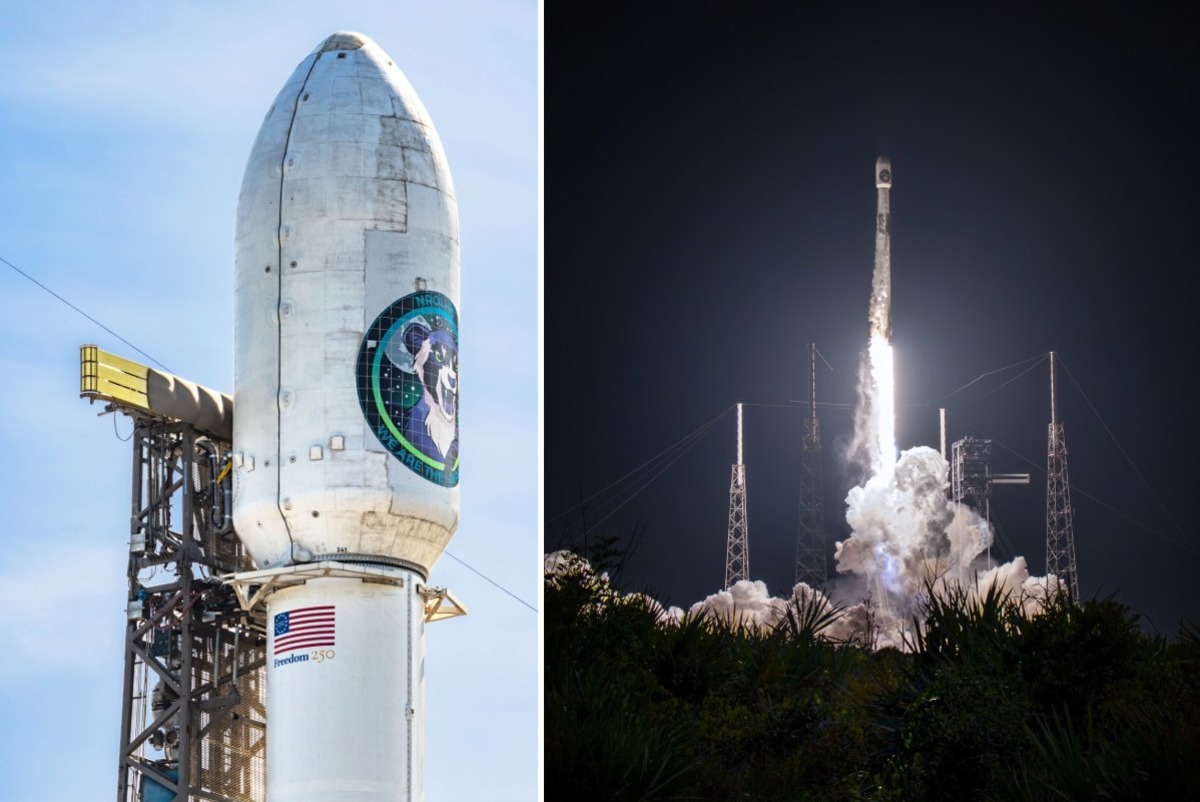
A rocket booster that has flown to space and back seven times carried a classified American spy satellite into orbit before dawn last week, the latest and least publicized entry in a launch campaign the National Reconnaissance Office has been quietly running at a pace unlike anything the agency has attempted before.
SpaceX launched the NROL-95 mission for the National Reconnaissance Office aboard a Falcon 9 rocket, DefPost reported, citing SpaceX and NRO. The rocket lifted off from Space Launch Complex 40 at Cape Canaveral Space Force Station at 3:10 a.m. ET on July 30, 2026, in partnership with U.S. Space Force Space Systems Command’s System Delta 80 and Space Launch Delta 45, the units responsible for coordinating national security launches from Florida’s Space Coast. The National Reconnaissance Office is the U.S. government agency responsible for developing, launching, and operating America’s fleet of intelligence and reconnaissance satellites, commonly known as spy satellites, providing imagery and signals intelligence to military commanders, the broader intelligence community, and civilian agencies responding to natural disasters.
The booster that carried NROL-95 into orbit was flying its seventh mission, a reuse record for that specific piece of hardware, having previously launched the KF-01 satellite, the IMAP solar wind mission, the classified NROL-77 payload, a GPS III-9 navigation satellite, a CRS-34 cargo resupply run to the International Space Station, and one Starlink mission before this latest flight. Following stage separation, the booster returned to Earth and landed at Landing Zone 2 at Cape Canaveral Space Force Station, part of SpaceX’s now-routine practice of recovering and reflying first-stage boosters rather than discarding them after a single use, a capability that has dramatically cut the cost of reaching orbit compared to traditional expendable rockets.
NROL-95 marks the NRO’s fourth national security space mission of 2026, following NROL-105 in January, NROL-172 in May, and NROL-179 in June, an accelerating launch cadence tied directly to what the agency calls its proliferated architecture initiative. That initiative represents a fundamental shift away from how American spy satellites have traditionally operated. For decades, U.S. reconnaissance satellites were built as enormous, extraordinarily expensive, individually irreplaceable spacecraft, meaning the loss of a single satellite to malfunction or enemy action could create a genuine gap in American intelligence coverage. The proliferated architecture instead deploys larger numbers of smaller, cheaper satellites spread across multiple orbital planes, an approach designed to eliminate single points of failure and let the constellation keep functioning even if individual satellites are lost, while also providing more frequent revisits over any given location on Earth and faster delivery of intelligence data to military and intelligence community users.
The NRO began that shift in earnest with the first proliferated architecture launch, NROL-146, on May 22, 2024, and has continued expanding the constellation steadily ever since. By the time NROL-172 flew in May 2026, the agency confirmed it as the thirteenth overall launch under the initiative, with NROL-95 continuing that buildout into its second year of accelerated deployment. The NRO’s own reporting indicates the growing constellation had surpassed 150 satellites by April 2025, and the agency has said the network supports a range of missions including ground moving target indicator work, a sensing capability that tracks vehicles and other moving objects on the ground from orbit, feeding directly into what the NRO describes as a broader space-based sensing and targeting architecture supporting both the intelligence community and the Department of War.
Much of what NROL-95 actually carries into orbit remains deliberately unknown to the public, consistent with how the NRO has handled every mission in this campaign. The agency routinely declines to disclose satellite counts, specific capabilities, or precise orbital parameters for any individual proliferated architecture launch, a level of secrecy the agency maintains even as the launches themselves, the rockets, the launch sites, and the booster landings, play out in full public view. That combination, classified payloads riding on rockets anyone can watch launch and land, reflects a deliberate choice by the NRO to let the visible mechanics of these missions become almost routine while the actual intelligence value they deliver stays entirely behind classification walls.
None of the public-facing details from Thursday’s launch, the exact time, the booster’s flight history, the landing zone, answer the only question that actually matters strategically, which is what NROL-95 will actually watch, track, or intercept once it settles into its operational orbit. That answer will likely never come, at least not officially, and that is precisely how the National Reconnaissance Office intends to keep it.
Content preview only. Full article available at source. View Full Article
SpaceX launched a classified American spy satellite, NROL-95, into orbit from Cape Canaveral Space Force Station on July 30, 2026. This mission is part of the National Reconnaissance Office's initiative to deploy a proliferated architecture of smaller, cheaper satellites for enhanced intelligence capabilities. The Falcon 9 rocket used for this launch has previously completed six missions, marking a reuse record.
- SpaceX launched the NROL-95 mission for the National Reconnaissance Office.
- The launch occurred at 3:10 a.m. ET on July 30, 2026.
- The rocket booster has flown to space and back seven times.
- NROL-95 is part of a series of accelerated national security space missions by the NRO.
- The NRO's new architecture involves deploying larger numbers of smaller, cheaper satellites.