
Gerbera Drones 2026 Threaten Spain, France, and Italy — Europe's Air Defense Remains Incomplete
 S.W
S.WGerbera Drones 2026 Threaten Spain, France, and Italy — Europe's Air Defense Remains Inadequate
A report about a possible Russian attack using Gerbera drones from merchant ships in the Mediterranean is not evidence of an imminent operation. Nevertheless, it is a strategically serious warning signal. The claimed method connects three European weaknesses: the permeability of civilian sea routes, the limited range of many national reconnaissance networks, and an air defense planning that is still too focused on large, easily recognizable missiles.
What the Report Actually Claims
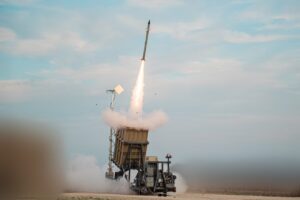
The Spanish newspaper El Mundo published information on September 23, based on an anonymous source from the Lithuanian defense apparatus. According to this, the CIA warned European states about a Russian scenario. Gerbera drones could be brought in containers aboard ordinary merchant ships into international waters and then launched against targets in Spain, France, or Italy. This claim has not yet been independently verified; therefore, Defense News and Euronews explicitly treat it as a report and not as an established fact.
However, the technical logic is plausible enough to warrant military examination. The Gerbera reportedly has a wingspan of about 2.5 meters, a range of up to 600 kilometers, and a speed of approximately 160 kilometers per hour. The payload of four to five kilograms would be insufficient for the destruction of a large structure. However, it could trigger fires, temporarily close an airport, damage exposed energy or port elements, and create a political effect that is disproportionate to the cost of the drone.
The Mediterranean is Not a Strategic Back Zone
The central misconception of European security planning is that the distance to the Ukrainian front automatically means protection. This assumption is losing its validity. NATO Secretary General Mark Rutte has pointed out that a Russian missile would reach Madrid only about ten minutes later than Warsaw. A launch from a ship changes the warning time and flight path, but not the political message: the southern NATO area is not a spectator zone of the war.
Additionally, there is a pattern that has already been observed. In February, the Swedish Navy reported a drone that was allegedly launched from a Russian reconnaissance ship near the Øresund Strait. Germany attributed a drone incident at Leipzig Airport in August to Russian entities after investigations. And the violation of Polish airspace by 19 Russian drones last year demonstrated how quickly a initially limited event can trigger a crisis within the alliance. No single incident proves a unified operational plan. However, together they create an escalation ladder below the threshold of war.
The Capability Gap is Not with Large Missiles
Spain, France, and Italy possess modern combat aircraft, warships, and some capable air defense systems. The problem is coverage. A Patriot or SAMP/T system protects a limited area and is designed for expensive high-value targets. It is neither economically nor operationally sensible to monitor every possible port, airport, refinery site, and civilian ship with a strategic interception system.
Therefore, Gerbera forces Europe into an uncomfortable reassessment. Not only are more interceptors needed, but a networked layer of coastal radar, passive sensors, electronic warfare, automated target classification, and inexpensive interception means. Austria responded on September 24 with an exercise involving around 300 soldiers, in which Mistral air defense missiles, 35-millimeter guns, and electronic countermeasures were deployed. This is sensible, but the exercise simultaneously reveals fragmentation: Austria, Spain, France, and Italy are each training national responses to a problem that could be organized across sea borders.
The European Response Must Not Just Be More Money
The current debate about higher defense spending does not provide an automatic answer to this threat. A state can spend billions on combat aircraft and long-range missiles and still remain vulnerable to a small drone. The architecture of readiness is crucial: Who recognizes a suspicious ship? Who is allowed to analyze civilian radar data? Who decides within minutes about a shootdown? And who takes political responsibility when an unmanned object over international waters cannot yet be clearly attributed to a state?
For the EU, this presents a limited but concrete field for defense integration. First, Europe needs a common maritime situational awareness that combines satellite imagery, AIS data, coastal radars, and intelligence information. Second, NATO should extend its counter-UAS standards to the southern maritime area. Third, Spain, France, and Italy need to consider joint procurement of small intercept drones and mobile electronic warfare systems. These would be capabilities with immediate utility, not the next abstract industrial promise.
The Political Effect is the Real Goal
Even if the CIA report later turns out to be exaggerated or false, its strategic value as a stress test remains. Russia would not need to deploy a large number of drones. A single hit at an airport or energy facility could increase insurance costs, slow down shipping traffic, and raise the question of whether European governments can protect their populations. Elections are upcoming in Spain, France, and Italy in 2027. A limited attack with high media impact could therefore influence a security policy debate without causing significant military damage.
Therefore, Europe should neither fall into alarmism nor dismiss the report as media speculation. The right response is verifiable precaution: better reconnaissance, common rules, and an air defense whose cost structure matches that of the adversary. More money is necessary. But as long as Europe has the same institutional sluggishness for a Gerbera drone as for a large armaments program, the cheapest weapon remains the most politically effective.
Sources
- Defense News, September 24, 2026 — Report on the CIA warning and technical details about the Gerbera drone.
- Euronews, September 24, 2026 — Contextualization of the possible Russian scenario and the vulnerability of Southern Europe.
- El Mundo, September 23, 2026 — Original publication of the anonymous intelligence information.
- ORF, September 24, 2026 — Austrian counter-drone and air defense exercise with 300 soldiers.
The CIA warned European nations about potential Russian drone attacks using Gerbera drones launched from merchant ships in the Mediterranean. Austria conducted a military exercise with 300 soldiers to enhance air defense capabilities against this threat. The Gerbera drone, with a range of 600 kilometers, poses a significant risk to Spain, France, and Italy, challenging existing security assumptions. A limited attack could have substantial political implications in these countries ahead of elections in 2027.
- CIA warned European states about potential Russian drone attacks using Gerbera drones from merchant ships in the Mediterranean.
- The Gerbera drone has a wingspan of about 2.5 meters, a range of up to 600 kilometers, and a speed of approximately 160 kilometers per hour.
- Austria conducted a military exercise involving 300 soldiers to address the drone threat.
- The Mediterranean is considered a strategic area for potential attacks, challenging European security assumptions.
- A limited attack could influence political debates in Spain, France, and Italy ahead of upcoming elections.