

Summary and Key Points: USS Parche entered service in 1974 as an ordinary Sturgeon-class attack submarine and left in 2004 with nine Presidential Unit Citations, a record widely treated as the most decorated of any U.S. submarine. She never fought a famous battle. In 1978, the Navy converted her to replace USS Halibut on the cable-tapping work that had begun as Operation Ivy Bells, listening on a Soviet line in the Sea of Okhotsk, and later sent her against cables in the Barents and White Seas. What those deployments actually recovered is still classified. The sail is all that remains on public display in Bremerton.
The Spy Submarine that Made History for the US Navy
The Sturgeon-class nuclear-powered submarine was one of the United States Navy’s most important submarine classes of the Cold War era. But one specific submarine of this class, the USS Parche (SSN-683), stands out. It was not only an excellent Sturgeon-class submarine, but also one of America’s greatest Cold War intelligence-gathering platforms.
Background of USS Parche
In 1974, the nuclear-powered submarine entered service as a conventional Sturgeon-class attack submarine. Its main job was to hunt Soviet submarines and surface ships. She even had a self-destruct mode built into the sub so she could never be taken captive.
By the time Parche left service 30 years later, it had become something completely different.
In fact, Parche earned an astonishing nine Presidential Unit Citations, ten Navy Unit Commendations, and 13 Navy Expeditionary Medals during its 30 years of service.
It is widely considered the most decorated submarine in Navy history.
Parche received its incredible citations from 1979 through 1982.
It again received a Presidential Unit Citation in 1986 and from 1993 to 1994.
The Parche received two more citations, one in 1998 and in 2004 — meaning this submarine stayed relevant (and mostly classified) long after the Cold War.
It received that final citation for a mission it participated in the Mediterranean in 2002.
The Presidential Unit Citation is given for distinguished performance in a US military unit. Parche earned these citations while conducting some of the most extreme, dangerous missions imaginable.
In 1978, the Parche was converted into a small collection of US submarines modified for classified intelligence-collection projects directed against the USSR. It was brought in to replace the aging USS Halibut.
Among the advances made was the ability to support saturation divers and even remotely operated vehicles. Mind you, this was back in the 1980s, when drones were still a unique concept.
Specialized sonar systems and other gear helped the submarine operate more effectively on the seabed.
Eventually, Parche evolved into the Navy’s best undersea espionage and intelligence-gathering platforms.
Its best-known public mission involved sabotaging undersea communications cables.
Ivy Bells
The old Soviet Union relied upon underwater cables to carry military communications between major installations in the Cold War.
One specific cable ran along the Sea of Okhotsk, linking Soviet Pacific Fleet facilities.
So, beginning in 1971, the aging USS Halibut penetrated that area and placed listening devices around the Soviet cable under the auspices of Operation Ivy Bells.
Ultimately, the Parche replaced the Halibut.
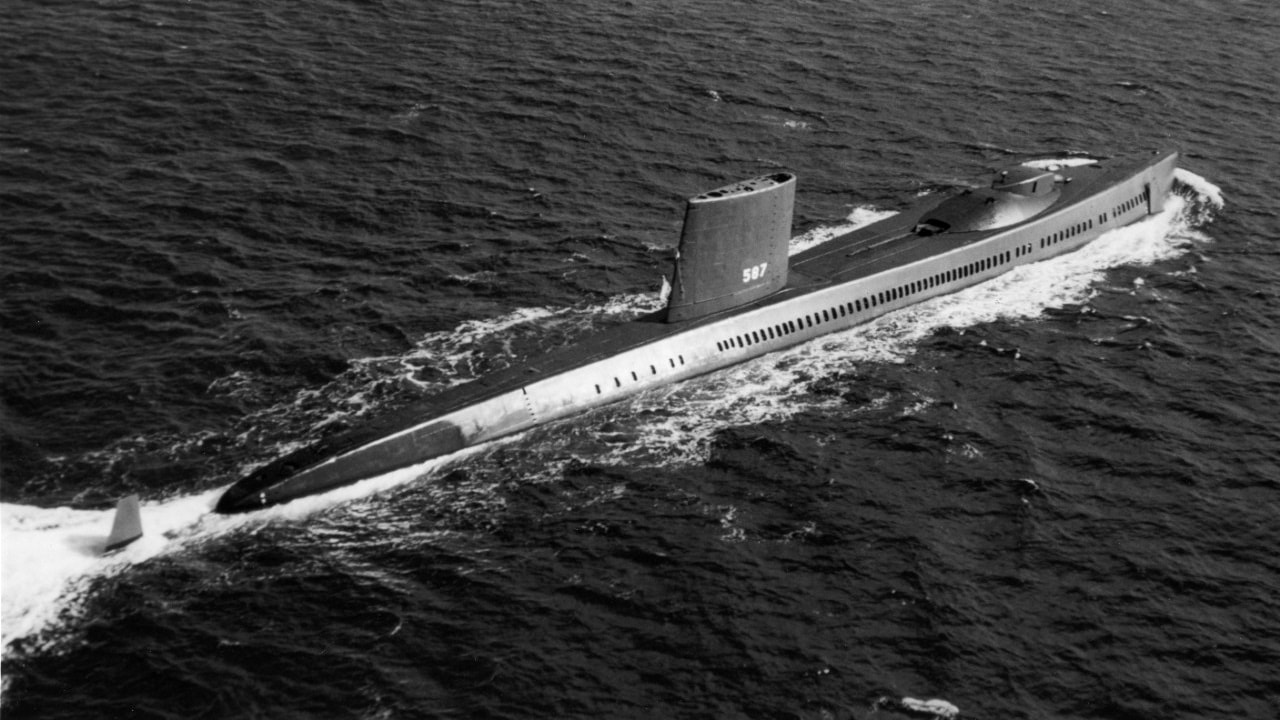
USS Halibut submarine. Image Credit: Creative Commons.
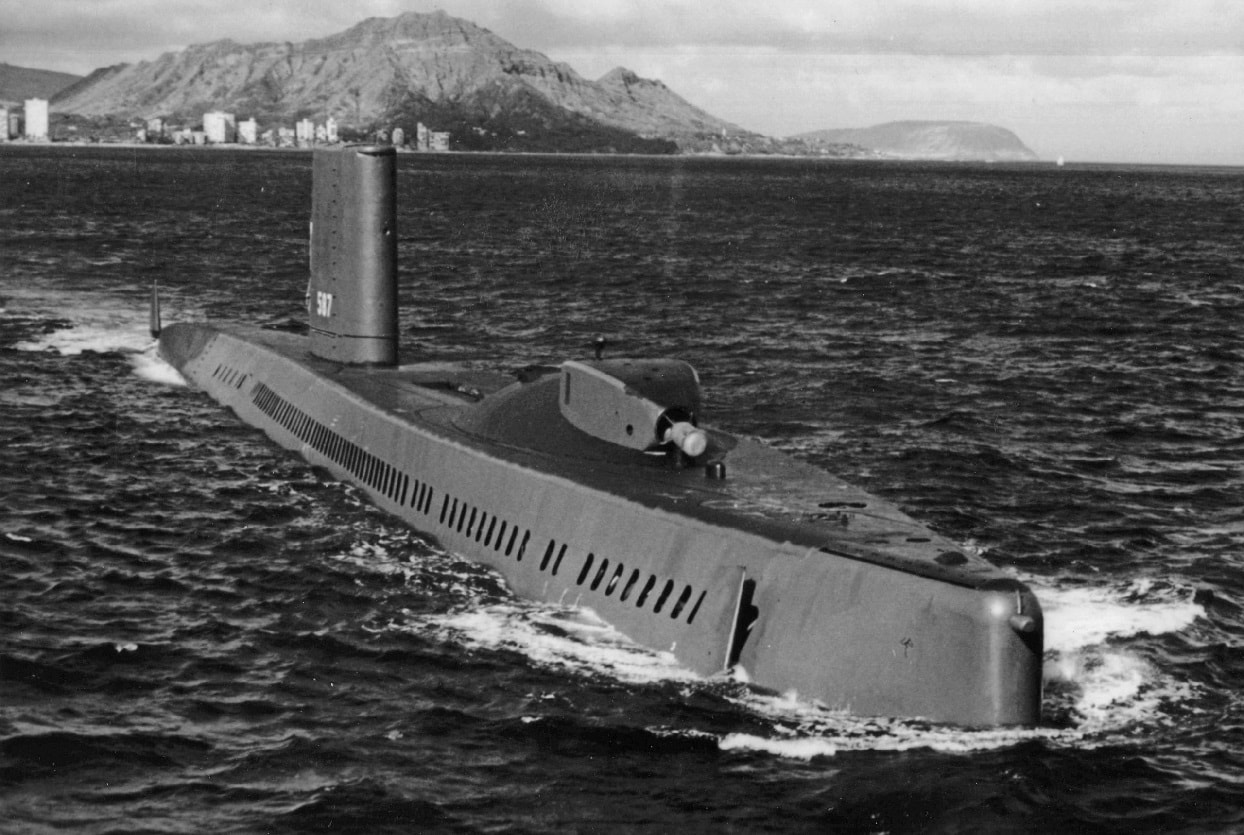
Halibut (SSGN-587) with Diamond Head in the background in late 1965. Note her topside thruster and she has no DSVR (Deep-Submergence Rescue Vehicle) habitat which was later fitted to the topside at the rear of the boat.
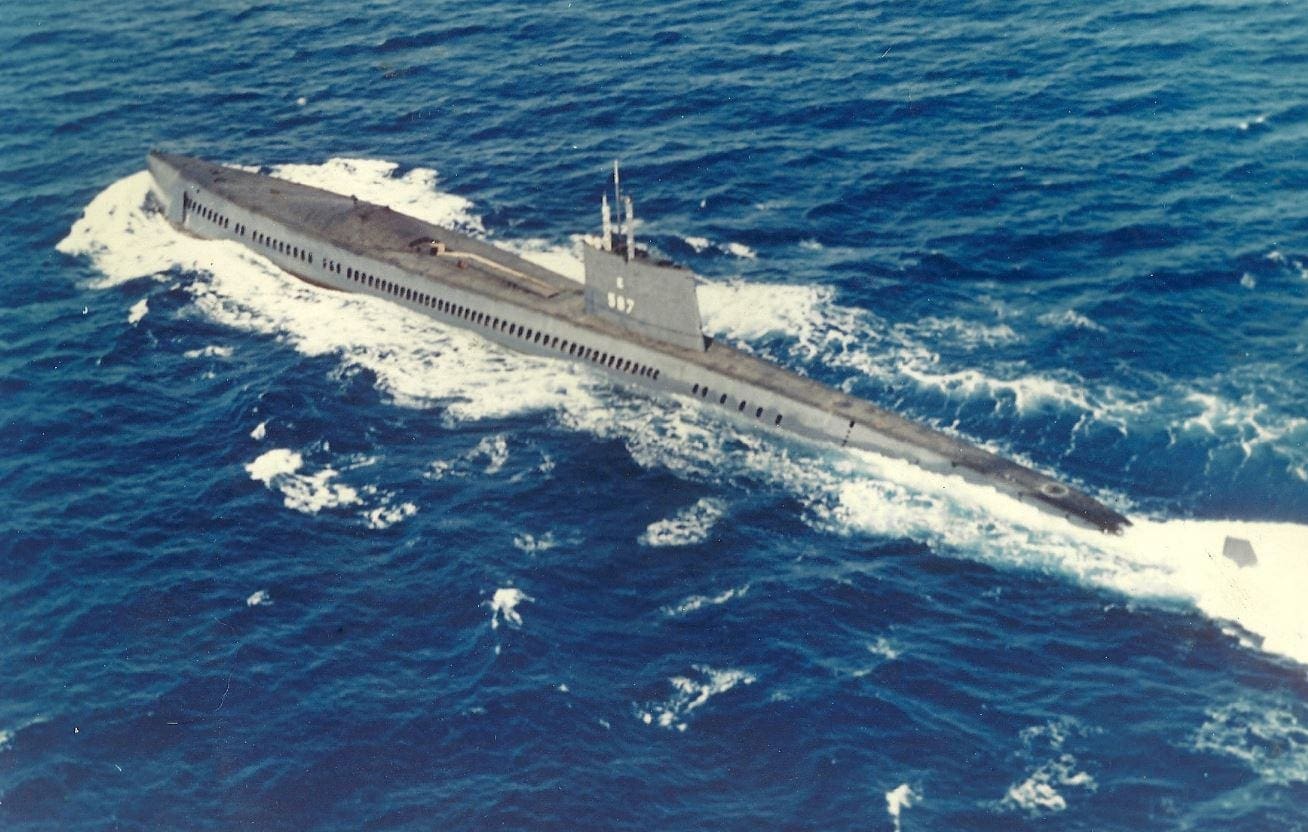
USS Halibut submarine. Image Credit: Creative Commons.
The Parche continued espionage operations against submarine cables. It also operated against cables around the Barents and White Seas, making the Parche a heavy hitter in espionage operations.
The submarine had to locate cables on the seabed while operating deep inside enemy waters.
It had to precisely move into position and support divers and specialized sonar gear.
Parche had retractable skids, side thrusters, and other equipment that let it hover and position itself accurately near the ocean floor.
There are even stories that the Parche was employed by the Navy to retrieve fragments of Soviet weapons from the seabed.
In one such instance, US intelligence knew the Soviets were testing a new missile.
They wanted to glean whatever intelligence they could from that new weapon.
So, the secretive Parche was deployed near where the missile was going to land, and the American submarine captured the remnants, allowing US intelligence to study the leftovers of the Soviet missile.
In fact, Parche conducted significant–and very secretive–intelligence-gathering operations beneath the icy waters of the Arctic.
No one knows what those missions entailed, but given how important the Arctic is for Russian submarines transiting to the Western Hemisphere, it stands to reason the US Navy used the Parche to track those subs.
Gone But Not Forgotten?
Retired in 2004, the USS Parche completed 19 significant deployments by the end of its service.
The Navy dismantled Parche, preserved its sail, and displayed it in Bremerton, Washington.
Parche received nine Presidential Unit Citations despite never being associated with any major battles in its long career.
Its mission was, in many ways, more valuable than hunting enemy submarines or targeting enemy surface ships.
For decades, Parche was America’s eyes, ears, and covert claws beneath the waves.
The intelligence it collected on the enemy, along with the sabotage it conducted, helped shape the bloodless American victory in the Cold War.
Twenty years after it was decommissioned and dismantled, Americans still don’t know what specifically made the USS Parche the most decorated US Navy vessel in history.
About the Author: Brandon J. Weichert
Brandon J. Weichert is the Senior National Security Editor at 19FortyFive.com. He also manages The Weichert Brief on Substack. Weichert also hosts “National Security Talk” on Rumble. He is the author of four bestselling national security books, most recently A Disaster of Our Own Making: How the West Lost Ukraine (Encounter Books). Follow him via Twitter/X @WeTheBrandon.