
German army picks a silent battery to replace noisy generators
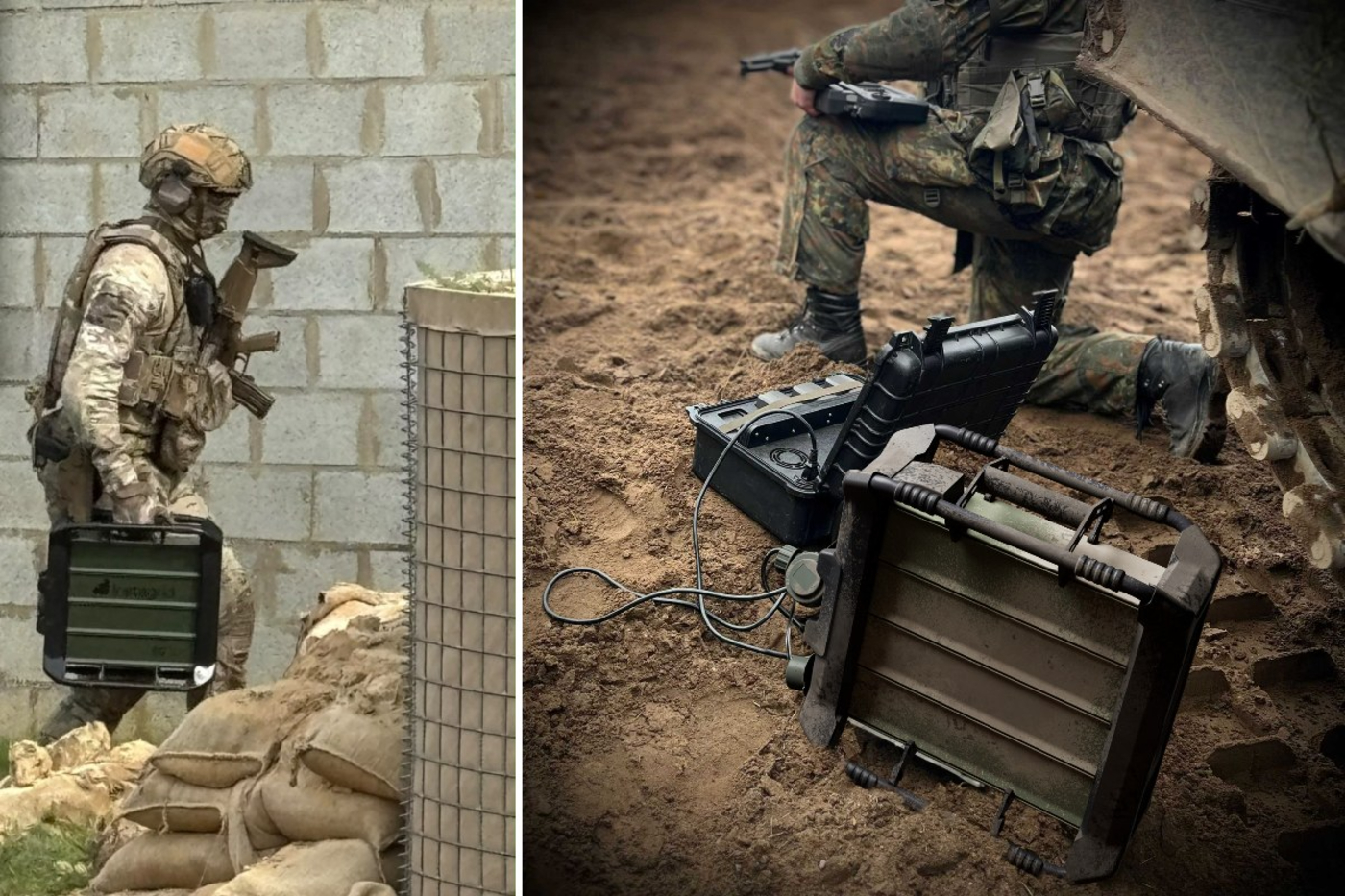
A 21-kilogram (46-pound) battery from German company Instagrid can run a Starlink terminal for about a day with no engine noise, no fan and almost no heat, the company says, and it is now selling the device to European militaries as a quiet stand-in for diesel generators.
Instagrid’s Sander Spoolder described the GO MIL, the military version of the company’s civilian GO and ONE batteries, in an email to The Defence Blog this week. He said “several NATO and EU ministries of defence and armed forces” have bought it, “speaking of thousands of units,” but didn’t name the countries or give contract figures.
Germany’s Bundeswehr has selected the GO MIL as part of its new 2-kilowatt tactical power set, alongside Instagrid’s LINK MIL switching unit and a Zarges transport case, according to the company. The battery has also been assigned a NATO Stock Number, which makes it easier for allied militaries to order.
The pitch is about signature. Generators are loud and run hot, which makes them easy to find for enemy drones carrying thermal cameras. Instagrid says the GO MIL has “no spinning parts,” is cooled without a fan and runs below 30 decibels, about the level of a whisper.
The company stripped out Bluetooth and every other wireless link from the military version, and a flip-up cover hides the status lights at night. Spoolder said the box has “only three settings: on, off/charge and transport.”
According to Instagrid’s spec sheet, the GO MIL stores 2,074 watt-hours in 24 small battery packs and puts out 3,600 watts continuously, with peaks of up to 18,000 watts for a moment. That’s enough to start power-hungry equipment. It measures 44 by 21 by 42 centimeters (17 by 8 by 17 inches) and recharges from a standard 230-volt outlet in under two hours.
It is sealed to the IP65 standard against dust and water jets and is rated to work from minus 32 to 60 degrees Celsius (minus 26 to 140 degrees Fahrenheit) and at altitudes up to 4,000 meters (13,100 feet).
Instagrid’s own description of the GO MIL is “anything with a cable in the field, from communications to laser equipment.”
Spoolder gave a few examples from the field. A Starlink modem drawing 75 to 100 watts can run for about 24 hours, he said, and a 420-watt LED floodlight for about five hours. The battery can also recharge a Parrot Anafi reconnaissance drone’s battery about 60 times or run a welder for repairs far from a garage.
Up to three units can be linked through the LINK MIL to triple the capacity, swap batteries without cutting power, or supply 400-volt three-phase power, the company said.
Instagrid started out making batteries for construction sites. Spoolder said the military model differs from other portable power packs because of its “passively cooled micro-inverter approach,” meaning each battery module has its own small converter rather than one large one that needs a fan.
Armies are hunting for ways to keep a growing pile of drones, radios and sensors charged without a running engine. Arizona-based Nishati recently patented a modular field generator built to charge military batteries directly, and DARPA has launched a program to develop much lighter, higher-energy batteries for the force.
Content preview only. Full article available at source. View Full Article
Instagrid is selling its GO MIL battery to European militaries, including the Bundeswehr, as a silent alternative to diesel generators. This battery can power devices like Starlink terminals for extended periods without noise or heat. It has been assigned a NATO Stock Number, facilitating procurement for allied forces. The GO MIL is part of a tactical power set that includes other equipment and is designed for use in various environmental conditions.
- Instagrid's GO MIL battery can run a Starlink terminal for about a day without noise or heat.
- The Bundeswehr has selected the GO MIL as part of its tactical power set.
- The battery has a NATO Stock Number for easier ordering by allied militaries.
- The GO MIL can output 3,600 watts continuously and peaks at 18,000 watts.
- The battery is designed to operate in extreme temperatures and altitudes.