
JNIM and ISSP clash in Burkina Faso — 320 battles reshape the war in the Sahel
 Marie Dubois
JNIM and ISSP Clash in Burkina Faso — 320 Battles Redefine the War in the Sahel
Ouagadougou, Burkina Faso — Since the beginning of September, the tracks along the Malian border have become the scene of a war within a war. JNIM, affiliated with al-Qaeda, and the Islamic State Sahel Province (ISSP) are clashing for villages, roads, and populations that allow them to hold territory. The Burkinabè government is losing ground, but one should not confuse the weakening of an adversary with a victory for the state.
In Kacham, the Numbers Tell a Story of Propaganda
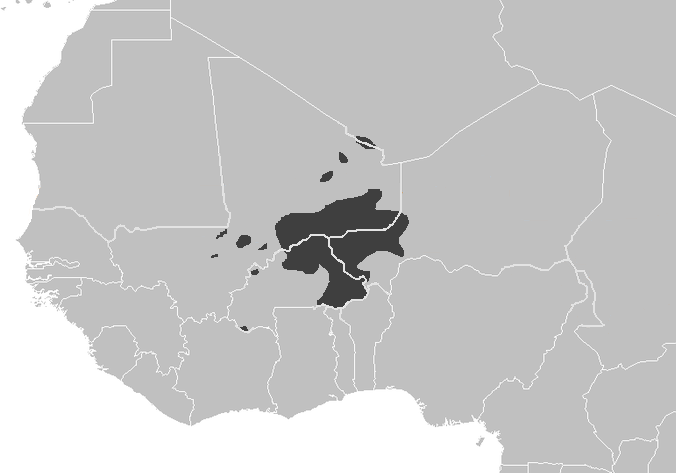
The first major clash reported this year occurred near Kacham, close to the Malian border, in early September. The ISSP claimed to have killed over 200 JNIM fighters, captured around thirty men, and seized weapons and motorcycles. This figure has not been independently verified. Heni Nsaibia from ACLED noted, however, that if accurate, it would represent the deadliest confrontation ever documented between the two organizations.
On October 9, fighting resumed around Ganadaouri in the Oudalan province. The publication Al-Naba later claimed over 400 deaths among JNIM ranks. Again, no independent investigation has confirmed this toll. Photographs released on November 1 by the ISSP show at least 120 bodies according to the media outlet i-Sahel, but they do not prove their identity or the exact location of their deaths. On the ground, caution is therefore a necessity, not a journalistic formula.
A Rivalry Turned Operational Front
Since 2019, the two groups have been competing for access to communities, transhumance corridors, and local resources. ACLED has recorded approximately 320 clashes and over 2,200 fighters killed since the beginning of this rivalry. This toll illustrates the scale of the problem: it is no longer incidents between factions, but a lasting front that absorbs personnel, motorcycles, intelligence networks, and logistical means.
JNIM retains the advantage of depth. Its presence extends from Mali to Burkina Faso and Niger, with the capacity to negotiate, tax, and recruit beyond administrative boundaries. The ISSP, on the other hand, seeks less to administer everywhere than to impose a military cost on its rival and to recover its defections. Each announced victory serves both recruitment and internal discipline.
Geography is decisive. In Oudalan, a column leaving a base or market can disappear into a network of tracks before a government force has even established its axis of advance. The season, the state of bridges, and the availability of motorcycles matter more than statements from Ouagadougou. It is over these distances that real control is measured.
The Respite Offered to Ouagadougou is Likely Temporary
Theoretically, the war between JNIM and ISSP diverts fighters and resources from the fight against the army and the Volunteers for the Defense of the Homeland. In practice, this effect has not yet produced any reconquest. Burkinabè forces must hold isolated garrisons, escort convoys, and protect populations to whom the state cannot guarantee regular access to markets or farmland.
The humanitarian crisis remains the best indicator of this weakness. United Nations planning estimates put the number of people in need of assistance in Burkina Faso at 4.5 million by 2026. The latest consolidated figure of internally displaced persons, published in March 2023, was around 2.1 million; it should not be presented as an updated count. In villages caught between the two organizations, the hope that the jihadists will exhaust each other does not replace security or freedom of movement.
The Risk Shifts Towards Niger and Coastal Countries
ACLED has already documented the spread of this rivalry towards Tillabéri and Dosso in Niger, as well as towards the Nigerian state of Kebbi. This extension is more significant than the toll of an isolated battle. When two competing groups seek to bypass a front, they open new axes of pressure: border markets, livestock corridors, and areas where public authority is intermittent.
JNIM remains particularly concerning for the West African coastline. Its operations in western and southern Mali, as well as its presence in eastern Burkina Faso, provide it with footholds towards Togo and Benin. The ISSP may force it to retain more men in the north, but it can also take advantage of the chaos to establish itself in areas abandoned by its rival. An internal war does not close a corridor; it can create several.
What to Watch Now
The next indicator will not be a claim of 400 dead. It will be necessary to look at who controls the markets, who imposes taxes, who guarantees — or prohibits — movement, and whether Burkinabè forces can maintain a presence beyond the main routes. The available sources are still incomplete, and the tolls from both groups are biased. My assessment on the ground is nonetheless clear: JNIM and ISSP are bleeding each other, but the state does not automatically recover the territory.
If Ouagadougou does not transform this respite into a lasting presence in Oudalan and the east of the country, the survivors from both camps will have to choose between resuming the war, dispersing towards Niger, or pushing towards the coastal borders. The next decisive battle may not be the deadliest. It will be the one that gives a faction control of a road that the army will no longer be able to reopen.
Sources
Ongoing clashes between JNIM and ISSP in Burkina Faso have resulted in significant casualties, with ISSP claiming over 200 JNIM fighters killed near Kacham and over 400 in Ganadaouri. Since early September 2026, the conflict has intensified, with over 320 documented engagements and more than 2,200 fighters killed since 2019. The struggle for territorial control continues to impact local communities and exacerbate the humanitarian crisis in the region.
- ISSP claimed to have killed over 200 JNIM fighters and captured 30 near Kacham.
- Over 320 clashes documented between JNIM and ISSP since 2019.
- ISSP claimed over 400 JNIM casualties in fighting around Ganadaouri.
- The conflict has led to a humanitarian crisis with millions in need of aid in Burkina Faso.