
Germany and Great Britain defend Ukrainian long-range attacks — 300 million dollars for Patriot show Europe's dilemma
 Dr. Klaus Weber
Germany and Britain Defend Ukrainian Long-Range Strikes — 300 Million Dollars for Patriot Highlight Europe's Dilemma
On November 17, 2026, two visions of European security policy collided at NATO headquarters in Brussels. U.S. Undersecretary of Defense Elbridge Colby questioned the utility of Ukrainian long-range strikes on targets in Russia. German Defense Minister Boris Pistorius called this criticism "pretty stupid"; British Defense Minister Wes Streeting also defended the operations. On the same day, Germany allocated around 300 million dollars for Ukrainian air defense, while Britain announced a package of 240 million pounds with more than 1,000 air defense missiles.
The apparent contradiction is the real crux of the matter. Europe primarily finances protection against Russian attacks, while simultaneously defending Ukraine's right to carry the war deep into Russian military and logistics territory. The debate is therefore not just about target selection. It concerns who defines military appropriateness within an alliance when Washington pays for fewer weapons and Europe takes on more responsibility.
Patriot and the Cost of European Support
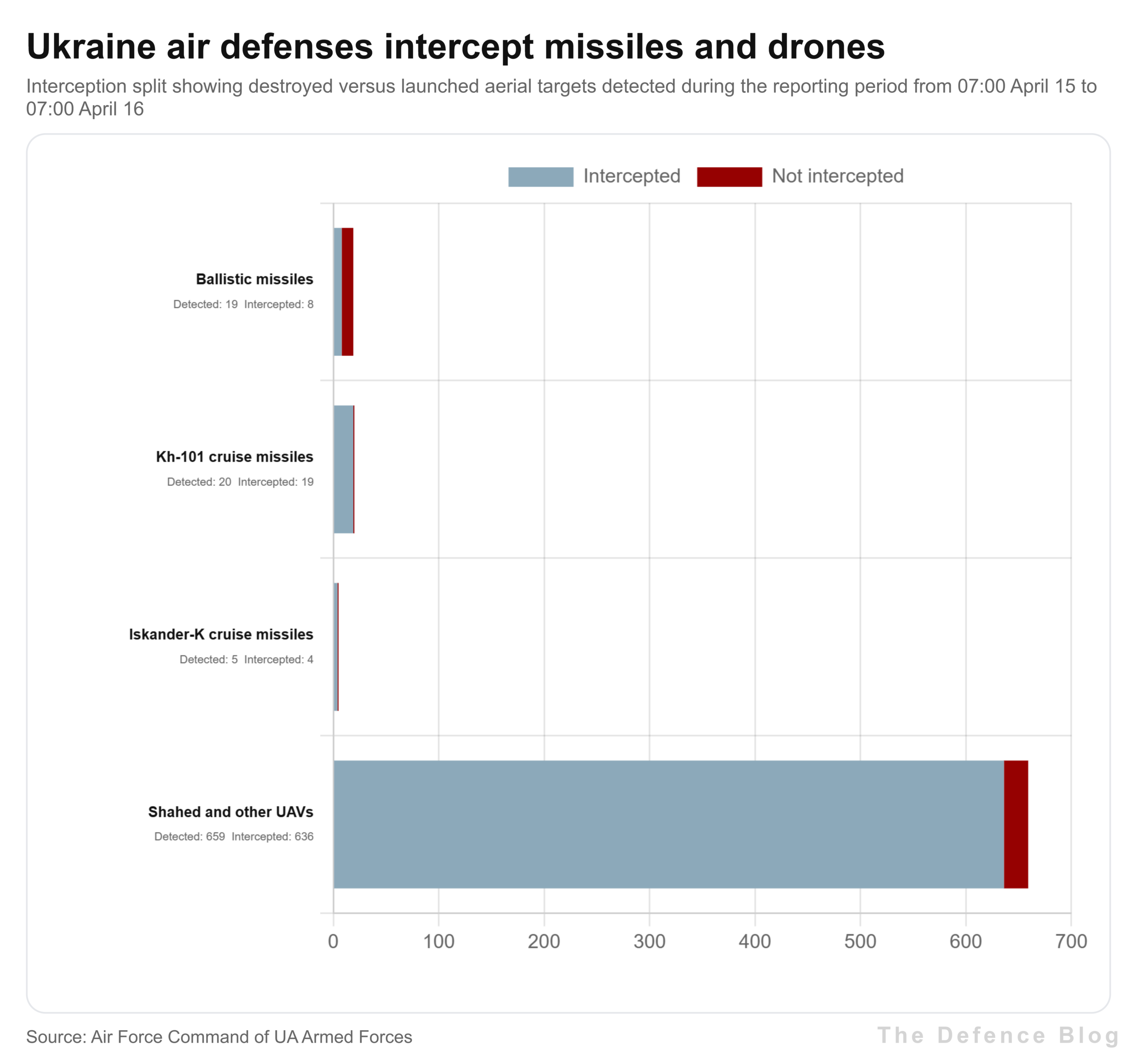
The German commitment focuses on air defense; Patriot interceptors are high on the priority list. This is militarily understandable. Russia attacks Ukrainian energy, water, and heating infrastructure with a mix of drones, cruise missiles, and ballistic missiles. However, a single Patriot battalion cannot provide comprehensive security. It protects particularly important points, while the costs of each interception decision rise and Europe's stocks remain limited.
The 300 million dollars are therefore more than just a budget figure. They show that Germany needs American systems in the short term to make European political responsibility credible. The NATO program PURL facilitates the purchase of U.S. weapons but does not replace European production capacity. Thus, Europe does not automatically pay for strategic autonomy but initially for maintaining a capability whose technology, ammunition, and supply still depend on the United States.
The British package of more than 1,000 air defense missiles also carries this dual significance. It strengthens Ukraine's resilience but does not solve the structural problem of European air defense. European states can finance additional missiles, but they cannot close the industrial gap between demand and production within a single winter. This is precisely where the difference lies between a political commitment and a military capability.
Why Berlin and London Defend Deep Strikes
Colby's argument is not entirely unfounded. If strikes on Russian targets neither slow the advance at the front nor bring the war decision closer, their strategic effect must be examined. The reference to facilities of the online retailer Wildberries also points to a real escalation problem: the further the target definition moves away from clearly military facilities, the easier it is for Moscow to portray the attacks as terrorism against the Russian population.
However, the American criticism narrows the measurement of military effect to too short a time horizon. Ukrainian long-range drones and missiles target refineries, depots, airfields, and logistics centers. Their value does not necessarily lie in ending the war immediately. They increase transportation costs, force relocations, tie up air defense, and complicate Russian supply lines. Britain argues that deep strikes weaken Russian capabilities, buy time, and save lives. This is not a guarantee of a Ukrainian victory, but a plausible logic of self-defense.
Pistorius' sharp reaction was also a signal to the alliance. Germany does not accept that Europe bears the financial burdens while Washington defines the permissible Ukrainian mode of operations from a distance. This does not mean that Berlin approves every target decision made by Kyiv. Rather, it means that a state under attack cannot be permanently confined to the role of a recipient. Those who only criticize the Ukrainian response without equally condemning the nightly attacks on civilian infrastructure create a political asymmetry.
The New Transatlantic Division of Labor Remains Unclear
The controversy occurs during a phase when the United States is not directly financing new arms deliveries, while European states and Canada continue to purchase U.S. systems. This creates a strange division of labor. Europe takes on the bill, Ukraine assumes the risk, and Washington continues to claim the authority over the proper conduct of operations.
Brussels' considerations for a new Ukraine loan of 45 billion euros for 2027 reinforce this impression. A loan can create liquidity and consolidate political support. However, it does not build a Patriot factory, accelerate training, or guarantee delivery. The European debate continues to confuse financing instruments with military availability. This is the old mistake in new packaging.
For the EU, this results in an uncomfortable priority. It must simultaneously support air defense, ammunition, and Ukrainian long-range capability without delegating its support to the American assessment of each individual operational target. This requires a common European target and escalation policy, not just larger sums. Such a policy would need to clearly distinguish military objectives from commercial infrastructure, preserve Ukrainian decision-making freedom, and simultaneously define transparent boundaries for escalation risks.
Europe's Dilemma is Political, Not Just Industrial
The events of November 17 show that Europe's strategic dependence cannot be measured solely by the lack of missiles. It is also evident in the uncertainty about who judges the use of the delivered capabilities. Germany and Britain want Ukraine to be able to fight effectively. The United States wants this effectiveness to fit into a strategy that considers its own escalation calculus. Both can only be connected through political coordination, not through further press releases.
The European conclusion should therefore be neither "more money" nor "more strikes." It must be that Europe needs to connect its support with its own strategic position. Patriot protects cities, long-range weapons disrupt the enemy's war machine; both capabilities belong in a common concept. However, as long as Europe buys American systems, bears Ukrainian risks, and only later debates the political logic of their use, its autonomy remains incomplete. More responsibility without its own decision-making power is not strategic sovereignty but an expensive interim state.
Sources
- Reuters, November 17, 2026, on the criticism of Elbridge Colby and the reaction of Boris Pistorius.
- The Kyiv Independent, November 18, 2026, "Germany, UK push back after US criticizes Ukraine’s deep strikes into Russia."
- United24 Media, November 17, 2026, on Germany's commitment of 300 million dollars for air defense.
- Defence Industry Europe, November 17, 2026, on the British package of 240 million pounds and more than 1,000 air defense missiles.
- POLITICO Europe, November 18, 2026, on Brussels' preparations for a 45 billion euro loan for Ukraine.
Germany pledged 300 million dollars for air defense systems, while the UK announced a package of 240 million pounds for over 1,000 air defense missiles on November 17, 2026, in Brussels. Both nations defended Ukraine's long-range strikes against Russia amid criticism from the US regarding their strategic effectiveness. This reflects Europe's ongoing military support for Ukraine and the complexities of transatlantic defense cooperation.
- Germany pledged 300 million dollars for air defense systems to Ukraine.
- The UK announced a package of 240 million pounds for over 1,000 air defense missiles.
- The debate centers on the effectiveness of Ukraine's long-range strikes against Russian targets.
- The US questions the strategic impact of Ukraine's deep strikes into Russia.
- Germany and the UK emphasize the need for Ukraine to maintain its military capabilities.