
JNIM and ISSP clash in the Sahel — Burkina Faso becomes the key to 2026
 Marie Dubois
JNIM and ISSP Clash in the Sahel — Burkina Faso Becomes the Key to 2026
Ouagadougou looks to the northeast, but the decisive battle is taking place hundreds of kilometers away, on the paths of eastern Burkina Faso that connect to Mali and Niger. In August and then in October 2026, thousands of fighters from Jama’at Nusrat al-Islam wal-Muslimin (JNIM), linked to al-Qaeda, and the Islamic State Sahel Province (ISSP) faced off in two battles described as the deadliest ever observed between the two organizations. These are not skirmishes between rival gangs. This is a war for control of territory.
The exact toll remains uncertain. ACLED reports hundreds of deaths among the fighters, while the groups obviously do not publish reliable accounting. But the operational signal is clear: the jihadist rivalry, long contained in Mali and Burkina Faso, is now spreading towards Tillabéri and Dosso in Niger, and then to the Nigerian state of Kebbi.
A Border That Exists Only on Maps
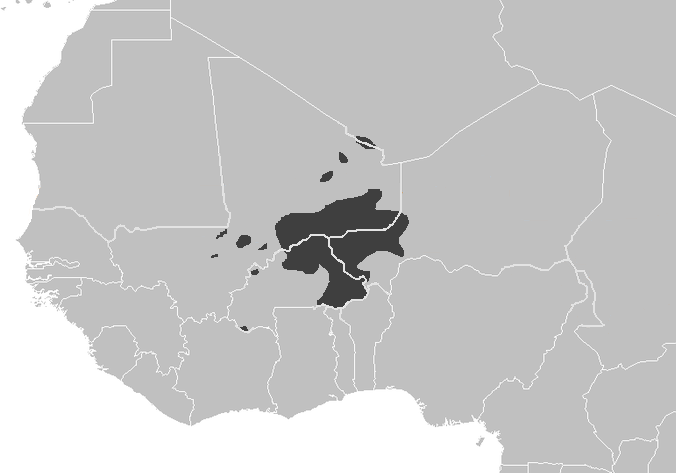
The Liptako-Gourma is not a continuous theater in the classical sense. It is an assemblage of villages, pastoral corridors, markets, and paths where the presence of the state varies from day to day. The border between the three countries cuts through routes, not networks. A pickup can leave the Ménaka region, cross northeastern Burkina Faso, and reach the Nigerien border areas by taking advantage of the season, knowledge of the terrain, and local complicities.
JNIM and ISSP are competing for the same resources: livestock taxes, taxation of convoys, recruitment of young men, and access to trafficking. However, the promise made to civilians differs. JNIM seeks to negotiate more with local leaders and focus its strikes against armed forces and Russian mercenaries. ISSP imposes a harder, transnational line and is more willing to punish communities that refuse its authority.
On the ground, this ideological distinction becomes a method of governance. Whoever controls a well, a path, or a market does not control an abstract line: they control the flow of food, motorcycles, and information.
JNIM Advances Slowly, ISSP Strikes Harder
The available data paints a paradox. Since the beginning of their confrontation in 2019, the two factions have reportedly engaged in about 320 battles and lost over 2,200 fighters, according to ACLED cited by the Africa Defense Forum. Yet, the dynamics are not symmetrical. JNIM has consolidated large areas in Mali and Burkina Faso and is trying to push its influence towards the coastal states. ISSP, on the other hand, has won several tactically important battles, particularly in areas where mobility and surprise compensate for a weaker political presence.
This difference matters. JNIM operates like an organization that wants to last: regular taxation, cautious alliances, gradual pressure on administrations. ISSP is more accepting of frontal shock when it can disrupt the rival and recover its fighters, weapons, or routes. The battles in August and October in northeastern Burkina Faso show that both groups can now concentrate significant forces, instead of limiting themselves to ambushes.
“The race is about controlling the borders between the three countries,” estimates researcher Wassim Nasr, quoted by Deutsche Welle. The formula is correct, provided that border is understood as a space of circulation and not as a customs post.
The Danger for Sahelian Capitals
The war between jihadists does not relieve the armies of the Sahel States Alliance. It can even weaken them. Each faction has an interest in maintaining sufficient pressure on military posts to prevent the adversary from concentrating on it. Burkinabè forces must thus monitor the axes from Djibo to Dori and the eastern accesses, while Niger cannot reduce its presence in Tillabéri without leaving a corridor for ISSP or JNIM.
The most immediate risk is the increased militarization of populations. When fighters demand that villagers choose a side, a village becomes intelligence, supply, and a human shield all at once. Retaliations multiply, markets close, and the army loses the only source of information that allows it to distinguish a scout from a herder. This is a mechanism I have seen on the ground in Mali: an operation can retake a position in one morning and lose all visibility over the fifteen kilometers surrounding it.
The presence of the Russian Africa Corps does not solve this problem. Additional firepower can retake a point, but it does not rebuild the administration, trust, or the human networks necessary to hold the path the next day.
Towards Nigeria from the Northwest
The next test lies in Nigeria. As the January 2027 presidential election approaches, ISSP seeks to influence the bandit groups in the northwest and establish a foothold in Kebbi State. JNIM is also making progress there. This convergence is more concerning than mere geographical expansion: it offers jihadists a reservoir of recruits, smuggling routes, and strategic depth far from the Sahelian strongholds.
It would be premature to claim that Nigeria is already becoming a new front comparable to Liptako-Gourma. The information is fragmented, and the allegiances of criminal groups remain opportunistic. But the Niger-Kebbi axis should not be treated as a mere periphery. Once markets and transport corridors are taxed, expansion does not require conquering a city.
The next significant battle may therefore not be announced by a black flag or the capture of a provincial capital. It will first be seen in a closed market, a convoy changing its route, and a garrison that no longer goes out after sunset. Burkina Faso is today the key to the system. If it yields to one of the two factions, the rivalry war will cease to be an internal struggle in the Sahel and will become a regional system, from Mali to northwestern Nigeria.
Sources
- Africa Defense Forum, “Rival Terror Groups Devastate the Sahel,” November 2026.
- ACLED, data on JNIM–ISSP clashes cited in the analysis.
- Deutsche Welle, analysis by Wassim Nasr cited by Africa Defense Forum, October 2026.
- UN, statements from the United Nations Office for West Africa and the Sahel before the Security Council, July-August 2026.
JNIM and ISSP fought deadly battles in Burkina Faso in August and October 2026, resulting in hundreds of casualties. The conflict is characterized by a struggle for territorial control and resources, with JNIM focusing on negotiations and ISSP enforcing strict authority. The rivalry is spreading into Niger and Nigeria, threatening regional stability.
- JNIM and ISSP engaged in deadly battles in Burkina Faso in August and October 2026.
- The conflict has resulted in hundreds of deaths among fighters.
- The rivalry between jihadist groups is expanding into Niger and Nigeria.
- JNIM seeks to negotiate with local leaders, while ISSP imposes harsher control.
- The control of resources and territory is central to the conflict.