
Germany Cannot Keep the 2026 South China Sea Open
 Marcus Chen
Germany Cannot Keep the 2026 South China Sea Open
Frank-Walter Steinmeier used the right comparison in Manila on June 16. The German president warned that a South China Sea flare-up could hit freedom of navigation the way the Strait of Hormuz crisis just hit energy and fertilizer prices. That is a serious statement from Berlin. It is not yet a serious military plan.
The gap matters because the South China Sea is not an abstract trade lane. It is a crowded operating area where Chinese coast guard ships, maritime militia, survey vessels, and navy units can apply pressure without crossing the clean threshold of war. Germany can support Manila diplomatically. It can train and equip the Philippine Coast Guard. It can send an occasional frigate. But keeping a sea lane open against a coercive Chinese campaign requires persistent sensors, escorts, repair capacity, fuel, munitions, and political authority to absorb risk.
That is where the European position starts to thin out.
The Hormuz comparison is useful but incomplete
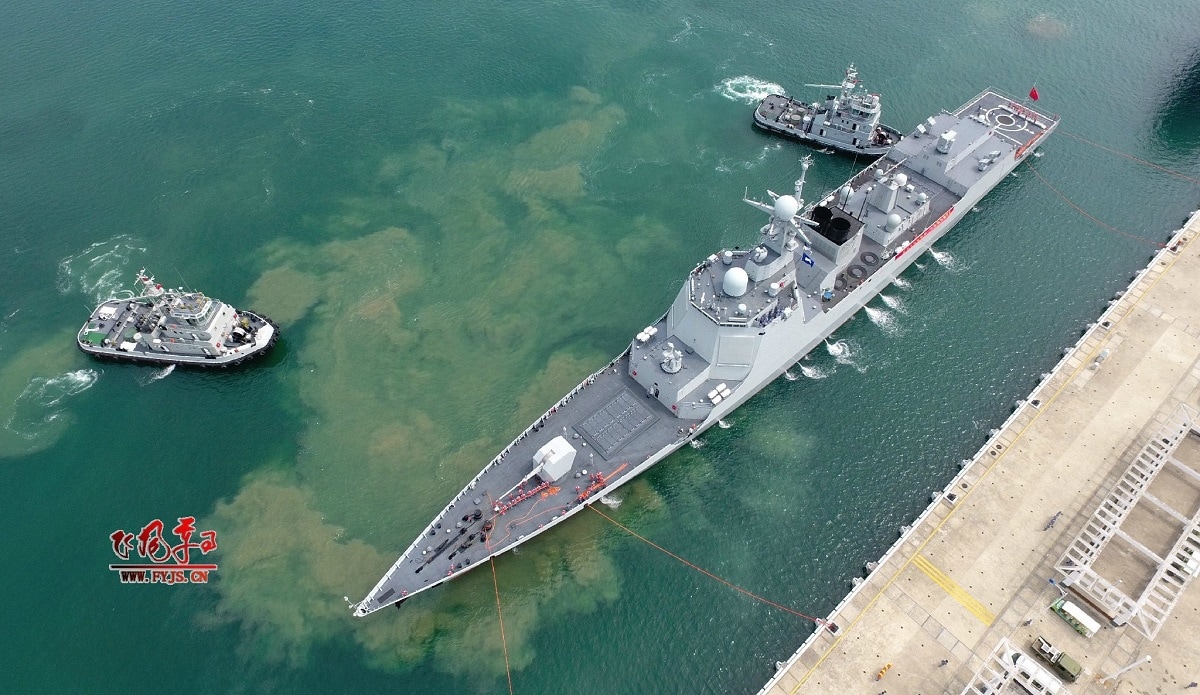
AP reported that Steinmeier told President Ferdinand Marcos Jr. that incidents in Southeast Asia would be a cause for concern in Europe because violations of the law of the sea threaten freedom of navigation. He also pledged continued German support for the Philippine Coast Guard, the service that has taken the daily punishment at Second Thomas Shoal, Scarborough Shoal, and other disputed areas.
The Hormuz analogy is valuable because it reminds Europeans that maritime disruption is not a regional hobby. A chokepoint problem becomes a price problem fast. But the military geography is different. Hormuz is narrow. The South China Sea is a theater. Scarborough Shoal is roughly 120 nautical miles from Luzon, but the pressure line runs from the Bashi Channel to the Spratlys and across the approaches to Palawan. A ship can visit the theater. A maritime posture has to live there.
Anyone who has served on a destroyer knows the difference. Presence is not the day you arrive. Presence is the maintenance plan that lets you remain useful after the first engineering casualty, the first weather delay, and the first three weeks of low-grade shadowing by vessels trying to wear down your crew.
China is building facts below the shooting threshold
The immediate background is not just a presidential visit. AP reported last week that the Philippines protested a Chinese floating structure with personnel at Scarborough Shoal, fearing it could become another step toward a more permanent Chinese position. Beijing rejected the protest and repeated its sovereignty claim. Manila remembers Mischief Reef for a reason. Small structures become administrative presence. Administrative presence becomes routine enforcement. Routine enforcement becomes a new baseline.
That is the core operational problem for Germany and other European states. China does not need to close the whole South China Sea to create leverage. It can make Philippine resupply missions more expensive, force coast guard escorts into repeated confrontations, and normalize Chinese law-enforcement patrols inside areas where Manila has treaty-backed interests and legal rights under the 2016 arbitral ruling.
A European statement helps Manila politically. It complicates Beijing's claim that the dispute is only a bilateral matter. But if the object is deterrence, the question is not whether Berlin is concerned. The question is how many hull days Germany can put near the problem.
The hull-day math is unforgiving
Start with the basics. A single frigate or support ship deployed from Europe to the Indo-Pacific is not one ship on station forever. Transit, port visits, replenishment, maintenance, crew rest, and diplomatic tasking eat the calendar. A useful rule of thumb for far deployments is that one ship sent from Europe produces only a fraction of a year of meaningful presence in the contested zone. To keep one combatant continuously available, a navy usually needs several ships in the rotation, plus logistics.
Germany does not have that margin. Berlin can make a high-quality contribution in exercises, maritime domain awareness, coast guard assistance, cyber support, and sanctions policy. It cannot independently police the South China Sea. Even the United States, with the Seventh Fleet forward in Japan and regular access to Philippine facilities, has to husband ships, missiles, and maintenance capacity.
CSIS warned in May that the United States would struggle in a protracted war with China because of shortages in long-range munitions, air defense interceptors, unmanned systems, and sustainment capacity. It also noted that forward bases in Japan, the Philippines, Guam, and elsewhere are vulnerable to Chinese missiles and drones. If Washington has a stockpile and base-defense problem, Berlin has a scale problem.
This is not an argument for Europe to stay home. It is an argument against pretending that a port call equals sea control.
What useful European support looks like
The useful European role is narrower and more practical. First, Germany should keep funding and equipping the Philippine Coast Guard because that is the force in daily contact. Better patrol craft, drones, secure communications, evidence collection systems, and maintenance support matter more than another speech about rules.
Second, European navies should coordinate deployments instead of sending isolated national signals. A German frigate, a French patrol aircraft detachment, a Dutch support ship, and British staff officers all moving on separate calendars create diplomacy. Combined scheduling with Manila, Tokyo, Canberra, and Washington creates usable coverage.
Third, Europe should help make coercion visible. China benefits when each water-cannon incident or floating structure is treated as a local episode. Persistent open-source reporting, shared maritime pictures, sanctions preparation, and insurance-market pressure can raise the cost of gray-zone gains without requiring a European navy to fight for Scarborough Shoal.
Finally, Berlin should be honest about what it will not do. If Germany is not prepared to escort Philippine vessels under pressure, it should not imply that concern alone changes the risk calculus at sea. Deterrence is built on capabilities the other side believes will actually be used.
The real test is staying power
Steinmeier's warning was useful because it connected European prosperity to Asian maritime order in concrete terms. The South China Sea is not far away when fuel prices, shipping insurance, and semiconductor supply chains are counted honestly. But the first serious question after any European warning is simple: what arrives after the communique?
If the answer is coast guard equipment, shared surveillance, coordinated allied deployments, and a realistic contribution to the U.S.-Philippine-Japan-Australia network, Germany can help. If the answer is symbolic naval tourism, Beijing will count the days until the ship leaves.
The South China Sea does not need more visitors. It needs staying power. Germany has identified the danger. Now it has to decide whether it wants to buy presence or just rent concern for a news cycle.
Sources
- Associated Press, June 16, 2026: German president says Europe is worried over tensions in the disputed South China Sea.
- Associated Press, June 9, 2026: The Philippines protests China's floating structure on the disputed South China Sea shoal.
- CSIS, May 12, 2026: Is the United States Prepared for a War with China?
- USNI News, June 12, 2026: Western Pacific Pulse.
Germany expresses concern over tensions in the South China Sea and plans to support the Philippine Coast Guard with training and equipment. President Steinmeier highlighted the importance of freedom of navigation in the region, warning that Chinese actions could disrupt maritime order. However, Germany lacks the naval capacity for sustained presence in the area, emphasizing the need for coordinated European efforts to address the situation.
- Germany warns of potential South China Sea tensions affecting freedom of navigation.
- Germany plans to support the Philippine Coast Guard with training and equipment.
- China's actions in the South China Sea are creating leverage against the Philippines.
- Germany lacks the naval presence to independently police the South China Sea.
- European navies should coordinate deployments to enhance maritime security.