

Summary and Key Points: Steve Balestrieri names HMS Ambush, the second Astute-class submarine, idle at Faslane since August 2022 and stripped for parts to keep her sisters running.
The Astute-Class Crisis?
The Royal Navy’s latest problem has a name: HMS Ambush. The second Astute-class boat hasn’t put to sea since August 2022. She sits at Faslane in the Navy’s lowest readiness state while engineers pull components out of her to keep her sister boats running. Put plainly, a nuclear-powered hunter-killer that can circle the globe without surfacing has become a parts locker for the other aging submarines.
That would be bad enough on its own.
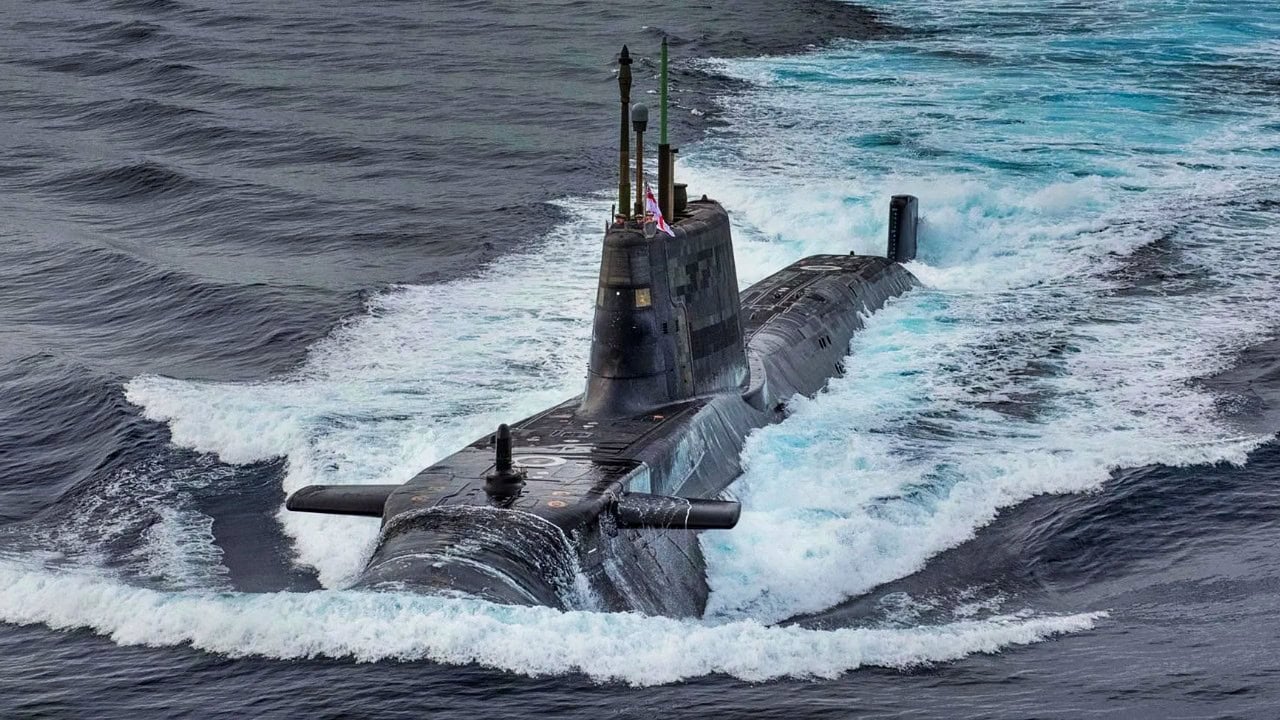
Astute-Class Submarine. Image Credit: Creative Commons.
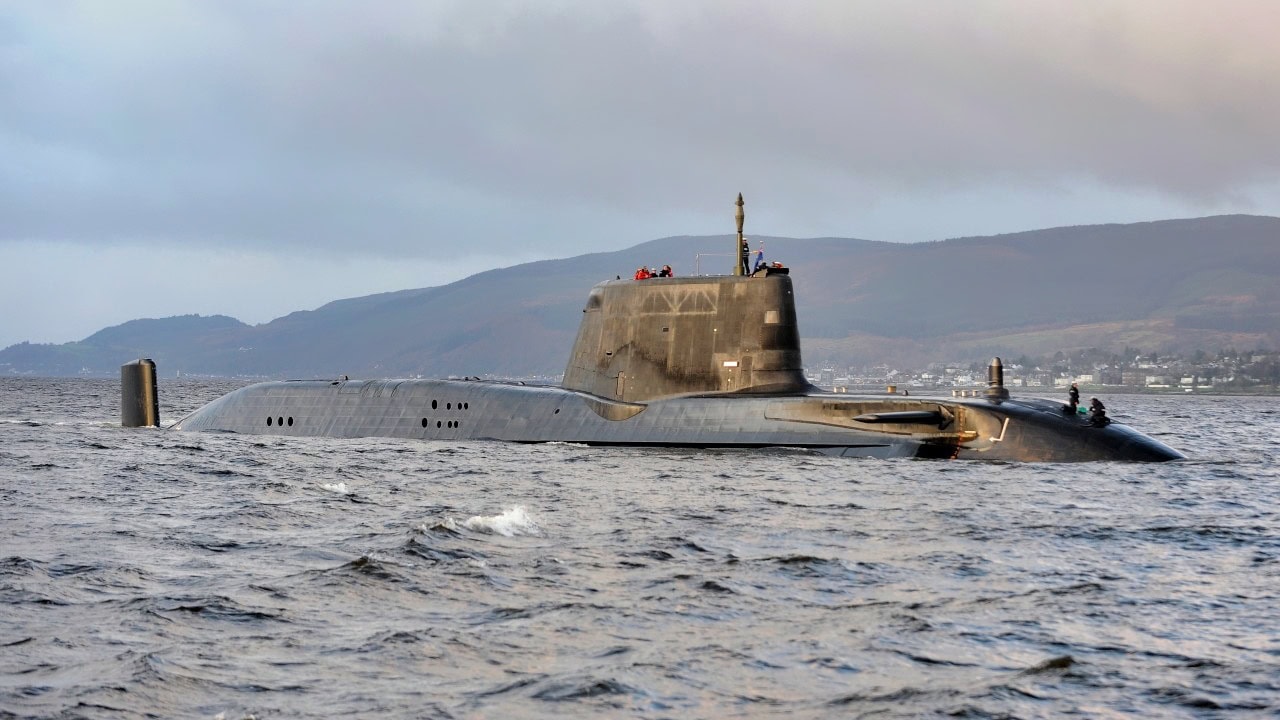
Astute-Class Submarine Royal Navy
But it’s happening in the Astute class, which still isn’t finished nearly three decades after the original contract was signed.
Back in late June, all five in-service Astute boats were tied up alongside at the same time. Not one British attack submarine at sea. For a navy that once ruled the waves, that’s a hard sentence to write.
An Unlucky Boat From The Start
HMS Ambush was laid down at Barrow in October 2003 and handed over to the Royal Navy in July 2013.
Three years later, she collided with a merchant ship off Gibraltar and came home with a massive dent in her conning tower.
They repaired her, and she went back to work.
Then she went quiet.
Cannibalization isn’t new to this program. A 2017 National Audit Office review found that 28 percent of the defects resolved on the in-service Astute-class subs in 2016-17 were fixed by stripping parts from other boats.
About £22 million in components came out of submarines still on the production line, which delayed HMS Artful by six weeks and added £4.9 million in indirect costs.
The Navy was robbing Peter to pay Paul nearly a decade ago. It still is.
Five Boats, Zero At Sea
So how does an entire class of attack submarines end up tied to the pier?
Go down the list.
HMS Astute entered Devonport for a mid-life refit in June 2025 and then waited in a dry dock.
Ambush was being stripped. Artful hadn’t sailed since 2023.
HMS Audacious reached Devonport in April 2023 and waited roughly 22 months to get into No. 15 Dock, and Babcock didn’t move her out until June 2026.
HMS Anson came home to Devonport on May 27 after her Indo-Pacific deployment was cut short.
The bottleneck is infrastructure.
By June, Britain had exactly three practical facilities for lifting a nuclear boat out of the water: the aging shiplift at Faslane and Nos. 9 and 15 docks at Devonport.
The Vanguard-class ballistic missile submarines carrying the nuclear deterrent go to the front of the line, as they should.
The attack boats wait.
Meanwhile, the spares pipeline has thinned, and nuclear-qualified engineers are in short supply.
The MoD launched a Submarine Maintenance Recovery Plan in January 2026, with a rebuilt dock at Devonport and new floating docks planned for Faslane.
That’s a step in the right direction.
However, it doesn’t fix this year’s problem.
The Royal Navy Can’t Finish The Last One Either
But the issues go deeper for the class.
The seventh and final boat, originally named Agincourt, was renamed HMS Achilles in January 2025 and was supposed to join the fleet in late 2026.
Then a fire broke out in the Devonshire Dock Hall at Barrow on October 30, 2024.
The MoD has admitted the fire hit assembly work on Achilles, but it still won’t put a number on the delay or the cost.
Two years later, the impact is effectively being kept secret.
Current estimates push delivery toward the end of the decade.
The original Astute contract was awarded in March 1997.
That is nearing three decades to deliver seven submarines.
When the Royal Navy is pulling parts out of a commissioned boat while the last hull in the class is still sitting in the build hall, the supply chain is telling you the issues are daunting.
That’s the loudest warning light in the whole program.
If you can’t source the components to keep five boats running, you have to wonder what that does to the pace of work on number seven.
The Trade-Off Between Missile Boats And Attack Subs
There is finally some good news. HMS Agamemnon, boat six, finally left Barrow on September 25 and arrived at Faslane on October 2 to start sea trials. Her keel was laid in July 2013, thirteen years ago.
She isn’t operational yet, so that won’t change the math for a while.
Between Anson’s return and Agamemnon sailing, Britain went about 120 days without an attack submarine at sea.
London chose to protect the deterrent first and run the attack boats on whatever was left. That made sense on paper.
However, the Astutes are what sanitize the patrol routes for the Vanguards, track Russian submarines in the North Atlantic, and give Britain a Tomahawk option.
Without them, the deterrent sails with less cover.
I wrote back in March that the Royal Navy had only one combat-ready Astute.
By June, it was down to none.
What It Means For AUKUS
The plan is to replace the Astute class with up to 12 SSN-AUKUS boats starting in the late 2030s. That’s a tall order for an industrial base that struggled for a quarter century to deliver seven boats and can’t keep five of them at sea.
And they can’t count on the Americans to bail anyone out. U.S. Virginia-class production is running about 1.1 to 1.2 hulls a year against an AUKUS requirement of 2.33.
Say what you will about the MoD’s optimism.
That’s beside the point. Until Britain has the docks, parts, and people, Ambush won’t be the last boat turned into a spare-parts bin.
A parts locker helps with the shortage, but it doesn’t hunt anything. And that is what matters most.
About the Author: Steve Balestrieri
Steve Balestrieri is a National Security Columnist. He served as a US Army Special Forces NCO and Warrant Officer. In addition to writing on defense, he covers the NFL for PatsFans.com and is a member of the Pro Football Writers of America (PFWA). His work was regularly featured in many military publications.