
Germany Weighs 2026 SAMP/T Offer as Patriot Stocks Tighten
 Alexandra Reeves
Germany Weighs 2026 SAMP/T Offer as Patriot Stocks Tighten
Berlin is being offered a way out of its Patriot dependency, and the awkward part is that the offer comes from Paris.
According to Defense News reporting from July 21, German Defence Minister Boris Pistorius said Germany will study President Emmanuel Macron's proposal to bring Berlin into cooperation on the French-Italian SAMP/T new-generation air defence system. That sounds like process language. It is not. It is a test of whether Germany actually means what it says about European sovereignty, or whether sovereignty remains something Berlin applauds in speeches while buying American interceptors in practice.
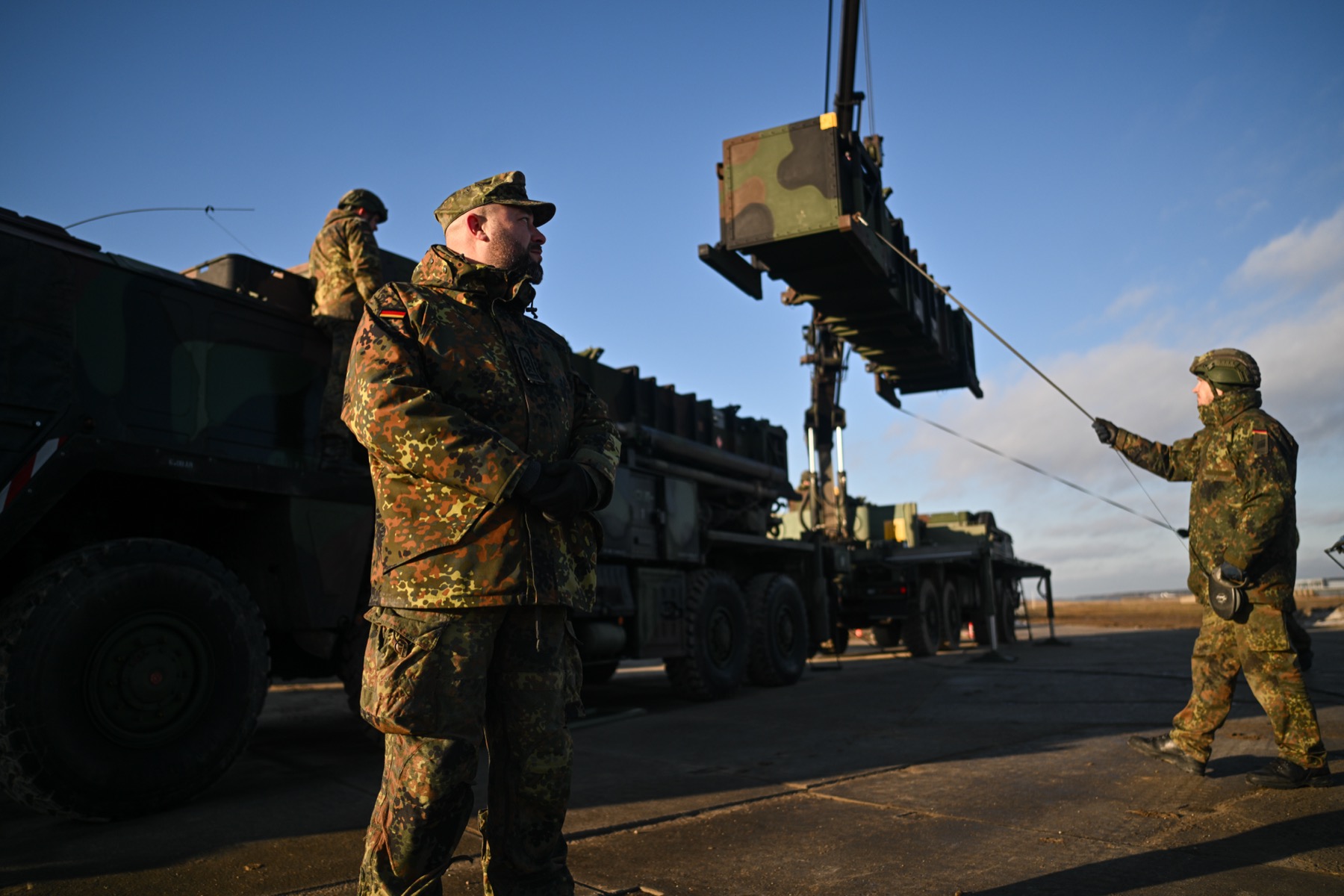
The timing matters. Patriot users in Europe are nervous because interceptor availability has become a political problem as much as an industrial one. Defense News reported that shortages have been worsened by US and Israeli operations against Iran, while Washington has signalled that American force requirements come first. For Germany, a major Patriot operator, that is the uncomfortable lesson: a system can be technically excellent and still be strategically fragile if the ammunition queue is controlled elsewhere.
The French Offer Is About More Than One Battery
Macron framed the proposal after a July 17 French-German ministerial summit as a move toward European air-defence sovereignty. The system in question is SAMP/T NG, built around the Aster interceptor family and developed by the Franco-Italian Eurosam partnership. It is not a boutique side project. It is the only European-made long-range ground-based air defence system that can credibly sit in the same strategic conversation as Patriot.
Pistorius gave the correct cautious answer. Germany is open in principle, he said, but running two long-range systems in the same altitude and distance segment would be hard to imagine. That is a real objection. Air defence is not just launchers on a parade ground. It is training pipelines, software integration, radar architecture, logistics stocks, missile certification, depot capacity and rules for who gets a scarce interceptor first on a bad night.
"We should therefore take this offer seriously," Pistorius told reporters, according to Defense News.
That line is more revealing than it looks. Germany is not being asked merely to buy a French system. It is being asked to decide whether a ten-year technology and production partnership is worth the pain of complicating its existing Patriot ecosystem.
Ukraine Is Forcing The Question
Ukraine has made the air-defence argument brutally simple. The country does not need more communiques about solidarity. It needs interceptors, radars and launchers that arrive before Russian missiles do. According to the Ukrainian presidential office, Kyiv plans to order four SAMP/T NG systems, with France committing to deliver modules progressively from 2027. A Thales Ground Fire 300 radar is expected in Ukraine by the end of 2026 as the first component, while France will send two current SAMP/T systems as an interim measure until the new-generation systems arrive.
The same Ukrainian declaration said France and Italy would accelerate Aster 30 missile deliveries by October and authorize licensed Aster 30 production in Ukraine before the end of 2026. That is the part Berlin should study most closely. The strategic prize is not one more European launcher. It is a missile production chain that can be expanded, licensed and politically controlled inside Europe.
The technical case is also stronger than it was a few years ago. Defense News reported that Italy received its first SAMP/T NG in January with a Leonardo radar offering at least 300 kilometers of air-surveillance range. France received its first upgraded system in February with the Thales Ground Fire 300 radar, whose claimed range reaches up to 400 kilometers. MBDA has said it plans to double Aster production this year, and the updated Aster 30 Block 1 New Technology interceptor is designed for medium-range ballistic missile and hypersonic missile threats.
None of that makes SAMP/T a magic shield. Air defence never works that way. But it does mean Europe now has a system, a missile family and a wartime user case that can sustain a serious alternative to total reliance on Patriot.
Germany Has A Bad Habit Of Admiring Sovereignty From A Distance
Here is the thing everyone in Berlin knows but prefers not to say too loudly: Germany likes European defence autonomy until it creates procurement risk. Then the safe answer is usually American hardware, American certification and American supply chains, with some European industrial participation attached later as a political garnish.
That instinct is understandable. Patriot is combat-proven, deeply embedded in NATO air and missile defence, and already familiar to German crews. A sudden pivot away from it would be irresponsible. But that is not the choice on the table. The real choice is whether Germany helps build a second European pillar over the next decade, or waits until the next interceptor shortage proves the same point again.
The alliance politics are delicate. A German role in SAMP/T would strengthen France and Italy, reassure Ukraine, and give Eastern European governments another procurement path. It would also irritate parts of the US defence ecosystem that have treated European air defence demand as a captive market since Russia widened the war in 2022. That tension is not a reason to avoid the decision. It is the reason the decision matters.
The Strategic Bet
If Germany joins SAMP/T NG in a meaningful way, Europe gets more than another programme logo. It gets a chance to align German scale, French political will, Italian industrial participation and Ukrainian battlefield urgency around a real capability. That combination is rare. Europe usually has two of those four pieces and spends years writing papers about the missing ones.
The risk is that Berlin studies the offer until the political moment passes. The Patriot shortage will ease eventually, at least on paper. US production slots will shift again. Officials will decide that standardisation beats diversification. Then, during the next missile crisis, Europe will rediscover that dependence is not a procurement category. It is a strategic condition.
My read is simple: Germany does not need to abandon Patriot. It does need to stop treating Patriot as a substitute for European agency. Watch three things next: whether Berlin asks for industrial workshare rather than a token seat at the table, whether Aster production really scales in 2026, and whether Ukraine receives the promised radar and interim SAMP/T systems on schedule. If those pieces move, this is more than French lobbying. It is the beginning of a European air-defence hedge that should have existed years ago.
Germany is considering a proposal from France to cooperate on the SAMP/T air defense system as concerns grow over the availability of Patriot missiles. This decision, influenced by the ongoing situation in Ukraine, could reshape European defense autonomy and procurement strategies. The German Armed Forces are evaluating the implications of integrating a new system while managing existing commitments to Patriot.
- Germany is evaluating a French proposal for the SAMP/T air defense system.
- Patriot missile availability has become a political issue in Europe.
- Ukraine plans to order four SAMP/T NG systems from France.
- Germany's decision could impact European defense autonomy and procurement strategies.
- The SAMP/T system is positioned as a credible alternative to the Patriot system.