
Germany's four Eurofighters for Latvia 2026 show the limits of European drone defense
 Dr. Klaus Weber
Germany's four Eurofighters for Latvia 2026 show the limits of European drone defense
Four Eurofighter Typhoons are to protect the airspace during the Latvian parliamentary election on October 3. Berlin is responding to repeated drone incidents on the eastern flank, not to a classic air attack. The political significance of this deployment lies precisely in that. A NATO combat aircraft is being used to secure an election against a threat that is cheap, small, and often difficult to attribute clearly. Europe's defense problem has thus become visible in a single mission.
A combat aircraft for a drone issue
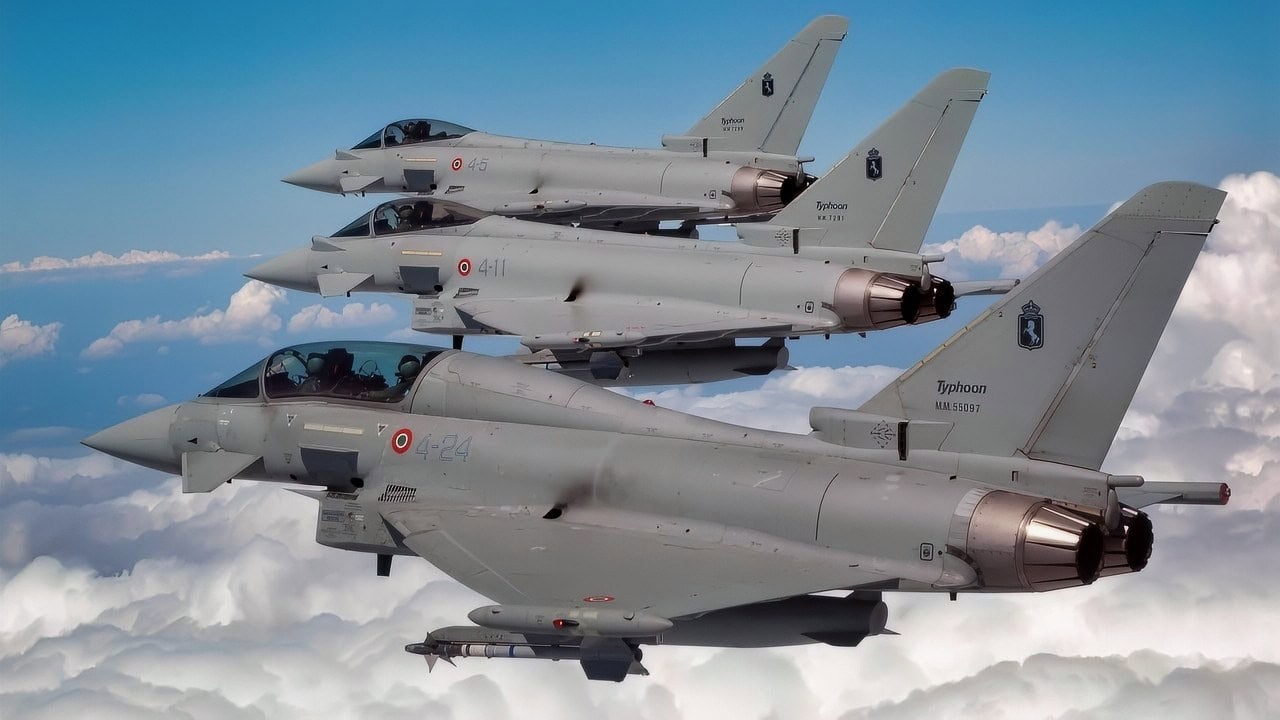
According to Defense News, four German Eurofighters are being sent to Latvia to monitor the Latvian airspace during the election and respond to incidents. Politico Europe and Latvian media are also reporting on the mission. The deployment comes at a time of heightened nervousness: A few days earlier, an Italian NATO aircraft shot down a drone that, according to the Italian Defense Minister, likely came from Russia. Additionally, a Russian warship directed flares at a Danish military helicopter that was observing it in international waters.
The Eurofighter is designed for air superiority and air defense. Its two engines, powerful radar, and high speed make it a suitable tool for quick interception decisions. However, against a small drone, speed is not automatically an advantage. A Typhoon costs many times more to operate and maintain than a commercially available or improvised missile can. If the adversary deploys the drone in large numbers, an economically absurd exchange arises. The fighter protects the political space, but it does not solve the quantity problem.
NATO demonstrates presence and buys time
Militarily, the German mission serves three functions. First, it creates a visible response capability over Latvia. Second, it reduces the risk that a single drone incident will be interpreted as evidence of a defenseless alliance. Third, it gives the Latvian authorities and NATO time to assess the origin and intent of an aerial object. This should not be underestimated. In cases of unclear attribution, a hasty interception decision is politically riskier than an additional minute for identification.
However, presence is not a permanent capability. The four Eurofighters will likely be supported by ground-based sensors, national airspace monitoring, and NATO command structures. They can intercept an object, but they cannot control all drone traffic over a state. Even less can they simultaneously protect critical infrastructure, polling places, and military facilities. Therefore, the mission is an air policing contribution, not an integrated counter-UAS system.
Germany's political message
For Berlin, the deployment is an opportunity to demonstrate the turning point in a concrete European commitment. Germany is not only supplying material to Ukraine or discussing higher defense spending, but is also taking a visible risk on NATO's eastern flank. This strengthens alliance solidarity. At the same time, the mission reveals how narrow Germany's response to new threats still is. Four highly advanced combat aircraft can help protect an election; they do not replace mobile short-range defense, electronic warfare, or cost-effective interceptor drones.
The crucial question, therefore, is not whether the Eurofighter is technically capable. It is. The question is whether Germany and its European partners can finance and procure a tiered defense architecture in which an expensive fighter only forms the top layer. This would require interconnected radars, passive sensors, electronic countermeasures, programmable air defense guns, and their own interceptor drones. The political benefit of these systems is less photogenic than a Eurofighter in the sky, but their military effect against swarms is likely greater.
Europe's procurement paradox
Since 2022, Europe's defense debate has been dominated by large platforms: combat jets, missiles, armored vehicles, and long-range precision weapons. These systems are necessary. But the Latvian case reminds us that security is also determined at the lower cost threshold. An alliance that must respond to every drone with a combat aircraft has impressive platforms but lacks a sustainable cost structure.
This is the institutional core of the problem. NATO members buy national systems while the threat occurs cross-border. EU instruments like SAFE can facilitate financing, but they do not automatically create common requirements, common data standards, or sufficient production capacity. The Eurofighter deployment is therefore both a symbol of solidarity and an indication of a lack of division of labor. Europe has the capability to intercept. What it lacks is the ability to manage thousands of cheap targets sustainably and economically.
Conclusion
The four German Eurofighters are politically valuable and militarily sensible for Latvia, as long as no one confuses them with a complete drone defense. The mission protects the election, demonstrates alliance willingness, and increases the costs of any intimidation operation. However, it does not address the structural gap between expensive platforms and cheap swarms. Europe must therefore decide whether it wants to continue making security primarily photogenic or whether it will invest in the unspectacular systems that actually provide everyday protection. More combat aircraft can increase political visibility. Only a multi-layered counter-UAS architecture can turn that into defensive capability.
Sources
- Defense News, September 17, 2026, report on the deployment of German Eurofighters to Latvia.
- Politico Europe, September 16, 2026, report on securing Latvian airspace during the election.
- LSM, September 18, 2026, report on additional NATO aircraft during the election period.
- Defense News, September 2026, reports on drone incidents in Lithuania and NATO airspace monitoring.
Germany deployed four Eurofighter Typhoons to Latvia to protect the airspace during the parliamentary election on October 3, 2026. This action responds to increased drone incidents on NATO's eastern flank, highlighting the challenges of defending against small, inexpensive drones. The mission serves to demonstrate NATO solidarity and provide a visible military presence.
- Germany is deploying four Eurofighter Typhoons to Latvia for airspace protection during elections.
- The mission is a response to increased drone incidents on NATO's eastern flank.
- The Eurofighter is designed for air superiority and air defense but faces challenges against small drones.
- The deployment aims to demonstrate NATO solidarity and provide a visible response capability.