
Germany's Withdrawal from 2 Hormuz Ships Highlights Europe's Maritime Capability Problem 2026
 Dr. Klaus Weber
Germany's Withdrawal of 2 Hormuz Ships Highlights Europe's Maritime Capability Problem 2026
Two German ships, 140 soldiers, and a political promise from 38 states are not enough to turn a potential Hormuz mission into a European security contribution. Berlin's decision to redeploy the minehunter Fulda and the supply tanker Mosel from Djibouti back to the eastern Mediterranean appears, at first glance, to be a tactical correction. In reality, it reveals a larger problem: Europe can quickly announce maritime presence politically, but can only slowly translate that into robust, heat-capable, air-defended, and parliamentarily secured operational capability.
The Withdrawal is More than a Weather Issue
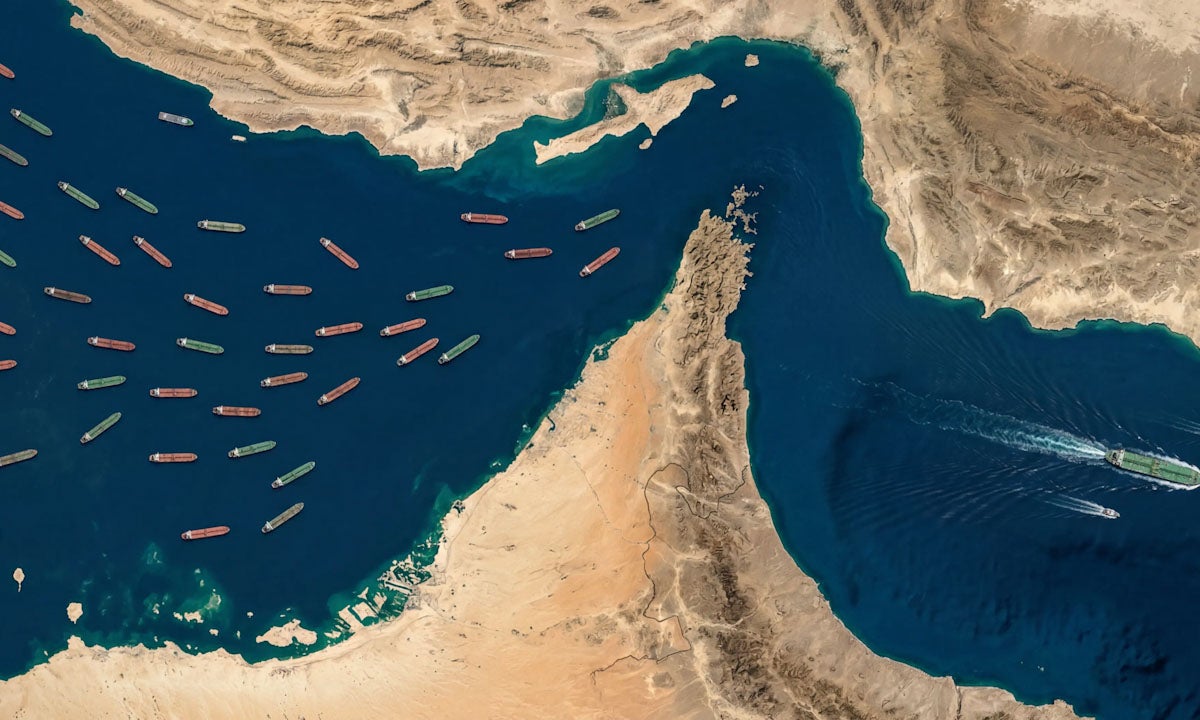
According to the German Ministry of Defense, Fulda and Mosel are not to be abandoned but held in a more suitable waiting area. Defense News reported on July 24 that Berlin no longer sees reliable indications of a short-term possible so-called permissive environment in the Persian Gulf. At the same time, a banal but analytically important factor comes into play: the cooling systems of both ships are not ideally designed for the extreme water temperatures in the Gulf of Aden and the Persian Gulf. This is where the strategic question begins.
A minehunter of the Frankenthal class is a precise, useful, and valuable tool for NATO mine countermeasures. But it is not a universal crisis management instrument. The class displaces about 650 tons, is approximately 54 meters long, travels at around 18 knots, and operates with mine-hunting sonar, divers, and remotely operated systems. This is plausible for mine countermeasures in European waters. In an environment where Iranian missiles, drones, fast boats, and coastal radars can become part of the situation at any time, such a ship needs protection, logistics, and a clear political mandate. Without an air defense umbrella, specialized capability becomes vulnerability.
The Mission was Politically Pre-Financed but Not Operationally Realized
On May 12, the United Kingdom, France, and numerous partners declared their political support for an independent, strictly defensive mission to protect shipping in the Strait of Hormuz. 38 states were involved, including Germany, Japan, several NATO countries, and Gulf partners. The mandate sounded limited: reassure commercial vessels, support civilian shipping, enable mine clearance. But even the declaration contained the actual reservation: operations should only begin in a permissive environment and in accordance with national constitutional procedures.
Germany took this reservation seriously. Pistorius emphasized in June that a deployment in the Strait of Hormuz would require a separate mandate from the Bundestag. Additionally, a permanent reduction in hostilities, an international mandate, and effectively the consent of the affected coastal states should be in place. This sounds legally sound. But it also means: Berlin could deploy ships forward without already having a politically and militarily complete operational architecture. This is not a German special case. It is the standard ailment of European security commitments.
The political logic was: they wanted to show Washington that Europe is not just commenting on the Gulf but contributing. The operational logic was: they wanted to be present with two specialized units in case mine countermeasures became urgently needed after a ceasefire. Between these two logics lay a gap. Those waiting for a ceasefire while simultaneously keeping ships in a hot zone must answer a question: for which scenario are they actually optimized?
Fulda and Mosel are Symptoms of an Older Fleet Structure
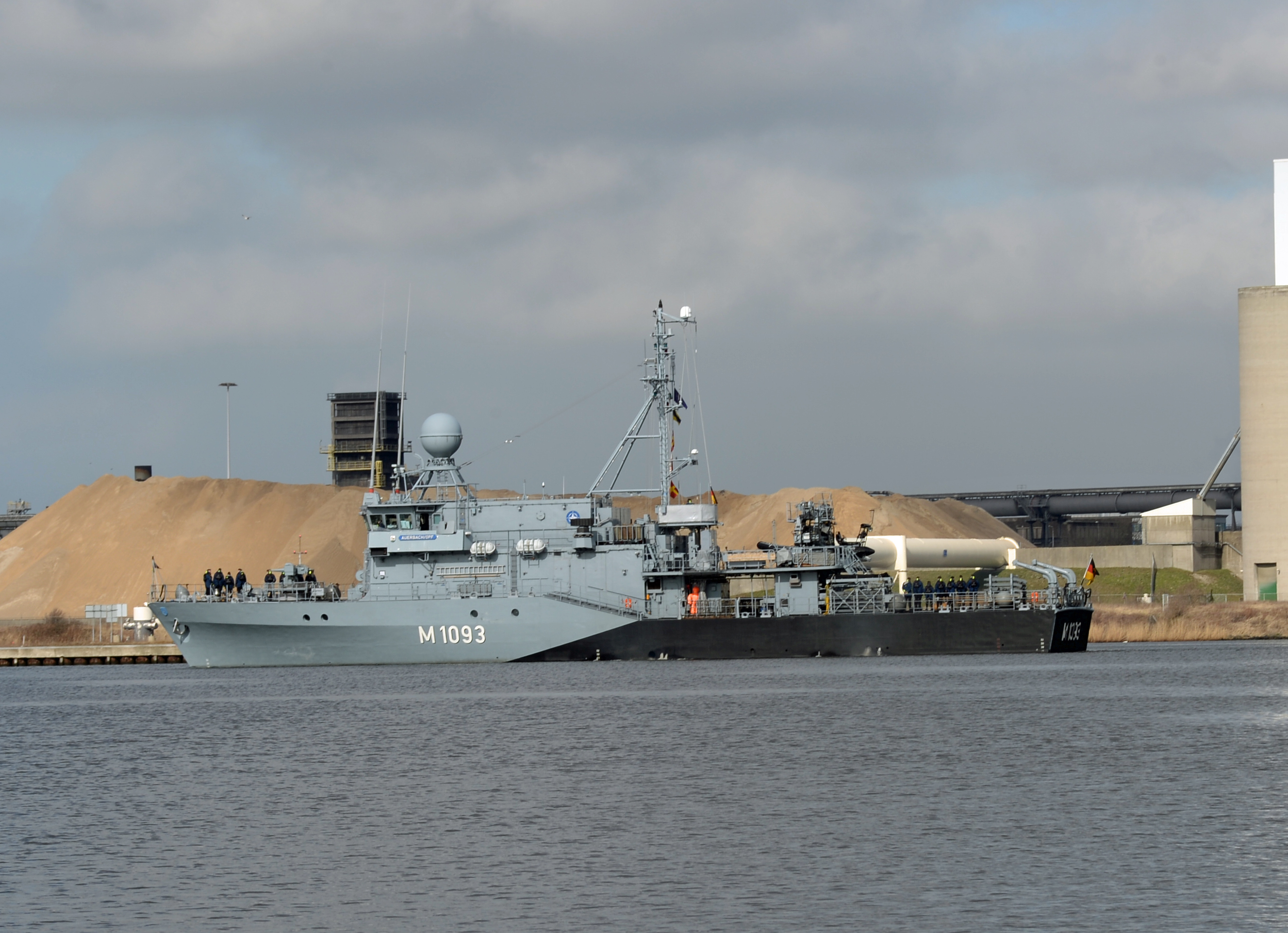
The Fulda belongs to a generation of German minehunters that were commissioned in the 1990s, and whose basic logic stems from operations in the North and Baltic Seas. The Mosel represents an even older problem. German fleet tankers and support platforms have been the subject of replacement and availability debates for years. Even if individual ships are operational, the Hormuz episode shows that availability is not the same as sustainability in a different climate and threat environment.
This sounds technical, but it is political. European governments are now discussing defense spending in percentage points of GDP and in billions. The European Defense Agency reported expenditures of 418 billion euros for 2025 and expects around 454 billion euros for 2026. However, a maritime mission does not fail due to an abstract European total. It depends on cooling systems, spare parts, escort protection, mandate durations, national deployment rules, and the question of whether a destroyer with air defense is available. More money does not create a coherent operational chain.
On the way to Djibouti, the German ships relied on British escort protection. This is normal within an alliance and not inherently a flaw. But it shows that European division of labor only generates strength when it is predictable. If each state contributes a symbolic module but critical enablers remain scarce, no European autonomy is created, but rather a maritime version of the well-known armaments problem: many platforms, few integrated capabilities.
Washington Will Draw the Wrong Lesson
In Washington, the withdrawal can easily be portrayed as a lack of European resolve. This interpretation would be convenient and incomplete. Berlin is not withdrawing the ships because it considers freedom of navigation unimportant. It is withdrawing them because a defensive mine clearance mission without a permissive environment and without adequate protection would be politically hardly justifiable. The problem lies not in a lack of courage, but in an unclear mission definition.
Nevertheless, Germany should not simply deflect American criticism. Those participating in a Hormuz initiative but finding after just a few weeks that the platforms are poorly suited to the climate and operational conditions of the waiting area did not examine the situation rigorously enough before deployment. Symbolic politics is not new in the German security debate. What is new is that it now meets a Bundeswehr whose material reserve leaves little room for symbolic wear and tear.
For the EU, the episode is uncomfortable because Operation Aspides in the Red Sea is currently seen as evidence of European operational capability. Aspides is defensive, CSDP-based, and focused on maritime security. But the Hormuz mission would be something different: politically broader, geographically riskier, and more dependent on the behavior of the USA, Iran, and Oman. A CSDP operation can secure a sea route when the risk is limited and escalation control is credible. It cannot automatically absorb a strategic crisis defined by an American-Iranian war.
Europe's Maritime Autonomy Does Not Begin in the Gulf
The most important lesson is not that Germany should send more ships to the Gulf. The lesson is more sober. European maritime autonomy begins with fleet structure, not with press releases. It requires enough mine countermeasures, enough air defense, enough tankers, enough spare parts, and a mandate process that combines speed with democratic control. Without these elements, any distant mission remains dependent on chance and partners.
Germany made the right decision not to leave specialized ships in a situation for which neither the climate, threat, nor mandate is suitable. But a correct withdrawal decision can still reveal poor initial planning. This is precisely the Weberian finding: Europe does not become more strategic by offering small contributions everywhere. It becomes more strategic when it promises less frequently but can deliver what is promised as a complete capability. The Strait of Hormuz highlights this limit more sharply than any budget speech in Berlin.
Germany withdrew the mine countermeasure vessel Fulda and supply tanker Mosel from Djibouti to the Eastern Mediterranean in 2026 due to operational and environmental concerns. This decision reflects Europe's challenges in translating political commitments into effective military operations, particularly in the context of the Strait of Hormuz. The ships are not adequately equipped for the extreme conditions in the Gulf, raising questions about European maritime capabilities and readiness for future missions.
- Germany withdrew the mine countermeasure vessel Fulda and supply tanker Mosel from Djibouti to the Eastern Mediterranean.
- The withdrawal reflects Europe's inability to translate political commitments into operational capabilities.
- The ships are not suited for the extreme temperatures of the Gulf of Aden and Persian Gulf.
- The mission was politically supported by 38 nations but operationally constrained by legal and environmental factors.
- Germany's decision highlights broader issues in European maritime capabilities.