
Greece Bets $4 Billion on Israel's Achilles Shield
 Alexandra Reeves
Greece Bets $4 Billion on Israel's Achilles Shield
By Alexandra Reeves, NATO/Russia/Middle East Expert
Greece is not buying another shiny defence programme for the parade ground. Athens has just approved a roughly $4 billion Israeli-built air-defence shield because the eastern Mediterranean is becoming a missile, drone and airpower problem faster than NATO's planning language can keep up.
According to a July 23 Reuters report carried by Defense News, Greece's national security council, KYSEA, approved procurement contracts for a multi-layer air defence system worth up to 3.5 billion euros, or about $4 billion. Defence Minister Nikos Dendias said the system, called Achilles Shield, will be built around Israeli radars and missiles from Rafael and Israel Aerospace Industries, and should be fully operational within 35 months. Greek companies are expected to produce at least 25 percent of it.
That last detail matters. This is not only an air-defence buy. It is an industrial and political choice about where Greece thinks reliable security technology will come from when missiles and drones are no longer niche threats.
What Athens Approved
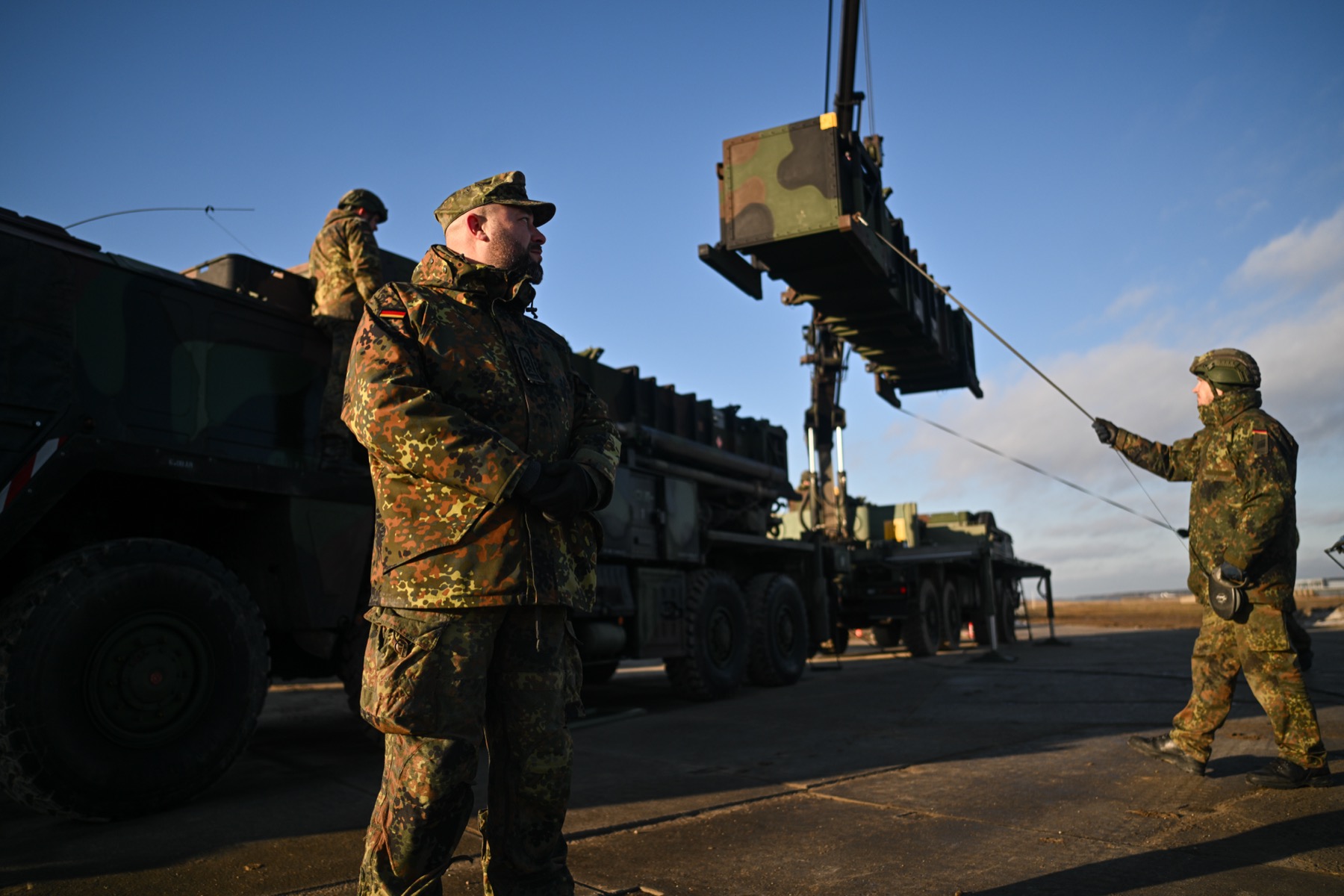
The public details are still limited, which is worth saying plainly. The Greek announcement, as reported by Reuters, describes Achilles Shield as a multi-layer anti-ballistic, anti-aircraft and anti-drone system. It names Rafael and IAI as core Israeli suppliers. It does not publicly map every interceptor, radar or command-and-control node.
Still, the architecture tells us enough. Greece is trying to connect layers against three different categories of threat: ballistic missiles, aircraft and drones. That is exactly the problem set that Ukraine, Israel and the Gulf states have been living with for years, and that much of Europe only recently began treating as a daily military requirement rather than a future contingency.
- Estimated value: up to 3.5 billion euros, or about $4 billion.
- Operational timeline: Dendias said 35 months from approval.
- Industrial share: at least 25 percent Greek production.
- Core suppliers: Israeli radars and missiles from Rafael and IAI, according to Reuters.
- Threat layers: ballistic missiles, aircraft and drones.
KYSEA also approved a wider package: three Embraer C-390 military transport aircraft, 10 British-built VICTA mini-submarines for special operations, U.S. V-BAT unmanned aircraft and Israeli Heron UAVs. Greece is already planning to buy up to 40 F-35 fighters from the United States and new frigates from France and Italy as part of a broader modernization plan worth about 28 billion euros by 2036.
The S-300 Problem No One Likes Discussing
Here is the awkward part for NATO: Greece still operates old Russian S-300 systems alongside U.S. Patriot batteries. That made more sense in the 1990s than it does in 2026. Russian-built strategic air defence inside a NATO member's inventory is now politically uncomfortable, technically harder to sustain and operationally strange when Moscow is the alliance's primary military problem.
Achilles Shield does not automatically mean the S-300s disappear tomorrow. But it points in that direction. A new Israeli-centred layered system gives Athens a path to reduce dependence on Russian-origin hardware without simply waiting for a NATO-wide procurement miracle that may never arrive.
This is where Greece is behaving more practically than many of its allies. Everyone in Brussels agrees Europe needs more air and missile defence. Fewer governments are willing to move money, sign contracts and accept that domestic industry cannot fill every gap on the preferred political timeline. Athens is making a choice: buy from Israel, integrate Greek firms where possible, and get the system fielded in under three years.
Why This Is a NATO Story
It would be easy to treat this as another chapter in the Greek-Turkish rivalry. That would be too narrow. Yes, Greece spends nearly 3.5 percent of GDP on defence, far above many NATO allies, largely because of its long dispute with Turkey. Yes, airpower over the Aegean still shapes Greek procurement more than polite alliance communiques admit.
But Achilles Shield is also about the southern edge of NATO. The eastern Mediterranean sits between Russia's Black Sea theatre, the Levant, the Suez route, North Africa and the Middle East missile environment. Greece is not Poland, and it should not pretend to be. Its geography creates a different set of risks: maritime chokepoints, airbase vulnerability, drone proliferation, Iranian-linked missile lessons from the region and the constant possibility that a crisis in the Middle East spills into European security planning.
That is why the Israeli connection is important. Greece and Israel already cooperate on air training, annual drills, anti-drone systems and cybersecurity. Last year, Athens bought 36 Israeli-made rocket artillery systems for about 650 million euros, according to the Reuters account. Achilles Shield deepens that pattern from cooperation into dependency, in the neutral sense of the word: Greek air defence will rely on Israeli technology, Israeli sustainment logic and Israeli combat experience.
The Drone Lesson Arrived Late
Europe spent years watching drones change wars elsewhere and still acted surprised when cheap systems began defeating expensive assumptions. Ukraine made the lesson impossible to ignore. So did the Red Sea, where Houthi attacks forced navies to burn costly interceptors against comparatively cheap threats. Israel's own experience under rocket, missile and drone fire has made its air-defence ecosystem attractive because it is not theoretical.
Achilles Shield is therefore a bet on layered defence as a normal requirement, not an emergency add-on. The uncomfortable truth is that single-system air defence is no longer good enough. Patriot-class batteries remain valuable, but they cannot be everywhere, and they are not the right answer to every drone or rocket. A credible shield now needs sensors, command systems, short-range counter-drone tools, medium-range interceptors and high-end missile defence working together.
That integration is hard. It is also where procurement announcements often go to die. The 35-month timeline will be the first serious test. If Athens can make the system operational on that schedule, it will have done something many larger European states are still describing in concept papers.
What To Watch Next
The first thing to watch is transparency. Greece does not need to publish a targeting manual, but it should eventually clarify the main interceptor families, radar architecture and command-and-control integration. Without that, Achilles Shield will remain more slogan than capability in public understanding.
The second is Turkey's response. Ankara will read this purchase through its own threat perceptions, especially as Greece continues toward F-35 acquisition. The risk is not that Achilles Shield starts a crisis by itself. The risk is that it becomes one more layer in an action-reaction cycle around airpower, drones and missiles in the Aegean.
The third is whether NATO learns the right lesson. Greece is not waiting for a perfect European air-defence consensus. It is buying what it thinks it needs, from a partner that has been forced to learn missile defence under pressure. That is sensible. It is also a quiet indictment of Europe's slow procurement culture.
The real question is not whether Greece can afford Achilles Shield. It is whether the rest of NATO can afford to keep treating layered air defence as a future programme instead of a present-tense requirement.
Greece approved a $4 billion procurement of the Achilles Shield air defense system to enhance its defense against missile and drone threats. The system, expected to be operational within 35 months, will incorporate Israeli technology and involve Greek production. This decision reflects Greece's strategic shift towards modernizing its military capabilities amid regional security challenges.
- Greece approved a $4 billion air defense system called Achilles Shield.
- The system will be operational within 35 months.
- At least 25% of the system will be produced by Greek companies.
- The procurement includes various military equipment, including transport aircraft and submarines.
- Greece is also planning to acquire F-35 fighters as part of a broader modernization plan.