
JNIM in Mali 2026 — Washington considers strikes in a Sahelian trap
 Marie Dubois
JNIM in Mali 2026 — Washington Considers Strikes in a Sahelian Trap
In Washington, on July 22, the debate over a military option in Mali has moved from confidential notes to the public sphere. According to the Washington Post, the Trump administration is considering strikes against Jama'at Nusrat al-Islam wal-Muslimin (JNIM), the Sahelian coalition linked to al-Qaeda. In Bamako, the same news arrives four days after the ambush in Anefis, in northern Mali, where at least 50 Malian soldiers were killed in an attack jointly claimed by the Front for the Liberation of Azawad (FLA) and JNIM.
This timing matters. It is not just another American temptation in an already long war. The Malian terrain is changing under the feet of all actors: the Malian army, the Russians from the Africa Corps, Tuareg groups, jihadists, and now perhaps the Americans. On a map, Anefis seems far from Bamako. On a logistical track, between Gao, Kidal, and the northern positions, it is a choke point. When this choke point is breached, strategic discourses become less important than tankers, tires, local intelligence, and the ability to hold the road during the hot season.
The Northern Mali is Not a Simple Target
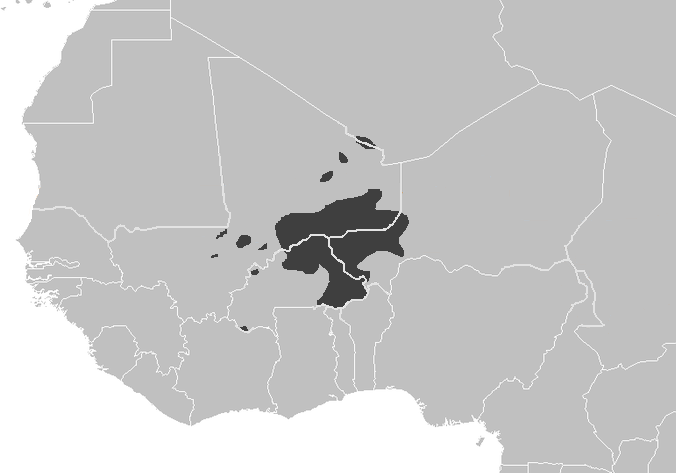
JNIM is no longer just an organization that harasses isolated posts. According to Al Jazeera, the attack in Anefis demonstrated operational coordination between the FLA, dominated by Tuareg networks, and JNIM, whose political goal remains Islamist. The alliance is not ideological. It is practical. Both camps see the Malian army and its Russian partners as an immediate adversary; each brings something that the other does not always possess: tribal knowledge, mobility in the desert, experience with explosive devices, the ability to choose the moment of the ambush.
On the ground, this complicates any air campaign. An American strike can destroy a pickup, a depot, or an identified leader. It does not fix the weakness of a column that rolls for hours on a track known to enemy scouts. It also does not rebuild the network of local informants that Bamako lost by breaking the Algiers agreement, expelling MINUSMA, and treating the north as a strictly coercive theater.
This is where French experience should weigh in. Barkhane knew how to strike. The Mirages, Reaper drones, Tiger helicopters, and commandos eliminated very dangerous leaders. Yet, the jihadist area of influence has shifted, fragmented, and then extended towards central Mali, Burkina Faso, Niger, and the coastal margins. A successful strike is not a strategy if no one holds the village the next morning.
Washington Also Targets Moscow
The most revealing detail in the statements reported by the Washington Post is not just the mention of strikes. It is the American accusation that Moscow has proven to be an ineffective security partner for Mali. Since the French withdrawal and the gradual disappearance of Wagner in favor of the Africa Corps, Bamako has sold its public the idea of sovereignty reclaimed by force. The ambush in Anefis strikes exactly at this narrative.
The Russians have brought drones, advisors, firepower, and an assumed brutality. They have also hardened the war. ACLED, cited by the Washington Post, attributes 925 civilian deaths to Malian forces and their Russian partners in 2024, compared to 232 to jihadist groups in the same comparison. These figures must be handled with caution, as data collection in war zones remains imperfect. But the order of magnitude says something essential: Bamako's strategy produces as much resentment as it does control.
For Washington, striking JNIM would therefore also be a messaging operation. It would be a way to tell the Sahelian juntas that Russia does not protect enough, that American equipment remains available, and that the United States can return through the security window after losing political access to Mali and Niger. This calculation is not absurd. It is simply dangerous, because it assumes that military regimes will accept aid without transforming that aid into domestic legitimacy.
The Risk of Nourishing the Islamic State in the Sahel
Another problem is more tactical. JNIM and the Islamic State in the Sahel (EIGS/IS Sahel) are rivals as much as they are enemies of the states. In certain areas, JNIM contains the expansion of EIGS by force, through local negotiation, or by controlling economic circuits. Brutally weakening JNIM in certain pockets can open space for the Islamic State, which is more transnational in its branding and often more indiscriminate in its massacres.
Wassim Nasr, a Sahel specialist cited by the Washington Post, believes that repeating the military solution will not resolve the conflict. He is right in substance, even if the formula is sometimes too comfortable from Paris or Washington. From experience, there are moments when an enemy column must be struck, and quickly. But the obsession with the target often masks the hardest question: who speaks to the communities after the strike, who reopens the road, who guarantees that the army will not come to punish an entire camp because a fighter slept there for two nights?
Bamako's current response is insufficient. It relies on a hammered sovereignty, on the Russian alliance, and on military pressure. Armed groups, on the other hand, respond with more flexible adaptation. They form ad hoc coalitions, cut axes, choose periods of vulnerability, and exploit every excess. It is a war of social control before being a war of flags.
What an American Strike Would Really Change
If Donald Trump approves the military option, Mali would become, according to the Washington Post's count, the eighth country targeted by American strikes since the beginning of his second term. The symbolism would be strong. But on the ground, the immediate effect would depend on three details: the quality of intelligence, Bamako's agreement or not for overflight, and deconfliction with the Russians.
The last point is underestimated. The Africa Corps is not a phantom force. Its men operate with the Malian army, circulate on the same axes, and use drones or air support in areas where Washington might want to act. An identification error, a downed Russian drone, or an American strike too close to a Malian detachment could produce a diplomatic crisis even before altering the military balance.
Mali is not an isolated shooting range. It is a space saturated with fragile alliances, local grievances, and foreign forces that do not trust each other.
The operational warning is simple: if the United States enters this war from the sky, they must know how they will exit on the ground. The next weak point is not necessarily Bamako. It is rather on the Gao-Anefis-Kidal axes, in the villages where the FLA and JNIM can still talk to each other despite their differences, and in the border areas where EIGS waits for a rival to be sufficiently weakened to advance. A strike can kill a leader. It can also shift the war by ten kilometers and make the next road even more expensive to hold.
The U.S. administration is considering military airstrikes against Jama'at Nusrat al-Islam wal-Muslimin (JNIM) in Mali following an ambush that killed at least 50 Malian soldiers. This discussion emerged publicly on July 22, 2026, amid concerns over the effectiveness of Russian security partnerships in the region. The attack highlights operational coordination between JNIM and the Front de libération de l'Azawad (FLA), complicating the military landscape in northern Mali.
- U.S. administration considers military strikes against JNIM in Mali.
- At least 50 Malian soldiers were killed in an ambush by JNIM and FLA.
- The attack indicates operational coordination between JNIM and FLA.
- The U.S. aims to send a message to Sahelian juntas regarding Russian security partnerships.
- The situation in Mali is complex with multiple actors involved.