
Green Berets tested glider drones for supply drops during a massive special operations exercise
Source: Task & Purpose
Loading...Strong SignalCredibility: 81%
Report Content
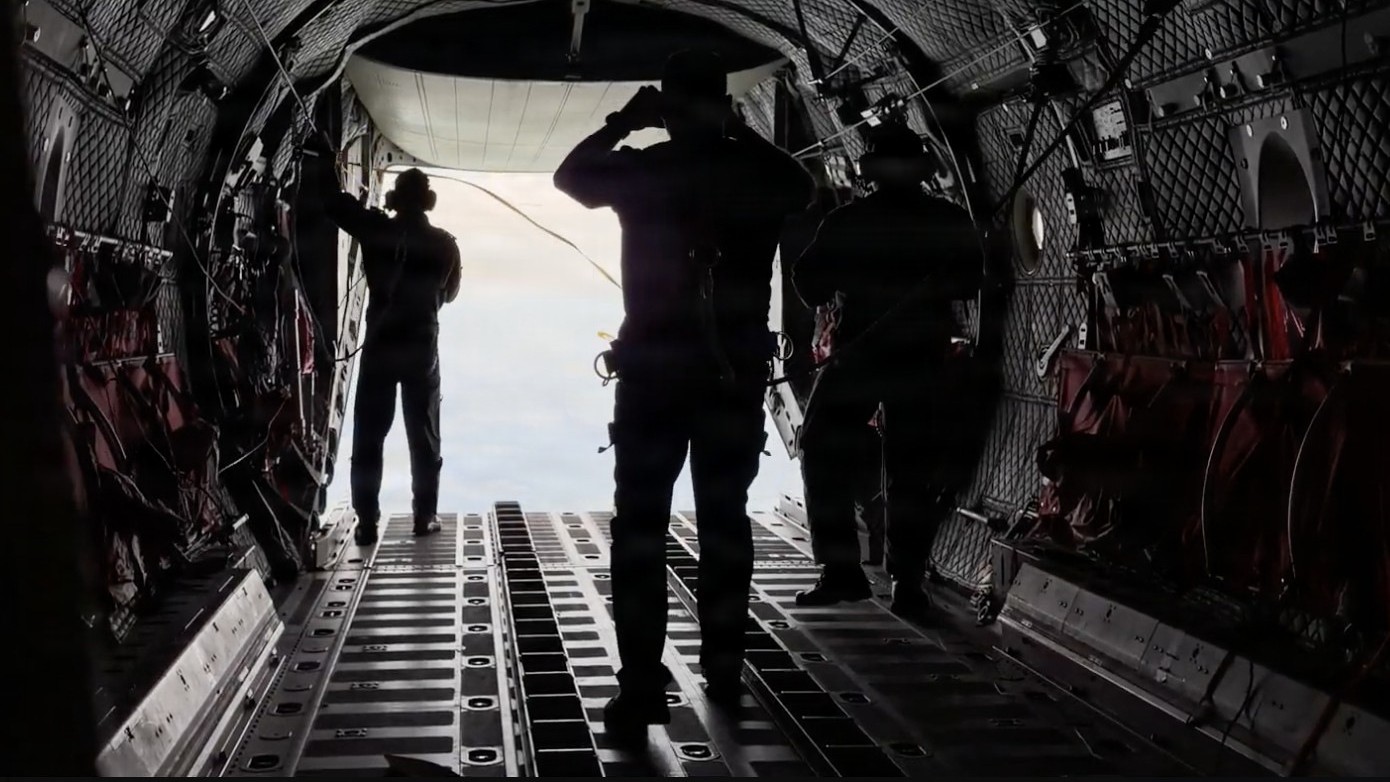
Special operations units might rely on uncrewed glider drones to get resupplied in the near future. At the very least, the concept was put to the test during the largest special operations training exercise in Europe this month.
NATO forces, including elements from Army Special Forces, took part in the Trojan Footprint Exercise. During one part of the exercise, U.S. troops and members of the Romanian Air Force dropped Grasshopper autonomous aerial resupply vehicles from an Alenia C-27J plane over North Macedonia, to reach troops on the ground. The long, coffin-shaped device dropped out of the cargo plane, its glider wings extending to help guide it to the target before an onboard parachute fired. Photos posted to the military’s Defense Visual Information Distribution Service show troops inspecting the glider on the ground, where it shows some minor damage from reaching the surface.
It’s the latest entry in the Army’s expanding efforts to use drones for logistical work and evacuations. Business Insider first reported on the testing during Trojan Footprint. The military is looking at using glider drones — autonomous aerial vehicles that can reach a target with minimal to zero electronic signature — for reaching frontline troops, according to an official who spoke to Business Insider.
The Trojan Footprint exercise brought together roughly 1,000 American special operations troops — including Special Forces and Navy SEALS — with another 2,000 from allied countries. According to U.S. Special Operations Command Europe, the exercise was meant to serve as a “testing ground for refining tactics, testing cutting-edge technology, and developing innovative operational concepts.” The exercise wrapped on May 21.
Top Stories This Week
According to manufacturer DZYNE, the Grasshopper and its long-range variant (which has an onboard turboprop) both are meant to accurately deliver a payload using a cheap and expendable frame and can each carry 500 pounds of cargo. The normal glider variant emits a very low electromagnetic signal.
The idea of gliders is appealing for modern operations. Glider drones like the Grasshopper are relatively small, have a minuscule electromagnetic footprint and are inherently meant to be single-use, disposable vehicles, perfect for escaping enemy detection. A passing cargo plane can launch one and, in theory, the glider can reach units cut off from normal supply lines or in a contested space. Army Special Forces have been testing out such technologies. Other versions of glider drones were tested stateside at the Yuma Proving Ground in Arizona in 2023. The deployment of this model of glider in an exercise as big as Trojan Footprint comes as the wider Army looks at integrating drones into resupply missions.
The Army has been heavily testing various drones in recent months in Europe, not for direct combat roles, but for logistics works. Those include ground vehicles meant to ferry supplies to the front lines and using an oversized aerial drone to pick up and evacuate wounded.
The post Green Berets tested glider drones for supply drops during a massive special operations exercise appeared first on Task & Purpose.
Classification
Region
Europe
Analytical Domain
Operational
Primary Category / Secondary Categories
Logistics / Weapons & Equipment
SALUTE Report
Size
1,000 American special operations troops and 2,000 allied troops
Activity
Testing of glider drones for supply drops during a special operations exercise
Location
North Macedonia
Unit
U.S. Army Special Forces and Romanian Air Force
Time
May 2023
Equipment
Grasshopper autonomous aerial resupply vehiclesAlenia C-27J plane
Summary
U.S. Army Special Forces tested glider drones for supply drops during the Trojan Footprint Exercise in North Macedonia in May 2023. Approximately 1,000 American special operations troops and 2,000 allied troops participated in the exercise, which aimed to refine tactics and test new technologies. The Grasshopper autonomous aerial resupply vehicles were deployed from an Alenia C-27J plane to reach troops on the ground.
Key Facts
- U.S. troops tested glider drones for supply drops during the Trojan Footprint Exercise.
- The exercise involved approximately 1,000 American special operations troops and 2,000 allied troops.
- Glider drones were dropped from an Alenia C-27J plane over North Macedonia.
- The Grasshopper drones are designed for low electronic signature and can carry 500 pounds of cargo.
- The exercise served as a testing ground for refining tactics and innovative operational concepts.