
Hegseth Gives NATO Six Months to Prove Europe Can Lead
 Alexandra Reeves
Hegseth Gives NATO Six Months to Prove Europe Can Lead
Pete Hegseth did not announce a withdrawal from Europe in Brussels on Thursday. He did something more useful for Washington and more unnerving for NATO: he put the American military presence in Europe on a clock.
According to Associated Press reporting from the NATO defence ministers' meeting on 18 June, the U.S. defence secretary told allies that the Pentagon will conduct a six-month review of American forces in Europe. The outcome, he said, will depend on how fast European states move toward taking primary responsibility for their own defence. That is not just another burden-sharing speech. It is the beginning of a conditional-security model for the alliance.
Europe should take the warning seriously, even if it should not take every line of Hegseth's rhetoric literally. He accused allies of neglecting tanks, fighters, and air defences in favour of domestic political priorities, a charge that ignores the scale of Europe's rearmament since Russia's full-scale invasion of Ukraine. But the political signal is blunt enough: Washington is no longer treating its European force posture as a permanent entitlement for allies. It is treating it as leverage.
The Review Matters More Than the Insult
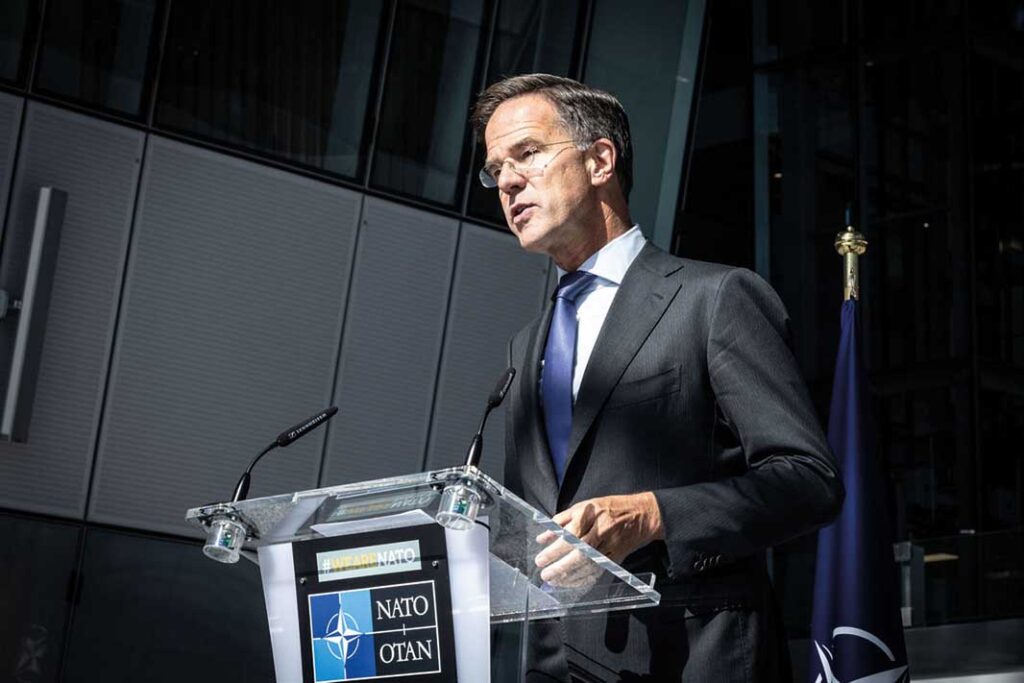
The easy European reaction is to focus on the performance. Hegseth's remarks about migration, gender policy, and European decline were designed to irritate. That is the noise.
The signal is the review. A six-month Pentagon assessment creates a decision point before the end of 2026, just as NATO tries to turn last year's 5 percent spending pledge into real force structure. NATO says allies committed at the 2025 Hague summit to spend 5 percent of GDP annually on core defence requirements plus defence- and security-related costs by 2035, with at least 3.5 percent going to core military needs. That target is now no longer only about pleasing Washington. It is about keeping Washington in the room on terms Europe can live with.
The current American footprint is still large. The Council on Foreign Relations, citing U.S. European Command, put the force at roughly 80,000 service members in Europe as of April 2025, with totals fluctuating because of rotations and exercises. Those troops are not decorative. They provide logistics, command-and-control, airpower, nuclear-sharing support, intelligence, training, and the connective tissue that makes NATO's eastern flank more than a map exercise.
That is why even a partial drawdown would matter. Losing a brigade is one thing. Losing U.S. enablers is another. Europe can buy artillery shells, drones, and armoured vehicles faster than it can reproduce American strategic airlift, aerial refuelling, theatre missile defence, intelligence fusion, and high-end command architecture. The uncomfortable truth is that NATO's European pillar has more money than it had five years ago, but it still depends on U.S. systems for the hardest parts of modern war.
Europe Has Improved, But Not Enough
Hegseth's argument would be stronger if it admitted that Europe has moved. NATO Secretary General Mark Rutte said ahead of the ministerial that allies need more forces, more resources, and a much stronger industrial base. NATO's own funding summary says all allies met or exceeded the old 2 percent benchmark in 2025, while European allies and Canada raised defence spending by 20 percent over 2024 and invested more than $574 billion in defence in 2025, adjusted to 2021 prices.
That is real movement. It also does not close the gap.
The AP reported last week that NATO's top military officer has been weighing alternative defence plans after the United States told allies it would scale down some aircraft and warship commitments available in a crisis. The list reportedly included a carrier strike group, submarines, fighter jets, maritime patrol aircraft, refuelling aircraft, and drones. Those are not luxuries. They are the assets that buy time in the opening months of a war, when Russia would try to overwhelm air defences, sever logistics, and force political panic before NATO's larger economy can mobilise.
So the six-month review is not happening in a vacuum. It follows a pattern: Washington is narrowing what it promises, Europe is being told to fill the gaps, and NATO is trying to make the handover look orderly. Rutte calls it a stronger Europe in a stronger NATO. Hegseth calls it NATO 3.0. The labels differ. The direction is the same.
The Iran Base Dispute Changed the Mood
The sharpest part of Hegseth's message was not about Ukraine or Russia. It was about Iran. He accused European allies of putting American forces at risk by denying predictable access, basing, and overflight for U.S. operations against Iran.
That point will land badly in Europe, where governments do not believe hosting U.S. troops means automatic participation in every American war. But from Washington's perspective, the complaint reveals why European bases are now being reassessed. If U.S. installations in Europe are useful for deterring Russia but politically unreliable for operations in the Middle East, an America First Pentagon will ask what it is paying for.
This is where Europe has a harder problem than most public debates admit. European leaders want the U.S. presence to remain NATO-focused, stabilising, and politically insulated. Washington increasingly wants it to be flexible, globally usable, and tied to allied compliance. Those are different visions of the same bases.
What to Watch Next
The next six months will show whether this is a negotiating tactic or the start of a real redesign. The first indicator will be whether the Pentagon review targets troop numbers, high-end enablers, or political access rules. Personnel cuts make headlines, but reductions in aircraft, naval commitments, intelligence support, or logistics capacity would hurt more.
The second indicator is whether European governments move beyond spending announcements. Watch air defence procurement, ammunition production, long-range fires, military mobility, and the boring but decisive infrastructure needed to move heavy forces east. If Europe answers Hegseth with communiques, it will fail the review. If it answers with contracts, stockpiles, and deployable formations, Washington will have less room to walk away.
The third indicator is Ukraine. Rutte said Zelensky would participate in the Ukraine Defence Contact Group session in Brussels, and NATO's industrial output for Ukraine remains a live test of allied seriousness. A Europe that cannot sustain Ukraine under fire will struggle to convince any U.S. administration that it can lead European defence in a direct NATO crisis.
The takeaway is not that America is leaving Europe tomorrow. It probably is not. Congress, commanders, host nations, and U.S. global logistics all complicate that. The takeaway is worse for Europe: the American presence is becoming conditional before Europe is ready to replace it. Hegseth gave NATO six months, but the real deadline was set years ago. Europe just kept pretending it had more time.
U.S. defense secretary announced a six-month review of American forces in Europe on June 18, 2025, urging European allies to take greater responsibility for their defense. The review will assess troop numbers and military capabilities, with implications for NATO's future structure. Hegseth criticized European nations for prioritizing domestic issues over military readiness, highlighting the need for increased defense spending and resources.
- U.S. defense secretary announced a six-month review of American forces in Europe.
- European allies are urged to take primary responsibility for their own defense.
- NATO members committed to increasing defense spending to 5% of GDP by 2035.
- The current U.S. military presence in Europe is approximately 80,000 service members.
- Hegseth criticized European allies for neglecting military readiness in favor of domestic priorities.