
Hezbollah Drones Push Israel Beyond Lebanon Yellow Line
 Alexandra Reeves
Hezbollah Drones Push Israel Beyond Lebanon Yellow Line
Israel just admitted something uncomfortable in southern Lebanon. The line it drew after the April ceasefire is no longer doing the job. On May 26, Israeli officials confirmed that ground forces had moved beyond the so-called Yellow Line in response to Hezbollah drone attacks that have wounded and killed Israeli personnel. That is not a minor tactical adjustment. It is a quiet confession that a buffer zone built for rockets and infantry raids is being rewritten by cheap drones.
The old assumption was simple enough: seize ground, push Hezbollah launch teams back, and create enough distance to protect northern Israel. That logic worked better against short-range rockets than against small drones, especially first-person-view systems and aircraft guided by hardened control links. A few extra kilometers of occupied terrain do not solve the problem if Hezbollah can still launch from beyond the new line and fly a munition into an Israeli platoon position.
The Yellow Line Is Already Moving
According to The Jerusalem Post, Israel confirmed on Tuesday that its forces had infiltrated deeper into Lebanon beyond the April 17 ceasefire Yellow Line. The IDF did not specify how far the new push would go, and Israeli officials presented the move as temporary rather than a formal annexation of more ground. But the language matters less than the precedent. A ceasefire boundary that can be moved under fire is not really a boundary. It is a forward operating concept under political camouflage.
Israeli forces also escalated from the air. The IDF said it struck more than 100 Hezbollah infrastructure sites and fighters overnight, including more than 90 weapons storage facilities, command centers, and lookout posts in southern Lebanon. It also hit targets in the Bekaa Valley, roughly 100 kilometers deep into Lebanon. Le Monde reported that the May 26 strikes killed 31 people, including children and women, while citing World Health Organization figures that at least 608 people had been killed in Lebanon by Israeli attacks since the April ceasefire began.
Those numbers explain why this is not just a military problem. Israel is trying to reduce tactical risk to its troops by widening the area in which it can strike and maneuver. Lebanon sees the same action as proof that the ceasefire is becoming a managed occupation. Hezbollah, meanwhile, can claim that Israeli ground activity gives it a continued justification for drone, rocket, and artillery attacks.
Drones Changed The Geometry
The most important sentence in the Israeli reporting was not the claim about the number of targets hit. It was the question raised by Israeli officials themselves: if Hezbollah drones have ranges around 30 kilometers, how does moving from roughly 10 kilometers to 12 kilometers inside Lebanon stop the threat? The short answer is that it probably does not.
It may disrupt nearby launch cells. It may clear observation points. It may give Israeli troops better terrain and fewer immediate ambush risks. But it does not remove Hezbollah from the drone fight. If anything, it pushes Hezbollah toward the tactics that have worked across Ukraine, Gaza, and Lebanon: smaller launch teams, shorter exposure windows, pre-surveyed routes, and drone attacks against logistics, medevac, and exposed armor rather than fortified positions.
This is where Israel has a problem that should feel familiar to NATO planners. Electronic warfare helps against many drones, but it is not a magic wall. Reports around the Lebanon front have pointed to Hezbollah using FPV and fiber-optic techniques that are harder to jam than ordinary radio-controlled drones. Whether every claim about fiber-optic guidance holds up is less important than the trend. The defender cannot assume that jamming will defeat the next wave. The attacker adapts, and usually does so faster than procurement systems can respond.
Airpower Cannot Substitute For Control
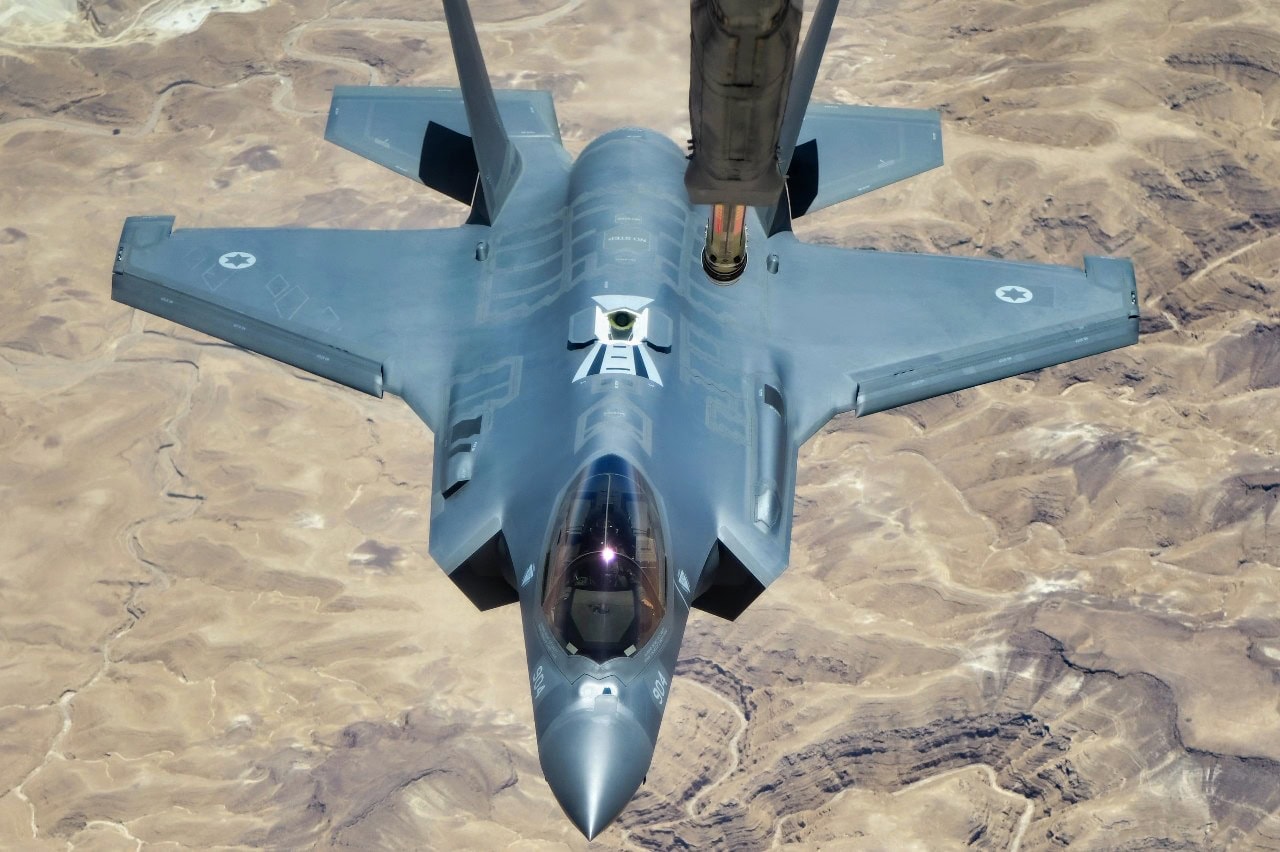
Israel still has overwhelming air superiority. Its F-35I, F-15I, F-16I, drones, artillery, and intelligence network can punish Hezbollah infrastructure far beyond the border. The Bekaa strikes prove that Israel can reach deep. But punishment is not control. Airstrikes can destroy warehouses, commanders, launchers, and staging sites. They cannot by themselves guarantee that a two-person drone team will not set up in a grove, fire from behind a ridge, and leave before a sensor-to-shooter chain closes.
That distinction is why the ground move matters. Israel is reaching for terrain because airpower has not removed the close-range drone threat. The awkward part is that terrain also creates new targets. The deeper Israeli troops sit inside Lebanon, the more Hezbollah can frame its operations as resistance against an occupying force, and the more Israeli units have to defend supply routes, observation posts, casualty evacuation routes, and engineering teams. The buffer zone becomes a target set.
There is a regional layer too. The escalation comes as Washington and Tehran are reportedly trying to finalize terms to end wider hostilities in the Middle East, with Iran insisting that Lebanon be included. That gives Hezbollah an incentive to keep pressure on Israel without necessarily triggering a full-scale conventional confrontation. It also gives Israel an incentive to change facts on the ground before diplomacy narrows its freedom of action.
The Lesson For NATO Is Unpleasant
Europe should pay attention because this is not only an Israel-Hezbollah story. It is another demonstration that the cheap end of the kill chain is forcing expensive militaries to spend ground, time, and political capital. A drone costing a fraction of an interceptor can force airstrikes, armored movements, evacuation delays, and ceasefire revisions. That is a good return on investment for the weaker side.
NATO has spent years talking about layered air defense, counter-UAS systems, and battlefield transparency. All of that is necessary. None of it is enough if the alliance still treats drones as an accessory to war rather than one of its organizing facts. Hezbollah is not Russia, and southern Lebanon is not the Suwalki Gap. But the basic geometry travels well: once small drones make the forward line visible and vulnerable, the defender either adapts fast or keeps moving the line.
The key finding is blunt. Israel moved beyond the Yellow Line because Hezbollah drones made the line feel unsafe. The next thing to watch is whether Israeli ground forces hold new positions, whether Hezbollah shifts launches farther north, and whether any US-Iran arrangement actually restrains the Lebanon front. If the answer to all three is messy, then the ceasefire will keep its name while the war keeps its habits.
Israeli forces moved beyond the Yellow Line into southern Lebanon on May 26, 2023, in response to drone attacks from Hezbollah. The Israeli Defense Forces (IDF) conducted airstrikes on over 100 Hezbollah targets, resulting in significant casualties. This shift indicates a change in military strategy as Israel adapts to the threat posed by Hezbollah's drone capabilities, which challenge traditional military boundaries.
- Israeli forces confirmed moving beyond the Yellow Line in southern Lebanon on May 26, 2023.
- Israeli airstrikes targeted over 100 Hezbollah sites, including weapons storage and command centers.
- 31 people were reported killed in the strikes, including civilians.
- Hezbollah drones are capable of launching attacks from beyond the new Israeli positions.
- The situation reflects a shift in military strategy due to the effectiveness of Hezbollah's drone capabilities.