F-35I Adir

🇺🇸United States•🇮🇱Israel
Lockheed Martin
2016 – Present
Spotlight

The only F-35 flying non-American mission software — and the first to kill a manned jet

Meet the F-35I (Israel Defense Forces)

Watch on YouTube
Overview
F-35I Adir
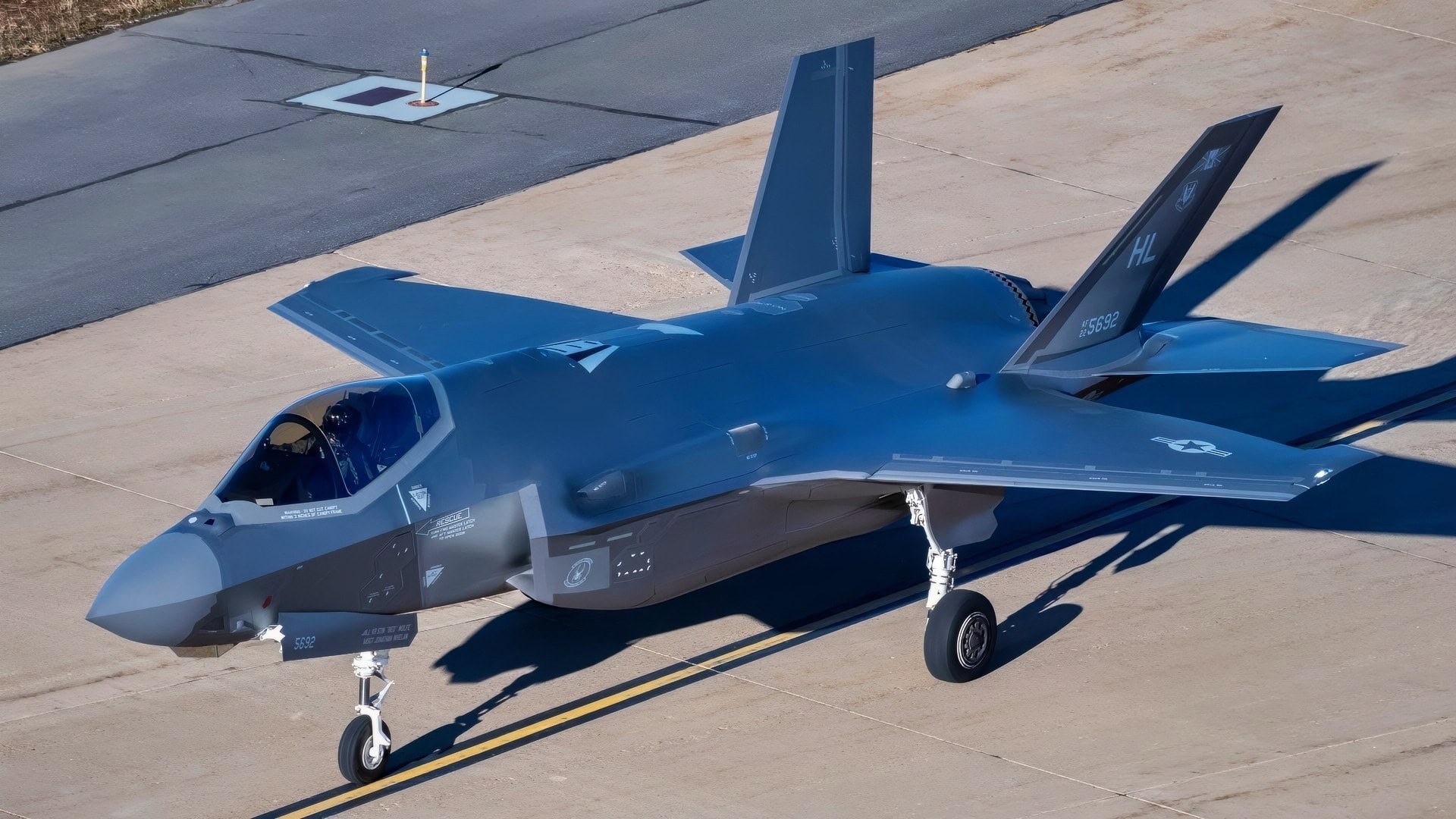
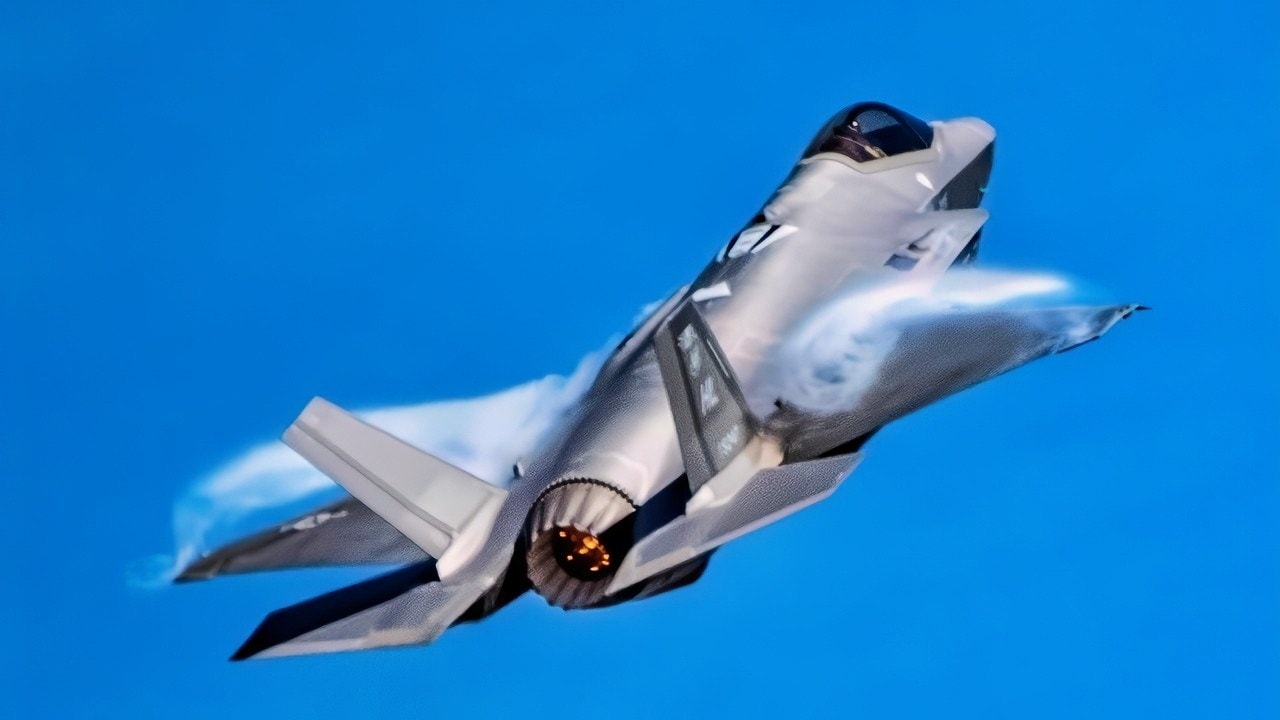
The F-35I Adir is a fifth-generation, single-engine, supersonic, stealth multirole fighter specifically modified for the Israeli Air Force. It is based on the F-35A with unique Israeli modifications, including Israeli-made electronic warfare systems, sensors, and countermeasures. The aircraft is capable of integrating Israeli air-to-air missiles and guided bombs. It features a Pratt and Whitney F135 engine and has a maximum speed of Mach 1.6. The F-35I Adir was first delivered to Israel in 2016 and became combat-ready in 2017.
Specifications

General

Crew1
RadarAN/APG-81 AESA
Engines1
StealthYes
Thrust Kn191 kN
Air To AirAIM-120 AMRAAM, AIM-9X Sidewinder
Hardpoints4
Internal GunGAU-22/A 25mm cannon
Air To GroundJDAM, Paveway, JSOW, GBU-39 SDB
Max Payload Kg8,165 kg
Max Speed Mach1.6 Mach
Combat Radius Km1,080 km
Service Ceiling M15,240 m

Other

Length M15.7
Powerplant1 × Pratt & Whitney F135-PW-100 afterburning turbofan
Wingspan M10.7
Internal Fuel Kg~8,165 (18,000 lb) (reported)
Electronic WarfareAN/ASQ-239 supplemented by Israeli-developed EW systems and dedicated airframe apertures (reported)
Main Operating BaseNevatim Airbase, Negev
Max Takeoff Weight Kg31,751 (70,000 lb)
Latest Developments
Sep 18, 2026strong signal
Saudi Arabia Is Getting the F-35 Fighter. That Means Israel Could Get the F-47 NGAD Stealth Fighter Built by Boeing

Israel will still maintain an advantage, though, because its F-35s have been specifically modified to meet its own requirements.

Jul 13, 2026strong signal
The Return of the F-35 to Turkey in 2026 Pressures Israel's Supremacy and Reveals the S-400 Knot

عودة F-35 إلى تركيا في 2026 تضغط على تفوق إسرائيل وتكشف عقدة S-400

Jun 20, 2026strong signal
Why the F-35 Keeps Its Missiles Hidden Inside the Aircraft

Entity 'F-35I Adir' mentioned in report

Jun 15, 2026strong signal
Israel Arrow and F-35I Pressure After 60-Day Iran Deal Exposes Missile Gap 2026

اتفاق الستين يوماً مع إيران يضع Arrow و F-35I أمام اختبار الذخيرة لا اختبار السياسة في 15 حزيران 2026

Jun 10, 2026strong signal
Russian military analysts openly challenge Putin’s Su-57 praise

Since 2024, Israeli F-35I Adir aircraft have been used repeatedly in strikes against Iranian territory and Iranian-linked targets, including air defense systems, nuclear facilities, ballistic missile sites, and military command infrastructure.

May 27, 2026strong signal
Hezbollah Drones Push Israel Beyond Lebanon Yellow Line

Entity 'F-35I' mentioned in report

Featured Coverage
Research Notes

Israeli F-35 variant shaped by national integration needs

high

The F-35I Adir is Israel's F-35A-derived variant, important for how it combines the global F-35 program with Israeli operational and sustainment requirements.

The F-35I Adir is Israel's national variant of the F-35, based on the conventional-takeoff F-35A family but shaped by Israeli operational, industrial, and integration needs. Lockheed Martin notes that Israel selected the F-35 through the U.S. Foreign Military Sales process and that the Israeli Air Force named the aircraft Adir, meaning Mighty One.

This background matters because the Adir is not just another export label. Israel places high value on sovereign mission planning, local sustainment, domestic electronic systems, and integration with the rest of the Israeli Air Force.

For HiWars, the page should explain F-35I as both a fifth-generation fighter and a national integration case. Its strategic relevance comes from stealth, sensors, networked operations, and Israel's effort to adapt the aircraft to regional threat requirements.

Stealth aircraft for a compact, high-tempo regional air force

high

Adir operations matter because Israel's air force works in a small geographic theater where range, intelligence, survivability, and rapid sortie generation interact.

Israel operates in a compact regional theater where air-defense density, warning time, distance to targets, and intelligence cycles can matter as much as raw aircraft specifications. The Adir gives the Israeli Air Force a stealthy sensor and strike platform for this environment.

The IDF described the Adir as entering operational use after a training period, highlighting the shift from procurement milestone to usable combat capability. That distinction should appear on the equipment page because aircraft numbers alone do not equal operational readiness.

A useful F-35I article should connect the jet to squadron formation, pilot training, mission-data preparation, weapons integration, air-defense penetration, and cooperation with existing Israeli aircraft. The value lies in the force package, not the aircraft in isolation.

Fleet growth and industrial participation

high

The third-squadron agreement shows that F-35I relevance is tied to fleet size, sustainment depth, and Israeli industrial participation.

The Israeli Ministry of Defense's third-squadron agreement shows that Adir capability is a growing fleet and sustainment story, not a one-time purchase. More aircraft can change sortie capacity, training depth, maintenance resilience, and operational planning options.

The ministry also emphasizes industrial commitments involving the aircraft manufacturer and engine manufacturer. That content is relevant because national defense value includes parts production, maintenance channels, and industrial knowledge, not only frontline aircraft performance.

For HiWars, F-35I should be linked to Israeli procurement phases, squadron growth, domestic support arrangements, and regional deterrence posture. Those additions help turn a thin aircraft entry into a more analytical military database page.

Key parameters at a glance

high

Figures describe the Israeli F-35I specifically; airframe dimensions follow the F-35A baseline, while modification, fleet and operational details follow the cited reporting.

Variant identity
F-35A airframe modified to a national standard for the Israeli Air Force; 'Adir' means 'Mighty One' in Hebrew. It is the only F-35 configuration built around systems the United States does not control end to end
Sovereign mission systems
Israeli electronic warfare equipment and custom mission software that no other F-35 operator has access to, fed by dedicated apertures cut into the lower fuselage and wing leading edges (reported)
Command and control layer
Israel Aerospace Industries developed an Israeli C4I layer that runs on top of the core avionics rather than replacing it — described by programme officials as an application riding over the central system
National test aircraft
One F-35I is assigned to the Flight Test Center at Tel Nof — the only F-35 test airframe delivered outside the United States, giving Israel an in-country path to certify its own modifications
Squadrons
140 'Golden Eagle' Squadron (first, 2016), 116 'Lions of the South' Squadron, and 117 'First Jet' Squadron as the conversion unit — all at Nevatim Airbase in the Negev
First combat use
May 2018 — the IAF announced that Israel had become the first air force in the world to employ the F-35 operationally, in strikes connected to Iranian activity in Syria
Firsts credited to the type
First F-35 shoot-down of a UAV (March 2021), first F-35 interception of a cruise missile (October 2023), and the first F-35 kill of a manned aircraft — an Iranian Yak-130 downed over Tehran on 4 March 2026
Order book
75 aircraft contracted in total: a third squadron of 25 was finalized in June 2024 with deliveries from 2028; about 50 had been delivered by mid-2026
Fourth squadron
In May 2026 Israel's ministerial committee approved an additional F-35I squadron alongside a second F-15IA squadron, which would take the fleet toward roughly 100 aircraft across four squadrons
Range constraint
About 18,000 lb of internal fuel gives an unrefuelled combat radius of roughly 700 miles (~1,130 km) in strike configuration — around half the Haifa–Tehran distance, forcing hundreds of aerial refuellings in the 2025 and 2026 Iran campaigns (reported)

Program milestones

high

Milestones specific to the Israeli F-35I programme rather than the wider F-35 family.

2010-10First Israeli order

Israel signed for an initial 20 aircraft worth about $2.75 billion, becoming the first international customer to commit outside the multinational development partnership. The order was contingent on a negotiation Israel had been pressing since 2008: permission to install its own systems on a jet whose software the United States otherwise controls tightly.

2011-07Israeli systems approved

Washington agreed to rewire the aircraft for Israeli electronic warfare equipment, and a follow-on contract funded Israeli-specific systems produced by domestic industry. This is the concession that turned an F-35A into the F-35I: dedicated apertures in the lower fuselage and leading edges, Israeli EW hardware, and an Israel Aerospace Industries command-and-control layer running above the core avionics.

2016-12First deliveries to Nevatim

The first two aircraft arrived on 12 December 2016 and entered 140 'Golden Eagle' Squadron. Israel also received the only F-35 flight-test airframe stationed outside the United States, at Tel Nof, which underpins its ability to certify national modifications without going through the US test enterprise.

2017-12Declared combat capable

With nine aircraft on strength, the IAF declared the F-35I operational in December 2017 — roughly a year after delivery, and unusually early by the standards of other F-35 operators. The declaration reflected a deliberate choice to push the type into the alert cycle rather than hold it in an extended work-up.

2018-05First combat use of any F-35

IAF commander Maj. Gen. Amikam Norkin stated that Israel had become the first country to employ the F-35 in combat, in operations linked to Iranian activity in Syria. The claim preceded the first US and British combat employment of the type and established the Adir as the reference point for F-35 operational experience.

2021-03Air-to-air firsts against unmanned targets

F-35Is shot down two Iranian UAVs in March 2021 — the first air-to-air kills by any F-35 — and in October 2023 an Adir intercepted a cruise missile fired from Yemen, again a first for the type. Both engagements used the aircraft as a forward sensor-shooter rather than as a strike platform.

2024-06Third squadron contracted

Israel finalized the purchase of a further 25 aircraft for about $3 billion, taking the total order to 75 and funding a third operational squadron. Deliveries were set to begin in 2028, meaning the third squadron will arrive on airframes built to a later production standard than the first two squadrons.

2026-03First F-35 kill of a manned aircraft

On 4 March 2026, during Operation Roaring Lion against Iran, an F-35I destroyed an Iranian Yak-130 over Tehran while the trainer was attempting to intercept Israeli Hermes 900 UAVs. It was the first time any F-35 had shot down a crewed aircraft. Two months later Israel signed a roughly $34 million contract with Elbit subsidiary Cyclone for external fuel tanks derived from the F-16I 'Sufa' design, and approved a fourth F-35I squadron.

Strategic significance

medium

What separates the Adir from the F-35A, F-35B and F-35C is not aerodynamic or structural — it is a question of who controls the aircraft's behaviour. Every other operator flies mission software and an electronic warfare library maintained in the United States. Israel negotiated the right to insert its own EW hardware through dedicated apertures, to run an Israel Aerospace Industries command-and-control layer above the core avionics, and to certify those changes on a national test airframe at Tel Nof, the only F-35 test aircraft outside American soil. The practical value of that arrangement is threat-library latency: an air force facing Russian- and Chinese-supplied radars around its borders can re-programme its own responses on its own timeline rather than queuing behind a multinational release schedule.

The operational record has made the Adir the reference case for what a fifth-generation fighter actually delivers, because Israel used it first and used it hardest. The 2018 announcement of the first F-35 combat sortie, the first UAV shoot-downs in 2021, the first cruise-missile intercept in 2023, and the first kill of a manned aircraft — an Iranian Yak-130 over Tehran on 4 March 2026 — were all achieved by this variant. These should be read with proportion: the Yak-130 is a subsonic trainer that was chasing drones, not a peer interceptor, and the engagements occurred after Israeli and American operations had already degraded Iranian air defences. The more meaningful data point is the ability to operate repeatedly over defended Iranian airspace at all.

The programme's binding constraint is fuel, not survivability. Roughly 18,000 lb internal gives an unrefuelled combat radius of about 700 miles — roughly half the distance from Israel to Tehran — so the 2025 Twelve-Day War and the 2026 Roaring Lion campaign both required hundreds of aerial refuellings, tying strike packages to a small tanker fleet at predictable orbits. The May 2026 contract with Elbit's Cyclone subsidiary for F-16I-derived external tanks is an explicit trade of signature for reach, and the parallel approval of a fourth squadron toward a fleet of roughly 100 aircraft indicates that Israel intends to solve the Iran problem with mass and range rather than with an alternative platform. Whether an externally-tanked F-35I remains useful in the opening, most heavily defended phase of a campaign is the open question that the tank programme has to answer.

Videos

Israel Declares F-35I Adir Combat Capable (Lockheed Martin)

Watch on YouTube

Israeli F-35 Downs Iranian Jet Over Tehran (WION)

Watch on YouTube

Why is Israel the only F-35 operator allowed to modify the aircraft? (Hunt Weapons Bureau)

Watch on Bilibili
Sources & References
Related Discussions

No discussions about F-35I Adir yet

Start the first discussion