
Israel Arrow and F-35I Pressure After 60-Day Iran Deal Exposes Missile Gap 2026
 Ahmed Al-Rashid
The Sixty-Day Agreement with Iran Puts Arrow and F-35I to a Test of Ammunition, Not Politics
On June 15, 2026, Israel's military problem was not just that Washington and Tehran announced a preliminary understanding, but that this understanding left the most dangerous items for subsequent negotiations lasting 60 days. The Strait of Hormuz, Lebanon, and high-enriched uranium entered the texts and statements, but what concerns any operations officer in Tel Aviv, Amman, or Riyadh is a simpler question: What happens if these sixty days collapse after the Arrow, David’s Sling, and Iron Dome batteries have consumed a large part of their stock?
An Agreement That Stops Fire but Does Not Halt Military Calculations
The details published so far indicate an incomplete agreement more than a stable settlement. The Guardian reported that the final text has not yet been published, and the fate of the Iranian nuclear program, freedom of navigation in Hormuz, and the situation in Lebanon remain open questions. Trump stated that attacks could resume if Tehran fails to reach a broader nuclear agreement. This is not a ceasefire in the military sense, but a conditional truce with a short time frame and an explicit threat of a return to strikes.
Practically, this type of understanding calms the markets before it calms the operations rooms. A military commander does not build an air defense plan on a political statement; he builds it on the number of ballistic missiles remaining with the adversary, the number of interceptors ready in the warehouses, and the time to rearm. Here begins the gap between American diplomacy and Israeli calculations.
Israel Is Not a Full Party to the Agreement
The most dangerous aspect of the scene is that Israel seems required to coexist with an agreement it did not fully draft. Initial Israeli statements indicated that the agreement does not bind it because it is not a party to it, and linked any final settlement to the removal of enriched materials, dismantling the enrichment infrastructure, restricting missile production, and stopping support for Iranian proxies. These are not formal conditions; they are a list of mini-war objectives.
Iran, for its part, wants to separate the files of Lebanon and Hormuz from the missile and nuclear files. If it succeeds in doing so, it will obtain a ceasefire and economic gains without paying a direct price in its missile program. If the path fails, Israel will return to the option of a preemptive strike or intensive defense, but after weeks in which Washington may be more sensitive to oil prices, Europe more insistent on calm, and the Gulf more concerned about any escalation over its territory and waters.
The Arrow and David’s Sling Dilemma
The recent experience does not allow for reassurance. JINSA estimates after the twelve-day war indicated that Israel used large numbers of Arrow, David’s Sling, and Iron Dome interceptors, and that the United States launched 150 THAAD missiles, about a quarter of its stock, in addition to 80 SM-3 missiles and 30 Patriot PAC-3 missiles to defend the Al Udeid Air Base in Qatar. If these numbers are correct, they mean that the war with Iran is not only draining Israel but also the American defense network that the Gulf relies on.
This point is well understood by military personnel in the region. Owning an air defense system does not mean having the ability to operate it indefinitely. The battery needs radar, a trained crew, command linkage, and ammunition. Ammunition is the least romantic and most decisive element. The interceptor that leaves the launcher does not return, and the factory does not operate at the speed of political discourse.
The Iranian Picture Is Not Just Nuclear
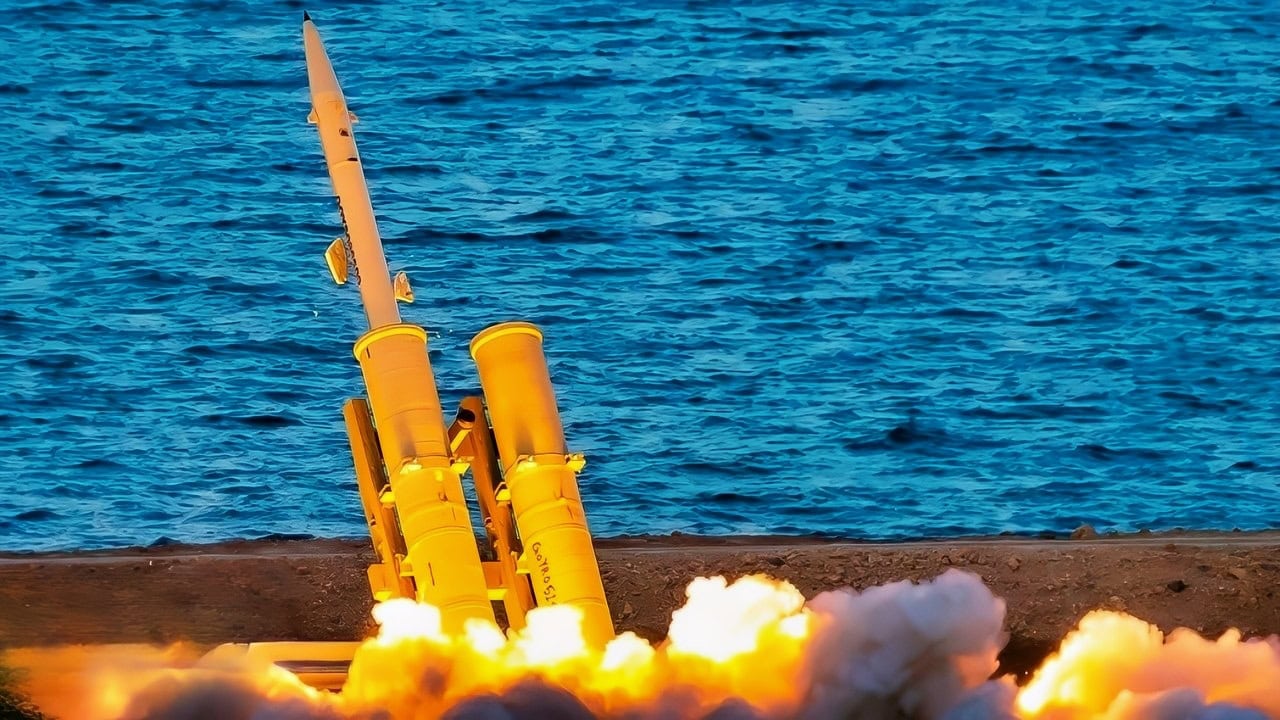
Much of the Western discussion reduces the crisis to uranium. Yes, the presence of more than 400 kilograms of high-enriched uranium, as reported in media reports, represents a central knot. But from an Arab military perspective, the Iranian problem is not just the bomb. The problem is Iran's ability to produce missiles, mobilize proxies, and create side fronts that make any Israeli or American strike more costly.
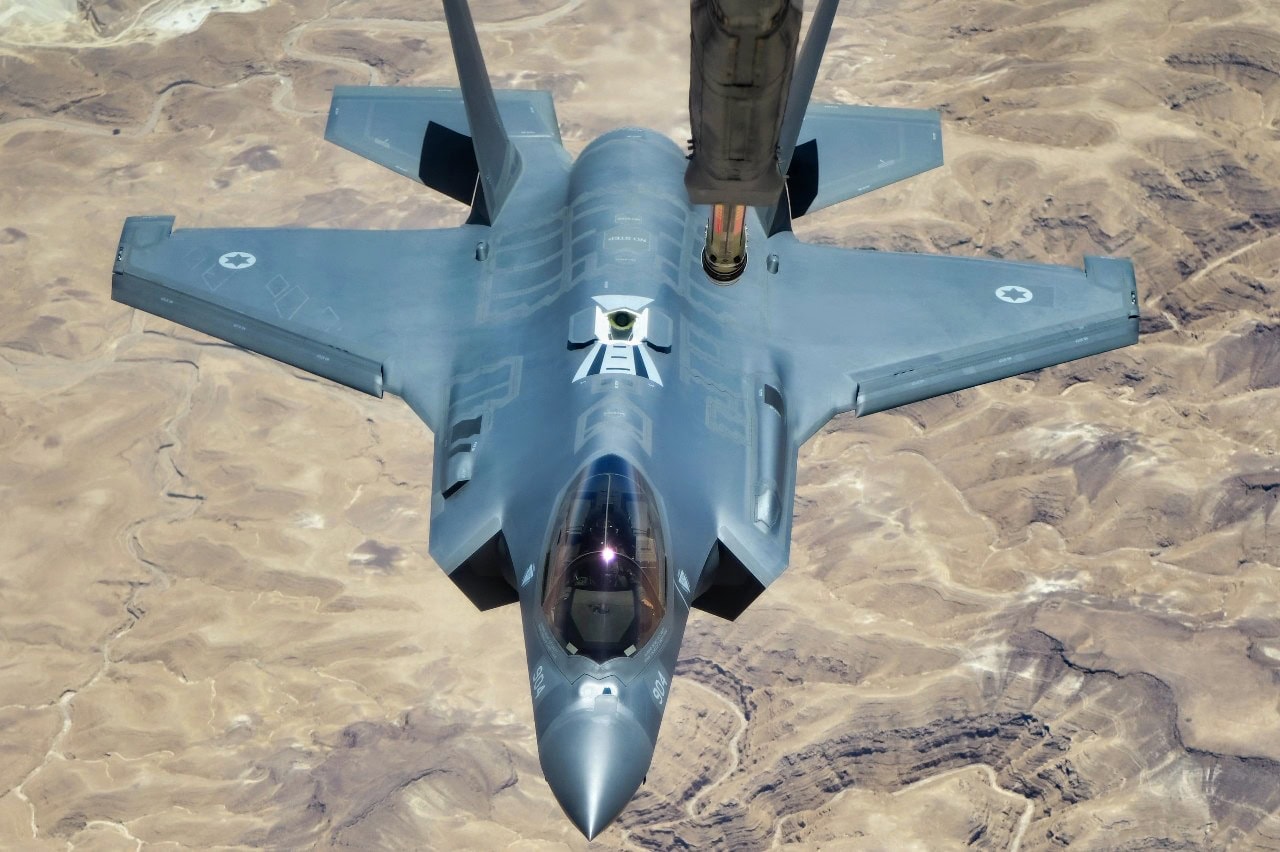
If the missile program remains outside the preliminary understanding, Israel will read the agreement as an operational pause, not a solution. This explains why the F-35I Adir and F-15I Raam will remain part of the equation even during negotiations. The stealth aircraft gives Israel penetration capability, but penetration is not the end of the story. After the strike comes a wave of retaliation, and here the burden returns to Arrow, David’s Sling, and Iron Dome, and to the American stock behind them.
The Gulf Watches but Is Not Out of the Battle
The Gulf states tend to welcome any agreement that opens Hormuz and lowers insurance and shipping prices. This is understandable. However, political welcome does not negate the military reality: if the agreement collapses, the Gulf bases, ports, and energy systems will become part of the theater of deterrence and response. Al Udeid Air Base in Qatar is not a detail. Defending it during previous waves required American PAC-3s, and these same interceptors are needed in Europe, Asia, and Israel.
Here an old Arab proverb comes to mind: He who borrows a cloak does not stay warm for long. The Gulf bought Patriots and THAAD and entered early warning and air linkage projects, but it still relies on the American decision and on an American stock that proves every month to be limited. So if Israel and Iran enter a new round after 60 days, the Iranian missile will not ask whether the battery in Qatar, Saudi Arabia, or Israel is part of a diplomatic agreement. It will test the radar, ammunition, and decision.
The Israeli Equation After the Agreement
Israel has three paths ahead. The first is to accept the truce and work through Washington to impose strict conditions on Iran during the 60 days. The second is to maintain pressure in Lebanon and Syria without directly striking Iran, a path that satisfies the logic of deterrence but threatens to blow up the agreement from the edges. The third is to prepare for a new strike if it sees that Tehran is using negotiations to hide enriched materials or rebuild missile chains.
Each path has a cost. Accepting the truce gives Iran time. Pressuring the proxies may clash with Washington's desire to succeed in the agreement. A new strike could open a wide missile front that drains Israeli and American defenses. Therefore, I do not see the real question as whether Israel can strike Iran again. It can. The question is whether it can withstand the next interception cycle if it comes larger than the previous one.
Military Summary
The sixty-day agreement reduces fire today, but it does not solve the capability dilemma. On paper, diplomats can postpone uranium, missiles, and Lebanon to later rounds. In reality, the field commander cannot postpone the stock of interceptors or production time. Israel enters this truce stronger in the air than Iran, but it is not entirely free in its decision because its deep defense is linked to American factories and the mood of the White House.
As for the Gulf, it sees Hormuz slowly opening and thinks the danger has receded. In my estimation, the danger has not receded; it has moved from the surface of the water to the military production stream. And this is the paradox that wealthy capitals in our region do not like: aircraft can be purchased in a few years, but building a sustainable capacity to withstand a regional missile war requires institutions, stockpiles, and industry, not press conferences and unpublished agreements.
Sources
Israel is evaluating its military readiness as it faces a potential missile gap following a 60-day agreement with Iran set to expire on June 15, 2026. The agreement leaves unresolved issues regarding Iran's nuclear program and missile capabilities, prompting concerns about Israel's defense strategy. The Israeli Defense Forces are assessing the depletion of their interceptor inventory, including Arrow and Iron Dome systems, amid ongoing tensions in the Gulf of Hormuz and Lebanon.
- Israel is facing a potential missile gap due to the depletion of its interceptor inventory.
- The 60-day agreement with Iran leaves critical military issues unresolved.
- Israel's military strategy may involve preemptive strikes if negotiations fail.
- The U.S. military's missile inventory is also being strained due to ongoing conflicts.
- Iran's missile production capabilities pose a significant threat to regional stability.