
Cancellation of Switzerland Talks and 16 Dead in Lebanon Place F-35I and Arrow-3 Before Iran Test 2026
 Ahmed Al-Rashid
Cancellation of Switzerland Talks and 16 Dead in Lebanon Place F-35I and Arrow-3 Before Iran Test 2026
On the morning of June 19, 2026, the Switzerland round between Washington and Tehran was canceled not only due to a vague legal clause but also because southern Lebanon reminded everyone that major agreements in the Middle East sometimes collapse at the first narrow valley and the first border village. The Guardian reported that Israeli strikes in southern Lebanon killed at least 16 people, while the Israeli army announced the death of four of its soldiers in fighting with Hezbollah. Meanwhile, Switzerland confirmed that the scheduled talks in Bürgenstock between the United States, Iran, Qatar, and Pakistan would not take place as planned.
This is not a diplomatic detail. The U.S.-Iran memorandum of understanding opened a 60-day window for negotiating a broader agreement, but it assumed that a cessation of operations could automatically extend to Lebanon, Hezbollah, and Israel. Militarily, this is a comforting assumption on paper and dangerous in the field. Any officer who has served in the region knows that Hezbollah does not treat Lebanese geography as a negotiating appendix, and Israel does not treat the border strip as a file that can be placed in a foreign ministry drawer.
The Problem Started from a Clause, Not a Missile
The U.S.-Iran deal essentially states that Tehran halts the course of open war, while Washington increases maritime pressure and opens the door for negotiations. However, Lebanon is not just an Iranian proxy front. It is a theater with a weak Lebanese army, an armed party with a relatively independent fire decision, and Israel maintaining a security logic that says complete withdrawal does not happen before ensuring the return of northern residents. Thus, the Lebanese clause in the agreement became the weakest link, not because of its little importance, but because it asks parties that are not actually present in the signing room to act as if they have signed.
RFE/RL reported that U.S. Vice President J.D. Vance's visit to Switzerland was postponed for what was said to be logistical reasons, and that the sixty-day period began after the memorandum was signed. However, the coincidence between the postponement and the escalation in Lebanon cannot be ignored. When peace negotiations begin with the postponement of the first executive session, this is not a sign of strength. It is a signal that the text preceded the ability to control the field.
F-35I Does Not Solve the Political Decision Dilemma
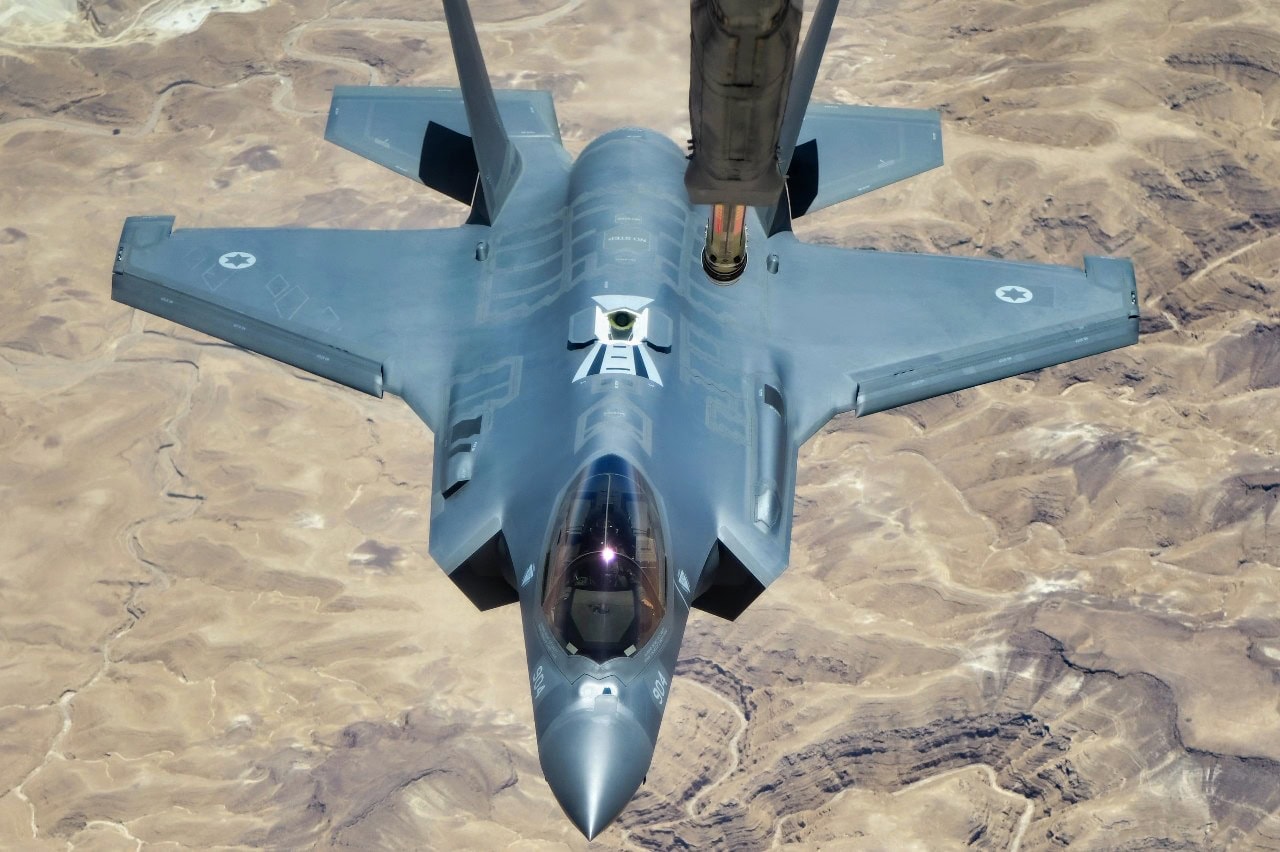
Israel possesses very advanced military tools: F-35I Adir for deep strikes and intelligence gathering, F-15I for heavy payloads, Iron Dome for short-range missiles, David’s Sling for medium threats, and Arrow-2/Arrow-3 for higher ballistic threats. This is a technological system that no single Arab party possesses. However, it does not answer the most important question: What do you do when the adversary is mixed with the population, the political front in Washington is linked to an agreement with Iran, and every strike in Bint Jbeil or Nabatieh can disrupt a diplomatic process in Switzerland?
Practically, the F-35I gives Israel greater freedom to penetrate, scout, and strike, but it does not grant it political freedom without cost. Arrow-3 intercepts a ballistic missile at a high layer, but it does not intercept Hezbollah's decision to launch an anti-tank shell from a nearby valley. Iron Dome may reduce losses in the north, but it does not determine who has the right to remain within the security zone. Here, the limits of technology appear when war shifts from a matter of intercepting targets to a matter of managing borders, sovereignty, and legitimacy.
Iran Gained Time and Hezbollah Gained Margin
The quick Western reading suggests that Iran accepted a truce because it is tired of war. This is partially true, but incomplete. Tehran gained something more valuable than a truce: a relative separation between its nuclear file and its armed networks file. If the memorandum of understanding does not impose detailed restrictions on missiles, drones, and proxy networks, then Iran can negotiate in Switzerland with one hand while allowing its allies to test the limits of the agreement with the other. This is not extraordinary intelligence, but an old practice in the region.
Hezbollah, for its part, knows that the moment of major negotiation grants it a margin. It can tell the Lebanese interior that it does not accept a political withdrawal under Israeli pressure, tell Iran that it maintains the resistance card, and tell Israel that any security area will be costly. Therefore, the danger of the last hours lies not only in the number of casualties but in the fact that it revealed that the agreement needs a field enforcement mechanism that no one possesses yet.
The Gulf Watches Lebanon's Lesson with an Eye on Air Defense
For Saudi Arabia, the UAE, Qatar, and Kuwait, what happened in Lebanon is not a side news. The Gulf states emerged from months of tension with Iran while considering replenishing their Patriot and THAAD stocks, expanding command and control systems, and linking radars and interceptions in a broader network. IISS noted in May that Gulf states are looking to rearm and strengthen their air and missile defenses after Iranian attacks. However, Lebanon's lesson indicates that purchasing intercept missiles is not enough if the regional decision is distributed among Washington, Tehran, Tel Aviv, and non-state actors.
In my view, the Gulf problem is not a lack of money. The problem is that Gulf air defense still tends to buy layers instead of building a common doctrine. Patriot here, THAAD there, American radars at one base, and national command centers that do not share everything in real-time. If Israel, with all its technical superiority and operational experience, is unable to convert air power into a stable ceasefire in Lebanon, how can a Gulf state think that a new deal alone will grant it defensive independence? As the military saying goes: a weapon that does not enter a clear command system becomes an expensive piece in an organized warehouse.
The End of the Naval Blockade Does Not Mean the End of Deterrence
USNI News reported that the U.S. Central Command announced the lifting of the naval blockade on Iranian ports and coasts, while other reports indicated the return of ship crossings in Hormuz. This is important for the global economy, but it does not resolve the deterrence dilemma. If Washington lifts the blockade, keeps its forces in the region, and threatens to reinstate it upon breach of commitments, it is practically building a suspended deterrent. The suspended deterrent requires daily credibility. Lebanon is now the first test of this credibility.
Israel wants freedom of action against Hezbollah. Iran wants an agreement that relieves it of pressure without dismantling its cards. Washington wants to stop a war that protects markets and does not seem like a concession. And Gulf states want not to pay the price for every mistake made by others. These are goals that can be written in a single statement, but they do not constitute a single command in the field.
Conclusion
The cancellation of the Switzerland talks does not mean the collapse of the deal, but it confirms that the deal was born before its fundamental security knot was resolved. F-35I, Arrow-3, Patriot, and THAAD are powerful tools, but they operate within a confused policy. If the Iran agreement needs calm in Lebanon to begin, and Lebanon needs the Iran agreement to calm down, then we are facing a closed circle, not a peace path. The real tension is not between war and diplomacy, but between everyone's desire to reduce the fire and each party's desire to retain the tool that ignited it.
Sources
Israeli airstrikes in southern Lebanon on June 19, 2026, resulted in at least 16 fatalities and the deaths of four Israeli soldiers in clashes with Hezbollah. The escalation in violence led to the cancellation of planned U.S.-Iran negotiations in Switzerland. The report emphasizes the military capabilities of Israel, including the F-35I and Arrow-3 systems, while highlighting the complex dynamics involving Hezbollah and the broader geopolitical implications.
- Israeli airstrikes killed at least 16 people in southern Lebanon.
- Four Israeli soldiers were killed in clashes with Hezbollah.
- U.S.-Iran talks in Switzerland were canceled due to escalating violence in Lebanon.
- The F-35I and Arrow-3 systems are highlighted as key military assets for Israel.
- The situation in Lebanon complicates U.S.-Iran negotiations.